Climate crisis

Search documents
X @Elon Musk
Elon Musk· 2026-02-22 13:47
Propaganda worksAlice Smith (@TheAliceSmith):Unreal things that leftists invented a new word for to push an agenda:GenderSexual orientationIslamophobiaWhite privilegeClimate crisisInstitutional / systemicIntersectionalityCultural appropriationMicroaggressionLived experienceMy truth ...
X @Forbes
Forbes· 2025-12-23 18:41
Overview - Forbes 30 Under 30 Social Impact 2026 highlights young founders and changemakers addressing global challenges [1] Key Areas of Focus - The report focuses on social impact entrepreneurs in healthcare, AI, and sustainability [1] - Key challenges being tackled include food insecurity, reproductive health, and the climate crisis [1]
Hope in the climate crisis | Anika Molesworth | TEDxDeakin Uni Melbourne
TEDx Talks· 2025-12-22 17:10
Environmental Crisis & Impact - Climate change is causing farmers worldwide to experience drought, floods, and fires, leading to food supply issues and potential social unrest [1] - The current environmental breakdown is occurring at only 15% above base levels, indicating the severity of the situation [1] - Climate change impacts food prices, nutrition, and availability, affecting consumers directly [11] Hope & Action - True hope involves confronting reality with courage to create a better future, emphasizing action and responsibility [1] - Every action, choice, and fraction of a degree matters in addressing the climate crisis [4][17] - Farmers are implementing solutions like reforestation, regenerative grazing, renewable energy, and methane reduction [10] Solutions & Choices - Consumers can contribute by making climate-conscious food choices, reducing waste, and supporting sustainable farming practices [11][12] - Individuals can further contribute by using renewable energy, avoiding fast fashion, and voting for politicians who prioritize climate action [12][13] - Scaling up and speeding up actions are crucial to creating a future with clean air, thriving farms, and a healthy environment [14]

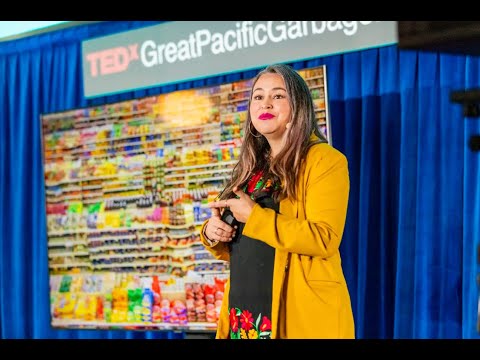
Turn Off the Plastic Tap to Break Free From Plastic | Melissa Aguayo | TEDxGreatPacificGarbagePatch
TEDx Talks· 2025-12-11 16:05
Environmental Impact of Plastics - 99% of plastic is made from fossil fuels, contributing to climate crisis as oil and gas companies increase plastic production [3] - By 2050, the amount of plastic could double or triple, exacerbating the climate crisis [4] - Over 4,200 out of 16,000 chemicals associated with plastic production pose significant hazards to human and environmental health [4][5] - Microplastics are found in remote environments, water, air, and even human organs, including the placenta and testicles [5][6] - The average human brain contains the equivalent of one plastic spoon's worth of microplastics [7] Plastic Production and Usage - 40% of all plastic produced today is used for packaging, which are often used briefly but last forever [8] - The industry is flooding markets with plastics and concealing the risks associated with it [4] Solutions and Alternatives - Reducing single-use plastics through policy reforms, brand audits, corporate accountability, and zero waste initiatives are crucial [11] - Investing in reuse systems, like the milkman model, can restore health and community connections [12] - Ending the unchecked production of plastics is essential to protect the environment and human health [12][13] Environmental Justice - Communities near production sites, landfills, and incinerators, often black, brown, indigenous, and rural communities, are disproportionately affected by plastic pollution [6]
Why Students Shoudn’t Wait for Permission to Change the World | Oskar Bonte | TEDxVUB
TEDx Talks· 2025-11-18 17:10
Core Message - The speech emphasizes that individuals, especially young people, have the power to create change and should not wait for others or external permission to act on issues like climate change [1][4][9][17] - It advocates for "hope through action," urging people to move beyond worry and take concrete steps, no matter how small, to address problems [5][6][18] - The speech challenges the notion of "being realistic" as a barrier to ambition and encourages individuals to question and reshape societal norms [4][16] Examples and Illustrations - A high school initiative to remove sugary drinks in plastic bottles from vending machines demonstrates that even small actions can lead to significant change [6][7][8] - The story of organizing a climate camp in Colombia highlights the importance of understanding the needs and priorities of others when seeking support for initiatives [9][10][11][12] - Greta Thunberg's individual strike inspired 7 million people in 150 countries, illustrating the power of one person's actions [14] Call to Action - The speech urges the audience to identify issues that frustrate them in their immediate surroundings and to start conversations and take action to address them [19][20] - It encourages building teams and supporting each other to overcome challenges and celebrate victories [18] - The speaker emphasizes that hesitation is detrimental and that every step and voice matters in creating change [17][20]

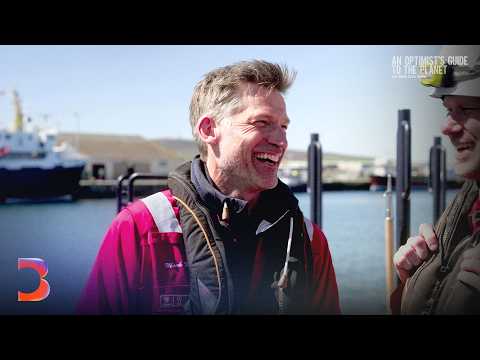
The Real Cost of Our Energy Demand | An Optimist’s Guide to the Planet
Bloomberg Originals· 2025-11-12 23:01
Energy Demand and Environmental Impact - Energy demand is expected to double by 2030, posing a steep cost to the planet [1][4] - Unbridled appetite for energy may be killing human societies, with AI potentially doubling energy needs by 2050 [4] - Data centers currently consume 1 in 3% of global electricity, projected to double by 2030, equaling Japan's total electricity consumption [12] - Shipping accounts for 2% of global CO2 emissions, highlighting the need for sustainable alternatives [89] Renewable Energy Solutions - Renewable energy sources like tidal power offer predictable and continuous energy [45][60] - Orkney generates over 100% of its electricity demand from renewables, showcasing a successful transition [62] - Tidal turbines can generate 2 megawatts, equivalent to powering 2,000 UK homes [51] - E-methanol, produced from renewable energy, can replace fossil fuels in heavy transport, aviation, and the chemical sector [69][73] Social and Economic Considerations - Rising energy demands exacerbate the climate crisis, disproportionately affecting vulnerable communities [20][41] - Low-cost cooling solutions can significantly reduce indoor temperatures in informal settlements, improving living conditions [31] - Fair conditioning has developed over 50 low-cost cooling methods, shared open-source without profit motive [38] Data Centers and AI - AI's energy demands are often hidden, requiring a behind-the-scenes look at data center power consumption [6] - Data centers require significant power, with one campus needing 45 megawatts, comparable to a city [10] - New GPUs for AI can consume 10 to 20 times more energy than traditional CPUs [11] - Recovering heat from data centers can be valuable for heating adjacent buildings or homes [14]
What a modern reformation would require | Kevin Noone | TEDxStockholm University
TEDx Talks· 2025-09-23 16:02
Core Argument - The current societal trajectory, driven by the separation of humans and nature, leads to an unsustainable and unjust world [3][5][20] - A "Reformation 2.0" is needed to reassess foundational assumptions and recognize the interconnectedness of humans and nature [24][35] - Shifting the mindset from viewing nature as a fungible resource to recognizing it as essential is crucial for a sustainable future [30][34] Driving Forces & Historical Context - Cartesian dualism, the idea that humans are separate and superior to nature, has deeply influenced Western thought and societal structures [6][9] - Adam Smith's "invisible hand" and Milton Friedman's emphasis on profit maximization have contributed to a focus on self-interest and shareholder value, potentially at the expense of the environment [11][13] - The concept of planned obsolescence and the drive to overuse resources, combined with the human-nature separation, exacerbate environmental problems [16][20] Proposed Solutions & Future Vision - Collaboration and cooperation, based on the understanding that humans and nature are intertwined, are essential for planning transitions [34] - Drawing inspiration from cultures that recognize the interconnectedness of humans and nature, such as Native American philosophies, can inform a new ethical framework [25][26][27] - Transformations in transportation, energy, and agriculture sectors demonstrate the feasibility of rapid and significant societal change [32][33]
Choosing connection over consumption | Rolena Richardson | TEDxBard College
TEDx Talks· 2025-09-22 16:50
Environmental Impact of Consumerism - Annually, Americans discard over 12 million tons of furniture, equivalent to filling 1,600 Olympic swimming pools [1] - An estimated three-fifths (60%) of all clothing ends up in landfills or incinerators within a year of production, translating to a truckload of used clothing dumped or burned every second [2] - Global waste generation is projected to increase by 70% over the next 30 years, equating to 34 billion tons of waste each year [25] Critique of Capitalism - Capitalism is criticized for leading to the destruction of traditional values, environmental degradation, worker and consumer exploitation, and negative mental health effects [2] - Over the last 55 years, the global population has doubled, while global resource extraction has tripled [12] - From 2016 to 2021, global consumption exceeded 75% of the entire 20th-century consumption [13] - Capitalism prioritizes products that generate quick profits, such as fossil fuel vehicles, fast fashion, and cheap gadgets, leading to endless production and waste [14][15] Alternative Consumption Model - The report advocates for slow and empathetic consumerism, emphasizing choices that honor relationships between consumers and items, the people who made them, and the land the materials come from [8] - Slow consumerism challenges the fast-paced disposable culture, promoting fewer, higher quality items crafted with care and designed to last [8][9] - Empathetic consumerism invites compassion into purchasing decisions, considering the lives, traditions, and stories of the people behind the products [10] Call to Action - The report suggests five simple actions: question the value and impact of purchases, engage in creation, build relationships (not just transactions), prioritize giving over getting, and reconnect with nature [26][27][28][29][30][31]
What if Earth had a flag? | Oskar Pernefeldt | TEDxKlagenfurt
TEDx Talks· 2025-09-06 17:01
Core Idea - Proposes the adoption of an Earth flag to foster global solidarity and a sense of shared identity [4][10] - Emphasizes the importance of visual systems like flags in representing unity and shared values, drawing parallels to national and organizational flags [5][6] Symbolism and Design - The Earth flag design features rings representing interconnected life and blue representing water, though the specific colors are less important than the concept [4] - The flag is intended as a visual representation of planet Earth, not tied to any specific ideology or religion [11][12] Global Challenges and Unity - Highlights the climate crisis, polarization, and global conflicts as reasons for needing a symbol of global unity [7][8] - Aims to promote the "overview effect," the realization of shared challenges and opportunities when viewing Earth from afar [11] Adoption and Impact - Advocates for the Earth flag's adoption by individuals, organizations, and institutions to strengthen its position as a global symbol [14][15] - Notes the flag's use in various contexts, including Earth Day celebrations, refugee boats, and peace marches, and its official acknowledgement by a town [16][17] Call to Action - Encourages individuals to fly the Earth flag as a symbol of unity, responsibility, and hope [18]
How to End the Climate Crisis by 2050 | Peter Fiekowsky, Ph.D. | TEDxTaftAvenue
TEDx Talks· 2025-09-05 15:15
[Music] [Applause] Your children and grandchildren can experience a safe climate they don't have to worry about. Impossible. You're probably thinking killer storms, floods, wildfires, they're all getting worse.Today, I'm going to challenge our climate thinking and show you that we can and probably will end the climate crisis in 25 years. Nature shows us how before ice ages. We just need to pay attention.Beyond stopping our planet from getting hotter, imagine a plan to cool it back down. I have two children ...