Meme Stocks

Search documents
Strategy Inc (MSTR) a Strong Buy, Analysts Forecast 193% Upside
Yahoo Finance· 2026-02-15 04:52
Core Viewpoint - Strategy Inc (NASDAQ:MSTR) is identified as one of the top meme stocks to consider for investment, despite recent price target adjustments by analysts [1][3]. Group 1: Analyst Ratings and Price Targets - Cantor Fitzgerald reduced its price target for MSTR from $213 to $192 while maintaining an Overweight rating [1]. - BTIG also lowered its price target significantly from $630 to $250, attributing this to a decline in bitcoin prices ahead of the company's Q4 earnings call, but still reiterated a Buy rating [2][3]. - The stock is noted to have a Strong Buy rating with an average share price upside of 192.54% as of February 12 [3]. Group 2: Financial Performance - Strategy Inc reported a net loss of $42.93 per share in Q4, a significant increase from a loss of $3.03 per share in the same period the previous year, primarily due to volatility in digital assets [4]. - The company is the largest corporate holder of Bitcoin globally, with 713,502 bitcoins held as of February 1, representing a total cost of $54.26 billion [4]. Group 3: Debt and Reserves - Analysts noted that MSTR's convertible debt is "extremely over-collateralized," and the company has approximately two and a half years of dollar reserves available for preferred equity dividend payments [3].

How Much Money Would You Have if You’d Invested in Meme Stocks for 10 Years?
Yahoo Finance· 2026-02-07 14:55
Core Insights - The meme stock phenomenon began in 2021 with GameStop, driven by retail traders on Reddit's WallStreetBets forum, leading to significant price surges due to short squeezes [1] - Investments in meme stocks from 2016 or at their IPOs have resulted in varied outcomes, with some stocks yielding massive gains while others have led to substantial losses [2] Investment Performance - A $1,000 investment in various meme stocks a decade ago would yield different values today, highlighting the volatility and potential of these stocks [3] - Notable performance includes: - GameStop (GME): $3,532 (+253%) - AMC Entertainment Holdings (AMC): $11 (-98.9%) - Palantir Technologies (PLTR): $14,659 (+1,366%) - Carvana (CVNA): $29,712 (+2,871%) - Roku (ROKU): $6,033 (+503%) [4] Market Trends - Meme stocks continue to emerge, indicating a persistent trend driven by social media sentiment rather than traditional business fundamentals [5]





Palantir, Strategy, Amazon And More: 5 Stocks Investors Couldn't Stop Buzzing About This Week
Benzinga· 2026-02-07 14:01
Core Insights - Retail investors are actively discussing five stocks driven by retail hype, earnings, AI buzz, and corporate news flow during the week of February 2 to February 6 [1] Amazon.com (AMZN) - AMZN is perceived as a bargain by some retail investors, trading around $197 to $200 per share, with a 52-week range of $161.43 to $258.60 [7] - The stock has declined by 6.76% over the year and has risen just 0.17% in the last six months, showing a weaker price trend in the short, medium, and long term, but maintains a solid quality ranking according to Benzinga's Edge Stock Rankings [7] Palantir Technologies (PLTR) - Retail investors are curious about the performance of PLTR, especially regarding Michael Burry's shorts, as the stock has slid 22.55% year-to-date [7] - Trading around $126 to $130 per share, with a 52-week range of $66.12 to $207.52, PLTR has returned 16.83% over the year but declined 27.59% in the last six months [7] - The stock shows a weaker price trend in the short, medium, and long terms, but has a solid growth score according to Benzinga's Edge Stock Rankings [7] Alphabet (GOOG) - Retail investors view owning Alphabet shares as safe due to its massive revenue, with the stock trading around $322 to $325 per share and a 52-week range of $142.66 to $350.15 [7] - GOOG has increased by 71.40% over the year and 68.26% over the last six months, maintaining a stronger price trend across all time frames and a solid quality score according to Benzinga's Edge Stock Rankings [7] Advanced Micro Devices (AMD) - Retail investors express confusion over the decline of AMD, questioning the AI spending directed towards semiconductor manufacturers [7] - The stock is trading around $187 to $190 per share, with a 52-week range of $76.48 to $267.08, gaining 74.75% over the year and 18.01% over the last six months [7] - AMD shows a weaker price trend in the short and medium terms but a strong trend in the long term, with a poor value ranking according to Benzinga's Edge Stock Rankings [7] Market Context - The retail focus combines meme-driven narratives with earnings outlook and corporate news flow, occurring during a week of negative market action for the S&P 500, Dow Jones, and Nasdaq [8]






GameGold? SilverStop? Metals Are Acting Like the New Meme Stocks.
Barrons· 2026-02-03 21:21
Core Viewpoint - The article draws parallels between gold and silver markets and the behavior of meme stocks like GameStop, highlighting how both have experienced significant price volatility and speculative trading patterns [1]. Group 1: Market Behavior - Metals such as gold and silver have seen historic declines followed by substantial gains, similar to the price movements observed in meme stocks [1]. - There are ongoing debates regarding the true underlying value of these metals, reflecting the uncertainty that also surrounds meme stocks [1]. Group 2: Market Concerns - Concerns are raised about leverage and retail exposure in the metals market, which could impact broader financial markets if there is a sharp reversal in prices [1].
“Big Short” Investor Michael Burry is Betting on GameStop’s Revival — Time to Buy?
Yahoo Finance· 2026-01-27 17:25
Core Viewpoint - Michael Burry is re-investing in GameStop, expressing confidence in Ryan Cohen's leadership and the stock's valuation near tangible book value, following Cohen's recent purchase of 1 million shares, which has positively impacted GameStop's stock price [4][7] Company Performance - GameStop's net sales for Q3 fell by 4.6% to $821 million, missing estimates of $987 million [6][7] - Hardware and accessories sales dropped by 12% year-over-year to $367.4 million, while software sales plunged by 27% to $197.5 million [6][7] - Collectibles sales surged by 50% to $256.1 million, contributing to an operating income of $41.3 million, representing 31% of GameStop's total revenue [7] Market Context - GameStop became a symbol of the meme stock movement in early 2021, with its price rising from under $5 to a peak of $86.88 per share, driven by retail investors and social media [5] - The stock has since fallen 72% from its peak, currently trading around $24, as the company faces challenges from a shift towards digital downloads and streaming, impacting demand for physical products [6]
Five years after the GameStop mania, retail investors have become a force Wall Street can’t ignore
CNBC· 2026-01-27 11:21
Core Insights - The influence of retail investors has proven to be more durable and long-lasting than expected, reshaping trading dynamics and pushing hedge funds to adapt [1][2] Retail Investor Participation - Retail trading participation in U.S. equities has risen to nearly 20% of daily trading volume, up from low single digits before the COVID-19 pandemic [4] - On high-volume days, retail participation can reach close to 40% in equities and up to 50% in options [5] - Retail investors have continued to deploy capital, with inflows jumping nearly 60% in 2025 compared to the previous year, surpassing the previous peak set in 2021 [7] Market Dynamics and Institutional Response - Hedge funds and short sellers have learned to respect retail investors, who can quickly mobilize capital and influence market movements [10][11] - Many hedge funds have scaled back short exposure and diversified portfolios to avoid becoming targets of coordinated buying by retail investors [11] Evolution of Retail Investors - The current retail investor is more informed and engaged, utilizing various tools for trading and information [8] - The democratization of access to markets and information has significantly changed the landscape for retail investors [9] Wealth Transfer and Future Participation - Retail investors are expected to gain even more influence due to a looming generational wealth transfer, with millennials and Gen Z set to inherit approximately $120 trillion over the next 20 years [16][17] - Brokerage firms are adapting by offering tools and services that cater to younger investors, including 24/7 trading and access to cryptocurrencies [17] Behavioral Trends - A significant increase in young investors moving funds from checking to investment accounts has been observed, with 37% of 25-year-olds in 2024 doing so compared to just 6% in 2015 [18]

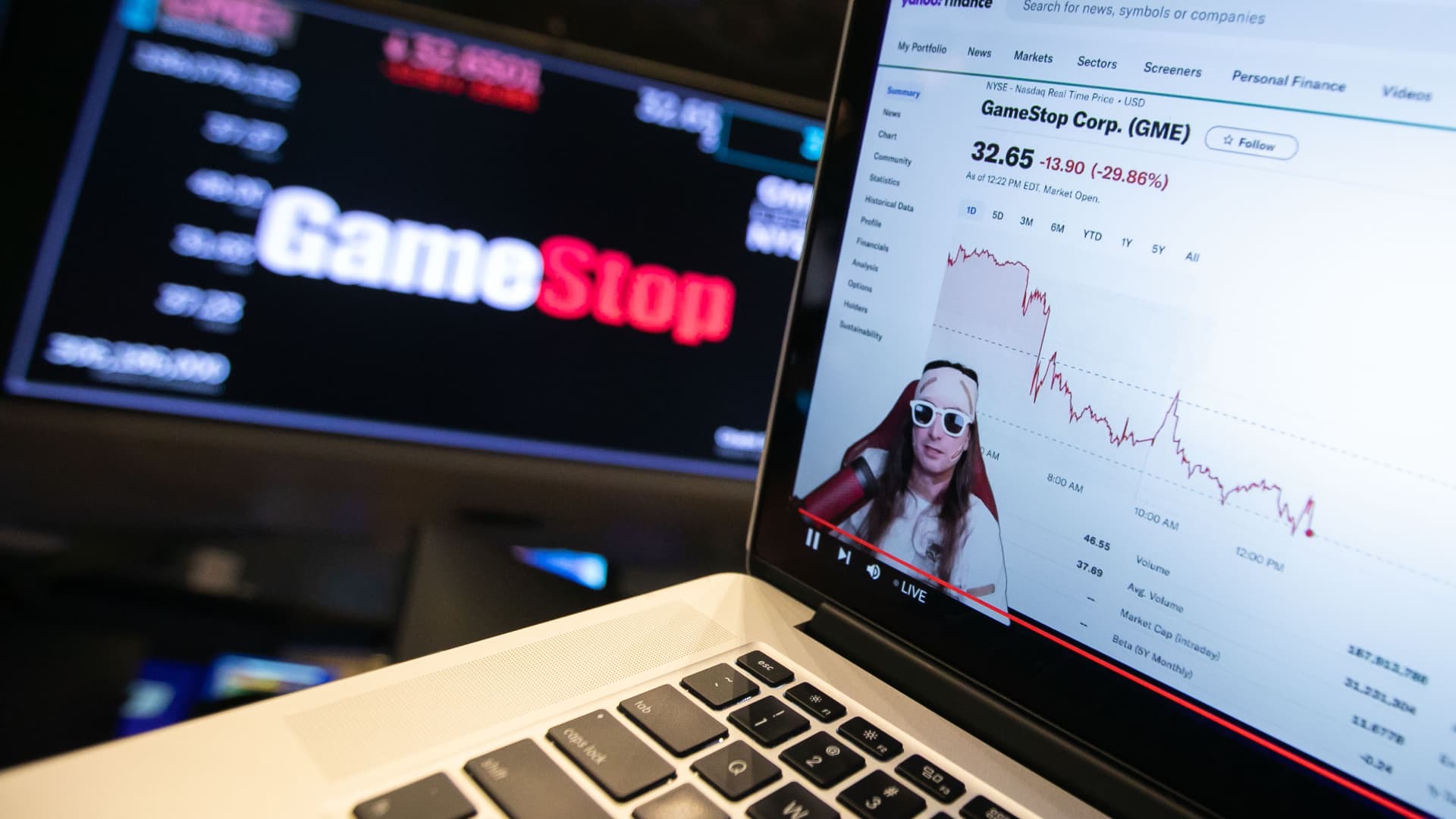
Five years after the GameStop mania, retail investors have become a force Wall Street can't ignore
CNBC· 2026-01-27 11:21
Core Insights - The influence of retail investors has proven to be more durable and long-lasting than expected, reshaping trading dynamics and pushing hedge funds to adapt [1][2] Retail Investor Participation - Retail trading participation in U.S. equities has risen to nearly 20% of daily trading volume, up from low single digits before the COVID-19 pandemic [4] - On high-volume days, retail participation can reach close to 40%, and in options trading, it can be as high as 50% [5] Market Dynamics - The retail investor community has become a persistent force in equity markets, providing a steady source of dip-buying flows that have supported one of the longest bull markets on record [2] - Hedge funds have learned to respect retail investors, who can mobilize capital quickly and influence market movements [10][11] Evolution of Retail Investors - Retail investors are now more informed and engaged, utilizing various tools and resources to make investment decisions [8] - The democratization of access to markets and information has significantly changed the landscape for retail investors [9] Wealth Transfer and Future Trends - A significant generational wealth transfer is expected, with millennials and Gen Z set to inherit approximately $120 trillion over the next 20 years, potentially increasing retail participation [16][17] - Brokerage firms are adapting to cater to younger investors, offering 24/7 trading and access to cryptocurrencies and private market offerings [17] Cultural Impact - The GameStop saga and the rise of meme stocks have left a mark on popular culture, influencing media representations such as the film "Dumb Money" [6][7]

‘Big Short' Investor Michael Burry Says He's Betting on This OG Meme Stock
Investopedia· 2026-01-26 23:20
Core Insights - Michael Burry, a notable investor known for predicting the 2008 financial crisis, has expressed confidence in GameStop (GME) by revealing his ownership and recent purchases of the stock [1][2]. Company Performance - GameStop has faced challenges in reinventing its business model due to declining sales, leading to store closures [3]. - Following Burry's announcement, GameStop shares increased by over 4% on Monday, contributing to a rally that has seen the stock gain approximately 20% of its value in 2026, although it remains significantly below the highs of early 2021 [3]. Management and Strategy - Burry has criticized GameStop CEO Ryan Cohen, suggesting that the current business is poorly managed and that Cohen is leveraging the meme stock phenomenon to raise capital for future investments in more promising ventures [4]. - GameStop is attempting to redefine its strategy by expanding its collectibles business and investing in Bitcoin [4].
Meme Stocks Turn 5. Will There Ever Be Another GameStop?
Barrons· 2026-01-23 06:00
Core Insights - The meme stock phenomenon has significantly altered market dynamics, leading to a shift in how retail investors engage with the stock market [1] - While retail investors have achieved some victories, the overall impact on their long-term investment success remains uncertain [1] Group 1: Market Changes - The rise of meme stocks has prompted Wall Street to adapt its strategies, indicating a transformation in traditional investment approaches [1] - Retail investors have leveraged social media platforms to influence stock prices, showcasing their growing power in the market [1] Group 2: Retail Investor Outcomes - Despite some short-term gains, retail investors may face challenges in sustaining their success against institutional investors [1] - The volatility associated with meme stocks raises questions about the sustainability of retail investor strategies in the long run [1]

Tuttle Capital Management Launches the Tuttle Capital Meme Stock Income Blast ETF (MEMY)
TMX Newsfile· 2026-01-20 14:02
Core Viewpoint - Tuttle Capital Management has launched the Tuttle Capital Meme Stock Income Blast ETF (CBOE: MEMY), which aims to provide current income and equity exposure to "Meme Stocks" through an options-based strategy [1][2]. Group 1: ETF Overview - MEMY is an actively managed ETF that targets income generation and equity performance of meme stocks, which are popular among retail investors due to social media influence [2][6]. - The fund will hold a portfolio of 15 to 30 meme stocks and implement a systematic put-spread program to generate income while maintaining equity-like exposure [3][6]. Group 2: Investment Strategy - The ETF's strategy involves identifying trending meme stocks through social media sentiment analysis and providing economic exposure to these stocks [7]. - MEMY employs a systematic put-spread strategy, selling near-the-money put options and buying further out-of-the-money puts, allowing for potential unlimited upside while generating option premium [7][8]. - The fund's structure is designed to capitalize on the high implied volatility of meme stocks, which can create unique opportunities in the options market [4][7]. Group 3: Market Context - Meme stocks have disrupted traditional market dynamics, often trading based on sentiment rather than fundamentals, leading to extreme volatility [4][5]. - The CEO of Tuttle Capital Management emphasized that meme stocks represent asymmetrical investment opportunities driven by a new generation of retail investors [5].