
Interest Rates

Search documents
X @Bloomberg
Bloomberg· 2025-11-24 05:11
Israel’s central bank is set to lower interest rates on Monday for the first time in almost two years https://t.co/m4WEw0xUxR ...
X @The Wall Street Journal
The Wall Street Journal· 2025-11-22 01:01
The president expects his next Fed chair to lower rates, but growing internal opposition shows the limits of a leadership change—and threatens to end decades of consensus. https://t.co/kHfeQ5nTnT ...
Dollar Posts Modest Gains as US Consumer Sentiment Revised Higher
Yahoo Finance· 2025-11-21 20:32
Core Insights - The dollar index reached a 5.5-month high but ended the day with a slight increase of +0.03% due to mixed signals from Federal Reserve officials and consumer sentiment data [1][2] Economic Indicators - The University of Michigan's US November consumer sentiment index was revised upward by +0.7 to 51.0, surpassing expectations of 50.6 [3] - The US November S&P manufacturing PMI decreased by -0.6 to 51.9, aligning closely with expectations of 52.0 [2] Federal Reserve Commentary - New York Fed President John Williams indicated potential for a rate cut in the near term, citing increased downside risks to employment and eased upside risks to inflation [4] - Boston Fed President Susan Collins expressed that maintaining steady interest rates is appropriate for now, given the likelihood of sustained elevated inflation [4] - Dallas Fed President Lorie Logan stated that further rate cuts would be difficult unless clear evidence of faster-than-expected inflation decline or a cooling labor market emerges [5] Market Expectations - The market is pricing in a 66% probability that the Federal Open Market Committee (FOMC) will implement a 25 basis point rate cut at the upcoming meeting on December 9-10 [5]
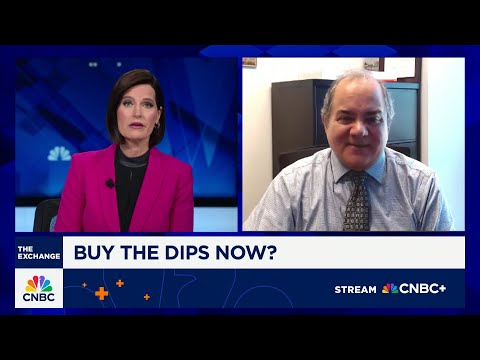
Time to 'buy the dip' as resilience remains evident through economic data: Oppenheimer's Stoltzfus
CNBC Television· 2025-11-21 18:51
John Sulfus, chief investment strategist at Oppenheimer is joining me now. Okay. So, where are you looking for the opportunities amid all this bubble talk and excuse me, but the roller coaster that is the market right now.>> Well, great to be on the show with you today, Contessa, especially on really where the Fed has been so kind to us, you know, great to hear from the New York Fed and from the Boston Fed today and see the market rally the way it is. Uh we think you know where we stand right now it really ...

X @Anthony Pompliano 🌪
Anthony Pompliano 🌪· 2025-11-21 15:07
The Fed should cut rates 50 basis points in December. ...
The Search For Market Direction
Seeking Alpha· 2025-11-21 12:30
Group 1: Market Trends and Economic Indicators - The National Retail Federation forecasts a record-breaking Black Friday, indicating strong consumer spending despite economic uncertainties [3] - There is a disconnect between positive economic data and the experiences of average Americans, leading to confusion regarding interest rates and the impact of AI investments [5] - The Nasdaq Composite experienced significant volatility, initially rising due to Nvidia's earnings but ultimately closing down 2.2%, marking a major intraday reversal [6] Group 2: Stock Market Performance - Major indices are showing signs of a potential market correction, with the Dow Jones down 5.2%, S&P 500 down 5.1%, and Nasdaq down 7.8% from recent highs [7] - Stock futures are stable but investors are expressing concerns about broader economic bubbles, including in AI, cryptocurrency, and housing markets [8] Group 3: Company-Specific News - Walmart reported better-than-expected earnings and is moving its listing to Nasdaq [9] - Abbott announced a $21 billion all-cash acquisition of Exact Sciences [10] - Verizon plans to cut over 13,000 jobs as part of a cost-cutting strategy [9]

Best money market account rates today, November 21, 2025 (up to 4.26% APY return)
Yahoo Finance· 2025-11-21 11:00
Core Insights - The Federal Reserve has cut the federal funds rate three times in 2024 and recently made a second cut in 2025, leading to a decline in deposit interest rates, including money market account (MMA) rates [1] - The national average rate for MMAs is currently 0.59%, while top high-yield accounts offer rates exceeding 4% APY, significantly higher than the national average [2][9] Group 1: Money Market Account Rates - The importance of comparing MMA rates is emphasized, as interest rates vary widely among banks, particularly online banks and credit unions, which often provide competitive offers [3][4] - Online banks have lower overhead costs due to their web-based operations, allowing them to offer higher deposit rates and lower fees [4] - Credit unions, as not-for-profit financial cooperatives, also provide competitive rates and fewer fees, although membership requirements may apply [5] Group 2: Features and Considerations of Money Market Accounts - Money market accounts are suitable for short-term savings goals, offering higher interest rates than regular savings accounts and easier access to funds compared to certificates of deposit (CDs) [5][7] - These accounts are considered low-risk and are FDIC-insured up to $250,000 per depositor, per institution, making them safer than money market funds [6] - Many MMAs require a minimum balance to earn the highest advertised rate, and failure to maintain this balance may result in fees or lower rates [6] Group 3: Access and Usage of Funds - While MMAs allow access to funds, they may limit the number of transactions per month, which is a consideration for those needing frequent access [7] - MMAs are recommended for individuals who want to earn more interest than a regular savings account without locking funds in a CD and can maintain the minimum balance to avoid fees [7][8]
Goldman Sachs Just Delivered Bad News for U.S.
The Motley Fool· 2025-11-21 09:25
Core Viewpoint - Goldman Sachs predicts that the S&P 500 will achieve an average annual gain of only 6.5% over the next decade, a significant decrease from the historical average of around 10% [2] Valuation Concerns - U.S. stocks are currently considered expensive, with the S&P 500's trailing price-to-earnings ratio near a multiyear high of 23 [4] - The valuation issue is exacerbated by a few large companies in the AI sector, which may lead to a broader market correction, potentially reducing market progress by about 1% per year through 2035 [5] Interest Rates Impact - The widening of the S&P 500's profit margins since 1990 has been largely due to falling interest rates and corporate tax rates, neither of which are expected to decline significantly in the next decade [6] Strategic Adjustments - Investors are encouraged to diversify their portfolios by considering stocks outside the current market favorites [7] - International markets, particularly in Japan and Asia, are projected to perform better, with average market growth outlooks of 8.2% and 10.3% respectively, and emerging markets expected to yield 10.9% annualized returns through 2035 [8] Spotlight on Foreign Stocks - Companies like Alibaba and MercadoLibre are highlighted as potential investment opportunities, with Alibaba focusing on AI for growth and MercadoLibre benefiting from the rise of web-connected smartphones in South America [9] Currency Dynamics - Both Alibaba and MercadoLibre's American depositary receipts are denominated in U.S. dollars, which may provide an additional 2 percentage points of net growth annually as the dollar is considered overvalued [11] Importance of Dividends - Dividends are expected to play a crucial role in total returns across all regions, benefiting dividend-focused companies like Coca-Cola and pharmaceutical firms such as Pfizer and Merck [12][13] Market Adaptation - Investors are advised to adapt their strategies in response to changing market conditions, including interest rates, government debt, and competitive dynamics introduced by AI [15]


X @Bloomberg
Bloomberg· 2025-11-21 03:58
Global investors snapped up the most Philippine shares in more than two years, on expectations the central bank will cut interest rates next month to bolster economic growth https://t.co/8w1WrmADxu ...