
Defense Spending

Search documents
Defense stocks report Q2 results: Here's what to know
CNBC Television· 2025-07-22 12:33
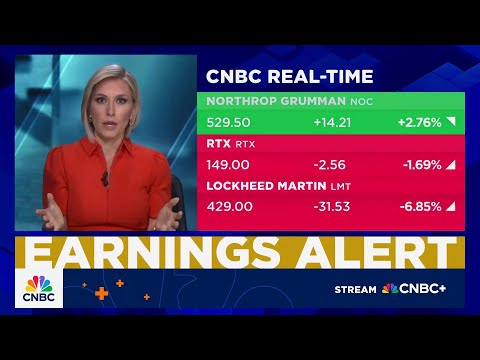
Morgan Brennan has uh the defense names on the move this morning after earnings. Dom Chu has some other key names to watch. Morgan, we'll start with you.All right, good morning, Andrew. Well, it's a mixed picture for defense today as those earnings get underway. North of Grman higher on a beat and a raise.The B2 bomber maker getting a boost from its Sentinel ballistic missile and B21 bomber programs. RTX though, that was lower down about 2% here in pre-market after trimming fullear profit guidance. higher c ...


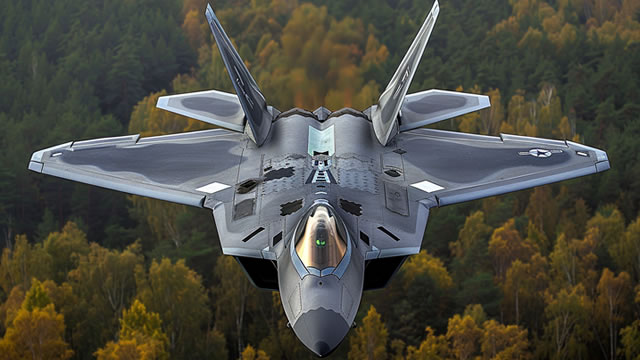
Could Buying Lockheed Martin Stock Today Set You Up for Life?
The Motley Fool· 2025-07-20 05:05
Investment Case for Lockheed Martin - The investment case for Lockheed Martin is supported by the ongoing need for defense equipment and services, particularly in the context of geopolitical conflicts and increasing defense budgets, including a proposed record U.S. defense budget of $1.01 trillion [1] - Lockheed Martin specializes in missile defense and tactical missiles, aligning with U.S. spending priorities [2] - The company has a significant backlog of $173 billion, equating to 2.3 years of sales based on management's guidance for 2025 revenue, with the U.S. government as a reliable customer [2] Valuation Metrics - Management's guidance indicates earnings per share of $23.15 and free cash flow of $6.7 billion, leading to valuations of 17.2 times earnings and 16.3 times free cash flow, which are attractive given the company's growth prospects [3] Execution Challenges - Lockheed Martin faces execution challenges, particularly highlighted by the Department of Defense's decision to reduce F-35 procurement, focusing instead on making existing F-35s mission-capable [4][5] - The F-35 program has experienced significant cost overruns and delays, impacting confidence in Lockheed Martin's ability to grow margins [5][9] - The loss of the next-generation air dominance contract to Boeing is also attributed to issues with the F-35 program [6] Long-term Defense Spending Concerns - There are concerns regarding the sustainability of long-term government spending on defense, especially in light of rising U.S. public debt to GDP ratios [7][9] - The ability to predict future global defense priorities remains uncertain, which could impact defense spending [10] Overall Assessment - While defense stocks may appear undervalued, Lockheed Martin's specific issues with the F-35 may limit its attractiveness as an investment for significant long-term returns [11]
Worldwide Exchange: ETF Flows Week of July 14
CNBC Television· 2025-07-18 11:35
ETF Market Inflows and Trends - Year-to-date net inflows into ETFs reach $623 billion, on track for another trillion-dollar year [2] - The industry is potentially heading towards $1.3 trillion in flows for the entire year, driven by low-cost and active strategies [3] - Stronger sector flows observed in the past three months compared to the prior three months, indicating tactical adjustments and improving sentiment [3][4] Communication Services ETFs (XLC) - Increased inflows driven by price and fundamental momentum, with the sector outperforming the broader market [4] - Communication services is the only sector with increased earnings estimates over the last three months, largely due to AI [5] - Beneficiary of the "one big beautiful bill act" due to high R&D expenditure that can be expensed at a higher rate, boosting cash flow [5] - Considered a safe haven due to its service-oriented nature, making it less impacted by tariffs [5] Small Cap ETFs - July saw $2 billion of outflows, contributing to net outflows year-to-date, reflecting a less robust economic outlook [6] - Small caps face challenges due to below-trend growth expected in 2025 and 2026, high interest costs, and significant debt financing [6][7] - Small caps have experienced negative earnings growth over the last three years, contrasting with the sizable positive earnings growth of large caps [7] - Sentiment favors large caps with AI tech benefits, higher cash flow, and less debt service, making them less tied to the economic cycle [8] ETF Recommendations for Current Market - Communication Services ETF (XLC) is recommended due to fundamental momentum, high earnings expectations, cash flow, earnings revisions, and limited tariff exposure [11][12] - Aerospace and Defense ETF (XR) is suggested due to macro momentum from increased defense spending driven by geopolitical conflicts [12][13]

Aerospace & Defense ETF (XAR) Hits New 52-Week High
ZACKS· 2025-07-17 10:00
Group 1 - The SPDR S&P Aerospace & Defense ETF (XAR) has reached a 52-week high and is up 58.9% from its 52-week low price of $137.09 per share [1] - The S&P Aerospace & Defense Select Industry Index represents the aerospace and defense sub-industry within the S&P Total Stock Market Index, which tracks all U.S. common stocks listed on major exchanges [1] - The fund charges an annual fee of 35 basis points [1] Group 2 - The aerospace and defense sector is experiencing increased attention due to a complicated geopolitical landscape and rising defense spending by global economies [2] - Europe is enhancing its military capabilities and significantly increasing defense spending to reduce reliance on the United States, positively impacting the fund [2] - Escalating geopolitical tensions in Asia are also expected to boost the fund's prospects [2] Group 3 - XAR currently holds a Zacks ETF Rank 2 (Buy) with a medium risk outlook, indicating potential for continued strong performance [3] - The fund has a positive weighted alpha of 56.91, suggesting further rally potential [3]

X @Bloomberg
Bloomberg· 2025-07-17 04:14
Ukraine is set for the biggest government shake-up since Russia’s full-scale invasion as the country faces a pressing need to find more money for its defense following failed diplomatic efforts to end the war. https://t.co/VJCgzStQnS ...
X @The Wall Street Journal
The Wall Street Journal· 2025-07-16 17:55
From @WSJopinion: The next decade will be one of the most dangerous yet most transformational periods the world has seen. More defense spending is necessary but not enough. We also need cooperation on trade and technology, writes @RishiSunak. https://t.co/wKC8z9kzuE ...
X @Bloomberg
Bloomberg· 2025-07-15 18:38
Donald Trump’s plan to allow the European Union pay for arms supplied to Ukraine is piling pressure on EU officials negotiating how to finance the bloc’s defense-spending ambitions https://t.co/vdMRJ6KViI ...
Trump Threatens Russia with 100% Tariffs | Bloomberg Markets 7/14/2025
Bloomberg Television· 2025-07-14 19:10
Market Trends & Dynamics - S&P 500 is fluctuating around flat territory, attempting to break into the green [1] - Bitcoin is elevated, trading under $120,000, with anticipation for "Crypto Week" in Washington [2][29] - Lower is down about 1.5%, slightly impacting the S&P [2] Geopolitical & Economic Impact - Potential for 100% secondary tariffs on Russia if a deal to end the war in Ukraine isn't reached in 50 days [3][6] - Discussion of secondary tariffs on countries buying Russian oil and gas, like China and India [7] - Legislation proposed with a potential 500% secondary tariff on countries aiding Russia [8] Defense & Technology Spending - NATO countries have agreed to spend 5% of their GDP on defense [11][15] - Increased defense spending is driving growth for defense tech companies [15] - A private investment firm sees private defense tech companies achieving meaningful revenue scale and potentially going public [17] Electric Vehicle (EV) & Battery Industry - Panasonic's new $4 billion battery plant is expected to reach full production this year [33] - The battery industry faces potential headwinds for battery demand due to a new bill [40] - Despite potential demand pushback, new battery supply is expected to drive battery prices down [41][42]

X @Bloomberg
Bloomberg· 2025-07-13 18:56
Defense Spending & Geopolitical Risk - France will make a "new" and "historic" effort to increase defense spending [1] - The increase in defense spending aims to counter an acceleration of threats to freedom in Europe [1] - The increased spending also addresses the risk of outright war in the coming years [1]
X @Bloomberg
Bloomberg· 2025-07-10 09:41
Defense Spending & Geopolitical Context - European countries are increasing defense spending due to a resurgent threat from Russia [1] - The spending amounts to hundreds of billions of dollars [1] Military Strategy - European countries are rebuilding their armies by utilizing part-timers, conscripts, and reserves [1]