Dividend King

Search documents
1 Reason Every Investor Should Know About Medtronic (MDT)
Yahoo Finance· 2025-09-17 13:45
Core Insights - Medtronic is on track to achieve Dividend King status, which is significant for income investors as it highlights the company's long-term commitment to dividend growth [2][7] - The company has a strong history of dividend increases, starting from a modest payout in 1977 to the current level of $0.71 per share [3] - Medtronic's revenue for the most recent fiscal year reached $33.5 billion, marking a nearly 4% increase, while net income surged by 27% to approximately $4.7 billion, resulting in a bottom-line margin of 14% [5] Company Performance - All four of Medtronic's business segments have shown sales growth, with increases ranging from under 1% to nearly 6% in the latest quarter [4] - Despite concerns about the pace of new product development, Medtronic remains a vital player in the medical supply chain, with consistent demand for its products [6] Investment Appeal - The current dividend yield for Medtronic is over 3%, and the company is expected to continue raising its dividend, making it an attractive option for income-focused investors [6] - Medtronic's nearly 50-year history of annual dividend increases positions it favorably, although it is not typically recognized as a dividend stock [7]

Altria Is One of the Top Dividend Stocks Investors Can Buy in September
Yahoo Finance· 2025-09-16 20:20
Core Viewpoint - Altria, a major player in the tobacco industry, has shown strong stock performance in 2025, driven by its consistent dividend payments and pricing power despite declining sales volume due to reduced smoking rates among U.S. adults [2][5]. Group 1: Stock Performance - Altria's stock has outperformed the market in 2025, increasing nearly 24% compared to the S&P 500's 12.4% gain [2]. - The stock has experienced both up and down years over the past decade, but recent gains have been welcomed by investors [1]. Group 2: Dividend Appeal - Altria has increased its dividend annually for 56 consecutive years, earning the title of Dividend King [4][3]. - The current dividend yield is approximately 6.4%, which raises concerns about potential cuts, but the company's long history of dividend increases provides reassurance [4]. Group 3: Financial Stability - Altria's free cash flow per share was $5.16 over the last 12 months, which is sufficient to cover the projected dividend payout of $4.24 per share in the next four quarters [6]. - The company possesses pricing power that helps maintain steady cash flow despite declining sales volume [5]. Group 4: Future Considerations - While Altria's sales volume has decreased, the company is exploring new revenue streams, including sustainable smokeless and nontobacco options [5]. - Analysts have identified other stocks as potentially better investment opportunities than Altria, suggesting a need for careful consideration before investing [7].

W.W. Grainger, Inc. (GWW): A Bull Case Theory
Yahoo Finance· 2025-09-16 18:03
Core Thesis - W.W. Grainger, Inc. is positioned as a resilient and essential player in the U.S. economy, with a strong financial track record and a commitment to dividend reliability [2][4][5] Company Overview - Founded in 1927, W.W. Grainger has evolved from a small distributor of electric motors to a global industrial supply giant, generating nearly $18 billion in annual revenue and serving over 4.5 million customers [2] - The company operates nearly 2,000 branches and large distribution centers, supported by an advanced online industrial supply platform [3] Financial Performance - Grainger is recognized as a Dividend King, having increased dividends for 53 consecutive years, currently paying $7.44 per share quarterly, which translates to $29.76 annually [4] - The company maintains a modest yield of approximately 0.8% with a low payout ratio of 20-25%, indicating conservative capital management and room for reinvestment [4] - Operating margins are around 14%, and Grainger consistently returns over $1 billion annually to shareholders through dividends and buybacks [4] Competitive Advantage - Grainger's resilience is highlighted by its ability to navigate economic challenges, including the Great Depression and various recessions, through financial discipline and early investments in logistics and e-commerce [3] - The company's reputation for reliability and customer loyalty in mission-critical products positions it as a hidden yet essential player in the economy [5]

1 Reason to Buy Altria Stock Before Sept. 15
Yahoo Finance· 2025-09-11 16:29
Group 1 - Altria is one of the largest tobacco companies globally, known for brands like Marlboro and Copenhagen, attracting investors primarily for its high-yield and growing dividend [1] - The ex-dividend date for Altria is September 15, meaning investors must own shares by this date to receive the next dividend payout scheduled for October 10 [2] - Altria recently increased its quarterly dividend to $1.06 per share, marking the 56th consecutive year of dividend increases, earning it the title of Dividend King [4] Group 2 - Altria's current dividend yield is approximately 6.16%, which is significantly higher than the S&P 500's average of 1.2% [5] - The stock has seen a 26% increase in 2025, although past performance should not be expected to continue year after year [5] - Altria was not included in a recent list of the top 10 stocks recommended by analysts, suggesting that there may be other investment opportunities with potentially higher returns [6][7]
S&P Global: I'm Adding The Newest Dividend King To My Roth IRA
Seeking Alpha· 2025-09-07 13:50
Core Insights - The article discusses the investment philosophy of a 30-year-old investor who focuses on high-quality U.S.-based growth stocks, low-cost diversified index funds, and select alternative assets like gold, silver, and cryptocurrency [1] - The investor's portfolio is designed for long-term compounding, balancing individual company conviction with broad market exposure [1] - The investor has a professional background in IT and data analytics, which aids in understanding large-cap technology companies that are central to their equity holdings [1] - The investor also explores opportunities in REITs, dividend growth stocks, and other industries with favorable risk-reward dynamics [1] - The investor's passion for finance was ignited during their MBA studies, where they developed a strong foundation in fundamental analysis, accounting, and portfolio construction [1] - The investor aims to provide insights for younger investors to help them build wealth and navigate market cycles [1]

Northwest Natural: Dividend King With A Strong 4.7% Yield
Seeking Alpha· 2025-09-04 15:51
Group 1 - The article promotes Ian's Insider Corner, which offers access to investment reports, trade alerts, and a chat room for members [1] - Ian Bezek, a former hedge fund analyst, has extensive experience in Latin American markets and specializes in high-quality growth stocks [2] Group 2 - The article includes a disclosure stating that the author has a beneficial long position in specific stocks and expresses personal opinions [3] - Seeking Alpha clarifies that past performance does not guarantee future results and that the views expressed may not reflect the platform's overall stance [4]



New Motley Fool Research Reveals the 10 Largest Consumer Staple Companies. Here's Which Dividend King Is Still Flying Under the Radar.
The Motley Fool· 2025-08-30 14:06
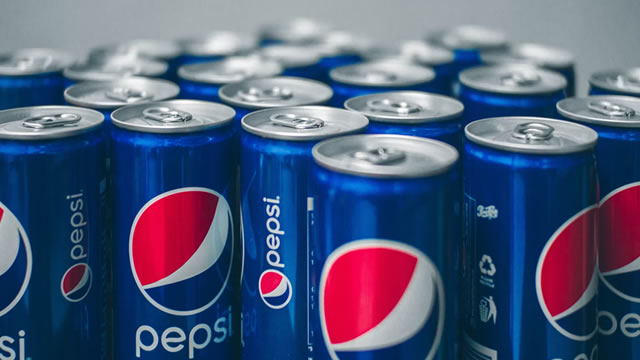
Group 1 - Consumer staples companies, including PepsiCo, are generally resilient but can fall out of favor, as seen with PepsiCo's recent performance [1][8] - PepsiCo ranks as the 7th largest consumer staple company with a market cap of approximately $200 billion, and it is one of the most diversified companies in the sector, with strong positions in beverages, snacks, and packaged foods [2][3][5] - PepsiCo has a strong brand recognition and competes effectively in distribution, marketing, and product development, positioning itself as an industry consolidator [6] Group 2 - PepsiCo is a Dividend King, having increased its dividend for 53 consecutive years, indicating a robust business model [7] - Despite being a Dividend King, PepsiCo has lagged behind peers like Coca-Cola, with only 2.1% organic sales growth compared to Coca-Cola's 5% [8] - PepsiCo's stock has declined over 20% from its 2023 highs, marking it as the worst performer among Dividend Kings [9] Group 3 - The current market negativity towards PepsiCo may present a long-term investment opportunity, as the company has a history of overcoming challenges [10] - Recent strategic moves, including acquisitions, and a rising dividend yield of 3.8% suggest that PepsiCo stock is currently undervalued [10][11] - Over the past three months, PepsiCo has been the best-performing stock among the top 10 consumer staples, indicating a potential recovery [12]



Could Walmart Become a Trillion-Dollar Company?
The Motley Fool· 2025-08-30 07:55
Core Insights - Walmart is on a trajectory towards a trillion-dollar market cap, currently valued at approximately $767 billion, making it the largest consumer staples company globally [1][4][11] Company Overview - Walmart operates a diversified business model that includes club stores, grocery stores, and superstores, unlike Costco, which focuses solely on club stores [3][4] - The market cap of Walmart exceeds that of Costco by over $350 billion, with Costco's market cap around $415 billion [4] Financial Performance - Walmart has achieved the status of Dividend King, with over five decades of annual dividend increases, indicating a strong and resilient business model [5] - The company is focused on profit growth rather than merely increasing store count, having fewer stores now than in fiscal 2016 [6] Market Capitalization Insights - Market cap is calculated by multiplying stock price by the number of outstanding shares, serving as an indicator of company growth [8][9] - Walmart's stock appears expensive based on its price-to-sales, price-to-earnings, and price-to-book-value ratios, all above their five-year averages [10] Long-term Outlook - Despite current valuation concerns, Walmart's historical performance and inflationary trends suggest continued growth, making it a potential long-term investment opportunity [11]


Warren Buffett's Berkshire Hathaway Reveals Over a Billion Dollars in Recent Trading, and This Dividend King Steel Stock Is on the List
The Motley Fool· 2025-08-25 10:09
Group 1: Investment Overview - Berkshire Hathaway recently invested $1.8 billion in Nucor, a leading steelmaker, along with two major homebuilders, D.R. Horton and Lennar, indicating a bullish outlook on economic growth and demand in cyclical sectors [4] - Nucor has a strong track record of increasing dividends for 52 consecutive years, making it a notable choice for income-seeking investors [2][9] Group 2: Competitive Advantages - Nucor utilizes a pioneering strategy of electric arc furnaces, known as mini-mills, which provide benefits such as lower carbon emissions, increased production flexibility, and reduced costs through the use of recycled scrap metal [5] - The company's shares are currently trading at about 13 times forward earnings, significantly cheaper than the S&P 500's average of around 22 times, suggesting a favorable valuation for potential earnings growth [6] Group 3: Growth Catalysts - Nucor has several capital projects nearing completion, including a rebar micro mill in North Carolina, a melt shop in Arizona, and a coating complex in Indiana, which are expected to drive future growth [7] - The demand for steel is anticipated to increase due to new semiconductor fabrication facilities, utility industry expansion, and data center development projects [7] Group 4: Financial Strength and Dividend - Nucor's dividend yield is approximately 1.5%, higher than the S&P 500's average of 1.2%, supported by robust cash flows and a strong balance sheet [10] - In the first half of the year, Nucor paid $258 million in dividends, which is less than a quarter of its $1.1 billion in operating cash flow, indicating strong financial health [10] - The company has returned a minimum of 40% of its annual net earnings to shareholders through dividends and share repurchases, having retired 27% of its outstanding shares since 2017 [11]


The Motley Fool Just Ranked the Biggest Consumer Staples Stocks. Here's Why the No.
The Motley Fool· 2025-08-24 15:38
Core Viewpoint - PepsiCo is highlighted as a potentially "recession-proof" investment opportunity due to its strong business model and history of dividend increases, despite current challenges affecting its stock price [2][7]. Company Overview - PepsiCo is a leading player in the consumer staples sector, focusing on food and beverages, with well-known brands like Pepsi, Frito-Lay, and Quaker Oats [5]. - The company has a market capitalization of approximately $200 billion, providing it with the ability to consolidate promising brands and adapt to consumer preferences [5]. Business Model Strength - PepsiCo's business model is characterized by its resilience during economic downturns, as consumer staples are essential items that maintain steady demand [3]. - The company has a strong dividend history, being classified as a Dividend King with over five decades of annual dividend increases, indicating reliable execution and a solid business model [6]. Current Challenges - Despite its strengths, PepsiCo is currently facing challenges, with its stock price down over 20% from its 2023 highs, placing it in a personal bear market [9]. - The company's dividend yield has increased to 3.8%, providing an attractive income stream for investors during uncertain economic times [8]. Investment Considerations - Investing in PepsiCo may be beneficial during a recession, as consumer staples are viewed as safe haven stocks, potentially leading to better stock performance even in a bear market [10]. - Recent acquisitions, including a Mexican-American food maker and a pre-biotic beverage company, suggest that PepsiCo is returning to strategies that have historically driven long-term growth [12].