
Value Stocks

Search documents
11 Best Value Dividend Stocks to Buy Now
Insider Monkey· 2025-09-29 12:14
Core Insights - The article discusses the performance of value stocks, particularly those that pay dividends, highlighting their historical outperformance compared to growth stocks [2][4]. Value Stocks Performance - Value stocks, defined by low price-to-book ratios, have outperformed growth stocks by an average of 2.5% annually since 1926 [2]. - The trend of value stocks outperforming growth stocks was disrupted during the global financial crisis from 2007 to 2020, but value stocks regained some traction in 2020 before losing ground again in late 2022 [2]. Investment Strategy - Joseph H. Davis from Vanguard emphasizes the importance of broad diversification and focusing on undervalued stocks to mitigate risks associated with market transformations, such as those driven by artificial intelligence [3]. Methodology for Stock Selection - The article utilizes Insider Monkey's Q2 2025 database to identify dividend stocks with forward P/E ratios below 25 as of September 26, ranking them based on hedge fund interest [6]. Company Highlights - **Eli Lilly and Company (NYSE: LLY)** - Forward P/E as of September 26: 23.70 - Major revenue drivers include Mounjaro, Zepbound, and Verzenio, which contributed to 65% of Q2 revenue of $15.6 billion, with growth rates between 12% and 172% [9]. - R&D expenses increased by 23% year-over-year to $3.3 billion, representing over 21% of revenue [10]. - The company has raised dividends for 11 consecutive years, currently offering $1.50 per share with a yield of 0.83% [11]. - **Abbott Laboratories (NYSE: ABT)** - Forward P/E as of September 26: 23.42 - Declared a quarterly dividend of $0.59 per share, maintaining a 53-year streak of dividend increases, with a yield of 1.77% [13]. - The FreeStyle Libre glucose monitoring system has become a significant growth driver despite a decline in COVID-19 test sales [14]. - **Illinois Tool Works Inc. (NYSE: ITW)** - Forward P/E as of September 26: 22.47 - Focuses on efficiency and customer-driven innovation, with a strategy that emphasizes operational improvements and disciplined portfolio management [15][16]. - Announced a 7.3% increase in its quarterly dividend to $1.61 per share, extending its dividend growth streak to 53 years, with a yield of 2.47% [17].



Viatris: Indore Plant Could Boost 2026 Numbers (NASDAQ:VTRS)
Seeking Alpha· 2025-09-25 17:16
Group 1 - The Conservative Income Portfolio focuses on value stocks with high margins of safety and aims to reduce volatility through well-priced options [1][2] - The Enhanced Equity Income Solutions Portfolio is designed to generate yields of 7-9% while minimizing volatility [1] - The Covered Calls Portfolio aims for lower volatility income investing with an emphasis on capital preservation [1][2] Group 2 - Trapping Value is a team of analysts with over 40 years of combined experience in generating options income and capital preservation [2] - The investing group operates the Conservative Income Portfolio in partnership with Preferred Stock Trader, featuring two income-generating portfolios and a bond ladder [2]


AerCap: Still Has Plenty Of Upside Ahead (NYSE:AER)
Seeking Alpha· 2025-09-24 13:17
Group 1 - AerCap (AER) has experienced a significant increase of 27% in 2025, outperforming the index despite the general decline of value stocks compared to technology stocks [1] Group 2 - The article highlights the importance of fundamental analysis in identifying investment opportunities that are undervalued and present a favorable risk/reward profile [2] Group 3 - The analyst has a beneficial long position in AerCap shares, indicating confidence in the company's future performance [3] Group 4 - The article does not provide any specific recommendations or advice regarding investment suitability for individual investors [4]


Is the Worst Over for UnitedHealth Group Stock?
Yahoo Finance· 2025-09-24 11:10
Group 1 - UnitedHealth Group's stock has experienced significant volatility this year, hitting new lows but recently showing signs of recovery [2][3] - The company has faced challenges including a CEO change and disappointing quarterly results, but it has provided a positive outlook for the upcoming year [3][4] - For 2026, UnitedHealth anticipates that approximately 78% of its members will be enrolled in highly rated Medicare plans, which will lead to larger government payments [4] Group 2 - UnitedHealth reaffirmed its adjusted earnings per share forecast for 2025, projecting at least $16 per share, which is below Wall Street's expectations but indicates stability [5] - The stock price has increased significantly since Berkshire Hathaway's investment, rising from around $270 to over $336, suggesting renewed investor confidence [6][7] - The company has been underperforming relative to analyst expectations, but the reaffirmation of guidance indicates potential stability ahead [8]

WTV: Value Stocks Could Lead Into Year-End As Inflation Runs Hot
Seeking Alpha· 2025-09-21 03:50
Group 1 - The current economic environment reflects a 1970s vibe, with the Federal Reserve expected to maintain a hot economy for the next few quarters, raising inflation concerns [1] - The Trump administration is likely to appreciate the Fed's approach, which may influence market dynamics and investor sentiment [1] Group 2 - The article does not provide specific company or industry insights, focusing instead on broader economic trends and investor behavior [2][3][4]
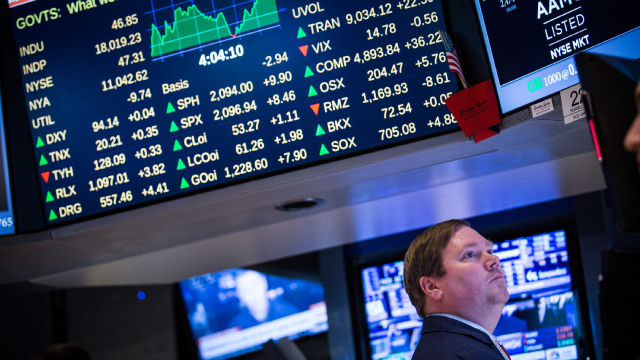
Are Magnificent 7 stocks overpriced? Here are alternatives.
Yahoo Finance· 2025-09-19 09:03
Core Viewpoint - The "Magnificent Seven," comprising Amazon, Apple, Alphabet (Google), Meta, Microsoft, Nvidia, and Tesla, have significantly outperformed the S&P 500, achieving a collective gain of 698% from 2015 to 2024, compared to the S&P 500's 178% return during the same period [1][2]. Group 1: Performance and Market Impact - The Magnificent Seven accounted for 12% of the S&P 500's total market value in 2015, which increased to 34% by 2025 [2]. - Nvidia, Meta, and Alphabet have seen stock price increases of 28%, 31%, and 32% respectively as of mid-September 2025 [8]. - The success of the Magnificent Seven has reshaped the stock market, positioning them at its core [13]. Group 2: Valuation Concerns - Current market forecasts suggest that the Magnificent Seven may be overpriced, with the S&P 500's CAPE ratio at 39.7, indicating high stock prices relative to earnings [4][5]. - Historical peaks in the CAPE ratio, such as in 1929 and 1999, were followed by significant market declines, suggesting potential overvaluation risks for the Magnificent Seven [5]. - Vanguard projects U.S. growth stocks, which include the Magnificent Seven, will only rise by 1.9% to 3.9% annually over the next decade [6]. Group 3: Investor Behavior and Exposure - Many investors may own more of the Magnificent Seven stocks than intended due to their significant market gains, leading to a potential overexposure in their portfolios [15]. - An investor with $1,000 in a typical S&P index fund has approximately $340 invested in the Magnificent Seven, with Nvidia, Microsoft, and Apple alone comprising over 20% of the fund's value [14]. - Investors are advised to assess their exposure to the Magnificent Seven and consider rebalancing their portfolios to mitigate concentration risks [11][16]. Group 4: Alternatives to the Magnificent Seven - To avoid market concentration and overpriced stocks, analysts suggest considering value stocks, small-cap stocks, non-U.S. stocks, and bonds as alternative investments [18]. - Vanguard anticipates value stocks will rise by 5.8% to 7.8% annually over the next decade, while small-cap stocks are projected to increase by 5% to 7% [18]. - Non-U.S. stocks in developed markets are expected to rise by 8.1% annually, and U.S. high-yield corporate bonds are projected to yield 4.7% to 5.7% over the next decade [18].





The Best Value Stocks to Buy Now
ZACKS· 2025-09-16 22:36
Market Overview - The S&P 500, Nasdaq, and Dow reached all-time highs, driven by optimism surrounding artificial intelligence (AI) spending and its impact on earnings growth [1] - The Federal Reserve is expected to lower interest rates, providing additional support to the stock market [1] Investment Strategy - A potential pullback in the market may occur after significant gains since April, prompting investors to consider value stocks instead of chasing high-flying tech stocks [2] - Investors can screen for stocks that combine strong value with improving earnings outlooks as the market continues to rise [2] Value Stock Screening - The screening process utilizes Zacks Rank 1 (Strong Buys) or 2 (Buys) stocks, focusing on those with price-to-earnings (P/E) and price-to-sales (P/S) ratios below the industry median [4][8] - The screening also considers quarterly earnings rates above the industry median and incorporates upgrades and estimate revisions to identify the top seven stocks [5][8] Ranger Energy Services (RNGR) - Ranger Energy Services specializes in high specification mobile rig well services and has seen its stock price increase by 420% over the past five years, outperforming its industry and the S&P 500 [9] - RNGR is projected to grow its adjusted earnings per share (EPS) by 53% in 2025 and an additional 11% in the following year, earning a Zacks Rank 1 [10] - The stock trades at an 18% discount to the broader Zacks Oil and Gas sector and 25% below its industry average, indicating strong value potential [13]

12 Best NASDAQ Penny Stocks to Buy According to Hedge Funds
Insider Monkey· 2025-09-14 18:50
Core Insights - The article discusses the performance of active U.S. small-cap managers, highlighting their strong long-term performance relative to the Russell 2000 index, particularly during value stock-led periods [2][3][4] Small-Cap Management Performance - Active small-cap managers outperformed the Russell 2000 index 58% of the time over rolling 5-year periods, with an 82% success rate during value-led periods and only 15% during growth-led periods [3] - 65% of the analyzed periods were value-led, indicating a favorable environment for active management [3] - When the Russell 2000's annualized 5-year return was 5% or lower, value stocks outperformed growth stocks only 48% of the time, but they averaged higher returns [4] - In periods with annualized 5-year returns between 5-10%, value stocks exceeded growth stocks 70% of the time, relevant as small-cap returns are expected to be in this range over the next five years [4] Hedge Fund Interest in Penny Stocks - The article lists the 12 best NASDAQ penny stocks to buy according to hedge funds, emphasizing the strategy of imitating top hedge fund picks to outperform the market [5][9] - The methodology involved shortlisting the largest companies trading under $5 on the NASDAQ and ranking them by the number of hedge fund holders [7][8] Company Highlights - **Prospect Capital Corporation (NASDAQ:PSEC)**: - Price as of September 12: $2.79, with 11 hedge fund holders [10] - Recently completed an $18 million investment in The Ridge, a physician-led addiction treatment facility [10][11] - The company has a net debt to total assets ratio of 30.4%, indicating high leverage, and is strategically exiting a real estate investment yielding 4.5% [13][14] - **Tilray Brands, Inc. (NASDAQ:TLRY)**: - Price as of September 12: $1.12, with 12 hedge fund holders [15] - Recently partnered with the Denver Broncos to launch a new lineup of spirits, celebrating their ongoing collaboration [15][16] - Analyst Kaumil Gajrawala raised the price target from $1.50 to $2, maintaining a Buy rating, influenced by the rescheduling of cannabis regulations in the U.S. [19][20]

Should Invesco Large Cap Value ETF (PWV) Be on Your Investing Radar?
ZACKS· 2025-09-12 11:21
Core Viewpoint - The Invesco Large Cap Value ETF (PWV) is a passively managed fund aimed at providing broad exposure to the Large Cap Value segment of the US equity market, with assets exceeding $1.20 billion, positioning it as an average-sized ETF in this category [1]. Group 1: Fund Overview - Launched on March 3, 2005, PWV is designed to track the performance of the Large Cap Value segment [1]. - The fund is sponsored by Invesco and has accumulated over $1.20 billion in assets [1]. Group 2: Investment Characteristics - Large cap companies, defined as those with market capitalizations above $10 billion, are generally more stable and exhibit predictable cash flows, making them less volatile compared to mid and small cap companies [2]. - Value stocks, characterized by lower price-to-earnings and price-to-book ratios, have historically outperformed growth stocks in most markets, although growth stocks tend to excel in strong bull markets [3]. Group 3: Costs and Performance - The annual operating expense ratio for PWV is 0.53%, which is relatively high compared to other ETFs, and it has a 12-month trailing dividend yield of 2.22% [4]. - As of September 12, 2025, PWV has gained approximately 15.75% year-to-date and 17.11% over the past year, with a trading range between $52.26 and $64.99 in the last 52 weeks [7]. Group 4: Sector Exposure and Holdings - The ETF has a significant allocation to the Financials sector, comprising about 31.5% of the portfolio, followed by Energy and Healthcare [5]. - Goldman Sachs Group Inc. is the largest holding at approximately 3.76% of total assets, with the top 10 holdings accounting for about 35.09% of total assets under management [6]. Group 5: Risk Profile - PWV has a beta of 0.82 and a standard deviation of 14.35% over the trailing three-year period, indicating a medium risk profile [8]. - The ETF consists of about 52 holdings, which helps to diversify company-specific risk [8]. Group 6: Alternatives - PWV carries a Zacks ETF Rank of 3 (Hold), suggesting it is a viable option for investors seeking exposure to the Large Cap Value segment [9]. - Alternative ETFs in this space include the Schwab U.S. Dividend Equity ETF (SCHD) and the Vanguard Value ETF (VTV), which have significantly larger asset bases and lower expense ratios of 0.06% and 0.04%, respectively [10]. Group 7: Conclusion - Passively managed ETFs like PWV are increasingly popular among retail and institutional investors due to their low costs, transparency, flexibility, and tax efficiency, making them suitable for long-term investment strategies [11].
Should Vanguard S&P 500 Growth ETF (VOOG) Be on Your Investing Radar?
ZACKS· 2025-09-12 11:21
Core Insights - The Vanguard S&P 500 Growth ETF (VOOG) is a passively managed ETF launched on September 9, 2010, with over $20.05 billion in assets, making it one of the largest ETFs in the Large Cap Growth segment of the US equity market [1] Group 1: Large Cap Growth Overview - Large cap companies typically have a market capitalization above $10 billion, offering a stable investment option with less risk and more reliable cash flows compared to mid and small cap companies [2] - Growth stocks are characterized by higher than average sales and earnings growth rates, but they also come with higher valuations and associated risks [3] Group 2: Costs and Performance - The ETF has an annual operating expense ratio of 0.07%, making it one of the least expensive options in its category, with a 12-month trailing dividend yield of 0.49% [4] - VOOG aims to match the performance of the S&P 500 Growth Index and has gained approximately 17.4% year-to-date and about 30.01% over the past year, with a trading range between $299.15 and $428.71 in the last 52 weeks [7] Group 3: Sector Exposure and Holdings - The ETF has a significant allocation to the Information Technology sector, comprising about 42.1% of the portfolio, followed by Telecom and Consumer Discretionary [5] - Nvidia Corp (NVDA) represents approximately 14.89% of total assets, with Microsoft Corp (MSFT) and Meta Platforms Inc (META) also among the top holdings; the top 10 holdings account for about 41.77% of total assets [6] Group 4: Risk and Alternatives - VOOG has a beta of 1.11 and a standard deviation of 20.13% over the trailing three-year period, categorizing it as a medium risk investment with 217 holdings to diversify company-specific risk [8] - The ETF holds a Zacks ETF Rank of 1 (Strong Buy), indicating strong potential based on expected returns, expense ratio, and momentum; alternatives include Vanguard Growth ETF (VUG) and Invesco QQQ (QQQ) [9][10] Group 5: Market Trends - Passively managed ETFs are gaining popularity among both institutional and retail investors due to their low cost, transparency, flexibility, and tax efficiency, making them suitable for long-term investment strategies [11]
