停火协议

Search documents
多国将推迟在伦敦举行乌克兰问题会谈
news flash· 2025-04-23 07:29
多国将推迟在伦敦举行乌克兰问题会谈 智通财经4月23日电,当地时间23日,总台记者获悉,英国、美国、法国、德国和乌克兰的高级外交官 推迟了原定于23日在伦敦举行的乌克兰问题会谈。乌克兰媒体23日引述英国媒体消息称,美方上周提出 的停火协议框架中包括乌克兰承认俄罗斯占领克里米亚、乌克兰不加入北约等内容,但这一提议遭到乌 克兰总统泽连斯基的拒绝。 (央视新闻) ...
突发!美国、俄罗斯,重大变数!
券商中国· 2025-03-25 14:31
Core Viewpoint - The ongoing negotiations between the US and Russia regarding the Ukraine conflict have faced significant challenges, with both sides unable to reach a joint statement due to Ukraine's stance, despite initial positive expectations from the US side [2][4][9]. Group 1: Negotiation Developments - The US and Russia held talks in Riyadh on March 24, which lasted over 12 hours, but failed to produce a joint statement due to disagreements primarily stemming from Ukraine's position [9]. - Russian Foreign Minister Lavrov indicated that discussions included the safety of navigation in the Black Sea and the need for clear guarantees regarding the resumption of grain exports [5][6]. - Lavrov emphasized that Russia would not tolerate any ambiguity in proposals related to the Black Sea [7]. Group 2: Ongoing Conflict - Despite the negotiations, the conflict between Russia and Ukraine continues, with both sides accusing each other of lacking sincerity in reaching a ceasefire [12][16]. - Ukraine's Defense Minister stated that the recent talks with the US were productive, focusing on key issues including energy [11]. - The situation remains tense, with reports of ongoing attacks and military actions from both sides, indicating that the conflict is far from resolution [15][16]. Group 3: Strategic Implications - Analysts suggest that as negotiations progress, the battlefield objectives of both Russia and Ukraine are shifting from purely military goals to strategies that serve their negotiation positions [16]. - The recent military actions by Russia in the Kursk region are seen as efforts to weaken Ukraine's bargaining power at the negotiation table [16].


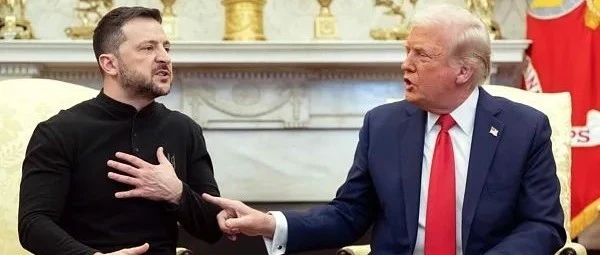
爆发激烈争吵!特朗普与泽连斯基会晤不欢而散
21世纪经济报道· 2025-02-28 23:52
Group 1: Meeting Overview - The meeting between US President Trump and Ukrainian President Zelensky on February 28 was marked by intense arguments, leading to Zelensky leaving the White House prematurely and the cancellation of a planned joint press conference [2][15][16] - Trump described the meeting as "not smooth," indicating that Zelensky "overestimated his leverage" and that the US seeks peace rather than prolonged conflict [3][4] Group 2: Key Issues Discussed - Trump emphasized the need for Zelensky to express a willingness to achieve peace in order to restart negotiations [4] - The US does not intend to provide specific security guarantees to Ukraine, stating that if Ukraine is attacked again, they cannot expect American protection [8] - Zelensky insisted that security guarantees are a prerequisite for any ceasefire agreement, highlighting the need for continued US support [10][11] Group 3: Mineral Agreement Insights - The US-Ukraine mineral agreement was described as "very fair," with the US seeking to leverage Ukraine's rich mineral resources for its own technological and military needs [6][21] - Analysts suggest that the agreement primarily benefits the US, with Ukraine's core demand for security guarantees being minimally addressed [21][22] - The agreement includes a joint investment fund where Ukraine will contribute 50% of future natural resource revenues, raising concerns about Ukraine's long-term development [22][21] Group 4: European Interest in Ukrainian Resources - European nations, including France and the EU, are also pursuing agreements to access Ukraine's mineral resources, indicating a competitive landscape for these assets [24][25][26] - Analysts note that both the US and Europe are vying for control over Ukraine's mineral wealth, exacerbating transatlantic tensions [26]