Dividend Investing

Search documents
Mastercard: Just Keep Swiping, Just Keep Swiping; More Growth Ahead
Seeking Alpha· 2026-01-28 13:00
Core Insights - The article emphasizes the importance of identifying high-quality dividend-growing and undervalued investment opportunities to achieve strong total returns through cash dividends and capital gains [1] Company Insights - Scott Kaufman, known as Treading Softly, has over a decade of experience in the financial sector and serves as the lead analyst for Dividend Kings, focusing on actionable investment insights [1] Investment Strategy - The strategy revolves around achieving a robust total return by focusing on both cash dividends and capital gains, indicating a dual approach to investment [1]



3 Dividend Stocks That Pay No Matter What the Economy Does
Yahoo Finance· 2026-01-28 12:30
Core Insights - The article emphasizes the importance of building a resilient portfolio that focuses on companies with consistent growth and shareholder rewards, regardless of market conditions [2][3] Group 1: Investment Strategy - A bulletproof portfolio should not chase trends but should include businesses that grow sales and reward shareholders consistently [2] - Companies that perform well during market volatility are highlighted as prime investment opportunities [1][2] Group 2: Dividend Kings - The article introduces the concept of "Dividend Kings," which are companies that have increased dividends for 50 or more consecutive years [3] - A screening process was used to identify companies with consistent revenue growth, balanced payout ratios, and strong analyst backing [4][5] Group 3: Genuine Parts Company (GPC) - Genuine Parts Company is a leader in the automobile industry, specializing in automotive and industrial replacement parts, with notable brands like NAPA Auto Parts [7] - In the latest quarterly financials, GPC reported a 5% year-over-year sales increase to $6.3 billion and a 21.11% increase over the past five years, although net income slightly decreased by 0.2% to $226 million [7] - The company has raised its dividends for 69 consecutive years, currently paying a forward annual dividend of $4.12, yielding around 3%, with a balanced dividend payout ratio of 55% [8]

AI? Venezuela? This 5.9% Divvie Is in the Thick of It All (and Thriving) – The Contrary Investing Report
Contraryinvesting· 2026-01-27 10:00
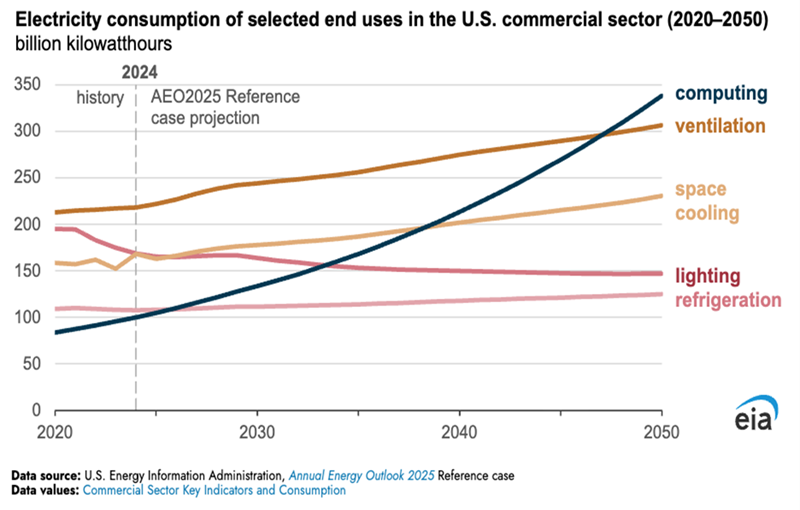
Core Viewpoint - Natural gas prices are experiencing a significant increase due to a severe winter storm in the US, presenting a contrarian investment opportunity in Enbridge (ENB), whose stock price has not yet reflected this trend [1][3]. Group 1: Natural Gas Market Dynamics - The spike in natural gas prices is attributed to a "generational" winter storm, indicating sustained demand for gas in the future [3]. - The Energy Information Administration (EIA) forecasts that natural gas prices will remain relatively flat in 2026 but are expected to rise by 33% in 2027 due to increased LNG exports and higher power consumption in the US [4]. - Data centers are a significant contributor to the rising power usage, impacting overall energy demand [7]. Group 2: Enbridge's Position and Strategy - Enbridge operates a pipeline network that transports 20% of the natural gas consumed in the US and 30% of North American crude oil production, positioning it well within the energy sector [9]. - The company benefits from increased demand for natural gas, acting as a "tollbooth" by collecting fees for the transportation of oil and gas [10]. - Enbridge is expanding its renewable energy portfolio, with over seven gigawatts of renewable projects either operational or under construction, which aligns with long-term energy trends [12]. Group 3: Oil Market Considerations - Enbridge is expanding its Mainline system to increase crude oil capacity, with plans to add 150,000 barrels per day by 2027 and an additional 250,000 barrels by 2030 [14]. - Concerns about Venezuelan oil displacing Canadian crude are unfounded, as Venezuela's oil infrastructure is in decline, making it unlikely to compete with Canadian heavy crude in the near future [15][17]. Group 4: Dividend and Investment Appeal - Enbridge has announced its 31st consecutive dividend increase, indicating strong financial health and a commitment to returning value to shareholders [18]. - The share price of Enbridge is currently lagging behind its dividend growth, suggesting it may be undervalued and presenting a buying opportunity [20]. - The dividends are paid in Canadian dollars, which could translate into higher returns for US investors as the US dollar weakens [21].


Is It Too Late to Buy SGX?
The Smart Investor· 2026-01-26 23:30
Core Viewpoint - Singapore Exchange Limited (SGX) has experienced a significant share price increase of approximately 43% over the past year, driven by strong fundamentals, increased trading volumes, new IPOs, and supportive policies [1][3]. Group 1: Business Fundamentals - SGX operates as Singapore's sole approved and regulated stock exchange, creating a natural monopoly that allows for robust cash flow generation with minimal capital expenditure [2]. - The exchange has a solid dividend track record, having paid annual dividends since 2003, which has historically rewarded long-term shareholders with dependable dividends and capital appreciation [5][6]. - SGX's recent annual dividend for 2025 is S$0.375 per share, with a payout ratio of 61.9%, supported by a healthy free cash flow of S$773.6 million for FY2025 [6]. Group 2: Recent Developments - Recent market fluctuations have led to increased trading and derivatives volumes, alongside positive policy initiatives and market reforms that have heightened interest in Singapore's markets [3][4]. - SGX is diversifying its offerings, including data, derivatives, and fixed income, which reduces reliance on equity trading and supports revenue growth [5][7]. Group 3: Investment Considerations - Despite the positive outlook, SGX's current forward price-to-earnings (P/E) ratio stands at 27.6 times, which is elevated compared to its 10-year historical average of 21.9 times, indicating stretched valuations [8]. - Long-term investors should focus on underlying fundamentals rather than short-term price movements, with current trailing annual yield at 2.1%, below the 10-year average of 3.44% [9][10]. - A dollar-cost-averaging (DCA) strategy may be prudent for investors to mitigate the risk of buying at a premium while ensuring consistent dividend income [11].
If I Could Own Only 3 Dividend Growth Stocks For The Long-Term
Seeking Alpha· 2026-01-26 19:48
Core Insights - Samuel Smith has extensive experience in dividend stock research and investment, having served as lead analyst and Vice President at notable firms [1] - He operates a YouTube channel focused on dividend investing and leads the High Yield Investor investing group, which emphasizes a balanced approach to safety, growth, yield, and value [1] - The High Yield Investor service provides real-money portfolios, trade alerts, educational content, and a community for investors [1] Company and Industry Summary - Samuel Smith's background includes a B.S. in Civil Engineering & Mathematics from the United States Military Academy and a Master's in Engineering from Texas A&M, focusing on applied mathematics and machine learning [1] - The High Yield Investor group collaborates with Jussi Askola and Paul R. Drake to identify investment opportunities that align with their strategy [1] - The service caters to various investment needs, including core, retirement, and international portfolios, enhancing its appeal to a diverse investor base [1]


The Smart Investor Guide to Spotting Safe Income Stocks in 2026
The Smart Investor· 2026-01-26 03:30
Core Insights - The current investment landscape emphasizes reliability over high yields as interest rates normalize, leading to a focus on income stocks that can withstand market volatility while providing sustainable payouts [1] Group 1: Definition of Safe Income - "Safe income" is often misinterpreted as the highest dividend yield, but high yields can indicate falling share prices or business distress [2] - True safe income is derived from stable, recurring cash flows that persist through economic cycles, rather than a single strong year of performance [2] Group 2: Business Quality and Earnings Visibility - Companies providing essential services, such as infrastructure and defensive consumer sectors, should be prioritized for investment [4] - Predictable earnings are more valuable than rapid growth; for instance, Singtel's diversified cash flows support long-term dividend payments despite modest revenue growth [5] Group 3: Financial Health and Dividend Sustainability - Assessing a company's balance sheet is crucial; high debt levels can jeopardize dividend payments during financial stress [6] - Companies with gearing below 40% and well-distributed debt maturities are ideal candidates for sustaining dividends [7] Group 4: Dividend Consistency and Cash Flow - Consistency in dividend payments is more important than the size of the dividend; companies that have maintained uninterrupted payouts build investor trust [8] - Dividends should be funded by cash flow rather than accounting profits, as strong free cash flow allows for sustainable dividend growth [9] Group 5: Valuation Considerations - Even established blue-chip stocks can be poor investments if overvalued; comparing current yields to historical averages and assessing Price-to-Earnings ratios is essential [10] - Reasonable valuations enable investors to benefit from both dividends and capital growth, enhancing compounding effects [11] Group 6: Common Investor Traps - Investors should avoid "yield traps," which occur when buying into price collapses without recognizing deteriorating fundamentals [12] - Special one-off dividends can mislead investors into thinking they represent ongoing income, creating a false sense of security [12] - Overconfidence in recent dividend increases can be risky, as past performance does not guarantee future growth [13] Group 7: Building a Resilient Income Portfolio - Diversification across sectors and income types is key to minimizing risks associated with bearish conditions in any single sector [14] - A balanced strategy should include "defensive anchors" for stability alongside growth stocks for appreciation [14] Group 8: Long-term Investment Strategy - A disciplined approach focusing on quality businesses with strong balance sheets and reliable cash flow is essential for building a resilient income stream [16] - Investors should prioritize long-term compounding over chasing quick gains [15]
These Are The Stock Market's Newest Dividend Payers
Forbes· 2026-01-25 18:00
Core Insights - The article discusses seven new dividend payouts from various companies, highlighting their potential as investment opportunities due to initial high yields and growth prospects [2][3] Group 1: Tutor Perini (TPC) - Tutor Perini announced its first dividend of $0.06 per share with a yield of 0.3%, marking a significant turnaround after three years of net losses [4][5] - The company reported record operating cash flow of $574.4 million and a backlog of $21.6 billion by Q3 2025, leading to a tripling of its share price in 2025 [5] - For full-year 2025, Tutor Perini is expected to report a profit of $4.10 per share, with the dividend representing only 6% of earnings, indicating room for future increases [6] Group 2: Orla Mining (ORLA) - Orla Mining initiated a quarterly dividend of $0.015 with a yield of 0.4%, transitioning from a junior miner to a mid-tier producer [7][8] - The company experienced a 143% increase in share price in 2025 and is expected to report a smaller profit for 2025 after doubling its net income in 2024 [9] - Future dividend growth may be limited due to the cyclical nature of mining profits, but management is confident in the sustainability of profits [10] Group 3: ePlus (PLUS) - ePlus announced a quarterly dividend of $0.25 with a yield of 1.1%, providing IT and professional services [12] - The company has seen a 2,000% increase in share price over the past 15 years, but is currently navigating mixed financial results [13][14] - Revenue growth is expected to be high-single-digit, but earnings per share are projected to decline in the current fiscal year [14] Group 4: Visteon (VC) - Visteon initiated a quarterly dividend of $0.275 with a yield of 1.2%, focusing on automotive technology [15][16] - After a history of volatility and declining net income, the company has shown a stable rebound in profits during the 2020s [17] - Despite the dividend announcement, the stock experienced a selloff following the first payment [17] Group 5: G-III Apparel Group (GIII) - G-III announced a quarterly dividend of $0.10 with a yield of 1.3%, operating in the apparel sector [18][19] - The company has seen steady net income, despite a loss in fiscal 2023 due to brand writedowns and supply chain issues [19][20] - G-III's dividend announcement reflects a strategy to attract shareholders amid limited growth prospects [20] Group 6: California BanCorp (BCAL) - California BanCorp initiated a quarterly dividend of $0.10 with a yield of 2.2%, showing rapid revenue growth from $13.6 million in 2015 to $180 million in 2024 [21][22] - Despite the growth, the company's stock has not seen significant appreciation, but the dividend may change investor sentiment [23] Group 7: Carnival Corp. (CCL) - Carnival Corp. announced a quarterly dividend of $0.15 with a yield of 2.1%, marking a resumption of its dividend program suspended during COVID-19 [24][26] - The company reported a substantial profit in 2024, returning to pre-COVID profit levels in 2025, indicating recovery from the pandemic's impact [26]

Do Not Retire Without Owning These 3 Dividend ETFs
Yahoo Finance· 2026-01-25 14:12
Core Viewpoint - The article emphasizes the importance of including specific dividend ETFs in retirement portfolios to maximize returns while managing risk effectively [2][3]. Group 1: Schwab US Dividend Equity ETF (SCHD) - SCHD has shown a strong performance in 2026, rising 5.2% year-to-date after a four-year period of underperformance [4][8]. - The ETF offers a dividend yield of 3.59% and has a low expense ratio of 0.06%, making it a preferred choice for retirees [5][8]. - SCHD is considered the gold standard for retirees due to its ability to provide both growth and income without excessive risk [5]. Group 2: Amplify CWP Enhanced Dividend Income ETF (DIVO) - DIVO is designed to provide an amplified yield while managing risk through the responsible use of covered calls [6][7]. - The ETF generates income from dividends and premiums from selling covered call options, holding a portfolio of 30 to 40 stocks [7]. - DIVO allocates 7% to 20% of its portfolio for covered calls, allowing it to capture more upside potential [7]. Group 3: iShares 20+ Year Treasury Bond ETF (TLT) - TLT offers a monthly yield of 4.42% and serves as a hedge against recession, attracting investors during periods of rate cuts by the Federal Reserve [8].
'The King Is Naked': Uncomfortable Truths About Starbucks' Dividend (Earnings Preview)
Seeking Alpha· 2026-01-25 14:00
Group 1 - Starbucks (SBUX) has shown stagnant performance since 2022, primarily providing opportunities for swing traders to buy at $75 and sell near $100 [1] - The company's growth in China, previously a significant driver, has deteriorated, leading to substantial challenges [1] - The focus on sustained profitability is emphasized, highlighting the importance of strong margins, stable free cash flow, and high returns on invested capital as reliable return drivers [1] Group 2 - The analyst has no current stock or derivative positions in any mentioned companies and does not plan to initiate any within the next 72 hours [2] - The article reflects the author's personal opinions and is not influenced by compensation from any company [2] - Seeking Alpha clarifies that past performance does not guarantee future results and that the views expressed may not represent the platform as a whole [3]


1 ETF Could Turn $500 Monthly Into a $800,000 Portfolio That Pays $24,000 in Annual Dividend Income
The Motley Fool· 2026-01-25 00:30
Core Insights - The Schwab U.S. Dividend Equity ETF (SCHD) offers a pathway to potentially reach $800,000 through consistent investments over time, emphasizing the importance of patience in investing [1][5]. Investment Rationale - SCHD tracks the Dow Jones U.S. Dividend 100 Index, focusing on companies with financial stability and strong cash flow, which results in a portfolio of reliable, established businesses rather than high-growth, volatile firms [3]. - The ETF's top five holdings include Lockheed Martin (4.63%), Chevron (4.19%), Merck & Co. (4.11%), Home Depot (4.07%), and Bristol Myers Squibb (4.05%), showcasing a focus on sectors like energy and industrials [3]. Performance Metrics - Since its inception in October 2011, SCHD has averaged annual total returns of 12.6%, with projections indicating that a monthly investment of $500 could grow to over $800,000 in approximately 25 years, assuming a consistent 12% annual return [5][6]. - The ETF has maintained an average dividend yield of around 2.8% since inception and 3.2% over the past decade, suggesting that an $800,000 investment could yield $24,000 annually [6].