
Interest rates

Search documents
The U.S. stock market had a rocky start to the year, thanks to tariffs and Trump's fight with the Fed. But it's ending on a high note
PBS News· 2025-12-23 16:49
Market Performance - The S&P 500 index funds returned over 18% in 2025, marking their third consecutive year of significant returns [2] - Despite initial fears from tariff announcements, the market rebounded, aided by strong profit reports and three interest rate cuts by the Federal Reserve [5] Tariff Impact - Trump's unexpected tariffs in April led to a nearly 5% drop in the S&P 500 on April 3, followed by a 6% drop the next day due to fears of a trade war with China [3] - The tariffs also caused a decline in the U.S. dollar and affected the U.S. Treasury market [3] Federal Reserve Relations - Trump's lobbying for lower interest rates created tension, as the Fed traditionally operates independently from political influence [6] - The Fed maintained steady rates through August despite inflation concerns, which drew criticism from Trump [7] Global Market Trends - Foreign markets outperformed U.S. stocks, with South Korea's KOSPI experiencing its largest gain in over two decades, driven by technology investments [11] - Japan's Nikkei 225 and Germany's DAX also saw double-digit gains, supported by national elections and stimulus plans [12] Cryptocurrency Developments - Bitcoin experienced volatility, initially dropping due to trade policy fears but later rebounding as support for digital assets grew [14][15] - Bitcoin peaked at around $125,000 in early October but fell to approximately $89,400, down 28% from its peak [16] Future Outlook - Analysts expect S&P 500 earnings per share to rise by 14.5% in 2026, an acceleration from the 12.1% growth estimated for 2025 [17] - Concerns remain regarding the profitability of investments in artificial intelligence technology, which may affect stock prices [18] - Strategists at Vanguard predict U.S. stocks may yield annualized returns of only 3.5% to 5.5% over the next decade [19]


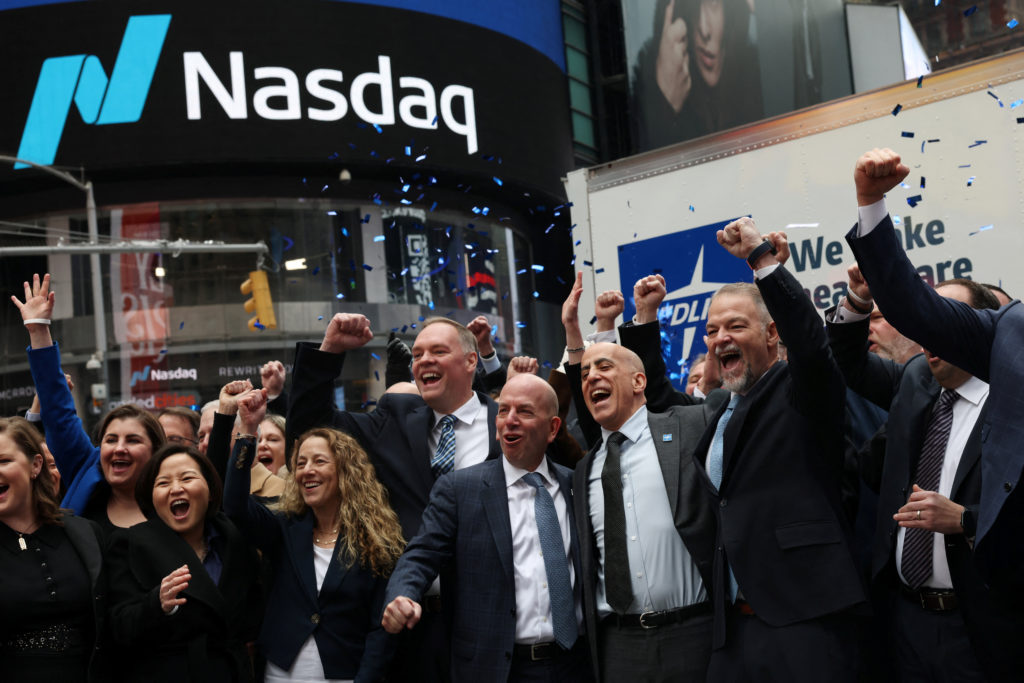
A chaotic 'up-crash' as markets and economic realities made for a turbulent 2025
Abc.Net.Au· 2025-12-22 19:10
Economic Overview - The year has been marked by significant economic shocks and surges, particularly due to changes in global trade dynamics and tariffs imposed by the US [1][6] - Despite these shocks, the global economy has shown resilience, with stock markets in various countries reaching record highs [6][10] Tariff Impacts - The US implemented a sweeping regime of tariffs that affected trade with allies and adversaries alike, with rates reaching as high as 145% for China and 10% for countries like Australia and the UK [11][12] - The chaotic nature of the tariffs, including those placed on uninhabited islands, exemplified the unpredictable environment created by the US administration [8][11] Market Reactions - Following the announcement of tariffs, global stock markets initially reacted with panic, with the S&P 500 index losing $7.5 trillion in value within two days [31] - However, the market sentiment shifted as fears of a trade war subsided, leading to a recovery in stock prices [19][31] AI Boom - The rise of artificial intelligence (AI) has been a significant driver of market performance, with substantial investments in technology and data centers propelling the "Magnificent Seven" tech companies [32][37] - Nvidia, a key player in the AI sector, saw its stock price increase by over 1,200%, making it the most valuable company globally, valued at over $4 trillion [33][36] Economic Growth and Projections - The capital expenditure related to AI is estimated to be close to $500 billion, contributing significantly to GDP growth in the US [37][38] - Economists have noted that while there are concerns about market bubbles, the current growth is supported by genuine earnings growth from leading tech companies [36][39]


X @Michaël van de Poppe
Michaël van de Poppe· 2025-12-22 15:05
Market Analysis & Strategy - MN Fund's allocations remain relatively large in the markets, with a high focus on volatility trading [1] - Macroeconomic events are crucial for MN Fund in building their strategy and thesis [1] Economic Indicators - US Unemployment Rate: Reported at 4.6%, exceeding the expected 4.4% [1] - CPI Data: Reported at 2.7%, falling short of the expected 3.1% [1] Monetary Policy - Bank of Japan decided to increase their interest rates by 25 bps (basis points) [1]
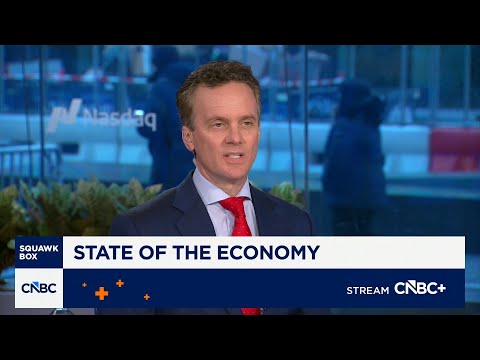
Joe Lavorgna: Pres. Trump has put in place policies that benefit middle- and lower-income workers
CNBC Television· 2025-12-22 14:29
Economic Outlook - The economy is considered very healthy, with potential for a significant boom next year, contingent on lower interest rates to facilitate investment spending, particularly in infrastructure for factory construction [6][7] - Non-financial corporate productivity growth has risen by 35% in the last four quarters [6] - Tariffs have not had the anticipated negative effects, and lower rates are needed to strengthen interest-sensitive sectors, as inflation is a lagging indicator [7][8] - The market reflects confidence in current policies, indicated by tight credit spreads and strong performance in both bond and equity markets [17] Fiscal Policy & Investment - Full expensing for factories is permanent, which will spur a supply-side boom evident in GDP data, with further acceleration expected next year [5] - Capex grew nearly 15% in real terms in the first half of the year, the largest increase since 2011-2012, excluding the pandemic period, which typically precedes hiring cycles and manufacturing job growth [10] - The bill providing 100% expensing for factories, with a normal shelf life of nearly 40 years, allows full expensing in year one, effective until 2028 [11] Labor Market & Wages - Real wages fell, impacting consumer sentiment [13] - Blue-collar workers have seen a 16% annualized increase through November of this year, marking one of the largest increases in the last 60 years at the start of a new administration [15] - Rising participation in the job market and new highs in the stock market contradict claims of economic misery [18] Tax & Revenue - Revenue share of GDP is over 17%, with spending being the primary concern [20] - Maintaining low taxes on labor and capital is crucial for fostering growth, creating goods, services, industries, and jobs [24] - If the economy grows at 3%, approximately $4 trillion more in revenue could be generated compared to CBO predictions, benefiting the long-term budget outlook [24] Deficit & Debt - Deficit numbers have improved under the current administration [28] - The tax cuts and jobs act effectively paid for itself, considering CBO scoring and revenue outcomes [28]
Gold price today, Monday, December 22: Gold elevates to a new record high after opening
Yahoo Finance· 2025-12-22 13:17
Core Viewpoint - Gold prices are experiencing upward momentum due to economic and geopolitical factors, with analysts anticipating further rate cuts from the Federal Reserve, which makes gold more attractive compared to yield-bearing assets [2][3]. Group 1: Current Gold Prices - Gold futures opened at $4,369.90 per troy ounce, slightly down from the previous closing price of $4,387.30, which was a record high since October [1]. - The price of gold reached $4,444 during early trading [1]. - The one-year gain for gold as of December 19 was 69% [3]. Group 2: Price Changes Over Time - The opening price of gold futures was 0.4% lower than the previous Friday's close [3]. - Over the past week, gold prices increased by 1.4%, by 8.4% over the past month, and by 67.7% over the past year [8]. Group 3: Factors Influencing Gold Prices - Economic and geopolitical conditions, including U.S.-Venezuelan tensions and anticipated Federal Reserve rate cuts, are significant drivers of gold prices [2]. - Key factors affecting gold prices include geopolitical events, central bank buying trends, inflation, interest rates, and mining production [11].
Bitcoin buyers to spark Santa rally? Three clues on where the price is going
Yahoo Finance· 2025-12-22 10:46
Market Overview - Bitcoin is experiencing a downturn with no anticipated recovery until the US Federal Reserve stabilizes the economy [1][2] - The current price of Bitcoin is approximately $89,000, which is 30% lower than its all-time high in October [2] Economic Factors - The US government shutdown has delayed crucial inflation data, leading to uncertainty in the Fed's monetary policy [1][4] - The Fed's path remains unclear until several months of consistent inflation data are available, impacting Bitcoin's performance as a risk asset [2] Investor Behavior - There has been a significant withdrawal from Bitcoin investments, with nearly $500 million pulled from spot Bitcoin exchange-traded funds last week [5] - Investors are closely monitoring macroeconomic indicators as they approach the end of 2025 [5] Economic Growth Expectations - Upcoming US GDP figures are expected to show a 3.5% annualized growth for the third quarter, following a strong 3.8% in the second quarter [6] - A robust growth figure could complicate expectations for further interest rate cuts by the Fed, which typically encourage investment in riskier assets like cryptocurrencies [6]
2026 Could Be Explosive For The SPDR Dow Jones REIT, And It’s 4% Dividend
Yahoo Finance· 2025-12-20 15:45
Core Insights - The SPDR Dow Jones REIT ETF (RWR) has $1.7 billion in assets and a dividend yield of approximately 4%, but it has only gained 3% year-to-date, underperforming the broader market [1][2] - Goldman Sachs predicts two additional Federal Reserve rate cuts in 2026, potentially lowering rates to between 3% and 3.25%, which could positively impact REIT valuations [2][4] Group 1: ETF Performance and Market Context - RWR's year-to-date performance of 3% significantly lags behind the broader market's double-digit gains [1] - The ETF's current trading price is around $99, reflecting a modest increase of 3% year-to-date through mid-December [1] Group 2: Interest Rate Impact - Interest rates are crucial for RWR, with forecasts indicating that lower rates will reduce borrowing costs and enhance cash flows for REITs, making their dividend yields more attractive compared to Treasury bonds [4] - Monitoring the Federal Reserve's economic projections and rate expectations is essential, as any acceleration in rate cuts could provide upside for RWR [5] Group 3: Holdings and Valuation Concerns - RWR's top holding, Welltower Inc, constitutes 11.5% of the portfolio and trades at a high valuation of 131 times trailing earnings, despite a 44% year-over-year decline in quarterly earnings [6] - Prologis Inc, another significant holding at 11% of assets, trades at a more reasonable 37 times earnings with profit margins of 35% [6]
What to Watch With Lowe's Stock in 2026
The Motley Fool· 2025-12-20 05:00
Core Viewpoint - Lowe's shares have underperformed compared to the S&P 500 in 2025, raising questions about potential recovery in 2026 [3][4]. Group 1: 2025 Performance - Lowe's share price decreased by 0.1% through December 15, 2025, while the S&P 500 appreciated by 15.6% [3]. - Including dividends, Lowe's total return was 2.8%, significantly lower than the S&P 500's total return of 17.3% [3]. - The company's market capitalization stands at $135 billion, with a current share price of $240.44 [4]. Group 2: Sales and Financial Metrics - Lowe's reported positive same-store sales over recent quarters, but fiscal third-quarter comps only increased by 0.4% [5]. - The increase in comps was driven by higher spending, with the average ticket contributing 3.4 percentage points, while traffic decline accounted for a 3 percentage point drop in comps [5]. - The gross margin for Lowe's is 31.42%, and the dividend yield is 1.95% [4][5]. Group 3: Economic Factors Influencing 2026 - Lowe's sales are closely tied to the overall economy, as consumers are more likely to undertake home improvement projects when they feel economically secure [6]. - Key economic indicators to monitor include new and existing home sales, as these typically lead to increased remodeling projects [7]. - Interest rates, particularly long-term Treasury yields and short-term rates set by the Federal Reserve, will impact mortgage rates and home equity loans, affecting homebuying and renovation financing [8]. Group 4: Employment and Consumer Confidence - Employment trends show signs of weakness, which could deter consumer spending at Lowe's for significant projects [9]. - Consumer confidence is crucial; higher confidence levels typically lead to increased spending, which can boost economic growth [9]. Group 5: Strategic Initiatives - Lowe's is focusing on the professional contractor market, having made significant acquisitions, including Foundation Building Materials for $8.8 billion and Artisan Design Group for $1.3 billion [10]. - Management's commentary on progress in the professional contractor segment and sales growth in this market will be important to monitor [10].


S&P Futures Muted as Bond Yields Climb
Yahoo Finance· 2025-12-19 11:21
Market Overview - Wall Street is preparing for "triple-witching," with a record $7.1 trillion in notional open interest set to roll off as derivatives contracts expire [1] - Major U.S. indices closed higher, with Micron Technology (MU) surging over +10% after strong FQ1 results and an optimistic FQ2 forecast [3] - The Euro Stoxx 50 Index is up +0.02%, with bank and industrial stocks gaining, while technology and consumer stocks underperformed [7] Economic Data - U.S. rate futures indicate a 75.6% probability of no rate change and a 24.4% chance of a 25 basis point rate cut at the January meeting [2] - November's CPI rose +2.7% y/y, below expectations of +3.1% y/y, while core CPI rose +2.6% y/y, also weaker than the expected +3.0% y/y [2] - The U.S. Philly Fed manufacturing index fell to -10.2 in December, significantly below expectations of 2.5 [2] - U.K. November Retail Sales fell -0.1% m/m and rose +0.6% y/y, weaker than expectations [8] Corporate Earnings and News - Paychex (PAYX), Carnival Corp. (CCL), and Conagra Brands (CAG) are set to report quarterly results [6] - Trump Media & Technology Group (DJT) jumped over +41% after announcing a merger with TAE Technologies valued at over $6 billion [3] - Nike (NKE) plunged over -10% in pre-market trading due to expected sales declines amid weakness in China [15] International Developments - Japan's Nikkei 225 closed higher, led by tech sector gains following the Bank of Japan's interest rate hike to a three-decade high [12] - China's Shanghai Composite Index closed up +0.36%, with tourism stocks rising after a $113 billion free-trade initiative [11] - The European Central Bank is maintaining flexibility over interest rates amid downside risks to inflation [7]
Best money market account rates today, December 19, 2025 (up to 4.25% APY return)
Yahoo Finance· 2025-12-19 11:00
Find out which banks are offering the best MMA rates right now. The Federal Reserve cut the federal funds rate three times in 2024 and recently made its third rate cut in 2025. As a result, deposit interest rates — including money market account rates — have been falling. It’s more important than ever to compare MMA rates and ensure you earn as much as possible on your balance. A look at the best money market account rates today Although money market account rates are elevated by historical standards, t ...