Inflation

Search documents
Understanding U.S. Inflation: Key Drivers & Impacts
Etftrends· 2025-12-12 14:26
Core Insights - U.S. inflation is influenced by demand-pull, cost-push, and structural factors, with CPI peaking at 9% in June 2022 and currently moderating to around 3% [1][5] Group 1: Demand-Pull Inflation - Demand-pull inflation arises when demand for goods and services exceeds supply, often driven by fiscal stimulus and loose monetary policy, notably the $5 trillion injected into the economy through the CARES Act and American Rescue Plan [1][5] - The U.S. Federal Reserve's actions, including cutting interest rates and purchasing bonds, significantly increased the money supply, with M2 rising nearly $5 trillion above previous business cycle trends by spring 2022 [1][5] - Excess savings peaked at $2.3 trillion, contributing to higher consumption and inflation [1] Group 2: Cost-Push Inflation - Cost-push inflation is driven by rising input costs, particularly energy prices, with crude oil prices increasing from $40 per barrel in 2020 to $120 in 2022 due to OPEC+ cuts and the Russia-Ukraine war [2] - A 10% increase in oil prices can add 0.2–0.4% to annual inflation, as energy prices affect approximately 70% of goods [2] Group 3: Housing Market Impact - Housing accounts for 35% of CPI and is a significant inflation driver, with shelter costs lagging market rents by 12–18 months [3] - Home prices surged by 44% from January 2020 to June 2022 due to post-pandemic migration and low inventory, exacerbating the housing shortage [3] Group 4: Food and Other Sectors - Food, comprising 14% of CPI, is influenced by energy and commodity prices, with wheat and corn prices spiking 30-50% in 2022 [4] - Ongoing food inflation is attributed to various dynamics, including energy costs [4] Group 5: Global Factors and Policy Responses - Global supply-chain bottlenecks contributed 1% to inflation in 2021, while the Fed's interest rate hikes from 2022 to 2023 aimed to curb demand but risked recession [5] - The fiscal drag from expiring stimulus and higher rates has helped maintain lower annual inflation rates compared to 2022 peaks [5] Group 6: Future Outlook - Sustaining a 2% inflation rate requires balanced growth, energy stability, and housing reforms [6] - Monitoring leading indicators like ISM prices paid and Zillow's rent indexes can aid in forecasting inflation trajectories [6]


Hoping for lower mortgage rates? Don't hold your breath
Yahoo Finance· 2025-12-12 14:12
Core Viewpoint - The Federal Reserve's recent interest rate cut does not directly lead to a decrease in mortgage rates, which are more closely aligned with the long-term 10-year Treasury yield rather than the federal funds rate [1]. Group 1: Federal Reserve Actions - The Federal Reserve's third consecutive rate cut in 2025 has lowered the target range for the federal funds rate to 3.5%-3.75%, primarily due to a weakening jobs market [2]. - The Fed has indicated that further rate cuts are on hold, projecting only one quarter-percentage-point cut in 2026 as it aims to control inflation and maximize employment [2]. Group 2: Mortgage Rate Trends - Following the Fed's rate cut, the national average for a 30-year fixed mortgage rate decreased to 6.3% on Wednesday, down from 6.35% on Tuesday, and further fell to 6.26% on Thursday [3]. - Despite the Fed's rate cuts, current mortgage rates have increased from 6.13% in late October [3]. Group 3: Economic Context - The Trump administration's trade war and tariffs are expected to slow economic growth and maintain elevated inflation levels, with tariffs resulting in an average tax increase of $1,100 per household in 2025 and $1,400 in 2026 [5]. - Experts caution that lowering the federal funds rate could lead to negative economic consequences, such as higher unemployment and job losses, which may deter consumers from committing to large financial decisions like mortgages [6]. Group 4: Factors Influencing Mortgage Rates - Mortgage rates are influenced by various economic factors, including the jobs market, inflation, geopolitical events, lender capacity, and borrower demand, rather than solely by the Fed's control over short-term interest rates [7].
Fed's Goolsbee explains vote against rate cut, says central bank should have waited
CNBC· 2025-12-12 13:27
Austan Goolsbee, President and CEO of the Federal Reserve Bank of Chicago, speaks to the Economic Club of New York in New York City, U.S., April 10, 2025.Chicago Federal Reserve President Austan Goolsbee on Friday explained why he voted against this week's interest rate cut, saying policymakers should have waited until they had more information before easing further."While I voted to lower rates at the September and October meetings, I believe we should have waited to get more data, especially about inflati ...

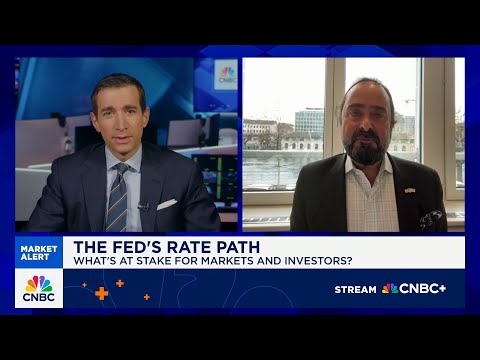
Expect the FOMC to turn dovish next year, says Jefferies' David Zervos
CNBC Television· 2025-12-12 13:20
talking about the economy and maybe what the Fed's going to do. Uh we're going to talk about that, the markets, uh and everything else. Want to bring in David Servos.He is chief market strategist at Jeffre, a CNBC contributor. Uh good morning to you. We'll talk to Austin Goldby later.I'm curious what you thought of what you heard earlier this week from the Federal Reserve and uh what you think it portends and were you surprised that the equity markets actually moved up on the back of this news. You [clears ...
Fed's Paulson says monetary policy still working to cool inflation
Reuters· 2025-12-12 13:04
Core Viewpoint - The main concern of the Federal Reserve Bank of Philadelphia President is the state of the job market, while also indicating that current monetary policy should assist in reducing inflation to the Fed's 2% target [1] Group 1 - The job market is highlighted as a primary concern by the Federal Reserve Bank of Philadelphia President Anna Paulson [1] - Current monetary policy is expected to help achieve the inflation target of 2% set by the Federal Reserve [1]

Fed's Paulson says monetary policy still working to cool inflation
Yahoo Finance· 2025-12-12 13:04
By Michael S. Derby NEW YORK, Dec 12 (Reuters) - Federal Reserve Bank of Philadelphia President Anna Paulson said Friday her main concern right now is the state of the job market, in remarks that also said the current state of monetary policy should help bring down inflation to the Fed’s 2% target. “On net, I am still a little more concerned about labor market weakness than about upside risks to inflation,” Paulson said in a speech prepared for a gathering held by the Delaware State Chamber of Commer ...
Global equity funds draw largest weekly inflow in five weeks
Yahoo Finance· 2025-12-12 12:46
Group 1 - Global equity funds saw significant inflows of $12.9 billion in the week to December 10, marking the highest weekly net additions since early November [1] - European equity funds led the inflows with $6.4 billion, following a previous week's inflow of $6.47 billion, while U.S. and Asian funds attracted $3.3 billion and $1.3 billion respectively [2] - Sectoral funds experienced a net inflow of $2.13 billion, with notable investments in metals and mining ($889 million), utility ($824 million), and industrial sector funds ($405 million) [3] Group 2 - Money market funds faced outflows of $12.99 billion after a previous week's inflow of $110.4 billion, indicating a shift in investor sentiment [3] - Global bond funds continued to attract interest for the 34th consecutive week, with net inflows of $8.23 billion [3] - Short-term bond funds recorded approximately $2 billion in inflows for the sixth consecutive week, while euro-denominated bond funds attracted $1.9 billion [4] Group 3 - Emerging markets equity funds received $2.78 billion in inflows, extending a buying streak to seven weeks, while bond funds saw a modest inflow of $68 million [5]
Pres. Trump is tone-deaf on affordability the same way Biden was on inflation, says Sen. Heitkamp
Youtube· 2025-12-12 12:15
Core Perspective - The article discusses the political strategy of Democrats focusing on the concept of "affordability" to critique the economic performance under President Trump, highlighting a disconnect between political messaging and the economic realities faced by many Americans [1][5][6]. Economic Sentiment - Affordability is defined as the ability to meet basic needs without financial fear, such as paying bills and providing for children, which resonates with a significant portion of the population currently struggling economically [4][5]. - The perception of economic hardship is prevalent, with about one-third of the population feeling economically insecure, leading to increased reliance on credit cards for essential purchases [5][11]. Political Messaging - The article emphasizes that political leaders, including President Trump, may be out of touch with the public's economic feelings, as they attempt to portray the economy positively despite widespread concerns [6][7]. - The discussion highlights the challenge for Republicans in addressing economic issues without appearing disconnected from the realities faced by voters [7][10]. Policy Implications - The article suggests that the current administration needs to implement effective policies, such as deregulation and healthcare reforms, to improve economic conditions for average Americans [8][12]. - There is a call for Republicans to propose tangible solutions, such as direct payments or subsidies, to address the economic challenges and counter the favorable perception of existing healthcare policies [9][10].

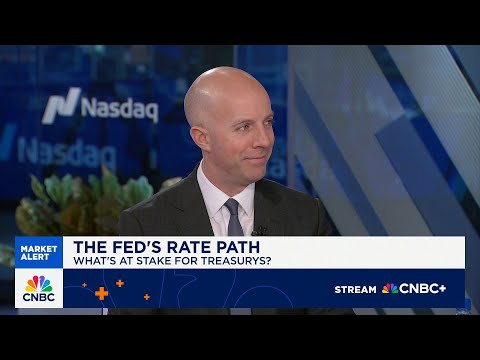
It's hard for the Fed to sound too hawkish right now, says BofA's Mark Cabana
CNBC Television· 2025-12-12 12:11
Treasury yields a little higher this morning after dipping post Fed. They were up, they were down, back up again to 416 for the 10 year, the two years at 353. And joining us right now with his insights on the bond market and the Fed's decision on rates this week is Mark Cabana.He's head of US rate strategy at Bank of America Securities. And Mark, big week. >> It was >> heard a lot from the Fed.We're still trying to figure out what comes next. Um it's a split Fed at this point and we're going to probably hea ...
It's hard for the Fed to sound too hawkish right now, says BofA's Mark Cabana
Youtube· 2025-12-12 12:11
Core Viewpoint - The Federal Reserve is currently experiencing a divided stance among its members regarding interest rates, influenced by upcoming economic data and the recent government shutdown that has delayed critical reports [2][3][4]. Group 1: Federal Reserve's Position - The Fed is facing challenges in providing clear guidance due to a backlog of economic data caused by the government shutdown, with significant reports on jobs, CPI, and retail sales expected soon [4][5]. - There is a concern about the unemployment rate, which is projected to rise to 4.5%, and any increase beyond that could shift the Fed's tone towards a more cautious approach [6][7]. - The market currently anticipates that the Fed has concluded its rate hikes, but if unemployment continues to rise, the Fed may need to adjust its strategy, potentially leading to rate cuts [7][8]. Group 2: Economic Data and Projections - The upcoming economic data, particularly the unemployment rate, is critical for the Fed's decision-making process, as hiring has slowed and the labor market remains a concern [5][6]. - The Fed's projections indicate a cautious outlook, with expectations that inflation will decrease as tariff effects dissipate, which could allow for future rate cuts [9][10]. Group 3: Treasury and Market Dynamics - The Fed's recent actions, including large-scale asset purchases, are aimed at stabilizing money market rates rather than signaling a shift towards quantitative easing [13][15]. - The Treasury's strategy of issuing more short-term T-bills while reducing long-term issuance is seen as a way to manage duration risk in the market, which aligns with the Fed's objectives [16][18]. - The combination of actions from both the Fed and the Treasury is expected to ease financial conditions, although the Fed maintains that its actions are independent of broader asset price movements [19][20].