Workflow
育儿补贴制度
icon
Search documents
国家卫健委郭燕红:育儿补贴制度每年可惠及上千万家庭
Zheng Quan Shi Bao· 2025-07-30 06:25
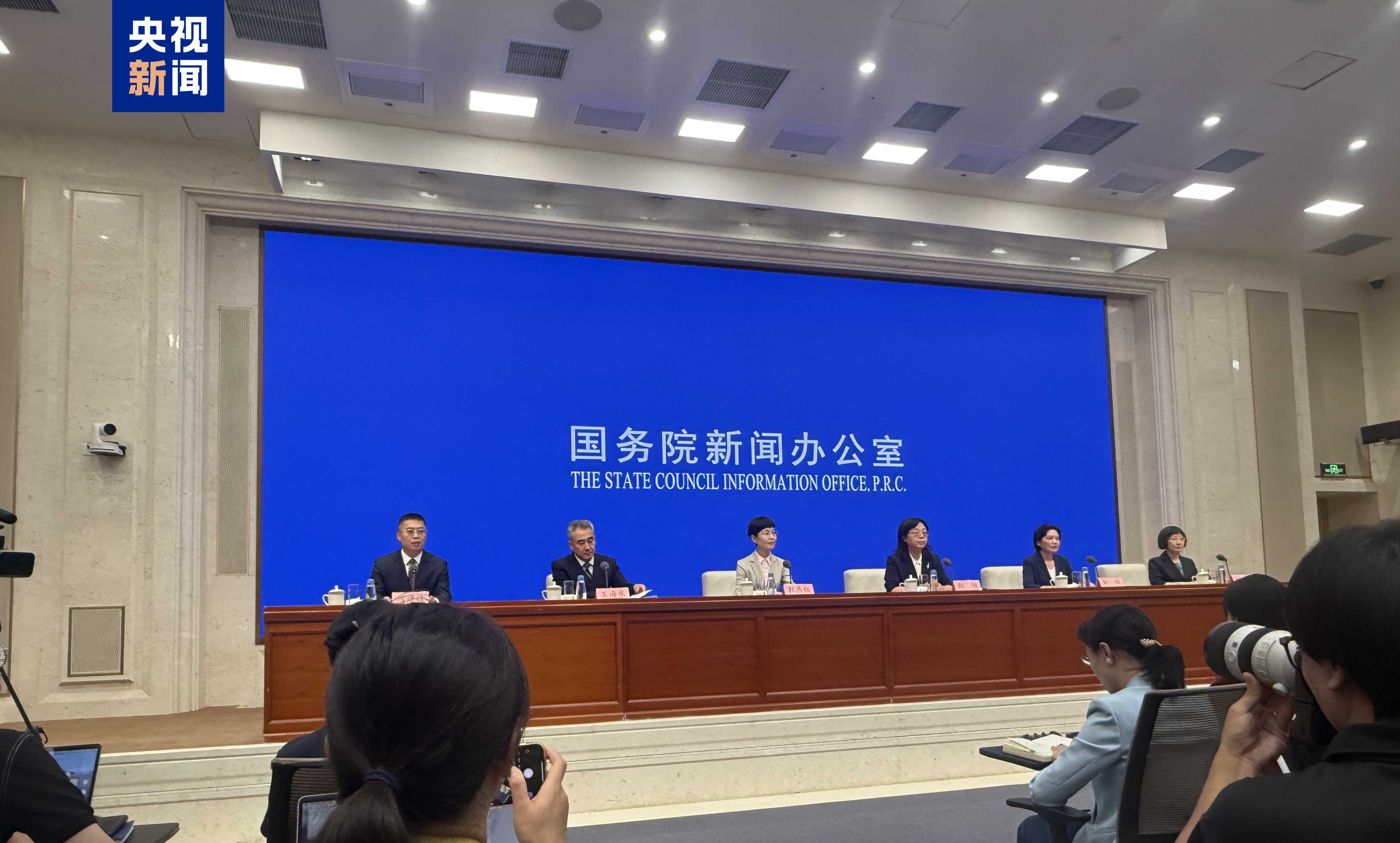
责任编辑:石秀珍 SF183 人民财讯7月30日电,国家卫生健康委副主任郭燕红7月30日在国新办新闻发布会上表示,育儿补贴制度 是一项重要的民生政策,从国际上看,是不少国家采取的生育支持政策之一,从国内看,一些地方结合 当地人口和经济社会发展实际,探索实施了不同形式的育儿补贴政策,受到群众普遍欢迎。我国实施育 儿补贴制度有利于帮助减轻家庭养育负担,通过财政资金的精准发放,可以直接增加群众的现金收入, 每年可惠及上千万家庭,可以为家庭育儿提供基础性支持,改善育儿条件,在一定程度上缓解家庭养育 孩子的经济压力。 ...
国家卫健委王海东:对3岁以下婴幼儿家庭提供生育支持是国际通行做法
人民财讯7月30日电,国家卫生健康委员会人口家庭司司长王海东7月30日在国新办新闻发布会上表示, 关于对3岁以下的婴幼儿发放育儿补贴,主要考虑0—3岁是儿童成长的关键阶段,也是家庭养育特别需 要支持的重要时期。针对3岁以下婴幼儿家庭提供生育支持也是国际上的通行做法。结合我国发展阶段 和财力状况,育儿补贴制度覆盖了3岁以前的婴幼儿养育阶段。 ...
育儿补贴每年惠及上千万个家庭
news flash· 2025-07-30 06:22
国家卫生健康委副主任郭燕红7月30日在国新办新闻发布会上表示,育儿补贴制度是一项重要的民生政 策,从国际上看,是不少国家采取的生育支持政策之一,从国内看,一些地方结合当地人口和经济社会 发展实际,探索实施了不同形式的育儿补贴政策,受到群众普遍欢迎。我国实施育儿补贴制度有利于帮 助减轻家庭养育负担,通过财政资金的精准发放,可以直接增加群众的现金收入,每年可惠及上千万家 庭,可以为家庭育儿提供基础性支持,改善育儿条件,在一定程度上缓解家庭养育孩子的经济压力。 (央视新闻) ...
不分区域、一孩也纳入补贴对象 育儿补贴制度体现4个原则
Yang Shi Xin Wen· 2025-07-30 06:20
育儿补贴不分城乡、民族、区域,也不分一孩、二孩或者三孩,实现三孩生育政策下家庭支持的全面覆 盖,确保符合条件的婴幼儿平等享受补贴待遇。 三是尽力而为、量力而行。我国是一个发展中大国,仍处于社会主义初级阶段。育儿补贴制度统筹考虑 人口发展情况和经济社会发展水平,合理确定补贴范围和标准,确保财政可负担、政策可持续。量力而 行才能行稳致远。 四是安全规范、简便易行。育儿补贴申领最大限度精简材料、优化流程、提高效率、方便群众。通过全 国统一的线上申领信息系统,实现网上办、一次办,无论是户籍人口还是流动人口,都可以通过线上申 领。在推行线上申领的主渠道下,同步做好线下服务工作。同时,严格资格审核,加强绩效管理,保障 资金安全,切实把好事办好。 育儿补贴是新中国成立以来首次大范围、普惠式、直接性向群众发放的民生保障现金补贴,是一项惠民 利民的重大举措。实施育儿补贴制度,体现了以下4个原则: 育儿补贴制度是一项全新的公共政策,涉及千家万户。根据《实施方案》,育儿补贴制度从2025年1月1 日起实施,补贴对象为符合法律、法规规定生育的3周岁以下婴幼儿,至其年满3周岁。 一是改善民生、惠民利民。育儿补贴聚焦群众最关心、最直接、 ...
2022年1月1日以后出生的婴幼儿均可领取育儿补贴
news flash· 2025-07-30 06:16
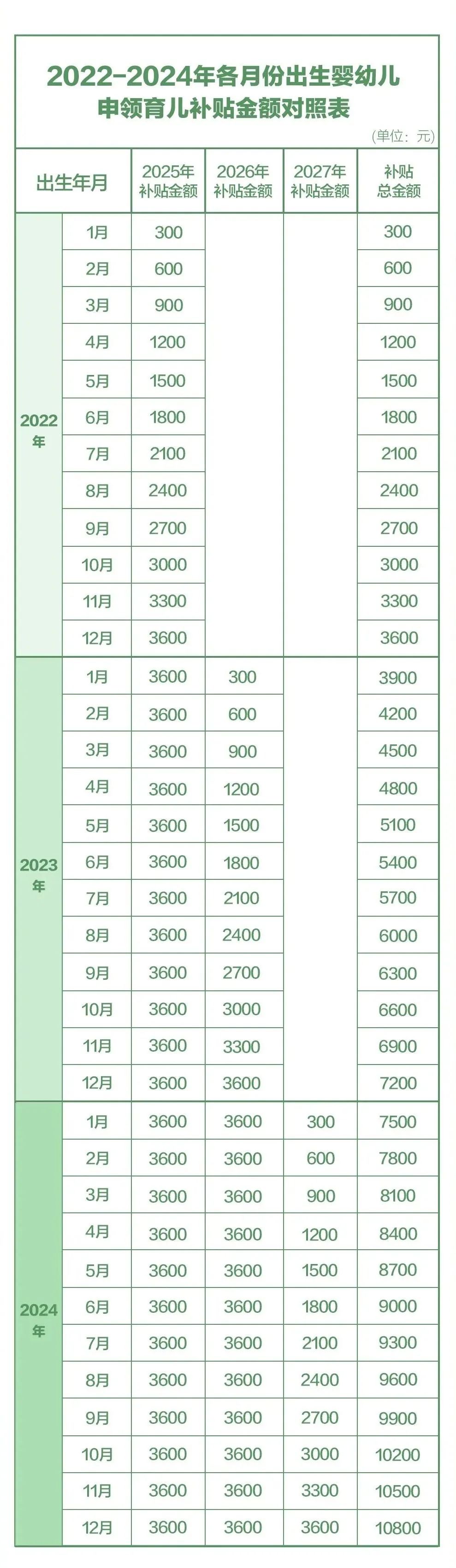
2022年1月1日以后出生的婴幼儿均可领取育儿补贴 智通财经7月30日电,国务院新闻办公室今天14时举行新闻发布会,介绍育儿补贴制度及生育支持措施 有关情况。国家卫生健康委人口家庭司司长王海东介绍,对3岁以下婴幼儿发放育儿补贴,主要考虑 是,0~3岁是儿童成长的关键阶段,也是家庭养育特别需要支持的重要时期。针对3岁以下婴幼儿家庭 提供生育支持,也是国际通行做法。结合我国发展阶段和财力状况,育儿补贴制度覆盖3岁以前的婴幼 儿养育阶段。 根据《育儿补贴制度实施方案》,从2025年1月1日起,对符合法律法规规定生育的3周岁以下婴幼儿发 放补贴,至其年满3周岁。同时,育儿补贴的发放对象也包括2025年1月1日之前出生的不满3周岁婴幼 儿,这部分婴幼儿按照应补贴月数折算计发补贴,至其年满3周岁。也就是说,2022年1月1日以后出生 的符合条件的婴幼儿,都可以领取育儿补贴。 为了方便群众申领,相关部门制定了2022年至2024年各月份出生的婴幼儿申领补贴金额对照表,可以一 目了然地知道每一个孩子的申领补贴金额。 ...
国家卫健委郭燕红:育儿补贴是新中国成立以来首次大范围、普惠式、直接性向群众发放的民生保障现金补贴
人民财讯7月30日电,国家卫生健康委副主任郭燕红7月30日在国新办新闻发布会上表示,育儿补贴制度 是一项全新的公共政策,涉及千家万户。育儿补贴是新中国成立以来首次大范围、普惠式、直接性向群 众发放的民生保障现金补贴,是一项惠民利民的重大措施。 ...
港股异动 婴童概念股表现活跃 H&H国际控股(01112)涨超4% 锦欣生殖(01951)涨超3%
Jin Rong Jie· 2025-07-30 03:25
Core Viewpoint - The announcement of a new childcare subsidy policy in China is expected to significantly benefit the infant and child-related stocks, leading to notable increases in their market performance [1]. Group 1: Stock Performance - H&H International Holdings (01112) rose by 4.28%, trading at 11.7 HKD [1] - Jinxin Fertility (01951) increased by 3.73%, trading at 3.34 HKD [1] - Beikang Medical-B (02170) saw a rise of 2.41%, trading at 2.98 HKD [1] - China Feihe (06186) grew by 1.7%, trading at 4.79 HKD [1] Group 2: Policy Announcement - The State Council Information Office will hold a press conference on July 30, 2023, to discuss the childcare subsidy system and related measures [1]. - Starting from January 1, 2025, families will receive an annual subsidy of 3600 CNY for each child until they reach three years old, regardless of whether they have one, two, or three children [1]. - For children born before January 1, 2025, and under three years old, the subsidy will be calculated based on the number of months eligible [1]. Group 3: Market Analysis - According to CITIC Securities, four sectors are expected to benefit the most: dairy products, maternal and infant retail, infant products, and postpartum care services [1]. - The market size for infant formula is projected to grow from 200 billion CNY to 300 billion CNY by 2025 [1]. - Maternal and infant retail is expected to maintain a growth rate of over 20% [1]. - The infant products market will continue to expand due to consumption upgrades [1]. - Postpartum care services are anticipated to be the fastest-growing segment, with an annual growth rate exceeding 30% [1].
婴童概念股表现活跃 H&H国际控股涨超4% 锦欣生殖涨超3%
Zhi Tong Cai Jing· 2025-07-30 02:32
Core Viewpoint - The announcement of a new childcare subsidy policy in China is expected to significantly benefit the infant and child-related sectors, leading to increased stock prices for companies in this industry [1] Industry Impact - The infant and child concept stocks opened higher, with notable increases: H&H International Holdings rose by 4.28% to HKD 11.7, Jinxin Fertility rose by 3.73% to HKD 3.34, BeiKang Medical-B rose by 2.41% to HKD 2.98, and China Feihe rose by 1.7% to HKD 4.79 [1] - The new childcare subsidy policy will provide an annual subsidy of CNY 3,600 for each child until the age of three, starting from January 1, 2025, which is expected to stimulate demand in the sector [1] Company Analysis - According to CITIC Securities, four sectors are expected to benefit the most: dairy products, maternal and infant retail, infant products, and postpartum care services [1] - The market for infant formula is projected to grow from CNY 200 billion to CNY 300 billion by 2025, indicating a strong demand for essential products [1] - Maternal and infant retail is expected to maintain a growth rate of over 20%, while the infant products market will continue to expand due to consumption upgrades [1] - Postpartum care services are anticipated to be the fastest-growing segment, with an annual growth rate potentially exceeding 30% [1]
港股异动 | 婴童概念股表现活跃 H&H国际控股(01112)涨超4% 锦欣生殖(01951)涨超3%
智通财经网· 2025-07-30 02:28
Group 1 - The core viewpoint of the article highlights the positive market response of baby and child concept stocks following the announcement of a new childcare subsidy policy by the Chinese government [1] - H&H International Holdings (01112) rose by 4.28% to HKD 11.7, Jinxin Fertility (01951) increased by 3.73% to HKD 3.34, Beikang Medical-B (02170) gained 2.41% to HKD 2.98, and China Feihe (06186) saw a rise of 1.7% to HKD 4.79 [1] - The new childcare subsidy policy will provide an annual subsidy of CNY 3,600 for each child until the age of three, starting from January 1, 2025, benefiting all families regardless of the number of children [1] Group 2 - According to CITIC Securities, four sectors are expected to benefit significantly from the new policy: dairy products, maternal and infant chain retail, baby products, and postpartum care services [1] - The market size for infant formula milk is projected to grow from CNY 200 billion to CNY 300 billion by 2025, indicating a strong demand for essential products [1] - Maternal and infant chain retail is expected to maintain a growth rate of over 20%, while the baby products market will continue to expand due to consumption upgrades [1] - Postpartum care services are anticipated to be the fastest-growing segment, with an annual growth rate potentially exceeding 30% [1]
光大期货金融期货日报-20250730
Guang Da Qi Huo· 2025-07-30 01:56
1. Report Industry Investment Rating - Not provided in the given content 2. Core Viewpoints of the Report - **Stock Index Futures**: The A-share market oscillated and rose, with the Wind All A index up 0.45% and a trading volume of 1.83 trillion yuan. The implementation of the childcare subsidy system is expected to boost inflation. The recent stock market rise is driven by long - term expectations of fiscal policy shift and inflation recovery, mid - term support for upstream cyclical sectors, and short - term capital inflows. The market is currently divided, and it is advisable to wait for clearer policies and market trends before adjusting positions [1]. - **Treasury Bond Futures**: On Tuesday, treasury bond futures closed lower. The central bank conducted 4492 billion yuan of 7 - day reverse repurchase operations, with a net injection of 2344 billion yuan. The start of the third round of Sino - US trade negotiations and the improvement in risk appetite led to bond market adjustments. However, the short - term bond market is expected to recover, and short - term treasury bonds may stop falling and stabilize [2]. 3. Summary by Relevant Catalogs 3.1 Research Views - **Stock Index Futures**: The A - share market showed an upward trend, with different indices rising to varying degrees. The implementation of the childcare subsidy system is a significant policy move. The long - term logic for the stock market rise includes expectations of fiscal policy shift and inflation recovery, mid - term support for upstream cyclical sectors due to anti - involution and infrastructure investment, and short - term capital inflows from a weak US dollar and improved corporate deposit - loan data. The market is currently divided [1]. - **Treasury Bond Futures**: Treasury bond futures closed lower on Tuesday. The central bank's reverse repurchase operations and the start of Sino - US trade negotiations affected the bond market. Short - term bond market trends are expected to improve [2]. 3.2 Daily Price Changes - **Stock Index Futures**: IH rose 0.29%, IF rose 0.47%, IC rose 0.66%, and IM rose 0.91% [3]. - **Stock Indices**: The Shanghai Composite 50 index rose 0.21%, the CSI 300 index rose 0.39%, the CSI 500 index rose 0.52%, and the CSI 1000 index rose 0.65% [3]. - **Treasury Bond Futures**: TS fell 0.06%, TF fell 0.17%, T fell 0.24%, and TL fell 0.77% [3]. - **Treasury Bond Yields**: Yields of 2 - year, 5 - year, 10 - year, and 30 - year treasury bonds increased [3]. 3.3 Market News - The International Monetary Fund (IMF) raised its forecast for China's economic growth rate in 2025 to 4.8%, an increase of 0.8 percentage points from the April forecast, and also raised the 2026 forecast by 0.2 percentage points, mainly due to stronger - than - expected economic activities in the first half of 2025 and lower - than - expected Sino - US tariffs [4]. 3.4 Chart Analysis - **Stock Index Futures**: The report presents the trends of IH, IF, IM, IC main contracts, and their corresponding basis trends [6][7][9]. - **Treasury Bond Futures**: It shows the trends of treasury bond futures main contracts, treasury bond yields, basis, inter - period spreads, cross - variety spreads, and capital interest rates [13][16][18]. - **Exchange Rates**: The report includes the trends of the US dollar - RMB central parity rate, euro - RMB central parity rate, forward exchange rates, US dollar index, euro - US dollar, pound - US dollar, and US dollar - yen exchange rates [21][22][25][26].