两融折算率调整

Search documents
折算率降为0!多家券商出手
第一财经· 2025-10-09 15:21
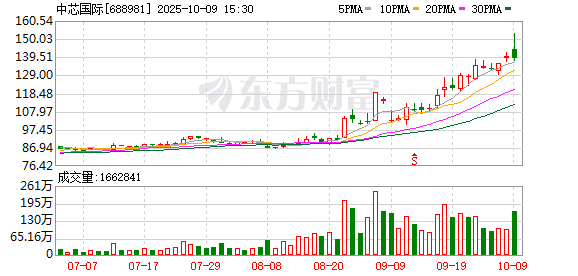
Core Viewpoint - The adjustment of margin financing and securities lending (two融) collateral ratios to 0 for stocks like SMIC (中芯国际) and BAWI Storage (佰维存储) due to their static price-to-earnings (P/E) ratios exceeding 300 times is a routine operation by brokerages based on exchange rules, not specific to any industry or sector [3][5][6]. Group 1: Margin Financing Adjustments - On October 9, the margin financing collateral ratios for SMIC and BAWI Storage were reduced to 0 because their static P/E ratios exceeded 300 times [3][5]. - The adjustment is part of a broader rule established in 2016, which states that stocks with a static P/E ratio above 300 or negative P/E will have their collateral ratios set to 0% [3][5]. - As of October 9, there are over 200 stocks in the A-share market with static P/E ratios exceeding 300, indicating a widespread impact across various stocks [6]. Group 2: Specific Stock Data - On September 29-30, SMIC and BAWI Storage had static P/E ratios of 303.06 and 301.91, respectively, leading to the adjustment of their collateral ratios [5]. - Other stocks affected include Road Bridge Information (路桥信息) with a static P/E ratio of 947.11 and Ruisheng Intelligent (瑞晟智能) at 321.78 [5]. - The adjustment by multiple brokerages, including Guotai Junan Securities and GF Securities, reflects a consistent application of the exchange's rules [4][5].




突发跳水,半导体利空来了?真相竟是
Zhong Guo Ji Jin Bao· 2025-10-09 12:09
Group 1 - The semiconductor sector experienced a sudden decline on October 9, with stocks like SMIC and Hua Hong falling after an initial rise, attributed to market rumors regarding adjustments in margin trading rules [2] - The trading exchange has mandated that A-share stocks with a static P/E ratio above 300 or negative must have their margin trading rates set to 0%, affecting stocks like SMIC and BAWI Storage [2][4] - Several brokerages confirmed that the margin trading rates for SMIC and BAWI Storage have been adjusted to zero, although this does not impact investors' ability to engage in margin trading [2] Group 2 - The adjustment of margin trading rates is based on the static P/E ratio calculated at the end of each trading week, with the rule having been in place since 2016, contrary to rumors suggesting it was a new regulation [4] - On September 30, multiple brokerages, including Northeast Securities and Hongta Securities, had already adjusted the margin trading rates for several stocks, including SMIC and BAWI Storage [4] - A table lists the margin trading rate adjustments for various stocks, showing significant reductions for SMIC and BAWI Storage, while Sifang Jingchuang saw an increase in its margin trading rate [5]