
同步辐射光源

Search documents
科学与健康|以光为“尺”探索物质微观结构!我国首台高能同步辐射光源今年底试运行
Xin Hua She· 2025-07-23 11:12
Core Insights - The first generation of synchrotron radiation source in China, the Beijing Synchrotron Radiation Facility (BSRF), has been reopened, while the construction of the world's highest brightness fourth-generation synchrotron radiation source (HEPS) is expected to be completed by the end of 2025, ready for trial operation [2][3][7] Group 1: Synchrotron Radiation Source Overview - The basic principle of synchrotron radiation sources involves accelerating electrons to produce light, which is utilized to explore the microstructure and evolution mechanisms of materials [3][5] - BSRF has been operational since 1990, providing high-quality synchrotron radiation across a range of applications, including aerospace, energy, environment, and biomedicine [3][4] - The facility has contributed to significant research outcomes, such as the molecular structure analysis of the SARS virus protein and the molecular mechanism of arsenic in leukemia treatment [3][8] Group 2: Fourth-Generation Synchrotron Radiation Source (HEPS) - HEPS, designed to emit the brightest light on Earth, will support advanced experimental methods such as nano-probing and ultra-high time resolution, enhancing the study of material microstructures under real conditions [5][7] - The HEPS project has completed the construction of the accelerator and beamlines, with all 15 beamlines operational, and aims to expand to 90 beamlines to maximize its capabilities [7][9] - The fourth-generation source is expected to significantly improve the quality and efficiency of microstructure analysis, aiding in the development of new materials and drug discovery [8][9] Group 3: Future Developments and Collaborations - The BSRF will retain 8 beamlines post-upgrade and continue to operate in a shared light mode, ensuring ongoing access for research institutions and universities [4][9] - The HEPS team is actively engaging with various research institutions and enterprises to gather experimental proposals and major R&D needs, aiming to align scientific demands with the facility's capabilities [9] - The focus will be on addressing national priorities and industrial innovation while fostering international collaboration and a user-friendly environment [9]


【中国新闻网】北京同步辐射装置将重启开放 高能同步辐射光源年底试运行
Zhong Guo Xin Wen Wang· 2025-07-23 03:05
Core Insights - The High Energy Photon Source (HEPS) Phase I has successfully achieved full output from 15 beamlines, marking a significant milestone in its development [5][7] - The HEPS is set to begin trial operations by the end of 2025, which will enhance research capabilities in various scientific fields [4][7] Development and Operations - The Beijing Synchrotron Radiation Facility (BSRF) has been operational since 1990 and is the first synchrotron radiation source in China, providing a platform for research in fields such as condensed matter physics, chemistry, and life sciences [6][8] - The HEPS is designed to meet national needs and promote industrial innovation, offering advanced experimental methods and high-energy X-rays for detailed material analysis [7][8] Future Plans - The HEPS project team aims to expand the number of beamlines to 45 within the next five years, enhancing its capacity to support cutting-edge research and industrial development [9][10] - The recent user conference included 11 keynote presentations and numerous reports, showcasing the operational status and research achievements of various synchrotron facilities [10]
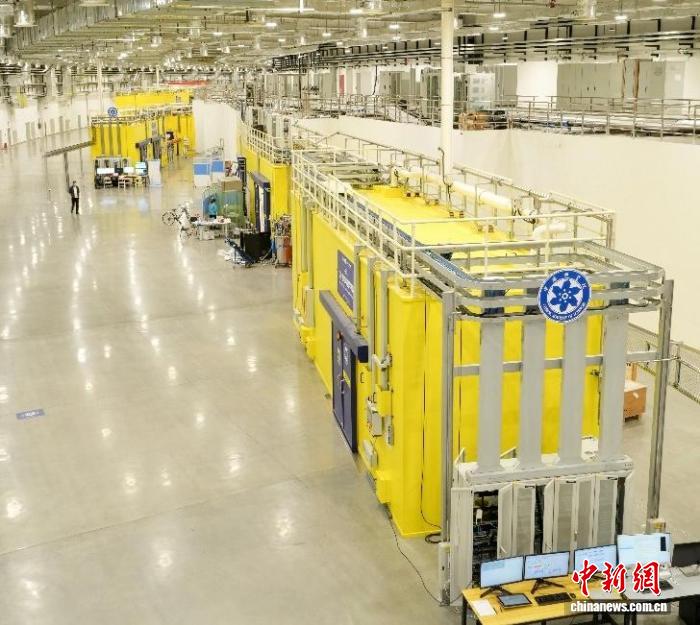
中国同步辐射光源为重大研发提供有力支撑
Ke Ji Ri Bao· 2025-07-23 00:55
Core Insights - The High Energy Synchrotron Radiation Source (HEPS) is set to complete its first phase by the end of 2025, with all 15 beamlines operational, providing significant support for major research and development initiatives [1][2] Group 1: HEPS Development and Capabilities - HEPS is designed to be the highest brightness fourth-generation synchrotron radiation source globally, capable of producing high-energy X-rays with strong penetration power, enabling real-time and precise observation of material structures [2] - The HEPS team is actively engaging with research institutions and leading enterprises to gather experimental proposals and major R&D needs, ensuring that the facility meets user requirements upon commissioning [3] Group 2: BSRF Contributions and Future Plans - The Beijing Synchrotron Radiation Facility (BSRF) has been a crucial research platform for over 30 years, contributing to various fields such as physics, chemistry, and biology, with notable achievements including the structural analysis of the SARS virus [2] - BSRF will retain 8 beamlines post-upgrade of the Beijing Electron-Positron Collider in May 2025, continuing to provide open access for scientific research [2] Group 3: Future Expansion and Collaboration - The HEPS facility has the potential to accommodate up to 90 beamlines, with plans to construct 45 beamlines during the 14th Five-Year Plan period, enhancing support for cutting-edge basic research and industrial R&D [3] - The HEPS team is exploring new investment models and deep collaboration with research and enterprise users to facilitate the ongoing construction of beamlines [3]