
脱贫攻坚成果巩固拓展

Search documents
交卷!脱贫地区大变样 这份答卷超亮眼
Yang Shi Xin Wen Ke Hu Duan· 2025-12-27 01:33
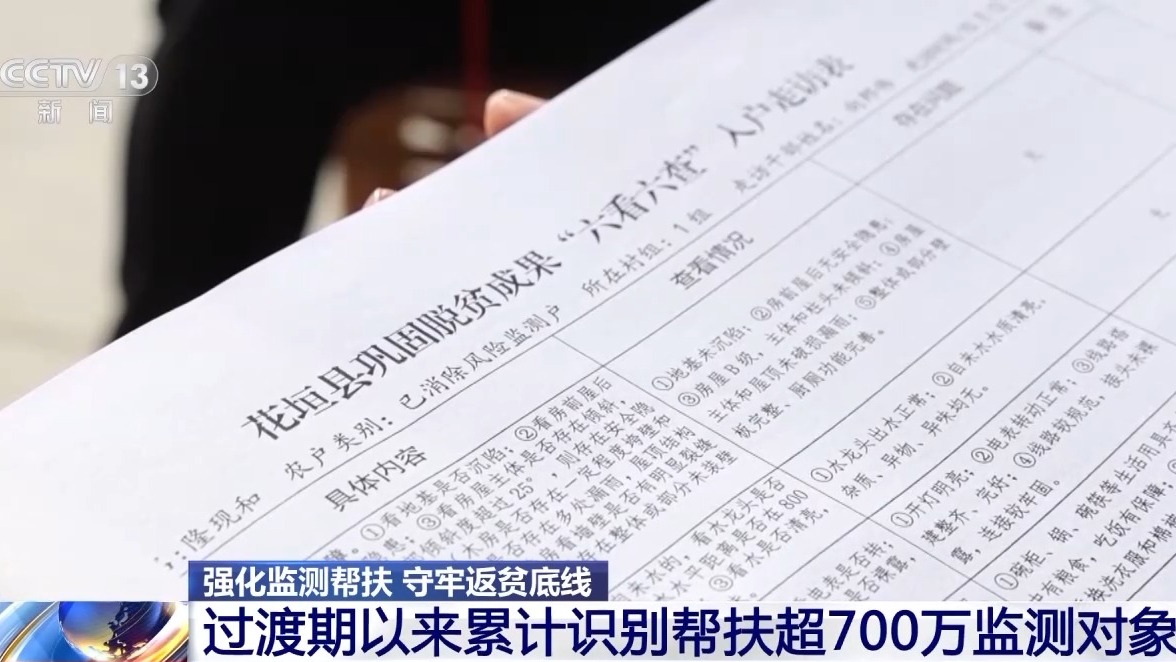
Core Viewpoint - The article highlights the achievements and ongoing efforts in poverty alleviation and rural revitalization in China, emphasizing the stability of the poverty alleviation measures and the transition to a sustainable support system. Group 1: Achievements in Poverty Alleviation - A comprehensive safety net has been established to prevent large-scale poverty, with over 7 million monitoring subjects identified and supported to eliminate poverty risks by the end of September [1] - The total output value of industries in poverty-stricken counties has surpassed 1.7 trillion yuan, with nearly three-quarters of the impoverished population linked to new agricultural business entities [3] - The employment scale for the impoverished population has remained stable at over 30 million, with various channels facilitating local employment and improved income levels [5] - The per capita disposable income of rural residents in poverty-stricken counties has increased from 12,588 yuan in 2020 to 17,522 yuan in 2024, with growth rates exceeding the national average for four consecutive years [7] - Central government funding for rural revitalization has reached 850.5 billion yuan, enhancing infrastructure and public services in poverty-stricken areas [9] Group 2: Future Support Mechanisms - Post-transition, support policies will not be abruptly halted, as the central economic work conference has integrated ongoing support into the rural revitalization strategy [10] - The approach to ongoing support will combine stable baseline guarantees with targeted development assistance [12] - Data-driven methods will be employed to identify households at risk of falling back into poverty due to unforeseen circumstances, ensuring tailored support [14] - Development assistance will focus on empowering impoverished individuals through industry and employment support, fostering self-reliance and motivation for a better life [16] - Targeted measures will be implemented for underdeveloped areas, particularly in 160 key support counties, to promote shared prosperity among the impoverished population [18]

推动乡村振兴要着眼长远
Jing Ji Ri Bao· 2025-12-15 22:39
Core Viewpoint - The year marks the conclusion of a five-year transition period for consolidating and expanding poverty alleviation achievements while effectively connecting with rural revitalization, transitioning to a new phase of normalized assistance to promote comprehensive rural revitalization and ensure that villagers share in the development outcomes [1][2]. Group 1: Industry Revitalization - Industrial revitalization is identified as the driving force for rural development, shifting from "blood transfusion" support during poverty alleviation to "blood production" cultivation in rural revitalization [1]. - Many rural areas still face challenges such as talent shortages and weak industrial chains, necessitating increased effective investment in industrial support tailored to local conditions [1]. - Emphasis on developing characteristic industries with a focus on "one village, one product" to reduce homogenization and enhance competitiveness [1]. Group 2: Employment Support - Employment assistance is highlighted as the most effective method for increasing villagers' income, with many rural areas providing public welfare jobs to stabilize income for vulnerable households [1]. - Long-term strategies include promoting collective rural economies and encouraging enterprises to absorb local villagers into employment [1]. - Strengthening labor training to improve villagers' skill levels and broaden employment channels is essential for achieving stable income for households [1]. Group 3: Collaborative Mechanisms - Future efforts to consolidate and expand poverty alleviation achievements will involve a collaborative mechanism across various administrative levels, including provincial, municipal, county, township, and village leaders [2]. - The continuation of effective practices such as East-West collaboration and targeted assistance from central units is crucial for enhancing support effectiveness [2]. - A long-term commitment to rural revitalization is necessary, emphasizing industrial support, employment assistance, and maintaining a bottom-line thinking approach to ensure all villagers benefit from development [2].
脱贫攻坚成果如何持续巩固拓展
Di Yi Cai Jing· 2025-12-15 12:46
Core Viewpoint - The article emphasizes the importance of consolidating and expanding poverty alleviation achievements as a strategic necessity to prevent large-scale risks of returning to poverty and to support rural revitalization and modernization in China [1]. Group 1: Achievements in Poverty Alleviation - By 2025, an effective monitoring and assistance mechanism will have identified and helped over 7 million monitoring subjects to stabilize and eliminate the risk of returning to poverty [2]. - The education, medical care, housing, and drinking water safety levels for the poverty alleviation population continue to improve, with a basic medical insurance coverage rate of over 99% [2]. - The per capita disposable income of rural residents in poverty-stricken counties reached 13,158 yuan, with a real growth of 6.5%, outpacing the national rural growth rate by 0.5 percentage points [2]. Group 2: Challenges Faced - The dynamic nature of monitoring subjects requires higher precision and cost-effectiveness in monitoring and assistance, with existing data barriers affecting the timeliness and quality of help [3]. - Some regions face challenges with the sustainability of industries and employment, including short supply chains and weak risk resistance, which affect income stability [4]. - There are shortcomings in public services such as education and healthcare in rural areas, which hinder the self-development capabilities of the poverty alleviation population [5]. Group 3: Recommendations - A more precise, intelligent, and efficient dynamic monitoring and assistance system should be established, utilizing big data and AI for risk assessment and ensuring comprehensive coverage [6]. - Enhancing the internal motivation and market competitiveness of industries and employment in poverty-stricken areas is crucial, with a focus on developing local特色产业 and integrating various sectors [8]. - Implementing tiered and categorized assistance policies for low-income populations to address diverse needs and improve their self-development capabilities [9].
2025年我国脱贫攻坚成果持续巩固拓展
Xin Hua She· 2025-12-10 11:06
Core Viewpoint - 2025 is the final year for consolidating and expanding the achievements of poverty alleviation and effectively transitioning to rural revitalization [1] Group 1 - The Ministry of Agriculture and Rural Affairs has confirmed that support policies will remain generally stable across all levels [1] - The focus will be on assisting impoverished areas and populations to prevent large-scale return to poverty [1]
【乡村振兴五年行】五年过渡期的中国答卷
Zhong Guo Jing Ji Wang· 2025-12-04 11:08
Group 1 - The year marks the conclusion of the "14th Five-Year Plan" and the final year of the transition period for consolidating and expanding poverty alleviation achievements while effectively connecting with rural revitalization [1] - The country has implemented a series of policies to support poverty alleviation, with over 700 million monitoring objects identified and supported to eliminate the risk of returning to poverty by the end of September this year [2] - More than 85% of poverty alleviation households have implemented at least one industrial support measure, with nearly three-quarters of the poverty alleviation population establishing benefit-sharing mechanisms with new agricultural management entities [3] Group 2 - The central government has invested a total of 850.5 billion yuan in rural revitalization support funds, focusing on key areas such as 160 national key poverty alleviation counties and 35,000 resettlement areas [4] - The infrastructure and public service levels in poverty-stricken areas have continuously improved, with a basic medical insurance coverage rate of over 99% for the poverty alleviation population [4] - The "15th Five-Year Plan" suggests establishing a regular mechanism to prevent the return to poverty, ensuring that poverty-stricken areas remain stable and move towards comprehensive rural revitalization and common prosperity [4]
仇焕广:坚持精准原则促进乡村全面振兴
Jing Ji Ri Bao· 2025-10-14 00:34
Core Insights - The year marks the final year of the five-year transition period for consolidating and expanding poverty alleviation achievements and effectively connecting with rural revitalization strategies [1][2] Group 1: Poverty Alleviation Achievements - As of July 2023, over 6 million individuals at risk of returning to poverty have received targeted assistance, effectively eliminating the risk of poverty [1] - By the end of 2020, China successfully eradicated absolute poverty, with 98.99 million rural poor lifted out of poverty, 832 impoverished counties removed from the poverty list, and 128,000 impoverished villages exiting poverty [1] - The average disposable income of rural residents in poverty-stricken counties is projected to reach 17,522 yuan in 2024, with growth rates exceeding the national average for four consecutive years [2] Group 2: Future Policy Directions - The transition period's conclusion will lead to a new phase in connecting poverty alleviation with rural revitalization, with the 2025 Central Document No. 1 proposing a structured approach to prevent poverty and assist low-income populations [2][3] - Future assistance policies will focus on four areas: enhancing targeted support for low-income groups, strengthening skill training and employment support for those capable of work, promoting development in underdeveloped regions through collaboration, and improving social security systems [3] Group 3: Broader Impact - The success of poverty alleviation efforts has garnered international recognition, contributing to global poverty reduction strategies and enhancing the material and cultural aspects of rural life in China [4] - The changes brought about by poverty alleviation have not only improved income levels but also strengthened the motivation for a better life among rural residents, providing a solid foundation for China's modernization efforts [4]
坚持精准原则促进乡村全面振兴
Jing Ji Ri Bao· 2025-10-13 22:09
Core Viewpoint - The year marks the final year of the five-year transition period for consolidating and expanding the achievements of poverty alleviation and effectively connecting with rural revitalization [1][2] Group 1: Achievements in Poverty Alleviation - As of July this year, over 6 million individuals at risk of returning to poverty have received targeted assistance, eliminating the risk of large-scale poverty [1] - By the end of 2020, China successfully eradicated absolute poverty, lifting 98.99 million rural poor out of poverty, with all 832 impoverished counties removed from the poverty list [1] - The per capita disposable income of rural residents in poverty-stricken counties is projected to reach 17,522 yuan in 2024, with growth rates exceeding the national average for four consecutive years [2] Group 2: Transition to Rural Revitalization - The transition period is set to conclude, leading to a new phase of connecting poverty alleviation with rural revitalization, with a focus on establishing a rural mechanism to prevent poverty [2][3] - The 2025 Central Document No. 1 proposes a layered and categorized assistance system for low-income populations and underdeveloped regions, guiding future rural development policies [2] Group 3: Policy Enhancements - Future assistance policies will focus on four areas: increasing targeted support for low-income groups, enhancing skill training and employment support for those with labor capabilities, promoting development in underdeveloped areas through collaboration, and improving the social security system [3] - The aim is to ensure the long-term stability of poverty alleviation achievements and facilitate a transition from poverty to revitalization, promoting sustainable common prosperity [3] Group 4: International Recognition - China's success in poverty alleviation has garnered widespread international recognition, contributing to global poverty reduction efforts and enhancing the material and cultural aspects of rural life [4]
刘国中在四川调研时强调 一以贯之巩固拓展好脱贫攻坚成果 促进乡村全面振兴
Xin Hua Wang· 2025-10-11 11:12
Group 1 - The core message emphasizes the importance of consolidating and expanding the achievements of poverty alleviation efforts while preventing large-scale poverty recurrence and promoting comprehensive rural revitalization [1][2] - Liu Guozhong's visit included various locations in Sichuan Province, focusing on understanding the effectiveness of the "three guarantees" (basic living needs, education, and healthcare) and water safety levels [1] - The need for effective monitoring and assistance to prevent poverty recurrence is highlighted, with a focus on timely identification and precise support to ensure risk elimination [1] Group 2 - Liu Guozhong stresses the importance of maintaining stable support policies post-transition period and enhancing the regular assistance mechanism [2] - The development of a robust support policy system is essential, focusing on enhancing internal development motivation through developmental assistance and ensuring a social security system to safeguard livelihoods [2] - The emphasis on improving infrastructure and public service levels in underdeveloped areas to boost county-level economies is noted [2]
我国脱贫攻坚成果得到巩固和拓展
Xin Hua She· 2025-09-16 14:27
Core Viewpoint - The article emphasizes the successful consolidation and expansion of poverty alleviation achievements in China, highlighting the importance of effective transition to rural revitalization during the final year of the five-year transition period [1][2]. Group 1: Poverty Alleviation Achievements - China has firmly maintained a baseline to prevent large-scale return to poverty, with over 6 million individuals identified as at risk of returning to poverty receiving targeted assistance by the end of July this year [1]. - The country has focused on enhancing the internal development motivation of impoverished populations, with over 85% of poverty-stricken households receiving at least one form of industrial support [1]. Group 2: Financial and Infrastructure Support - The central government has allocated a total of 850.5 billion yuan in special funds for rural revitalization since the beginning of the 14th Five-Year Plan, with a focus on 160 key poverty alleviation counties and 35,000 resettlement areas [2]. - Infrastructure and public service levels in impoverished areas have improved, contributing to sustained economic and social development [2]. Group 3: Future Plans - The government plans to continue regular assistance, combining developmental support with basic guarantees to permanently maintain the baseline against large-scale poverty [2].
高质量完成“十四五”规划丨我国脱贫攻坚成果得到巩固和拓展
Xin Hua She· 2025-09-16 08:32
Group 1 - The core viewpoint is that China has successfully consolidated and expanded its poverty alleviation achievements during the transition period, ensuring no large-scale return to poverty [1][2] - The Ministry of Agriculture and Rural Affairs reported that over 6 million individuals at risk of returning to poverty have received targeted assistance by the end of July this year [1] - More than 85% of poverty alleviation households and monitored households have received at least one type of industrial support policy [1] Group 2 - A total of 850.5 billion yuan has been invested in rural revitalization support since the beginning of the 14th Five-Year Plan [2] - Infrastructure and public service levels in poverty-stricken areas have improved, contributing to sustained economic and social development [2] - Future efforts will focus on maintaining regular assistance and combining development-oriented support with basic guarantees to prevent large-scale poverty [2]