乡村全面振兴

Search documents
“十五五”规划纲要,全文来了
21世纪经济报道· 2026-03-13 14:16
Core Viewpoint - The article discusses the official release of the "14th Five-Year Plan" for China's economic and social development, outlining key strategies for modernization and growth in various sectors [1]. Group 1: Modernization and Economic Development - The plan emphasizes the creation of a modern industrial system to strengthen the foundation of the real economy [2]. - It highlights the importance of accelerating high-level technological self-reliance to lead new quality productivity [2]. - The initiative to deepen the construction of a digital China aims to enhance the level of digital and intelligent development [2]. Group 2: Market and Economic Structure - The plan calls for the establishment of a strong domestic market and the acceleration of a new development pattern [2]. - It advocates for the construction of a high-level socialist market economy system to enhance the momentum for high-quality development [2]. - The strategy includes expanding high-level opening-up to create a new situation of win-win cooperation [2]. Group 3: Rural and Regional Development - The plan focuses on accelerating agricultural and rural modernization to promote comprehensive rural revitalization [2]. - It aims to optimize regional economic layout to facilitate coordinated regional development [2]. Group 4: Cultural and Social Development - The plan seeks to stimulate the cultural innovation and creativity of the entire nation to promote the development of socialist culture [2]. - It emphasizes the need to improve population development strategies to promote high-quality population development [2]. - The initiative includes increasing efforts to guarantee and improve people's livelihoods, advancing common prosperity for all [2]. Group 5: Environmental and Security Considerations - The plan outlines the goal of achieving comprehensive green transformation in economic and social development to build a beautiful China [2]. - It also addresses the modernization of the national security system and capabilities to establish a higher level of safety in China [2].

两会|政府工作报告13次提及“保险”,是何用意?最新解读来了
券商中国· 2026-03-07 01:26
Core Viewpoint - The insurance industry is positioned as a "social stabilizer" and "economic shock absorber" in the government's work report, highlighting its role in various sectors such as commercial health insurance, long-term care insurance, agricultural insurance, and catastrophe insurance [1]. Group 1: Capital Market Reforms - The government work report emphasizes the need to further improve mechanisms for long-term capital entering the market, shifting from "actively promoting" to "improving mechanisms" [2]. - The focus is on enhancing the quality and efficiency of investment and financing reforms, supporting wealth growth for residents, and aligning capital markets with the goal of a "strong technology nation" [2]. - Insurance funds, as a typical long-term capital, have significantly increased their market participation, with a balance of 38.48 trillion yuan by the end of 2025, and stock investments rising to 3.51 trillion yuan, marking a 10.12% share [3][4]. Group 2: Development of Commercial Health Insurance - The government aims to accelerate the development of commercial health insurance to better meet diverse medical needs, with a focus on innovative drugs and medical devices [5][6]. - The introduction of the "commercial health insurance innovative drug directory" is expected to enhance the role of commercial health insurance in providing coverage for innovative treatments [7]. - Commercial health insurance is transitioning from a supplementary role to a key pillar in the multi-tiered medical security system, with potential growth in areas like chronic disease insurance and long-term care [7]. Group 3: Long-term Care Insurance System - The government work report reiterates the push for a long-term care insurance system, which has been a recurring theme in previous reports [8][9]. - The long-term care insurance system currently covers 300 million people, addressing the needs of an aging population and those with disabilities [9]. - Challenges remain in funding mechanisms, service supply, and assessment accuracy, which need to be addressed for effective implementation [10]. Group 4: Agricultural Insurance Development - The government is set to implement measures to promote agricultural insurance, enhancing disaster prevention and mitigation capabilities [11]. - In 2025, agricultural insurance premium income reached 155.55 billion yuan, providing risk coverage of 5.32 trillion yuan for 139 million households [12]. - The focus is on expanding coverage for staple crops and improving service capabilities through technology [13][14]. Group 5: Catastrophe Insurance System - The government work report highlights the need to strengthen the catastrophe insurance system, which is crucial for disaster risk management [15]. - In 2025, the insurance industry compensated over 30 billion yuan for significant natural disasters, demonstrating its role in disaster response [15][16]. - The catastrophe insurance coverage is still low compared to global standards, indicating a need for improvement in risk-sharing mechanisms and data support [16]. Group 6: Export Credit Insurance - The government work report emphasizes the importance of export credit insurance, marking its 12th consecutive mention since 2009 [18][19]. - This reflects a commitment to enhancing support for foreign trade and investment, which is welcomed by foreign insurance companies operating in China [20].
吉林“十五五”规划建议
Zhong Shang Chan Ye Yan Jiu Yuan· 2026-03-07 00:05
Investment Rating - The report does not explicitly provide an investment rating for the industry Core Insights - The "14th Five-Year" period has seen significant achievements in Jilin's revitalization and development, with stable economic growth and structural optimization [8][9] - The "15th Five-Year" period is crucial for building a modern socialist Jilin, focusing on high-quality development and overcoming challenges [10][11] - Jilin's development environment is complex, with both opportunities and risks, necessitating strategic efforts to address deep-seated issues [12][13] Summary by Sections Economic and Social Development Goals - The guiding ideology emphasizes Marxism, socialism with Chinese characteristics, and the importance of high-quality development [13][14] - Key principles include the Party's leadership, prioritizing people's needs, and promoting comprehensive reform [15][16] - Major goals include significant advancements in high-quality development, technological innovation, and social civilization [17][18] Modern Industrial System - The focus is on strengthening the real economy, optimizing traditional industries, and fostering strategic emerging industries [21][22] - Emphasis on nurturing new industries such as renewable energy, advanced manufacturing, and biotechnology [23][24] - Future industries like artificial intelligence and hydrogen energy are prioritized for development [26][27] Infrastructure and Technological Innovation - Infrastructure development will balance new construction and upgrades, with a focus on digital and smart technologies [25][30] - Technological innovation is seen as a key driver for revitalization, with efforts to enhance original innovation and integrate technology with industry [26][28] Demand Expansion and Economic Reform - Expanding effective demand is crucial, with strategies to boost consumption and investment [31][32] - Economic reforms aim to enhance market vitality and improve the business environment [34][35] Open Economy and Regional Development - Jilin aims to deepen integration into the Belt and Road Initiative and enhance its role as a hub for Northeast Asia [39][40] - Regional coordination is essential for overall revitalization, focusing on urbanization and border area development [47][48]
一财社论:“强矛厚盾”, 垫衬起中国向上的发展之力
第一财经· 2026-03-05 14:29
Core Viewpoint - The article emphasizes the dual strategy of "strong spear and thick shield" in China's economic policy, focusing on fostering new growth drivers while enhancing domestic market resilience to navigate economic challenges ahead [2][3][4]. Group 1: Economic Growth and Policy Goals - The government aims for an economic growth rate of 4.5% to 5% by 2026, with a CPI increase of around 2% and a target urban unemployment rate of approximately 5.5% [2]. - A fiscal deficit target of 4% is set, alongside a commitment to more proactive fiscal policies and moderately loose monetary policies [2]. - The focus is on cultivating new industries and enhancing traditional sectors, particularly through initiatives in artificial intelligence and smart economy [2][3]. Group 2: Domestic Demand and Employment - Strengthening domestic demand is prioritized, with a focus on increasing residents' income, particularly for low-income groups, and improving social security systems [3][4]. - The government plans to enhance high-quality employment, education equity, and basic healthcare services, reflecting a detailed approach to improving people's livelihoods [3][4]. Group 3: Social Policy and Safety Nets - The article highlights the urgent need for social policies to mitigate the impacts of technological changes, such as AI, which may lead to structural unemployment [4][5]. - Legal frameworks will be established to provide a safety net for basic living standards, aiming to transform preventive savings into actual market purchasing power [5][6]. - The government is expected to shift state capital from production-oriented to consumption-supporting roles, reinforcing social policies that underpin economic growth [5][6].

2026年政府工作报告重点内容与历年回顾
Guo Tai Jun An Qi Huo· 2026-03-05 07:19
1. Report Industry Investment Rating - No relevant content found 2. Core Viewpoints of the Report - The government aims to maintain stable and high - quality macro - economic development in 2026, with a GDP growth target of 4.5% - 5%, a CPI target of around 2%, and a goal of creating over 12 million new urban jobs. Fiscal policy remains positive and is set to be more forceful, while monetary policy is moderately loose. The government also focuses on promoting the healthy development of the capital and real - estate markets, and advancing national construction in multiple fields such as the unified market, modern industrial system, and rural revitalization [3] 3. Summary by Related Catalogs Macroeconomic Targets - Real GDP growth target in 2026 is 4.5% - 5%, unchanged from 2025 and slightly adjusted from 2024's 5% [3] - CPI target is around 2%, down from 2024 [3] - New urban employment target is over 12 million people, unchanged for three years [3] - Urban survey unemployment rate target is around 5.5%, unchanged for three years [3] - International payments are expected to remain basically balanced, unchanged [3] - Grain output target is over 1.4 trillion catties, rising from 2024's over 1.3 trillion catties [3] Fiscal Policy - Fiscal policy remains positive, with increased efforts and effectiveness [3] - Fiscal deficit rate rises from 3% in 2024 to 4% in 2026, and the fiscal deficit increases by 230 billion yuan [3] - Local government special bonds amount to 4.4 trillion yuan, unchanged from 2025 but up from 3.9 trillion yuan in 2024 [3] - Super - long - term special bonds total 1.3 trillion yuan, rising from 2024, with details including equipment renewal and other purposes [3] - Central budget expenditure is 755 billion yuan, rising compared to previous years [3] Monetary Policy - Monetary policy is moderately loose, aiming for flexible and precise effectiveness [3] - It maintains a reasonably abundant liquidity environment, with the possibility of timely reserve requirement ratio cuts and interest rate cuts [3] - Structural monetary policy tools are optimized and innovated, with an appropriate increase in scale [3] - Social financing and M2 growth rates are to be matched with nominal economic growth and price level targets [3] - The RMB exchange rate is to remain basically stable at a reasonable and balanced level [3] Other Key Areas - Capital market: Deepen comprehensive investment and financing reforms, promote the entry of long - term funds, and improve the direct and equity financing ratio [3] - Real - estate market: Promote the stable and healthy development of the market, and resolve risks [3] - Unified market: Promote the construction of a national unified market and rectify "involution - style" competition [3] - Work tasks: Include promoting modern industrial system construction, expanding domestic demand, implementing the strategy of rejuvenating the country through science and education, deepening reforms, expanding opening - up, preventing and resolving risks, and promoting rural revitalization, etc. [3]
一图速览丨2026年政府工作十大任务
证券时报· 2026-03-05 02:32
Group 1 - The core viewpoint emphasizes the importance of building a strong domestic market and implementing measures to boost consumption and investment potential [3][4] - The government aims to accelerate the cultivation of new growth drivers while optimizing traditional industries and expanding the service sector [4][5] - There is a focus on enhancing technological self-reliance and innovation, particularly in key core technologies [4][6] Group 2 - The report highlights the need for deepening reforms in fiscal and financial systems to stimulate the vitality of various business entities [5][6] - It advocates for expanding high-level opening-up and promoting stable and optimized foreign trade [5] - The government is committed to rural revitalization, ensuring food production, and implementing targeted assistance measures [5][6] Group 3 - The initiative for new urbanization and regional coordinated development is emphasized, aiming for a people-centered approach [6] - There is a strong commitment to improving people's livelihoods, promoting quality employment, and enhancing education and healthcare services [6]
政府工作报告极简版来了!不到1000字
21世纪经济报道· 2026-03-05 02:25
Group 1 - The core economic indicators for 2025 include a GDP growth of 5%, urban employment increase of 12.67 million, and a grain production target of 1.43 trillion jin [1] - Over the past five years, the average annual GDP growth was 5.4%, with manufacturing value added maintaining the world's largest scale for 16 consecutive years [1] - The "14th Five-Year Plan" aims for a GDP growth within a reasonable range, with R&D expenditure increasing by over 7% annually and a reduction of carbon emissions per unit of GDP by 17% [1] Group 2 - For 2026, the economic growth target is set at 4.5% to 5%, with urban employment expected to exceed 12 million and a consumer price increase of around 2% [1] - The budget deficit is planned at around 4%, with an increase of 230 billion yuan compared to the previous year, and public budget expenditure expected to reach 30 trillion yuan for the first time [1] - The issuance of long-term special bonds is proposed at 1.3 trillion yuan, along with 440 billion yuan in local government special bonds [1] Group 3 - The government plans to implement a rural and urban resident income increase plan, focusing on low-income groups and improving social security systems [2] - A special long-term bond of 250 billion yuan is allocated to support the replacement of consumer goods [2] - Investment plans include 755 billion yuan for central budget investments and 800 billion yuan in long-term special bond funding for infrastructure projects [2] Group 4 - The establishment of a national unified market will involve capacity regulation, standard guidance, and quality supervision to address "involution" competition [3] - The government aims to expand pilot programs in sectors like telecommunications and biotechnology to enhance openness [3] - Initiatives for rural revitalization include extending land contracts and conducting a national agricultural census [3]
2026年政府工作十大任务
财联社· 2026-03-05 02:16
Group 1 - The government work report outlines ten key tasks for 2026, focusing on effective investment potential and fostering new economic drivers [1] - Emphasis on optimizing traditional industries and nurturing emerging and future industries, alongside enhancing service quality [3] - The report highlights the importance of accelerating technological self-reliance and innovation, particularly in core technologies [3] Group 2 - Continuous reforms in key areas are necessary, including the establishment of a unified national market and financial system reforms [4] - The report stresses the need for high-level opening up and expanding foreign trade while improving investment cooperation [4] - A strong focus on rural revitalization and food production stability is emphasized, along with promoting new urbanization and regional development [5] Group 3 - The report aims to improve living standards through quality employment, education equity, and enhanced healthcare services [6] - It advocates for a comprehensive green transition and ecological environment governance [6] - Development of a green low-carbon economy is prioritized, with a focus on achieving carbon peak and neutrality [7] Group 4 - The report calls for risk prevention in key sectors, including stabilizing the real estate market and managing local government debt risks [7] - Emphasis on maintaining national security and social stability is highlighted [7]
今年我国将制定托育服务法等法律
券商中国· 2026-03-04 08:48
Group 1 - The National People's Congress (NPC) will focus on building a unified domestic market and advancing rural revitalization this year [1] - The NPC aims to draft laws on social assistance, medical security, and childcare services to allocate more resources to the people's livelihood sector [1] - The goal is to encourage consumers to spend more confidently and willingly [1]
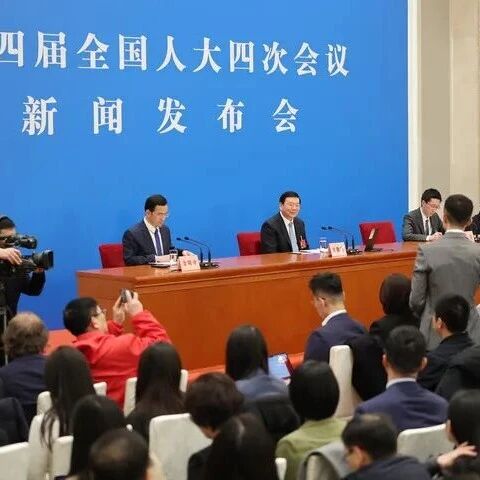
两会|人大会议首场发布会,要点速览→
证券时报· 2026-03-04 07:36
Core Viewpoint - The 14th National People's Congress (NPC) will hold its fourth session from March 5 to March 12, 2023, focusing on economic development, social welfare, and foreign policy [2][12]. Agenda Summary - The NPC session will include 11 main agenda items, such as reviewing the execution of the 2025 national economic and social development plan and the draft for 2026 [4]. - The session will also discuss the budget execution for 2025 and the draft budget for 2026 [4]. - Key legislative proposals include the Ecological Environment Code, the National Development Planning Law, and the Ethnic Unity and Progress Promotion Law [4][6][9]. Legislative Focus - The Ecological Environment Code aims to integrate existing environmental laws into a cohesive framework to enhance legal effectiveness in promoting green development [8]. - The Ethnic Unity and Progress Promotion Law is intended to ensure comprehensive leadership of the Party in ethnic affairs and to strengthen national unity [9]. - The government will also focus on laws related to childcare services, social assistance, and medical security to improve public welfare [7]. Economic Policies - The government emphasizes the importance of expanding domestic demand and boosting consumption as a strategic priority for economic growth [7]. - The basic policies for promoting the development of the private economy will remain unchanged, aiming to enhance confidence and momentum in the private sector [10]. International Relations - The NPC spokesperson highlighted the importance of mutual respect and cooperation in Sino-American relations, emphasizing the need for dialogue and collaboration [12]. - The spokesperson also noted that cooperation between China and Europe is beneficial for both parties, with a focus on economic development and addressing global challenges [13][14]. - The stance on Taiwan was reiterated, emphasizing that it is a core interest of China and rejecting any external interference in domestic affairs [15].