雨雪冰冻天气

Search documents
降温图变紫了!大范围雨雪冰冻持续,雪线再往南推
Xin Lang Cai Jing· 2026-01-19 11:01
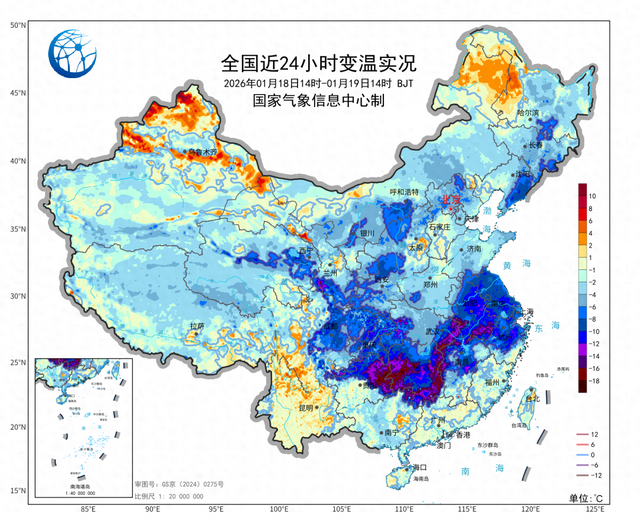
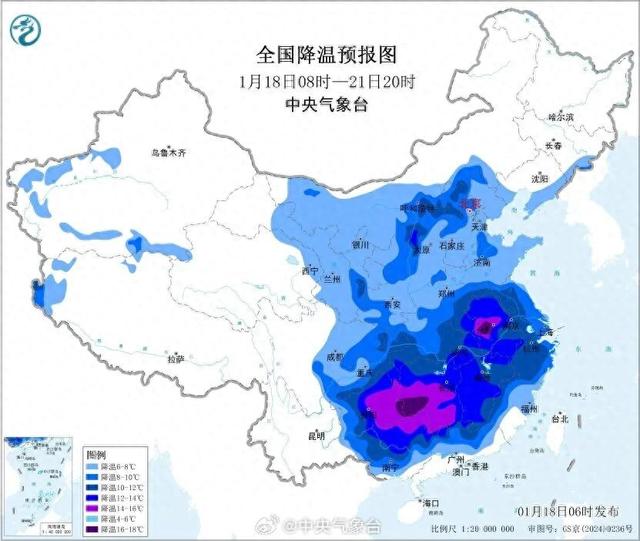
Core Viewpoint - A significant cold wave is impacting China, with temperatures dropping sharply across various regions, leading to the coldest period of the winter so far and extensive rain and snow events [1][3][4]. Group 1: Cold Wave Impact - The cold wave front has moved past the Yangtze River, with southern regions expected to experience the coldest temperatures during this event [1] - Northern areas are experiencing extreme cold, with temperatures in parts of Northeast China dropping below -10°C and some regions in Inner Mongolia falling below -20°C [3] - The temperature in the Yangtze River basin, which was previously warm, has now dropped to single digits [3] Group 2: Rain and Snow Events - The cold wave is interacting with warm, moist air, resulting in the strongest rain and snow events of the winter [4] - From 8 AM to 2 PM today, significant snowfall was reported in several provinces, including Gansu, Shaanxi, and Henan, with freezing rain observed in Xinyang, Henan [4] - The rain and snow line is expected to continue moving south, affecting areas such as Guangxi and parts of southern China [6][10] Group 3: Temperature Forecast - The coldest temperatures in southern regions are anticipated to occur in the next couple of days, with maximum temperatures around 0°C in the middle and lower reaches of the Yangtze River [8] - Major cities like Hefei, Wuhan, and Nanjing may experience their lowest temperatures of the winter, with some areas potentially dropping below 0°C for the first time this season [8] - The cold wave's effects are expected to persist for an extended period, particularly in areas north of the Yangtze River, with another weak cold air mass expected to arrive after the 25th [9] Group 4: Weather Conditions and Precautions - The rain and snow will continue to be widespread, with heavy snow expected in regions such as Henan and Hubei, and some areas may experience blizzard conditions [10] - The precipitation process is characterized by complex forms of precipitation, including freezing rain, which poses significant risks to transportation, agriculture, and power infrastructure [13] - The precipitation event is expected to conclude on the 22nd, after which warmer, drier conditions will return to much of the central and eastern regions [12]

寒潮继续影响我国中东部地区 鄂豫皖湘黔等地有雨雪冰冻天气
Zhong Guo Xin Wen Wang· 2026-01-19 01:22
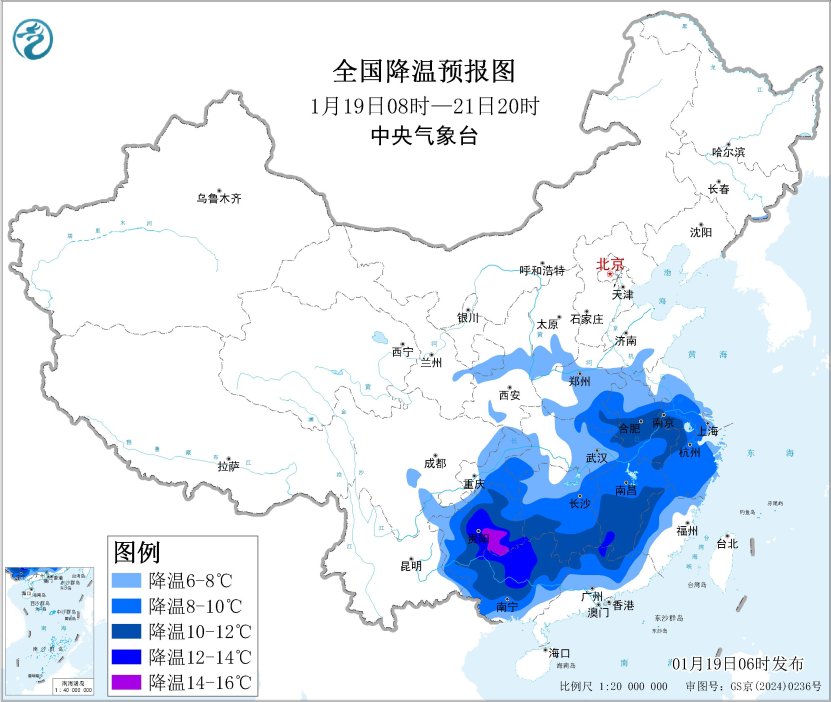
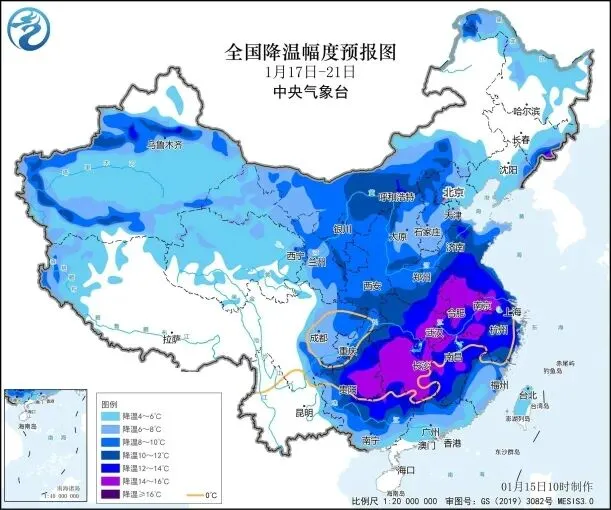
Core Viewpoint - A cold wave is impacting central and eastern China, leading to significant temperature drops and adverse weather conditions including snow, freezing rain, and strong winds from January 19 to 21 [1][2][6]. Weather Impact Summary - From January 19 to 21, temperatures in the Huanghuai region and southward are expected to drop by 6 to 10 degrees Celsius, with some areas experiencing drops of 10 to 14 degrees Celsius, and localized drops exceeding 16 degrees Celsius [2][6]. - The lowest temperature line is projected to move southward to areas including southern Guizhou, northern Guangxi, central Jiangxi, and southern Zhejiang by the morning of January 21 [2]. Snow and Rain Forecast - A widespread rain and snow event is anticipated across central and eastern regions, with complex precipitation types including rain, snow, and freezing rain [6][11]. - Specific areas such as southern Shaanxi, southern Henan, and parts of Hubei and Anhui are forecasted to experience heavy snow, with accumulations of 4 to 8 centimeters, and localized areas exceeding 12 centimeters [6][11]. Freezing Rain Alerts - Freezing rain is expected in parts of southeastern Henan, southwestern Anhui, and central Hubei, with ice accumulation ranging from 1 to 3 millimeters, and some areas potentially reaching 4 to 6 millimeters or more [8][10]. Wind Conditions - Wind speeds of 4 to 5 levels are forecasted in regions including northeastern Heilongjiang and northern Hebei, while coastal areas will experience stronger winds of 5 to 7 levels, with gusts reaching 8 levels [11][15].
受降雪、道路结冰等影响 多省区干线部分路段封闭管控
Xin Lang Cai Jing· 2026-01-18 10:12
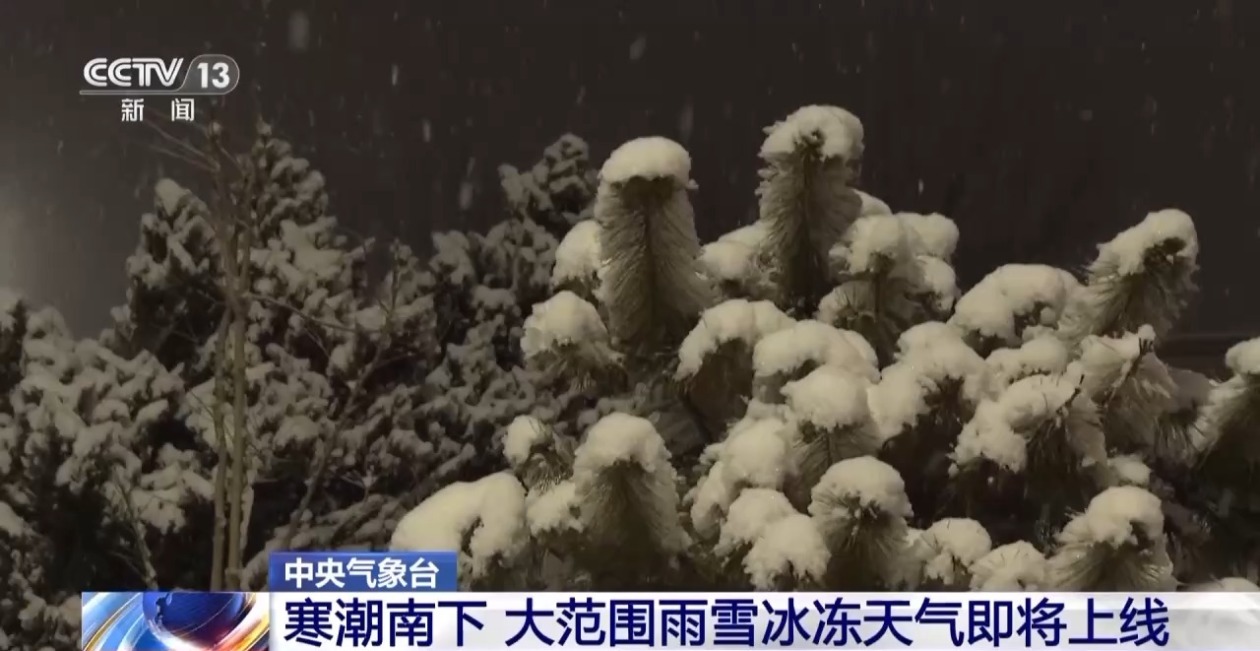
Core Viewpoint - A significant cold wave is affecting various regions in China, leading to widespread rain and snow, with the most severe weather expected in the coming days [1][3][14] Weather Impact - The cold wave has resulted in snow and sleet across regions such as Xinjiang, Inner Mongolia, Beijing, and Hebei, with some areas experiencing heavy snowfall [1][3] - The Central Meteorological Observatory predicts continued snow and sleet in multiple provinces, including significant snowfall in southern Shaanxi, southern Henan, and parts of Hubei [1][3][14] Transportation Disruptions - Due to the adverse weather conditions, several provinces have implemented road closures, with 40 road sections in Shandong, Shanxi, Inner Mongolia, and Xinjiang under control measures as of noon [5][6] - The closures affect 28 highways and one national and provincial road, with additional closures in Henan due to fog [6] Emergency Preparedness - In response to the snowfall, Beijing has mobilized over 4,000 emergency personnel and 2,600 snow removal machines, implementing specific measures for public transport and road safety [10] - Local authorities in Hunan are preparing for significant cold and snow, enhancing monitoring and preemptive measures to ensure road safety [12][14]
天气大反转!大雾过后紧接寒潮雨雪冰冻
Xin Lang Cai Jing· 2026-01-18 07:07
Core Viewpoint - A significant cold wave is expected to impact various regions in China, with temperatures dropping sharply and severe weather conditions including rain, snow, and ice forecasted [1][15]. Group 1: Weather Forecast - The Central Meteorological Administration has issued a blue alert for a cold wave, predicting the strongest rain, snow, and freezing weather since the start of winter across central and eastern regions [1]. - Temperatures are expected to plummet by 15°C to 20°C within 1 to 2 days, transitioning from mild to extremely cold conditions [1]. - In Guangxi, a strong cold air mass will lead to a significant drop in temperatures, with forecasts indicating minimum temperatures in high-altitude areas dropping to between -5°C and 1°C [7][14]. Group 2: Visibility and Safety Alerts - A fog warning has been issued for several cities in Guangxi, with visibility expected to drop below 1000 meters in some areas, and below 200 meters in localized regions [3][12]. - The cold wave and associated weather conditions are likely to adversely affect transportation, prompting safety advisories for travel and outdoor activities [17]. Group 3: Temperature Predictions - The forecast indicates that from January 19 to January 22, temperatures will drop significantly, with minimum temperatures across Guangxi expected to fall below 10°C in most areas [15]. - Specific temperature ranges include -7°C to -1°C in high-altitude regions, and 1°C to 8°C in northeastern Guangxi [10][14].
今年首场寒潮来袭 中东部多地将迎大范围雨雪冰冻天气
Xin Lang Cai Jing· 2026-01-17 12:35
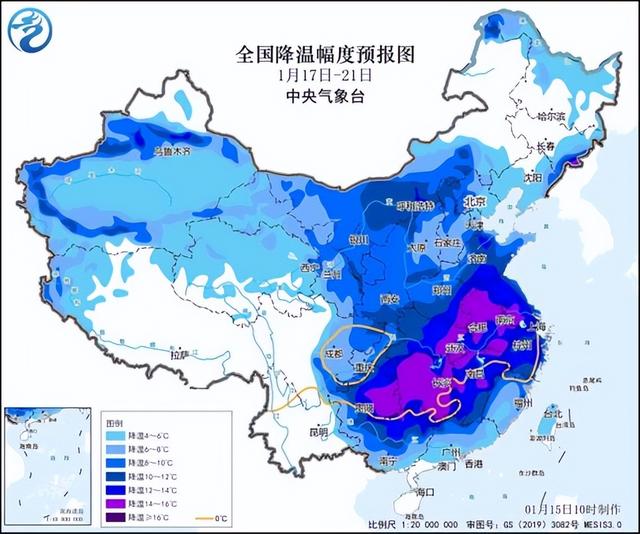
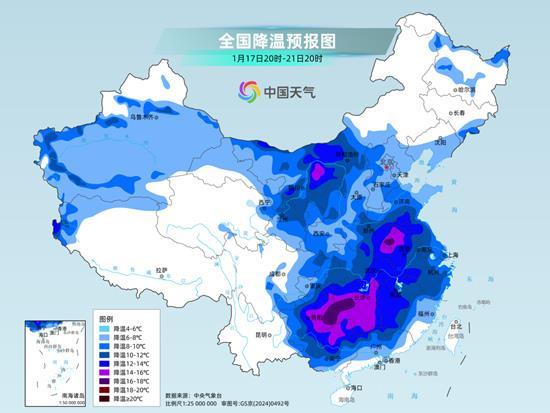
Group 1 - The core point of the article highlights the arrival of the first cold wave of 2026, with temperatures in Urumqi dropping to nearly -20°C, marking a new low for this winter [1] - The cold wave is expected to significantly alter the recent warm weather pattern, leading to record low temperatures in many regions over the coming days, potentially making it the coldest period of the winter [1][3] - The Central Meteorological Administration forecasts a widespread temperature drop of 6-12°C across most of the country, with some areas experiencing drops of 12-14°C and localized drops exceeding 16°C [3] Group 2 - The cold wave will particularly impact northern regions, with cities in Anhui, Henan, Hubei, Hunan, and Guizhou expected to see maximum temperature drops exceeding 20°C, creating a stark contrast from warm to extremely cold conditions [3] - Rain and snow are anticipated in provinces such as Shandong, Henan, Hubei, Anhui, Hunan, and Jiangxi, with some areas facing heavy snow or blizzards, while freezing rain may occur in nearly ten provinces including Hubei and Hunan [5] - The article notes a significant temperature difference between Yunnan and Guizhou due to a quasi-stationary front, with Yunnan remaining around 20°C while Guizhou experiences temperatures below 5°C along with wet and cold weather [7]
寒潮来袭!大范围雨雪冰冻天气即将上线!对昆明有影响吗?
Xin Lang Cai Jing· 2026-01-17 09:29
Core Viewpoint - A significant cold wave is expected to impact China from January 17 to 21, bringing strong winds and a notable drop in temperatures, particularly in southern regions, with the central and eastern areas experiencing the strongest rain, snow, and ice since winter began [1]. Group 1: Temperature and Weather Forecast - The cold wave will cause temperatures across most of China to drop by 6 to 10 degrees Celsius, with certain areas like the Tianshan region in Xinjiang, central and western Inner Mongolia, and parts of the Yangtze River basin experiencing drops exceeding 12 degrees Celsius [1]. - Wind speeds are expected to reach 4 to 6 levels from the north, with gusts between 7 to 9 levels [1]. Group 2: Regional Weather Impact - In Kunming, the weather will remain mostly sunny over the weekend, with maximum temperatures gradually rising to 19-20 degrees Celsius, but significant temperature differences between day and night will persist, with minimum temperatures around 4-5 degrees Celsius [4]. - The air humidity in Kunming is decreasing due to the lack of rainfall, leading to an increased forest fire risk, which may reach levels 2 to 3 [5]. Group 3: Broader Weather Effects - The cold wave will affect various regions sequentially, impacting northern areas like Xinjiang and Gansu on January 17, moving to eastern and central Inner Mongolia and North China on January 18, and continuing to affect the central and eastern regions on January 19 [5]. - By January 21, the zero-degree line will move south to areas from Guizhou to southern Jiangnan, with low temperatures expected to persist in southern regions until January 23 due to supplementary cold air [5].
18日至21日寒潮来袭 陕西大部气温下降8℃至10℃
Xin Lang Cai Jing· 2026-01-17 05:22
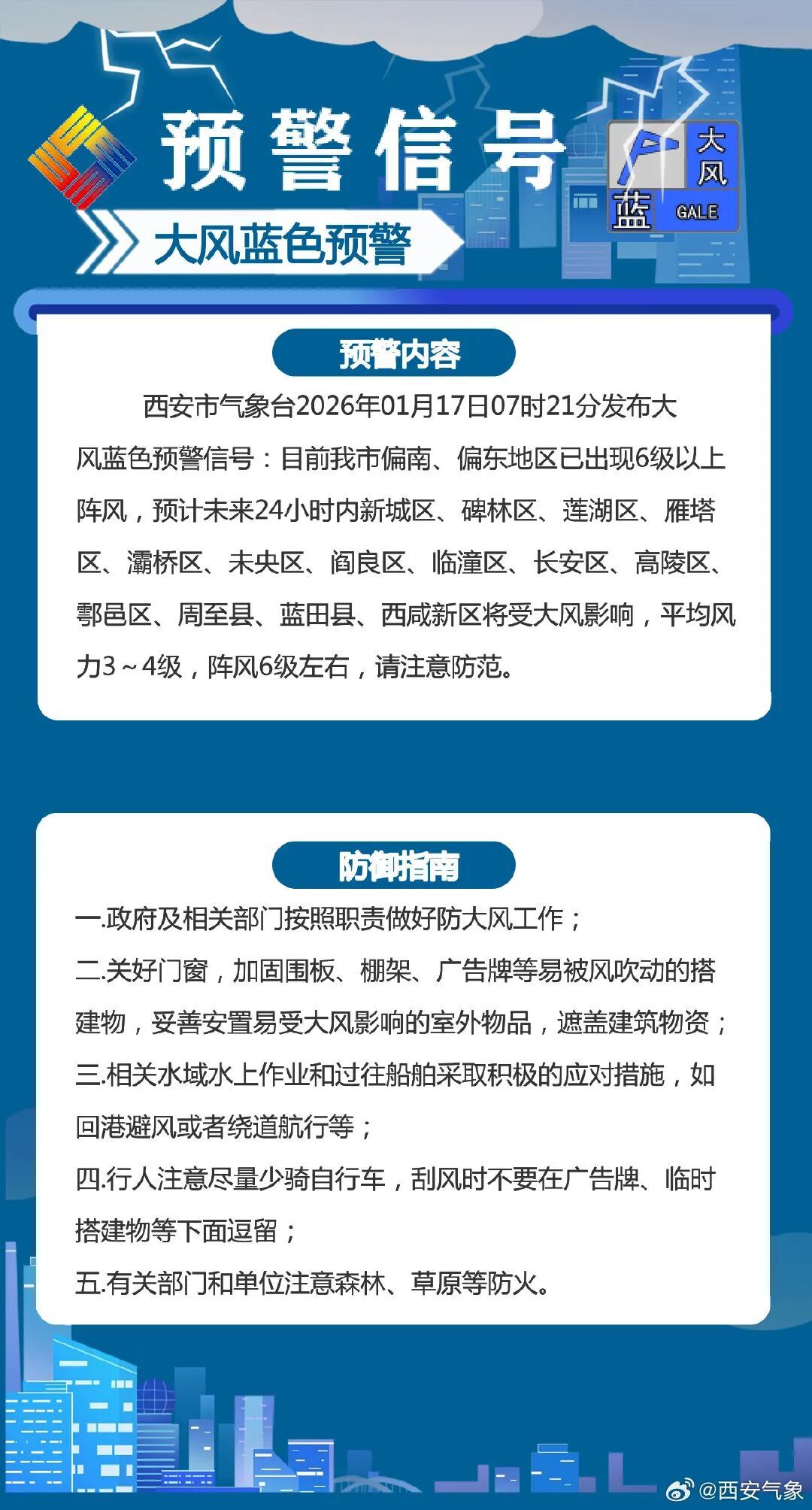
Summary of Key Points Core Viewpoint - A significant cold wave is affecting Shaanxi province from January 18 to 21, leading to a temperature drop of 8°C to 10°C across most areas, with some regions experiencing drops of over 12°C [1]. Group 1: Weather Impact - The cold wave has resulted in moderate to heavy snowfall in the Guanzhong area, southern Shaanxi, and the Qinba mountainous region, with local areas experiencing blizzards [1]. - Snow accumulation is expected to reach 1 cm to 5 cm in southern and central Shaanxi, 3 cm to 6 cm in Guanzhong, 5 cm to 12 cm in the Qinba region, and 1 cm to 2 cm in the Ankang valley [1]. - Wind gusts of 6 to 7 levels are anticipated in some areas during the rain and snow event [1]. Group 2: Transportation and Infrastructure - The inclement weather poses high safety risks for transportation on major highways and railways, including the Lianhuo Expressway and Jingkun Expressway [1]. - Recommendations include increasing inspections of key infrastructure such as roads, bridges, and tunnels, and preparing energy reserves [1]. Group 3: Agricultural Risks - The weather is expected to create snow disaster risks for facility vegetables and fruits in southeastern Weinan, southeastern Xi'an, and northeastern Shangluo [1]. - Low-temperature disaster risks for facility agriculture are anticipated in northern Yulin, northern and southeastern Weinan, and several other regions [1]. - Suggestions for mitigating risks include reinforcing facility structures, clearing snow from roofs, and implementing temperature control measures in affected areas [2].
今年首场大范围寒潮来袭 各地各部门“以雪为令”保通保畅保障“温暖过冬”
Yang Shi Wang· 2026-01-17 02:07
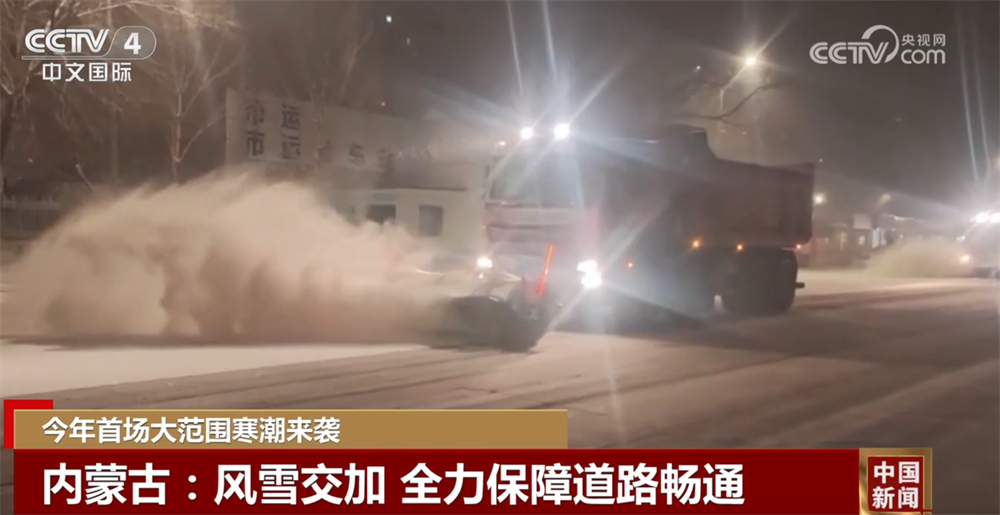
Group 1 - A significant cold wave is expected to impact most regions of China from January 17 to 21, with average daily or minimum temperatures dropping by 6 to 12 degrees Celsius, and some areas experiencing drops of 12 to 14 degrees Celsius, with localized drops exceeding 16 degrees Celsius [1] - Inner Mongolia is facing heavy snowfall, with the maximum snowfall recorded at 3.5 millimeters, prompting local authorities to mobilize snow removal equipment to ensure road accessibility [2] - In Jilin Province, temperatures have plummeted to minus 25 degrees Celsius due to continuous snowfall, with railway departments working overnight to clear ice and snow to maintain operational lines [6] Group 2 - Liaoning Province has issued a yellow cold wave warning, with temperatures expected to drop below minus 20 degrees Celsius in the northern and central regions, and mountainous areas potentially reaching minus 26 to minus 31 degrees Celsius [9] - Xinjiang's G30 Lianhuo Expressway is experiencing strong snowfall, leading to traffic control measures and continuous snow removal operations by local authorities [11] - Beijing is forecasted to experience significant snowfall on January 17 and 18, with daytime temperatures dropping below freezing and a notable wind chill effect expected [13]
四九开场今年首场寒潮发货 雨雪冰冻天气逐渐增多
Yang Shi Wang· 2026-01-17 01:14
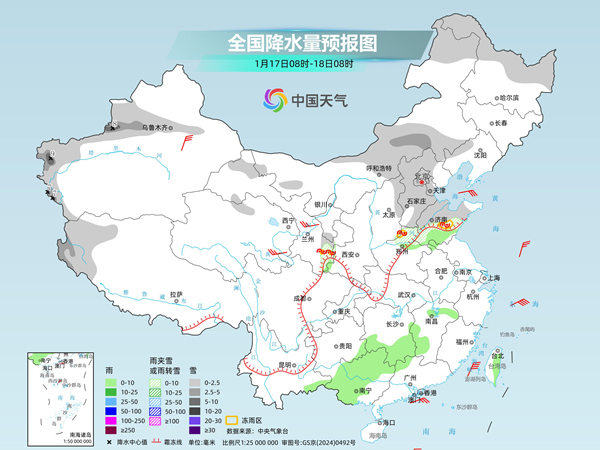
Core Viewpoint - A significant cold wave is set to impact a large part of China, leading to drastic temperature drops and severe weather conditions including rain, snow, and ice from January 17 to 21 [1][2][3] Group 1: Temperature Changes - The cold wave will cause temperatures in the central and eastern regions to drop significantly, with daily maximum temperatures decreasing by around 10°C in areas such as southern Huanghuai, northern Jianghuai, and northern Jianghan [2] - The average or minimum temperatures across most regions will decline by 6 to 12°C, with some areas experiencing drops of 12 to 14°C, and localized decreases exceeding 16°C [2][3] Group 2: Weather Conditions - The cold wave will bring widespread rain and snow, with complex precipitation patterns expected in the regions south of the Qinling-Huaihe line, including rain, snow, and freezing rain [3][5] - Areas such as southern Shaanxi, southern Shanxi, Henan, Shandong, and parts of Hubei and Hunan may experience heavy snow, while freezing rain is anticipated in regions like central Henan and western Hubei [3][5] Group 3: Public Safety and Preparedness - The public is advised to take precautions against the cold and potential health risks associated with respiratory and cardiovascular diseases due to the sudden temperature changes [2] - Authorities recommend monitoring weather alerts and taking measures to ensure safety on roads due to possible ice and slippery conditions [6]
今年首场大范围寒潮来了!此次雨雪到底有多强
Xin Lang Cai Jing· 2026-01-16 14:58
Group 1 - The core viewpoint of the article is that a significant cold wave is set to impact China from January 17 to 21, bringing the strongest rain, snow, and freezing weather of the winter season to the central and eastern regions [1][2][3] Group 2 - The cold wave is expected to cause temperature drops of 6 to 10 degrees Celsius across most of the country, with some areas experiencing drops exceeding 12 degrees Celsius [2][4] - The main impact period of the cold wave is from January 17 to 21, with a gradual southward penetration pattern [3][4] - This cold wave differs from the 2016 "King of Cold" wave and the 2008 snow disaster, as it features a gradual rather than rapid southward movement and is characterized as a "process" rather than "persistent" cold weather event [3][4]