寒潮天气

Search documents
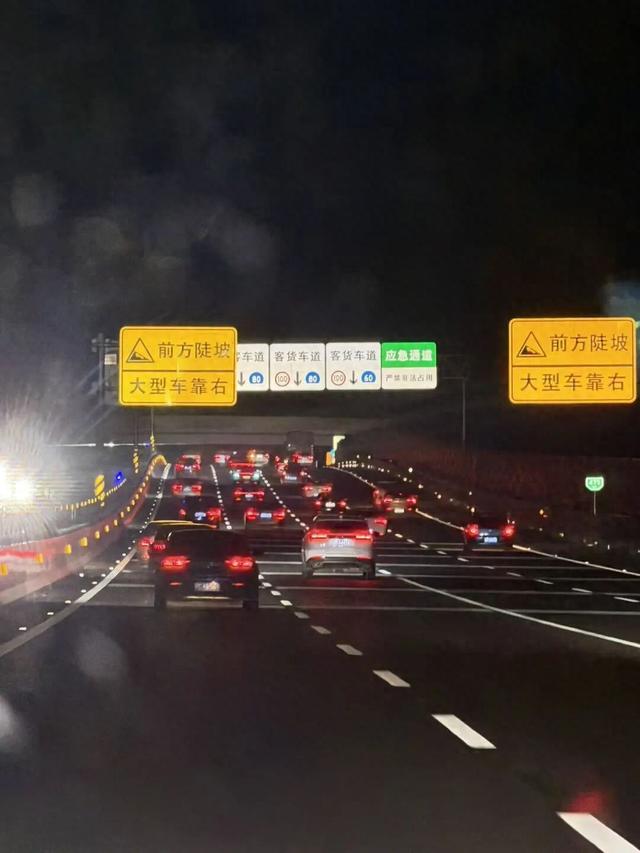
“上了高速,发现全是聪明人”!还有人带了一锅饭……
Xin Lang Cai Jing· 2026-02-22 16:55
Group 1 - The article discusses the heavy traffic and long travel times experienced by individuals returning home after the Spring Festival holiday, with reports of journeys taking significantly longer than usual [1][5][9] - Social media posts highlight the frustrations of travelers, with some reporting travel times of 15 hours for a trip that typically takes 10 hours, and others facing similar delays [3][7][9] - The article mentions that the return traffic is particularly heavy on major highways, such as the Shanghai-Chongqing and Beijing-Shanghai expressways, leading to significant congestion [20] Group 2 - The article provides practical advice for travelers, including the use of electric rice cookers to prepare meals on long journeys, which has been a trend for three consecutive years among some travelers [14][17] - Weather conditions are also discussed, with warnings of a cold wave affecting northern regions, leading to temperature drops exceeding 10°C, as well as strong winds and dust storms impacting visibility and travel safety [20] - The article emphasizes the importance of being prepared for adverse weather conditions and traffic congestion during the return journey, suggesting that travelers should consider these factors when planning their trips [20]

中央气象台四预警齐发!东北局地降温可达16℃以上
Xin Lang Cai Jing· 2026-02-21 09:00
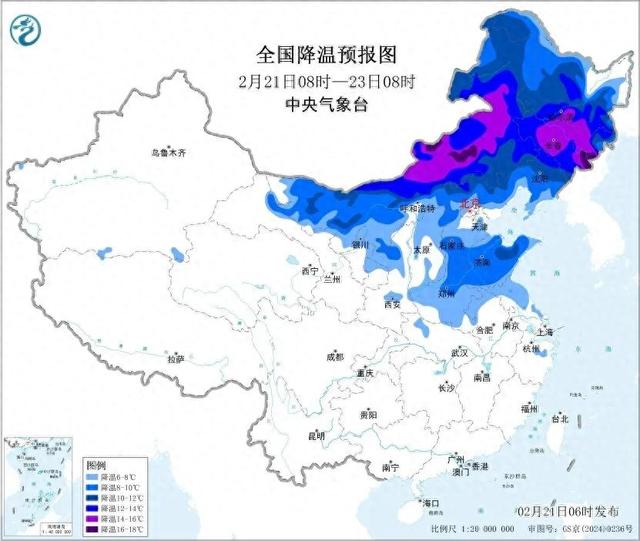
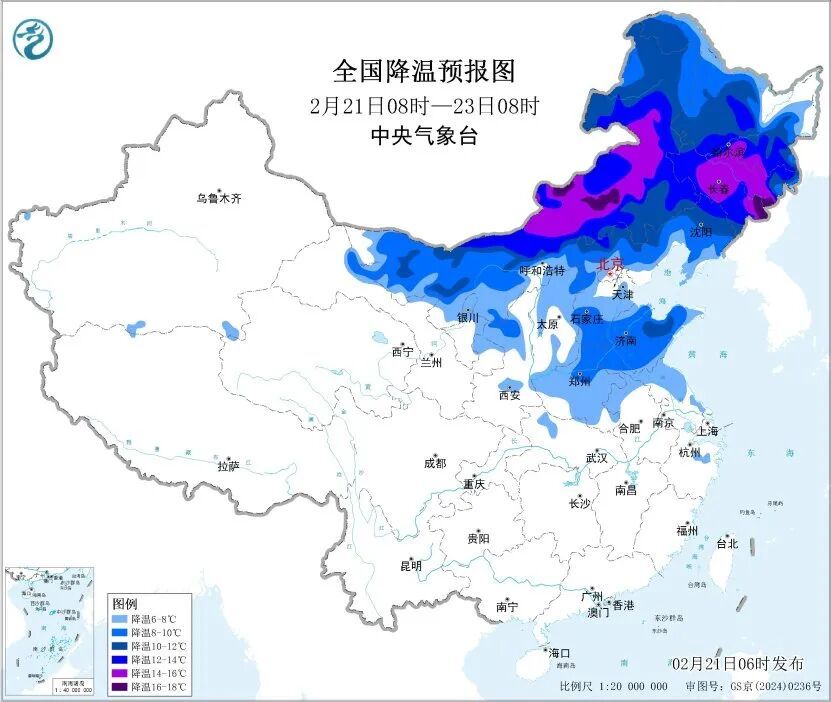
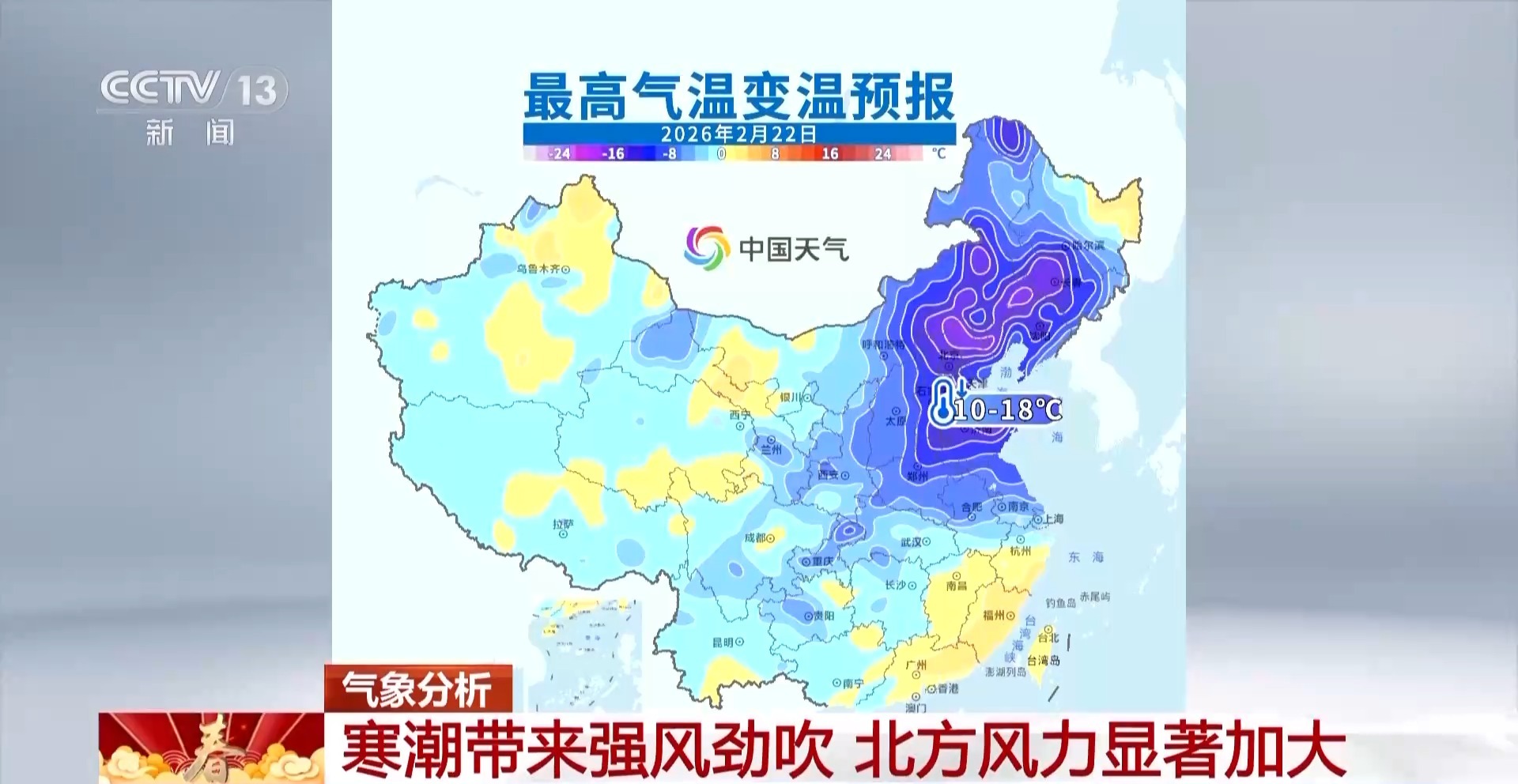
Core Viewpoint - A significant weather change is expected in China, with a drop in temperatures and adverse weather conditions affecting travel during the Spring Festival return period [1][7]. Group 1: Temperature Changes - The Central Meteorological Administration forecasts a temperature drop of 6 to 10 degrees Celsius across most areas north of the Yellow River, with some regions experiencing drops of 12 to 16 degrees Celsius [2][3]. - Specific cities will see drastic temperature changes, such as Harbin's high dropping from 10 degrees Celsius to -8 degrees Celsius and Zhengzhou's high falling from 27 degrees Celsius to 9 degrees Celsius [3]. Group 2: Precipitation and Weather Warnings - Significant snowfall is expected in Inner Mongolia and Northeast China, with some areas receiving an additional 10 to 20 centimeters of snow [4][6]. - Widespread rainfall is anticipated in regions south of the Yellow River, with some areas experiencing severe convective weather [4][6]. Group 3: Impact on Travel - The weather changes, including strong winds and sandstorms, will significantly impact travel, particularly during the peak return period of the Spring Festival [7][8]. - The strongest winds are expected today, with gusts reaching 9 to 11 levels, and the sandstorm's intensity and range are predicted to be the largest this year [7].
四预警齐发!局地降温可达16℃以上
Xin Lang Cai Jing· 2026-02-21 04:52
Core Viewpoint - A significant weather change is expected in China, with a drop in temperatures and adverse weather conditions affecting travel during the Spring Festival return period [1][10]. Weather Forecast - From February 21 to 22, temperatures in northern China will drop by 6 to 10 degrees Celsius, with some areas experiencing a decrease of 12 to 16 degrees Celsius, and localized drops exceeding 16 degrees Celsius [3][5]. - The Central Meteorological Observatory has issued multiple weather warnings, including yellow alerts for strong winds and sandstorms, blue alerts for snowstorms, and blue alerts for cold waves [2][10]. Precipitation and Snowfall - Significant snowfall is expected in Inner Mongolia and northeastern regions, with some areas anticipating an additional 10 to 20 centimeters of snow [7]. - Starting tomorrow, widespread rainfall will occur in the Huanghuai region and southward, with some areas experiencing severe convective weather [6][9]. Impact on Travel - The weather changes, particularly the cold wave and strong winds, will significantly impact travel and return journeys during the Spring Festival, especially in northern regions [10][12]. - The strongest wind effects are expected today, with gusts reaching 9 to 11 levels, and the most severe sandstorm conditions will also occur today, particularly in western Inner Mongolia and Gansu [10].
强冷空气携大风沙尘降温来袭 会影响返程吗?
Xin Lang Cai Jing· 2026-02-21 00:47
Group 1 - The core viewpoint of the article highlights the impact of a strong cold air mass bringing significant weather changes, including extreme temperature drops, strong winds, and widespread sandstorms, particularly affecting travel during the holiday season [1][3]. - This cold air mass is characterized by a typical cold high-pressure system combined with a Mongolian cyclone, creating a large pressure gradient that leads to strong winds [3]. - The strongest winds are expected today, with gusts reaching levels of 9 to 11, and the conditions are favorable for significant sand lifting due to low soil moisture in the sand source areas [3][5]. Group 2 - The sandstorm's intensity and range are noted to be the largest observed this year, which is unusual for this time of year [7]. - The sandstorm is expected to expand southward to the lower Yangtze River region, with the most severe impacts occurring today [5]. - The combination of strong winds and sand will significantly reduce visibility, posing challenges for travel and necessitating precautions for outdoor activities [7].
陕西:雨夹雪,局地大到暴雪!23—24日雨雪范围确定
Xin Lang Cai Jing· 2026-02-16 04:37
Group 1 - A cold wave is currently affecting China, with temperatures in Shaanxi province dropping by 7 to 18 degrees Celsius compared to the previous day [1] - The lowest temperatures recorded as of 6 AM on February 16 include -20.9°C in Shenmu and -12.3°C in Yintai [2][3] - Rain and snow are expected in parts of southern Shaanxi today, with small to moderate snow or sleet in the Qinba Mountains and heavy snow in localized areas [5] Group 2 - The weather forecast for the next 4-14 days indicates mostly sunny to partly cloudy conditions from February 19 to 22, with a subsequent drop in temperature and windy conditions [6] - Rain and snow are anticipated again on February 23-24 in the Guanzhong and southern Shaanxi regions [6] - The upcoming round of rain and snow coincides with a peak travel period, advising caution for pedestrians and drivers [10]
中东部气温玩起“折返跑”,明天这些地方降温超10℃
Xin Lang Cai Jing· 2026-02-15 11:37
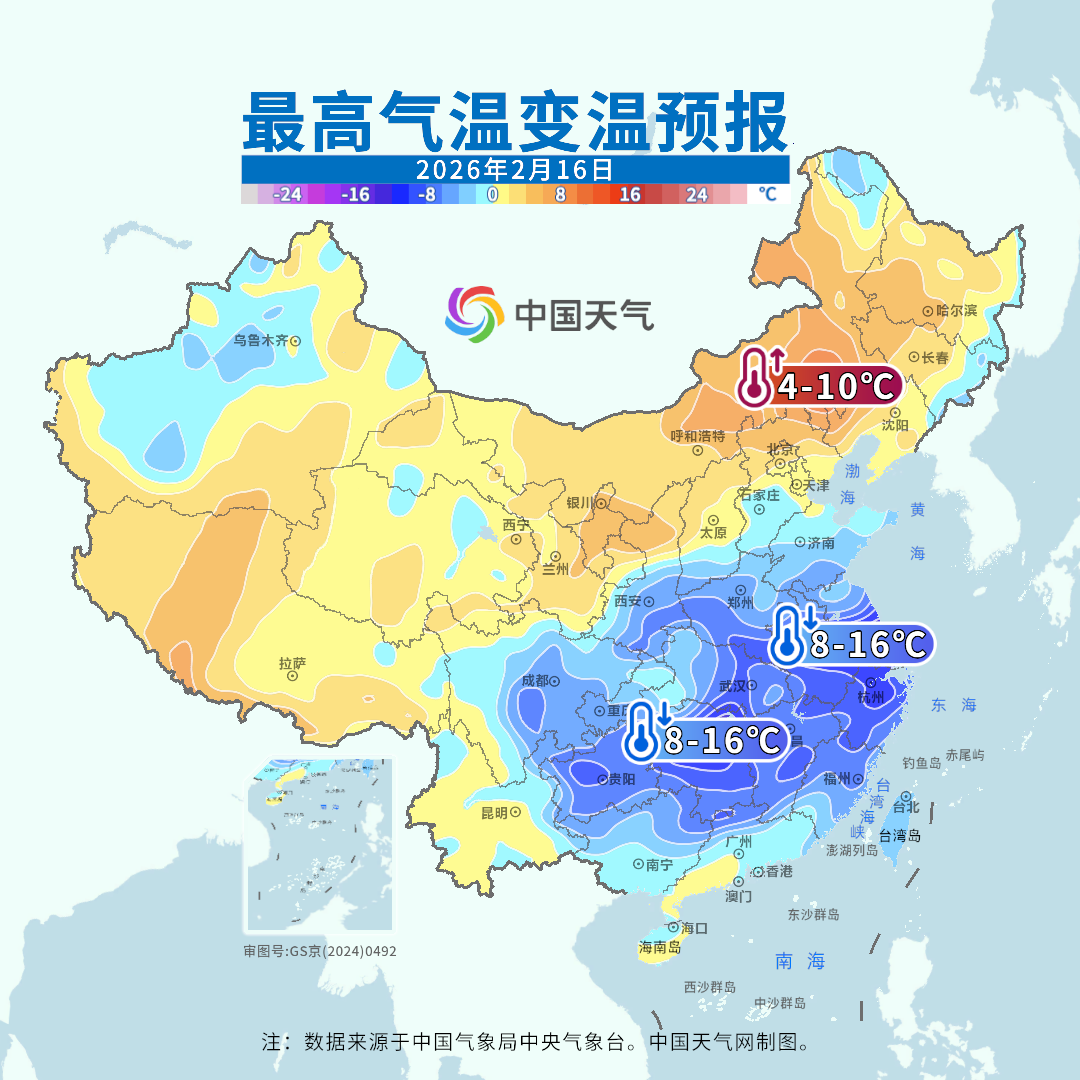
Group 1 - A cold wave is affecting the central and eastern regions of China, with temperatures dropping by 10-20°C in many areas north of the Yangtze River [1] - The cold wave is expected to rapidly advance to the Jiangnan region, with maximum temperatures in areas from central Guizhou to Jiangnan dropping by 8-16°C [3] - Cities like Changsha will experience a significant temperature drop from around 25°C to 8°C, indicating a single-day temperature decrease of 17°C [5] Group 2 - Precipitation in the central and eastern regions is expected to be widespread but will show a weakening trend overall [7] - From February 17 to 19, light rain is expected in southern regions, with specific areas like Guizhou, Guangxi, and Fujian still experiencing small rain on the first day of the Lunar New Year [9] - Rainfall in the south will remain weak until the fifth day of the Lunar New Year, which is favorable for travel, although frequent overcast and rainy weather will persist in areas like Guizhou, Hunan, and Guangxi [10]
中央气象台:内蒙古东北地区等地出现大幅降温 寒潮雨雪继续影响中东部
Xin Lang Cai Jing· 2026-02-15 03:15
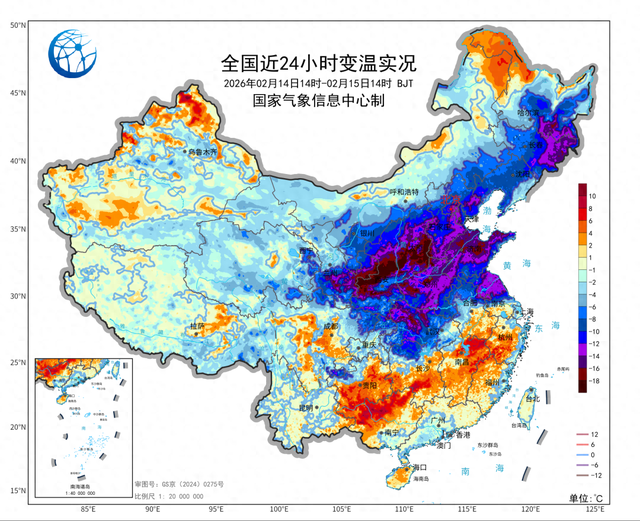
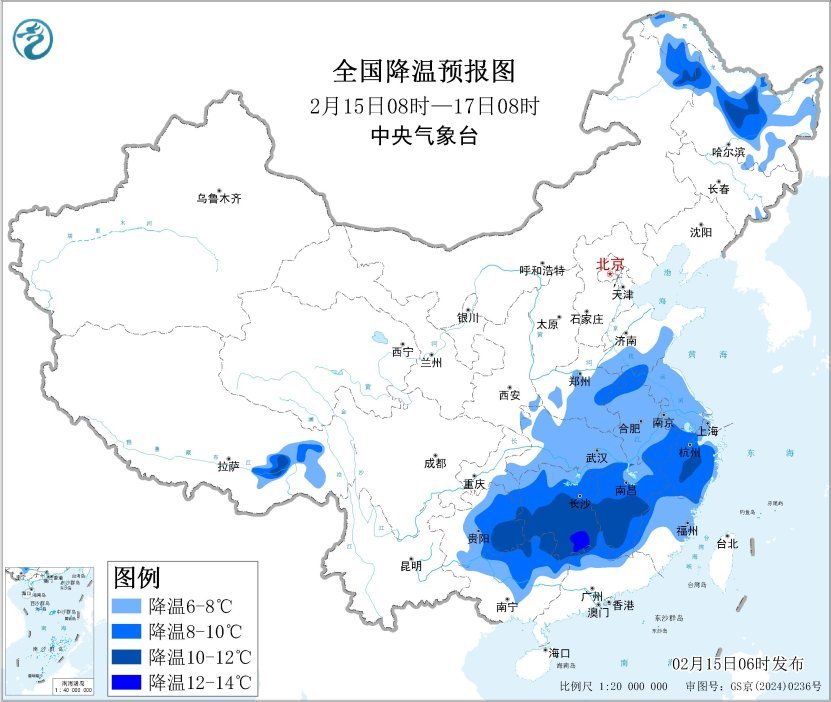
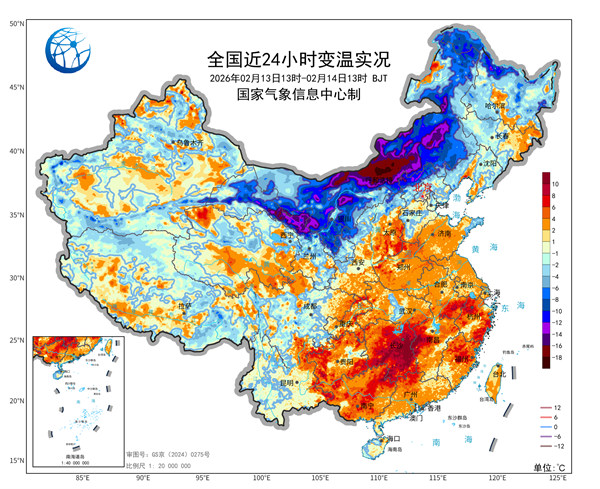
Group 1 - A significant temperature drop of 6 to 10 degrees Celsius has been observed in regions such as Inner Mongolia, Heilongjiang, Jilin, and Liaoning, with some areas experiencing drops exceeding 12 degrees Celsius [1] - A cold wave is expected to continue affecting the central and eastern regions of China, bringing further temperature drops, strong winds, and rain or snow over the next two days [1] - The Central Meteorological Observatory has issued blue alerts for cold waves and strong winds, predicting average wind speeds of around 5 levels and gusts of 6 to 8 levels in various regions [1] Group 2 - Rainfall is anticipated in eastern Chongqing, eastern and southern Hubei, northern Hunan, and other areas, with some regions experiencing heavy rain and potential thunderstorms [3] - Areas such as the eastern Tibetan Plateau and parts of Xinjiang are expected to see light to moderate snow or sleet, with localized heavy snow [3] - Public travel advisories have been issued, urging individuals to monitor weather conditions and adjust travel plans accordingly [3] Group 3 - Dense fog has been reported in southeastern Jiangsu, Shanghai, and other regions, with visibility dropping below 200 meters in some areas [5] - A yellow alert for fog has been issued, indicating visibility below 1 kilometer in several provinces, necessitating caution for transportation [5] - Coastal areas such as Fujian and Guangdong are also expected to experience low visibility due to fog, impacting maritime traffic [5]
局地降温超20℃!春节前寒潮来袭,冷暖快速切换,暴雪大雨也上线
Yang Shi Wang· 2026-02-14 10:46
Core Viewpoint - A significant cold wave is impacting China, leading to rapid temperature fluctuations and widespread precipitation, particularly affecting the central and eastern regions as the Spring Festival approaches [1][5]. Group 1: Temperature Changes - The cold wave has already begun to affect regions such as Gansu, Ningxia, and Inner Mongolia, with temperature drops exceeding 10°C in many areas [3]. - Major temperature declines are expected tomorrow, with some areas in Henan, Shandong, and Jiangsu experiencing single-day drops of over 10°C, and localized drops reaching 20°C [4]. - On the eve of the Spring Festival (February 16), the core area of temperature decline will shift southward, with regions like Guizhou, Hunan, Jiangxi, Zhejiang, and Anhui seeing drops between 12°C and 22°C [4]. Group 2: Precipitation and Weather Conditions - A large-scale rain and snow event is anticipated, with the most intense precipitation occurring tomorrow, particularly in regions such as southeastern Tibet, central western Sichuan Plateau, northern Hubei, and western Henan, where heavy snow is expected [12]. - On February 16, the intensity of rain and snow will decrease, but areas like eastern Tibet and parts of Inner Mongolia will still experience light to moderate snow or sleet [13]. - By February 17 (the first day of the Lunar New Year), regions including Guizhou, Guangxi, Hunan, Jiangxi, and Fujian will continue to see overcast and rainy weather [14]. Group 3: Temperature Recovery - Following the cold wave, temperatures are expected to rise quickly starting February 17, with most areas experiencing a warming trend until February 21, when no significant cold air activity is forecasted [10]. - By February 20 (the fourth day of the Lunar New Year), many southern regions will see maximum temperatures return to above 20°C, with the 10°C isotherm moving north into southern Northeast China [11].
专家解读丨春节前夕返乡须留意大雾影响 南方多地有强对流天气
Xin Lang Cai Jing· 2026-02-14 08:18
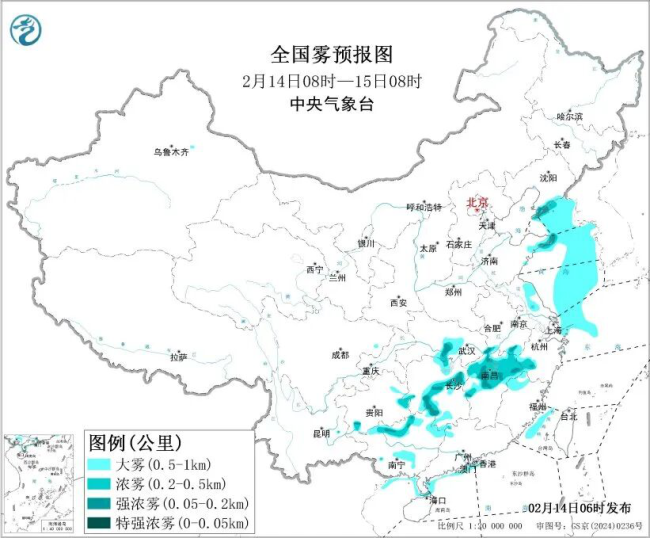
Core Viewpoint - A cold wave and significant fog are expected to impact large areas of central and eastern China from February 14 to 16, with accompanying rain and potential severe weather conditions [1][5]. Weather Warnings - The Central Meteorological Observatory issued a blue alert for cold waves and a yellow alert for fog, indicating visibility issues in various coastal and inland areas [1]. - Visibility in certain regions, including the Yellow Sea and East China Sea, is expected to drop below 1 kilometer, with some areas experiencing dense fog with visibility under 500 meters [1]. Temperature Changes - The cold wave is projected to cause temperature drops of 6°C to 10°C across most of central and eastern China, with some areas experiencing drops of 10°C to 12°C, and localized drops exceeding 14°C [5][8]. Rain and Snow Forecast - Rain and snow are anticipated, particularly on February 15, with regions such as Xinjiang, Tibet, and parts of central and southern China experiencing light to moderate snow or sleet [8]. - Areas in Hubei and Hunan are expected to see heavy rain, with localized thunderstorms and potential for severe weather including hail and short-term heavy rainfall [5][8]. Impact on Travel and Safety - The low visibility and severe weather conditions may affect aviation and coastal tourism, necessitating caution for travelers during this period [3][5]. - The combination of cold temperatures, strong winds, and wet conditions will create hazardous travel conditions, particularly on roads [8].
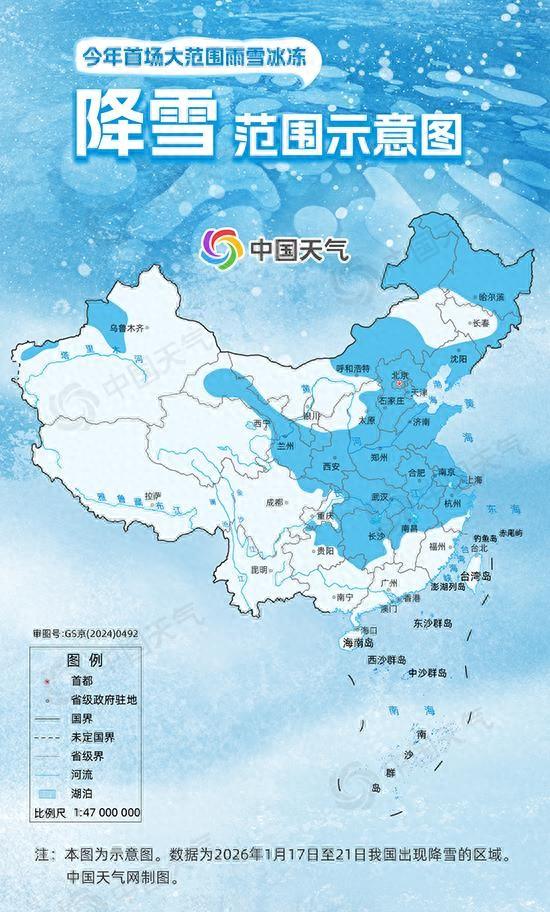
数说今年首场寒潮雨雪冰冻有多强,南北方各地何时回暖
Xin Lang Cai Jing· 2026-01-22 08:53
Core Insights - A significant cold wave has impacted central and eastern China, bringing the first large-scale rain, snow, and ice weather event of the winter from January 17 to 21, affecting over twenty provinces [1][2][3] Summary by Sections Snow and Ice Impact - The core areas of snowfall were identified in Henan, northern Hubei, and northern Anhui, with some regions experiencing heavy to extreme snowfall, such as over 20mm of precipitation in places like Jinzhai, Quxian, and Danjiangkou on January 19 [3][4] - Accumulated precipitation ranged from 5 to 15mm in many areas, with specific locations like Zhumadian in Henan and Liu'an in Anhui receiving between 20 to 26mm [1][2] Freezing Rain - Freezing rain occurred in regions including southern Hunan, central Hubei, and parts of Guizhou, with the maximum ice thickness reaching 169mm in Hunan [4] - Ice accumulation affected power lines in multiple counties across Hunan, Guizhou, and Hubei, leading to significant disruptions [4] Temperature Drops - A drastic temperature drop was recorded across most of the country, with average daily temperatures falling by 6°C to 10°C, and some areas experiencing drops of 12°C to 20°C [6][7] - Major cities reported record low temperatures, with Harbin reaching -30.1°C on January 18, marking the lowest temperature recorded in urban areas this winter [7][9] Future Weather Outlook - As of January 22, the cold wave's impact is diminishing, with southern regions expected to experience a stable warming trend, while northern areas will see slower and more variable temperature increases [10][12] - By January 25, temperatures in southern regions are projected to rise above 20°C, while northern areas, particularly in the northeast, will continue to experience below-average temperatures for at least the next week [12]