Asset Prices

Search documents
X @Anthony Pompliano 🌪
Anthony Pompliano 🌪· 2025-12-05 16:47
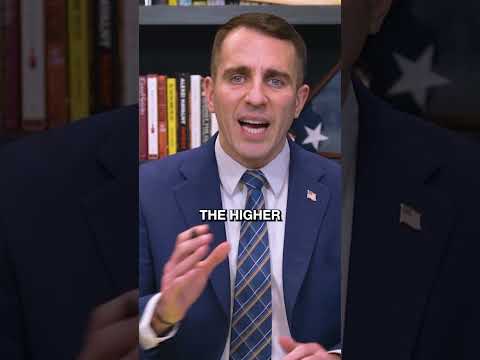
QT is ending.QE is coming.@dgt10011 explains what will happen to asset prices. https://t.co/HnuUUWsb4w ...
Is Your Retirement Income Enough? How I Leveled Up Mine With Covered Call ETFs
Seeking Alpha· 2025-12-03 14:15
The harsh reality is that most asset prices are negatively correlated with the changes in interest rates. For example, if the rates go down, the asset prices go up. The mathematical consequence of this is that the yields tendRoberts Berzins has over a decade of experience in the financial management helping top-tier corporates shape their financial strategies and execute large-scale financings. He has also made significant efforts to institutionalize REIT framework in Latvia to boost the liquidity of pan-Ba ...


X @Anthony Pompliano 🌪
Anthony Pompliano 🌪· 2025-11-16 21:43
RT Anthony Pompliano 🌪 (@APompliano)I sat down with @jvisserlabs this week to discuss the recent sell-off in asset prices, including why the absence of a clear catalyst matters, how it may change the way you think about your portfolio, and where Jordi believes capital could rotate over the next 12–16 months.We also dig into Bitcoin’s lackluster performance, whether investors should be worried, and how to interpret the current market environment.Enjoy!YouTube: https://t.co/GdNBQM2qjWSpotify: https://t.co/Bv9 ...
Fed's Musalem Sees Labor Market Cooling, Urges Caution on Rates
Bloomberg Television· 2025-11-10 15:36
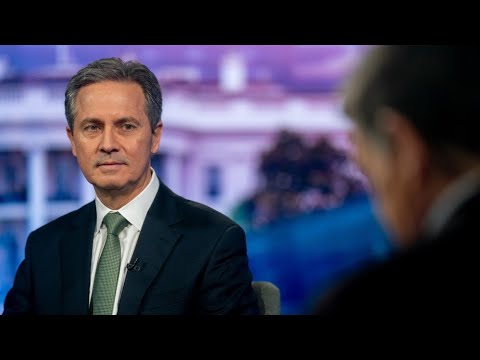
Economic Outlook - The economy has been resilient, with growth around 18% annually, despite uncertainty [2] - The labor market has been near full employment but is cooling, with both demand and supply decreasing [2] - Inflation is closer to 3% than the 2% target [2] - Companies report resilient consumption, with growth being fine, and the labor market softening slightly [5] Consumer Finance - Higher-income households are consuming due to wealth effects from the stock market and home prices [7] - Lower-income households are taking on more credit card debt to maintain consumption [7] - Consumer balance sheets are generally okay, but there was an increase in subprime loan and credit card defaults over the past year, which have since stabilized [8][9] Business Concerns - Companies indicate uncertainty has plateaued, allowing them to operate with a higher level of uncertainty [11] - Some companies are passing on higher costs related to terrorism, insurance, and upstream production [11][12] - Companies closer to the consumer are facing difficulty passing on costs due to pushback from final buyers [12][13] Labor Market - The labor market is cooling in an orderly way, with both supply and demand decreasing [13] - Layoff announcements have been noted, but weekly claims remain stable [13][14] Monetary Policy - Monetary policy should consider both cyclical/demand-side factors and structural transitions in the economy [15][16] - The real federal funds rate has declined by 250 basis points in the past year, with 150 basis points from nominal interest rate reductions and 100 basis points from rising expected inflation due to tariffs [18][19] - Companies are more concerned about non-interest costs, such as raw material and insurance costs, than interest costs [20][21] - There is limited room to ease policy further without it becoming overly accommodative, with the real federal funds rate around 1%, which is the long-run neutral rate [25] Inflation and Household Impact - It's important to bring inflation back towards 2% to allow households to catch up with their real incomes [21][26][27] - People are increasingly experiencing "more month than money," going to food pantries, and requesting utility assistance [26][27] Asset Prices - Financial conditions are very accommodative, and asset valuations are notable, with house and stock prices appearing elevated [28][29]
X @The Economist
The Economist· 2025-11-09 07:00
Economic Overview - The British economy is in a difficult situation [1] - Asset prices have been performing well despite the poor economic state [1]
X @Anthony Pompliano 🌪
Anthony Pompliano 🌪· 2025-11-05 21:59
RT Phil Rosen (@philrosenn)The passive investing "everything bubble" could end up fueling a bigger crash than the AI boom.Veteran strategist Mike Green (@profplum99) joined me for the debut episode of FULL SIGNAL to discuss how inflated asset prices are masking risks in the economy, AI versus dot-com, criticisms of bitcoin and more.0:00 - Intro0:27 - Biggest risks in markets1:17 - Passive investing inflating asset prices3:34 - Tipping point to passive bubble?8:50 - Rising earnings mask weakness13:30 - AI vs ...
Why Fed Rate Cuts Aren’t Helping Most Americans
CNBC· 2025-10-28 16:02
The Federal Reserve is making loans cheaper. The federal funds rate is currently around 4.11%. By the end of 2026, this rate is expected to fall below 3.5%.Wall Street is excited, but middle class Americans aren't likely to benefit much from this decline in interest rates. Low rate and high liquidity environments benefit the guys who have money in markets, benefit the guys who already have the wealth. The top 0.1%: they have seen their wealth nearly double since 2020 to over $23 trillion.Stocks accounted fo ...
X @Anthony Pompliano 🌪
Anthony Pompliano 🌪· 2025-10-26 13:30
Market Outlook - Asset prices are expected to experience significant volatility this week [1] - The potential announcement of a US-China trade deal could drive market fluctuations [1] - A potential interest rate cut by the Federal Reserve (Fed) may contribute to market volatility [1]
X @Anthony Pompliano 🌪
Anthony Pompliano 🌪· 2025-10-24 12:50
Inflation & Economy - Government reports inflation at 3%, lower than economists' expectations [1] Asset Market - Asset prices are cleared to go higher [1]
The New Weird Relationship Between The Job and Stock Market
From The Desk Of Anthony Pompliano· 2025-10-11 22:15
Labor Market Analysis - The labor market's weakness is attributed to weaker labor supply, not weaker labor demand [1] - Three factors contribute to slow job growth: lower immigration, AI implementation, and fewer government jobs [1] - The analysis suggests continued weakness in the labor market in the near term [2] Monetary Policy Implications - The expectation is that the Federal Reserve (The Fed) will continue to lower the cost of capital [2] - Lower interest rates are expected to drive asset prices higher [2] - Investors and corporations may increase risk-taking due to cheaper capital, potentially investing more in R&D [3] Economic Outlook - A weaker labor market could lead to higher asset prices, contrasting historical trends where weaker labor markets typically precede recessions and lower asset prices [3] - The current weak labor market is attributed to increased company productivity and efficiency, and a less bureaucratic government [4] - The analysis anticipates a future of weak labor markets alongside all-time high asset prices [4]