
Copyright infringement

Search documents
Warner Bros. sues Midjourney for AI images of Superman, Batman, and other characters
TechCrunch· 2025-09-05 16:56
Group 1 - Warner Bros. is suing AI startup Midjourney for copyright infringement, claiming that Midjourney allows users to generate images and videos of characters like Superman, Batman, and Bugs Bunny without permission [1] - The lawsuit alleges that Midjourney has made a profit-driven decision to offer no protection for copyright owners, despite being aware of the extent of its piracy and copyright infringement [2] - Warner Bros.' lawsuit follows a similar lawsuit filed by Walt Disney and Universal against Midjourney for copyright infringement involving characters such as Darth Vader and Bart Simpson [3] Group 2 - The lawsuit seeks unspecified damages, the return of profits earned from the alleged infringement, and a cessation of further violations [2] - Midjourney has argued that using copyrighted works to train generative AI models is legal under the fair use doctrine of U.S. copyright law [3] - Midjourney did not respond to requests for comment regarding the lawsuit [3]


Atlanta officials investigate Beyoncé stampede incident and unreleased music theft
NBC News· 2025-07-16 02:30
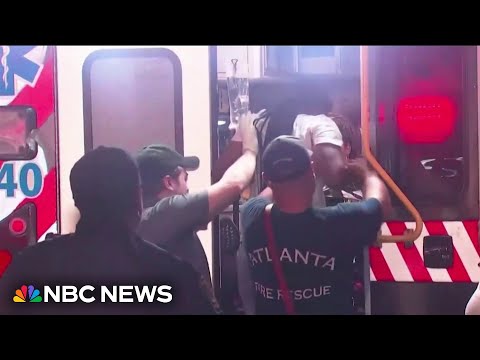
Security Incident - A stampede at the Metro Rail Station near Mercedes-Benz Stadium injured nine people as fans left Beyoncé's concert [1][2] - The stampede was reportedly caused by a person running and screaming, leading to an escalator malfunction [2] - A suspect stole Beyoncé's unreleased music and tour materials from choreographer Christopher Grant's car [3][4] Investigation and Legal Repercussions - Atlanta's transit authority is investigating the stampede incident [3] - Police are investigating the theft of Beyoncé's unreleased music and tour materials [3][6] - The thief could face criminal penalties for theft and civil penalties for copyright infringement [8] Industry Impact and Artist Concerns - The theft of unreleased music is a significant concern for artists, as it involves intellectual property [6] - Artists use copyrights and password protection to safeguard their music [5] - Despite the theft, Beyoncé received two Emmy nominations [9]
X @The Economist
The Economist· 2025-07-02 19:03
Legal Issue - A copyright infringement claim has been brought by Ethan Klein, an American YouTuber and podcaster, regarding whether reaction videos constitute fair use [1]
Disney, Universal sue AI firm for copyright infringement: ‘Bottomless pit of plagiarism'
New York Post· 2025-06-11 18:33
Core Viewpoint - Disney and Universal have initiated a copyright lawsuit against Midjourney, marking a significant legal confrontation between major Hollywood studios and generative AI technology [1][2]. Group 1: Lawsuit Details - The lawsuit was filed in federal district court in Los Angeles, alleging that Midjourney has pirated the libraries of Disney and Universal to create and distribute unauthorized copies of their iconic characters, including Darth Vader and the Minions [2][8]. - The complaint describes Midjourney as a "quintessential copyright free-rider" and emphasizes that the use of AI does not exempt the company from copyright infringement [3][5]. Group 2: Company Response and Context - Disney and Universal claim that Midjourney has ignored their requests to cease infringing activities and to implement technological measures to prevent such image generation [6]. - Midjourney's CEO, David Holz, previously characterized the service as a "search engine" for images, suggesting that copyright concerns should evolve alongside human creativity [7][10]. - The lawsuit is part of a broader trend, with increasing legal actions against AI developers, including cases against OpenAI and Anthropic, and a notable trial involving Getty Images and Stability AI in London [12].


Disney, Universal launch first major studio lawsuit against AI company
TechXplore· 2025-06-11 16:51
Core Viewpoint - Disney and Universal have initiated a copyright infringement lawsuit against AI company Midjourney, labeling it a "bottomless pit of plagiarism" and marking a significant legal confrontation between Hollywood studios and AI firms [3][4]. Group 1: Lawsuit Details - The lawsuit, filed in federal district court in Los Angeles, accuses Midjourney of unauthorized use of Disney and Universal's intellectual property, including iconic characters like Darth Vader, Elsa, and Minions [4][5]. - The studios claim that Midjourney has generated high-quality reproductions of their characters without permission, using their copyrighted works to train its image generation service [4][6]. - Disney and Universal are seeking unspecified monetary damages and a preliminary injunction to prevent further infringement and to enforce copyright protections [8]. Group 2: Company Actions and Revenue - Prior to the lawsuit, Disney and Universal approached Midjourney regarding their copyright concerns, requesting the implementation of measures to prevent infringement, which Midjourney allegedly ignored [6][8]. - Midjourney reportedly generated $300 million in revenue last year through paid subscriptions, indicating a significant financial incentive for the company to continue its operations despite the legal challenges [7]. Group 3: Context of Legal Action - This lawsuit represents the first major legal battle between major entertainment studios and an AI company, following previous lawsuits from independent artists against Midjourney and other generative AI firms for similar copyright issues [3][8]. - A California federal judge previously ruled that artists had a plausible case against Midjourney and other AI companies for copying and storing their work, allowing litigation to proceed [8].

Meta allegedly used pirated books to train AI—US courts may decide if this is 'fair use'
TechXplore· 2025-04-01 16:11
Core Perspective - The article discusses the legal and ethical implications of AI companies, particularly Meta, using copyrighted materials for training their AI models, raising concerns among authors and publishers about intellectual property rights and fair compensation [2][3][5][24]. Group 1: Legal Challenges - Meta is facing a lawsuit in the United States for copyright infringement, with allegations that it used the LibGen dataset, which contains pirated materials, to train its AI models [4][10]. - The legal debate centers on whether mass data scraping for AI training qualifies as "fair use," a legal doctrine that allows limited use of copyrighted works under certain conditions [5][6][24]. - A significant case is The New York Times vs. OpenAI and Microsoft, where the newspaper claims its articles were used without permission for AI training [9][10]. Group 2: Industry Reactions - The Australian Society of Authors has called for regulations requiring AI companies to obtain permission and provide fair compensation to authors for using their works [13][14]. - Various licensing agreements are being established globally between academic publishers and AI companies to ensure creators are compensated while allowing data usage [21][22]. - The Authors Guild argues for a more favorable compensation model for authors, suggesting a 75% share of earnings should go to the author [15]. Group 3: Implications for Creators - The average median full-time income for authors in the U.S. was just over USD 20,000 in 2023, highlighting the financial vulnerability of creators in the face of AI advancements [12]. - The proliferation of AI-generated content poses a threat to original works, making it challenging to distinguish and protect intellectual property [16][17]. - As AI systems often do not cite sources, the value of attribution diminishes, further complicating the landscape for content creators [16]. Group 4: Regulatory Landscape - The European Union's Artificial Intelligence Act of 2024 aims to balance the interests of copyright holders with the need for innovation in AI, though its provisions are considered relatively weak [18]. - In contrast, the U.S. government has not enacted specific regulations for AI, with some officials arguing against excessive regulation [19][20]. - The Australian government has released a voluntary framework emphasizing transparency and fairness in AI systems, but no specific statutes have been enacted yet [23].

