Customer Loyalty

Search documents
Albertsons’ loyalty program continues upward trajectory
Yahoo Finance· 2025-10-14 16:10
Core Insights - Albertsons is enhancing customer engagement through investments in loyalty and personalization, which are integrated with its promotional strategies [3][7] - Digital sales have shown significant growth, with a 23% year-over-year increase, while same-store sales grew by 2.2% [3][7] Group 1: Customer Engagement Strategies - The Albertsons for U loyalty program has seen a 13% year-over-year increase in membership, reaching 48.7 million [7] - Nearly 40% of engaged households are utilizing the automatic cash-off feature to redeem loyalty points for discounts at checkout [5][7] Group 2: Technology and Personalization - The Ask AI tool is improving personalization by allowing customers to ask for specific product recommendations, enhancing the shopping experience [4][7] - AI technology is being scaled across various business functions, including data analysis and customer service, to further improve customer experience [4][7]

How To Pick the Next Apple Stock, According to Warren Buffett
Yahoo Finance· 2025-10-07 18:20
Core Insights - Warren Buffett's investment in Apple has yielded substantial returns, with his stake currently valued at approximately $70 billion, making it Berkshire Hathaway's largest stock holding despite a recent decrease in its portfolio weighting [2]. Group 1: Customer Loyalty and Brand Positioning - Apple is recognized for its exceptional customer loyalty, which enhances its pricing power, allowing consumers to upgrade their iPhones at premium prices [4]. - The brand's positioning as an innovator, largely attributed to Steve Jobs, has transformed Apple into a luxury brand rather than just a technology company [4]. - This perception led Buffett to view Apple as a consumer goods company, which, combined with its pricing power, influenced his decision to invest heavily in its shares [5]. Group 2: Investment Strategy and Collaboration - Buffett's investment in Apple was facilitated by Todd Combs, a portfolio manager at Berkshire Hathaway, who identified Apple as a suitable investment opportunity based on Buffett's established criteria [6][5]. - The importance of consulting with other investors and experts is highlighted, as Buffett's collaboration with Combs resulted in one of his most profitable investments [7]. Group 3: Investment Criteria - A key criterion for identifying good investment opportunities is a low price-to-earnings (P/E) ratio, which was one of the factors considered by Combs when selecting Apple stock for Buffett [8].

The Children’s Place Updates My Place Rewards Program
Globenewswire· 2025-10-07 13:00
Core Insights - The Children's Place has revamped its My Place Rewards loyalty program to enhance customer engagement and loyalty in a competitive retail environment [1][2] - The updated program focuses on personalization, exclusive perks, and meaningful experiences for families, aligning with the company's digital-first strategy [2][4] Program Features - The My Place Rewards program now includes tiered memberships (Insider, Stylist, Icon) that offer various ways to earn and unlock benefits [7] - Members can enjoy exciting rewards such as points, bonuses, and exclusive incentives with every purchase [7] - Unique members-only perks include VIP events, early access to collections, and faster order processing [7] - Family-centered benefits allow parents to register up to four children for special perks, including a Birthday Discount of 20% for all members and 25% for My Place Rewards Credit Card holders [7] - Enhanced convenience features include a free gift-wrapping kit and the ability to redeem points at the customer's discretion [7] Availability - The updated My Place Rewards program is accessible through the company's websites, mobile app, and in stores nationwide, allowing families to join instantly and start earning rewards [3]



Ollie's Bargain Army Hits 16M in Q2: Loyalty Driving 80% of Sales?
ZACKS· 2025-10-02 14:21
Core Insights - Ollie's Bargain Outlet Holdings, Inc. reported a 10.6% year-over-year increase in Ollie's Army membership, reaching 16.1 million, which now accounts for approximately 80% of total sales, highlighting the program's significance in driving growth and customer engagement [1][8] - The reimagined Ollie's Days event, aimed at rewarding loyal customers, resulted in a nearly 60% increase in new member acquisitions during the event week and contributed an estimated 100 basis points to comparable store sales for the quarter [2][8] - Ollie's Army members exhibit stronger spending habits, spending about 40% more than non-members, which underscores the program's critical role in the company's sales momentum [3][8] - The company anticipates comparable store sales growth of 3-3.5% for fiscal 2025, reflecting confidence in its strategic initiatives and the strength of its loyal customer base [4] Competitive Landscape - Walmart's membership strategy, focusing on Walmart+ and Sam's Club, saw a 15.3% growth in membership fee income globally, with Sam's Club U.S. achieving 7.6% growth in membership income [6] - Target's Target Circle 360 program led to over 25% growth in same-day delivery and a 4.3% increase in digital comps, with a penetration rate of 16.9% for the Target Circle Card, indicating strong customer engagement [7]


Will Dutch Bros' Loyalty Program Cement Its Transaction Growth Runway?
ZACKS· 2025-10-01 15:05
Core Insights - Dutch Bros Inc. (BROS) is intensifying its focus on customer loyalty amidst increasing competition in the beverage category, with an expected same-shop sales growth of approximately 4.5% in 2025 driven by the Dutch Rewards program [1][8] Customer Loyalty and Engagement - In Q2 2025, Dutch Rewards accounted for 72% of system transactions, a 5 percentage point increase from the previous year, attributed to improved segmentation and personalized offers [2][8] - The program has facilitated the adoption of new initiatives, with order ahead transactions representing 11.5% and a food pilot in 64 shops contributing to incremental ticket and transaction growth, particularly among Rewards members [3][8] Technological Enhancements - The company is enhancing its operational capabilities with new functionalities, including improved dashboards for shop-level teams and ongoing app improvements to streamline the mobile ordering experience [4] Strategic Positioning - Management identifies significant growth potential in the morning segment, where mobile ordering and food options are expected to increase transaction frequency, positioning loyalty as a key driver of growth rather than merely a marketing tool [5] Competitive Landscape - Starbucks Corporation (SBUX) exemplifies a mature loyalty program with 34 million active Rewards members, focusing on enhancing personalization and engagement through upcoming app upgrades in 2026 [6] - Sweetgreen, Inc. (SG) is undergoing a loyalty program transition that initially impacted performance but is expected to yield positive results as active membership and frequency improve through personalized offers [7]




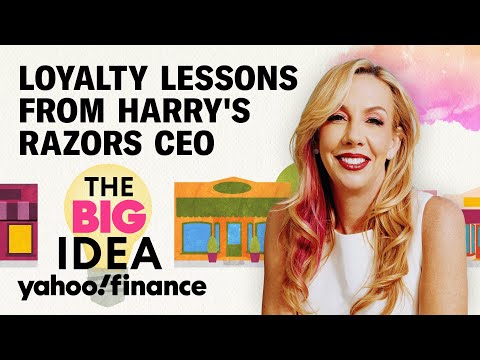
How Harry’s co-founder turns customers into lifelong fans
Yahoo Finance· 2025-09-25 20:20
Customer Loyalty Strategies - Direct-to-consumer businesses benefit from direct customer interaction, enabling companies to gather feedback and improve products [1][3][6] - Proactive customer outreach, such as phone calls and personalized emails, fosters organic marketing and strengthens customer loyalty by creating a personal connection [2][3] - Customer feedback should be integrated into product development, even if it requires additional costs, as it enhances the overall customer experience [3][4] - Prioritizing customer satisfaction drives business growth; win-win solutions that benefit both the customer and the company are essential [5][6] Brand Building and Expansion - Authenticity and clear brand values are crucial for creating an emotional connection with customers [39][41][42] - A unique and easily explainable product that improves people's lives is fundamental to building customer loyalty [34][37] - Expanding to retail should be based on a solid direct-to-consumer foundation, ensuring a deep understanding of customer preferences and product performance [6][7] - Maintaining a customer-centric approach, even when partnering with large retailers, ensures that product placement and presentation align with customer needs and preferences [8][9][10][13] Product Development and Innovation - Continuous product improvement based on customer feedback is essential for long-term success [38] - Innovation, such as the Harry's Plus razor, requires significant investment and time but can result in superior product performance and customer satisfaction [16][17][18][19] - Addressing customer needs beyond the core product, such as Lumi's expansion into sweat control, can drive growth and enhance brand loyalty [20][21] Social Impact and Community Engagement - Integrating social responsibility into the business model, such as Warby Parker's glasses donation program and Harry's support for men's mental health, adds meaning to the work and resonates with customers [23][24][25][27][28] - Partnerships with organizations like the Girl Scouts to promote body neutrality align with brand values and create a positive impact on the community [31][32]
Why Customer Loyalty Will Make Chewy a Long-Term Winner for Investors
Yahoo Finance· 2025-09-24 14:12
Group 1 - Chewy is focusing on market share and customer loyalty for long-term success, despite short-term earnings dips [1][2] - The company's strategy has shifted from rapid growth to nurturing loyalty and recurring purchases, with Chewy+ and autoship programs showing steady growth [1][5] - Chewy reported net sales of $3.1 billion in Q2 2025, an 8.6% increase year-over-year, with autoship accounting for 83% of total net sales and growing 15% year-over-year [4][6] Group 2 - Chewy's customer base has grown to 21 million active customers, spending an average of $591 per year, capturing 41% of the online pet supply market [6] - The company stands out due to its early adoption of autoship and e-commerce, outperforming brick-and-mortar competitors like Petco and PetSmart [7] - Recent quarterly reports showed a decline in earnings due to a one-time tax break in 2024, but other metrics like gross margin improved, growing 90 basis points to 30.4% [10]

Walmart's Membership Income Jumps 15%: Is Loyalty the Moat?
ZACKS· 2025-09-22 16:10
Core Insights - Walmart Inc.'s financial results indicate significant growth in membership income, particularly from the Walmart+ program, which surged 15.3% in Q2 of fiscal 2026, contributing to a 5.4% increase in the "Membership and other income" segment [1][8] Membership Growth - Membership fees from Walmart+ and Sam's Club outpaced overall sales growth, showcasing strong customer engagement, with Walmart+ achieving double-digit growth in fee income and Sam's Club seeing a 7.6% increase due to higher Plus member penetration and renewal strength [2][8] Financial Strategy - Management emphasized that membership economics are now a crucial driver of revenue alongside advertising and e-commerce, with CFO John David Rainey noting that these higher-margin streams provide financial flexibility to counteract cost pressures while enhancing price leadership and market share [3][8] Customer Engagement Initiatives - New offerings, such as the OnePay Cash Rewards credit card providing 5% cash back for Walmart+ members, aim to enhance customer engagement and spending, indicating a shift in Walmart+ from a mere subscription service to a key component of customer loyalty strategy [4][8] Competitive Performance - Walmart's stock performance has been strong, with shares rising 28.9% over the past year, outperforming the industry growth of 26.9%, while competitors like Costco and Target have shown varied performance [5] Valuation Metrics - Walmart's forward 12-month price-to-earnings ratio is 37.01, higher than the industry average of 33.31, indicating a premium valuation compared to Target but a discount relative to Costco [6] Sales and Earnings Estimates - The Zacks Consensus Estimate projects year-over-year growth of 4% in sales and 3.6% in earnings per share for the current financial year, with specific sales estimates for upcoming quarters indicating steady growth [9][10]

The secret to great customer service | Michele Marshall | TEDxStGeorge
TEDx Talks· 2025-09-16 15:51
[Music] [Applause] It was in the early 1990s that I was working as a customer service agent for a large bank that I received a call from a furious client. She was holding the bank and by proxy me responsible for a recent overdraft on her account. She'd written a check to one of her vendors.Yes, paper checks were a thing back then. And the vendor cashed the check prematurely, causing a substantial overdraft on her account. She screamed at me, "You idiots, let him cash the check. It's all your fault." I expla ...