
Diversified Portfolio

Search documents
European Lithium sells CRML shares for ~A$45m boost, adds to robust cash position
Yahoo Finance· 2026-02-05 01:48
Core Viewpoint - European Lithium Ltd has significantly strengthened its cash position by adding A$45 million through the sale of shares in Critical Metals Corp, raising its cash reserves to approximately A$356 million while retaining a substantial stake in CRML [1][2]. Financial Position - The company sold 2.5 million ordinary shares of CRML, which is expected to increase its cash reserves to around A$356 million [2]. - Following the sale, European Lithium holds 45,536,338 ordinary shares in CRML, valued at an estimated US$689.4 million (approximately A$985 million) based on CRML's closing price of US$15.14 [3]. Strategic Actions - The partial sell-down of CRML shares is seen as a strategic move to bolster the company's financial position, with the executive chairman stating it reinforces the already robust balance sheet [4]. - The company does not plan to sell any additional CRML shares in the next four months, maintaining its strategic influence in potential corporate transactions [4]. Previous Transactions - This transaction follows a previous sale of 5 million CRML shares for about A$124 million, which has materially boosted the company's liquidity [4]. Broader Portfolio and Outlook - Beyond CRML, European Lithium is advancing a diversified portfolio of critical minerals assets, focusing on lithium and titanium exploration in Europe, including projects in Austria, Ukraine, and Ireland [5]. - The company also holds interests in Australian base metal projects and a 7.5% stake in the Tanbreez rare earth project in Greenland [5]. - In January, European Lithium announced a proposed all-scrip acquisition of US-based titanium producer Velta, aimed at broadening its exposure to strategic industrial minerals beyond lithium [6]. Growth Strategy - With a strengthened cash position and retained strategic holding in CRML, the company aims to balance liquidity with long-term upside from its CRML-linked rare earth and lithium exposure while progressing growth through diversified critical minerals opportunities [7].
This Vanguard ETF Has Doubled the S&P 500's Returns Since the Start of 2025. Is It a Buy Now?
Yahoo Finance· 2026-02-03 17:35
Core Insights - The S&P 500 has increased by 18% since the beginning of 2025, indicating a positive trend for American stocks after a volatile year [1] - The Vanguard International High Dividend Yield ETF (NASDAQ: VYMI) has significantly outperformed the S&P 500, rising 41% since the start of 2025 [1] Investment Opportunity - VYMI focuses on international companies that provide above-average dividends, requiring firms to meet specific yield criteria and demonstrate the ability to maintain dividends [5] - The ETF includes over 1,500 stocks from both developed and emerging markets, offering a balance of stability and growth potential [5] - VYMI's top five holdings include Roche, HSBC, Novartis, Nestle, and Royal Bank of Canada, all of which are established companies known for being shareholder-friendly [6] Dividend Yield - VYMI currently has a dividend yield of approximately 3.4%, with an average yield of around 4.1% since the start of 2025, which is more than three times that of the S&P 500 [7] - Assuming a maintained yield of 4%, a $1,000 investment in VYMI would generate an annual payout of $40 [7] Portfolio Diversification - Investing in VYMI can enhance portfolio diversification by including international companies across various sectors and geographical locations [8] - While maintaining a majority of investments in American stocks (around 90%), VYMI provides exposure to different regions: Europe (44%), Pacific (25.9%), Emerging markets (20.9%), North America (8.2%), Middle East (0.8%), and Other (0.2%) [8]
A Diversified Portfolio Should Outperform The Magnificent 7 This Year
Seeking Alpha· 2026-01-30 13:59
Group 1 - Lawrence Fuller has 30 years of experience managing portfolios for individual investors, starting at Merrill Lynch in 1993 and later founding Fuller Asset Management for independence [1] - Fuller Asset Management manages the Focused Growth portfolio on Dub, a copy-trading platform approved by US securities regulators, allowing retail investors to automatically copy chosen managers' portfolios and trades [1] - The Portfolio Architect, led by Fuller, focuses on an economic and market outlook that supports an all-weather investment strategy aimed at achieving consistent risk-adjusted market returns [1] Group 2 - The services offered by Fuller Asset Management include portfolio construction guidance, access to an "All-Weather" model portfolio, a dividend and options income portfolio, daily briefs on current events, a week-ahead newsletter, technical and fundamental reports, trade alerts, and 24/7 chat support [1]


This 1 retirement expense can cost you thousands, and most retirees miss it completely. Are you falling for this trap?
Yahoo Finance· 2026-01-26 12:37
Investment Fees and Their Impact - Investment fees can significantly affect retirement savings, with a 1% fee on a 7-8% return making a substantial difference in the final amount available at retirement [1][2] - The average expense ratio for active U.S. funds was reported at 1% in 2024, which may seem low but can lead to high costs over time [2][6] - Only 33% of actively managed mutual funds and ETFs outperformed their passive counterparts over a 12-month period, indicating that high fees do not guarantee better performance [6][7] Financial Behavior of Seniors - A survey indicated that 52% of American seniors on Social Security are cutting back on discretionary spending due to rising living costs, with over 30% reducing essential expenses [4] - An overwhelming 94% of respondents felt that the 2025 cost-of-living adjustment for Social Security was insufficient to meet their actual expenses [4] Investment Strategies - Warren Buffett advocates for low-cost index funds as a better investment strategy compared to actively managed funds, which often do not deliver superior returns [8][19] - The potential savings from reducing investment fees can be significant; for example, investing $1 million in a low-cost fund with a 0.03% fee results in a $300 fee compared to $10,000 for a 1% fee fund, leading to substantial long-term savings [12][13][14] Diversification and Expert Consultation - Building a diversified portfolio is recommended to mitigate risks associated with market downturns, allowing for better financial stability [9] - Consulting with a vetted financial expert can help investors navigate their options and make informed decisions about their investments [9][10]
Want to Invest Globally? IEFA Offers Broader Diversification Than EEM.
The Motley Fool· 2026-01-25 19:15
Core Insights - The iShares MSCI Emerging Markets ETF (EEM) has shown recent outperformance with a focus on emerging markets, while the iShares Core MSCI EAFE ETF (IEFA) offers lower costs, higher yield, and broader developed-market diversification [1][2] Cost and Size Comparison - IEFA has an expense ratio of 0.07%, significantly lower than EEM's 0.72% - IEFA's one-year return is 31.8%, while EEM's is 33.3% - IEFA offers a dividend yield of 3.5%, compared to EEM's 2.1% - IEFA has assets under management (AUM) of $170.4 billion, while EEM has $25.1 billion [3][4] Performance and Risk Comparison - Over five years, IEFA's maximum drawdown is -30.41%, while EEM's is -39.82% - A $1,000 investment in IEFA would grow to $1,307 over five years, compared to $1,044 for EEM [5] Portfolio Composition - EEM holds 1,214 stocks, with significant allocations in Technology (30%), Financial Services (21%), and Consumer Discretionary (12%) - Top holdings in EEM include Taiwan Semiconductor Manufacturing (12.6%), Tencent Holdings (4.5%), and Samsung Electronics (4.5%) [6] - IEFA contains 2,591 developed-market stocks, with major sector weightings in Financial Services (23%), Industrials (20%), and Healthcare (11%) - Leading positions in IEFA include ASML Holding (2.1%), Roche Holding (1.3%), and HSBC (1.2%), indicating a more diversified approach [7] Investment Implications - IEFA serves as a low-cost index fund for global stock market exposure, with over 2,500 stocks and minimal concentration risk - EEM focuses on higher-risk emerging markets with greater growth potential but also higher fees and concentration risk [10][11]

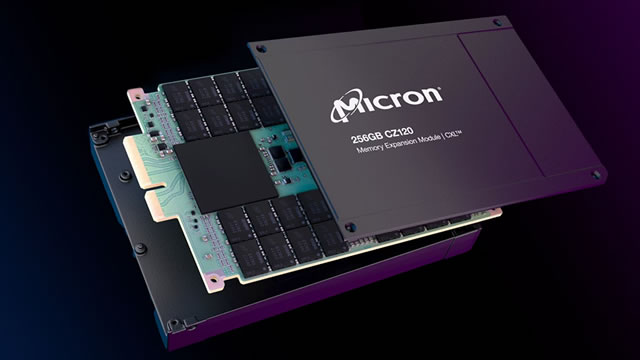
Micron, Nvidia Or Intel Stock: Which Is The Best Bet?
Forbes· 2026-01-23 16:20
Core Insights - Micron Technology has experienced a significant stock increase of 256.9% over the past year, reflecting positive sentiment in the memory sector [4] - The company reported impressive revenue growth of 45% alongside healthy operating margins of 32%, although its free cash flow margins of 11% are lower than industry leaders [1][3] - Micron's valuation, with a P/E ratio of 36.7, is considered moderate, which may stabilize its stock performance despite potential constraints from AI infrastructure benefiting competitors [1] Financial Performance - Micron's revenue growth rate of 45.4% surpasses many rivals, indicating a recovery in the memory market, yet it still lags behind NVIDIA's AI-driven market expansion [3] - The operating margin for Micron stands at 32.5%, which, while robust for the memory sector, is significantly lower than NVIDIA's 58.8% [3] - The company's free cash flow margin of 11% is noted as a lagging indicator compared to industry leaders [1] Competitive Landscape - Micron's stock performance is contrasted with Western Digital Corporation (WDC), which has shown superior returns due to diverse catalysts in the storage market [4] - The analysis highlights Micron's position relative to competitors in terms of size, valuation, and profitability, emphasizing the competitive pressures from companies focused on AI [4]

5 ETFs That Combine Dividend Income With Intense Growth
247Wallst· 2026-01-23 15:56
Core Viewpoint - Many investors nearing retirement and those already in retirement are increasingly turning to dividend ETFs for a reliable and steady stream of income through equities in a diversified portfolio [1] Group 1 - Dividend ETFs are favored by investors seeking income stability as they approach or are in retirement [1] - The use of dividend ETFs allows for diversification within an investment portfolio, which is crucial for risk management [1] - The trend indicates a growing preference for income-generating investments among retirees [1]

Better Buy: CICT vs FCT
The Smart Investor· 2026-01-22 03:30
Core Viewpoint - Singapore REITs are favored by local investors for their low cost and reliable income, with expectations of benefiting from easing interest rates leading to lower financing costs and increased property valuations, potentially resulting in higher distributions [1] Business Model and Portfolio Focus - CICT has a diversified portfolio comprising 40% offices, 25% integrated developments, and 35% retail malls, with a total portfolio value of S$27 billion as of December 31, 2025 [2] - FCT focuses primarily on suburban retail malls, with 97.3% of its portfolio valuation in retail, and has a total property value of approximately S$6.4 billion as of September 30, 2025 [3][4] Income Stability and Distribution Track Record - CICT benefits from diversified income streams, while FCT's suburban malls provide steady cash flows due to essential services, with 54% of tenants classified as essential as of September 30, 2025 [5] - CICT has paid an annual distribution since 2002, with a DPU of S$0.1088 for the full year 2024, while FCT has maintained a constant annual distribution since 2006, with a DPU of S$0.1211 for FY2025 [6] Growth Drivers and Rental Upside - CICT is focused on asset enhancement, redevelopment, and organic portfolio management, achieving strong rental reversions for 2025 [9] - FCT is leveraging steady rental reversions and potential acquisitions, reporting a rental reversion of +7.8% for FY2025 [10] Balance Sheet Strength and Interest Rate Sensitivity - Both REITs have similar gearing ratios, with CICT at 39.2% and FCT at 39.6%, and comparable interest coverage ratios of 3.5 times for CICT and 3.46 times for FCT [11] - FCT has an average debt maturity of 3.16 years and an average cost of borrowing of 3.5%, while CICT has a slightly longer debt maturity of 3.9 years and an average cost of debt of 3.3% [12] Yield Versus Quality Trade-Off - FCT offers a trailing distribution yield of 5.3%, making it a more defensive income play, while CICT has a lower yield of 4.6% due to its diversified portfolio and larger scale [13] Investment Suitability - CICT is suitable for investors seeking scale and diversified exposure, while FCT is appropriate for those looking for defensive and predictable income from essential services [14][15]

Nike Stock: Too Early To Call A Comeback (NYSE:NKE)
Seeking Alpha· 2026-01-20 04:35
Core Viewpoint - The article emphasizes the importance of building a balanced investment portfolio that includes both technology stocks and defensive options, highlighting the need for intrinsic value and strong catalysts in investment decisions [1] Group 1: Investment Strategy - The company focuses on diversifying portfolios to ensure clients benefit from technology stock growth while maintaining investments in defensive sectors [1] - There is a strong preference for established technology companies and those in consumer staples and discretionary goods, prioritizing company value over market circumstances [1] Group 2: Experience and Expertise - The company has been actively managing third-party portfolios for seven years, with a focus on macroeconomic trends, stock valuation, and the interplay between politics and markets [1] - A Master's degree in Economics and experience as a consultant for public and private organizations contribute to the company's analytical capabilities, particularly in financial and economic aspects [1] Group 3: Challenges and Insights - The company acknowledges the difficulty of the investment principle "buying low and selling high," particularly during market crises such as those in 2020 and 2022 [1] - The experience with public tenders has provided insights into the pressures of market fluctuations, akin to the stress of stock market declines [1] Group 4: Social Responsibility - The company promotes financial inclusion programs for women in finance, recognizing the need for greater opportunities in this area [1] - There is a commitment to contributing to the expansion of opportunities for women within the financial sector [1]


Curious About Financial Independence? Here's the Average Investment Portfolio for Millennials
Yahoo Finance· 2026-01-19 12:32
Core Insights - Millennials are saving approximately 13% of their income for retirement, which aligns closely with expert recommendations [3][6] - The average 401(k) balance for millennials is $67,300, but the median balance is significantly lower at around $35,000, indicating a disparity in savings among this demographic [2][6] Millennial Portfolio Characteristics - Millennials contribute an average of 8.7% of their salary to 401(k) plans, with an additional 4.6% contributed by employers, totaling around 13.3% [3][6] - A Goldman Sachs survey reveals that high-net-worth millennials allocate only about 27% of their assets to public stocks, while around 20% is invested in alternative assets, which is notably higher than older investors [4] Expert Recommendations for Portfolio Building - Experts suggest a diversified portfolio strategy for millennials, typically comprising 80%-90% in broad index funds and 10%-20% in bonds and cash to manage market volatility [7] - The recommended savings rate for millennials is between 12%-15% of income, including employer contributions, to effectively replace a significant portion of pre-retirement income [8] Tips for Increasing Savings - Incrementally increasing contributions by 1% every six months or after each raise is advised to make the goal of saving 15% more achievable [9] - Starting early and maximizing the 401(k) match can significantly enhance long-term savings, potentially doubling the balance over a 30-year period [9]