Electric Vehicle Adoption

Search documents
PG&E to Report Q3 Earnings: What's in the Cards for the Stock?
ZACKS· 2025-10-21 17:01
Core Insights - PG&E Corporation (PCG) is set to report its third-quarter 2025 results on October 23, with expectations of higher earnings and revenue growth compared to the previous year [1][9] Factors Impacting Q3 Results - Below-normal temperature patterns during the third quarter likely reduced electricity demand for cooling, although a heat wave in late August and early September may have increased demand [2] - Anticipated growth in electric load from electric vehicle adoption, data centers, and building electrification is expected to support PG&E's long-term business expansion [2] - PG&E's partnership with Energy Vault to operate the Calistoga Resiliency Center aims to reduce Public Safety Power Shutoffs amid rising wildfire risks, serving around 1,600 customers [3] - The launch of an advanced vehicle-to-grid electric school bus fleet in collaboration with the Fremont Unified School District and The Mobility House signifies progress in clean transportation and grid resilience [4] - PG&E reduced residential electric rates by 2.1% and gas rates by 0.4%, making energy more affordable and potentially attracting new customers [5] Financial Expectations - The Zacks Consensus Estimate for sales is $6.62 billion, indicating a year-over-year growth of 11.4% [6] - The consensus estimate for earnings is 46 cents, reflecting a year-over-year rise of 24.3% [6] Earnings Prediction - PG&E's Earnings ESP is +1.45%, suggesting a strong likelihood of an earnings beat [7] - The company currently holds a Zacks Rank of 2 (Buy), further increasing the odds of a positive earnings surprise [8]

What’s Driving the Fall in US EV Adoption?
Yahoo Finance· 2025-10-20 17:30
Core Insights - The U.S. auto industry faces increased uncertainty regarding its electric vehicle (EV) future due to challenges such as cost concerns, sluggish adoption, and policy reversals [1][2] Group 1: Company Actions - General Motors (GM) CEO Mary Barra committed to zero emissions by 2030, eliminating gas and diesel vehicles [1] - GM announced a $1.6 billion loss to scale back its EV operations, attributing this to weaker expected demand influenced by recent U.S. policy changes [2] - GM has paused the second phase of its Ultium CAM project for producing cathode active materials for EV batteries, citing evolving market dynamics [4] Group 2: Industry Trends - The expiration of the federal EV tax credit on September 30 has contributed to a slowdown in EV sales, which surged by 40% in Q3 due to a rush before the subsidy ended [5][6] - The second quarter of 2023 saw a decline in new EV sales by 6.3% year on year, indicating a curbed growth trajectory for the EV market [6] Group 3: Partnerships and Supply Chain - The planned expansion of a battery facility in Bécancour, Quebec, is on hold, with the first phase of the Ultium CAM project set to open in 2026 [3] - Brazilian mining giant Vale SA has scrapped plans for a nickel sulfate plant that would have supported the second phase of the Ultium CAM project due to GM's decision [5]

Car executives fear a collapse in EV sales as US tax subsidy vanishes
Yahoo Finance· 2025-10-01 16:55
Core Insights - The expiration of a $7,500 tax credit for electric vehicle (EV) buyers is expected to significantly impact U.S. EV sales, with executives predicting a sharp decline in sales [1][2][5] - Ford's CEO anticipates that EV sales may drop to 5% of total U.S. vehicle sales next month, which would be a substantial decrease from August's record levels [2] - Nissan's chairman warns of a potential collapse in the EV market in October due to increased competition and a surplus of unsold EVs [3] Industry Overview - The U.S. EV market has been lagging behind other major markets, with China achieving over 40% sales penetration for electrics and plug-in hybrids, while Europe is around 20% [6] - Despite the tax credit, EV sales growth in the U.S. had already slowed in the past two years, with only a 1.5% increase in the first half of the year compared to the previous year [7] Legislative Context - The $7,500 tax credit was initially approved in 2008 and extended by the 2022 Inflation Reduction Act, which also imposed eligibility criteria based on domestic production [4] - The expiration of the tax credit was set by a tax-cut and spending bill signed into law by former President Donald Trump, which may further hinder EV adoption [5]
National Drive Electric Month kicks off Sept. 12, features events in 41 states
PRWEB· 2025-09-11 12:00
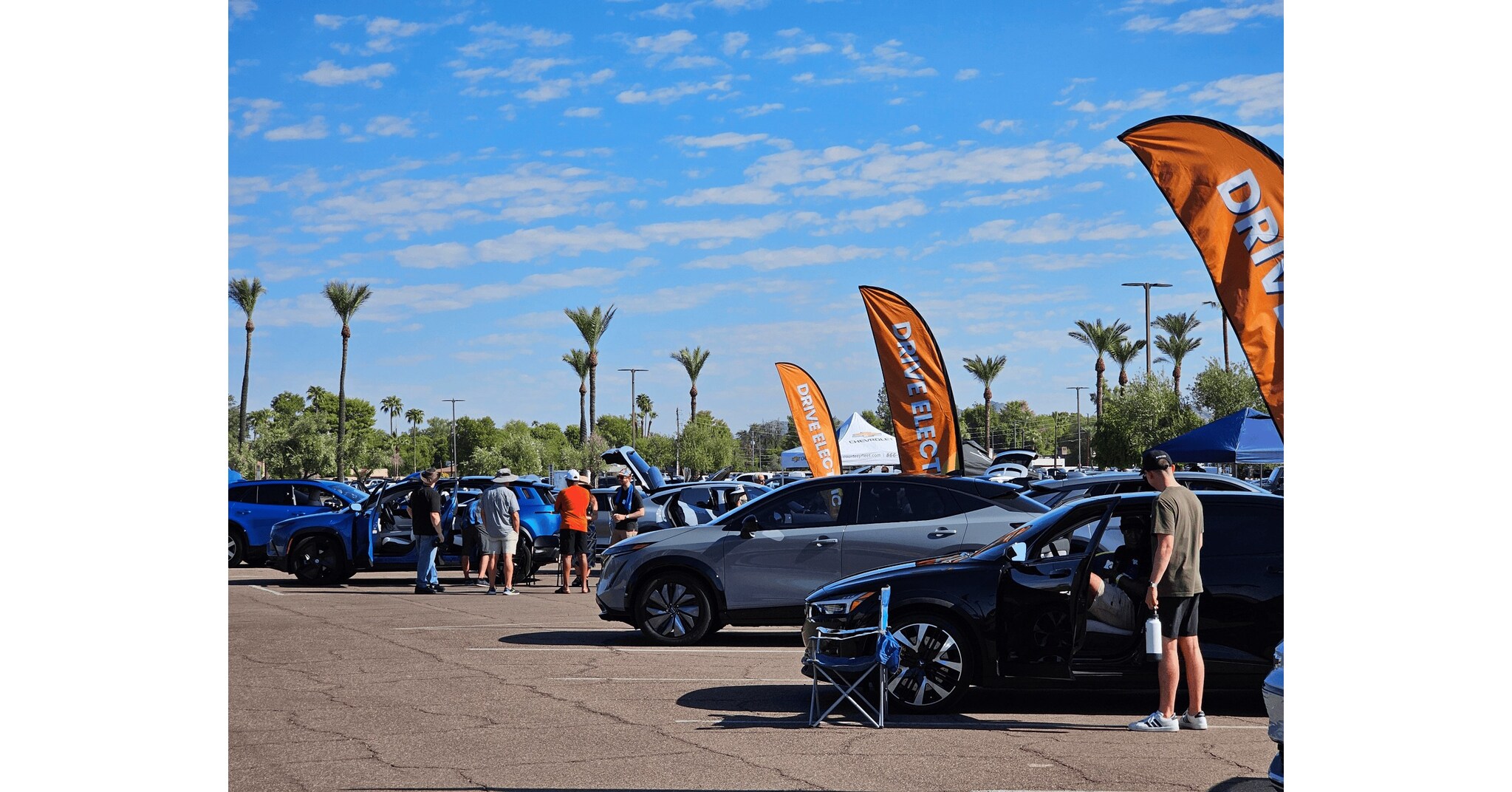
Core Insights - The electric vehicle (EV) market is experiencing significant growth, with over 400 electric model trims available, catering to diverse lifestyles [2] - National Drive Electric Month events are designed to promote EV adoption through test drives and educational experiences [1][3] - Federal tax credits for new, used, and commercial EVs are available until September 30, incentivizing potential buyers to act quickly [2][3] Industry Events - National Drive Electric Month features events across the United States, including locations in Hawaii and Alaska, with participation from various sponsors [4] - Notable sponsors include Nissan, which is launching the 2026 Nissan LEAF®, and other organizations supporting EV adoption [4] - Events include educational talks, test drives, and opportunities to interact with current EV owners, enhancing community engagement [6] Organizational Background - Plug In America is a leading nonprofit organization focused on promoting the use of plug-in electric vehicles through education and advocacy [5] - The organization has been active since 2008 and runs various programs, including National Drive Electric Month, to inform consumers and dealerships about EVs [5]


US Electric Car Uptake Will Slow Further on Trump Policies
Yahoo Finance· 2025-09-09 13:24
Core Insights - The expiration of a $7,500 tax credit for electric vehicle (EV) buyers is expected to further slow the already sluggish adoption of EVs in the US [1][3] - EY forecasts that battery-powered cars will account for half of US auto sales by 2039, which is five years later than previously predicted [1] - EV sales growth is projected to be minimal this decade, reaching only 11% of the US market by 2029, up from 8.1% last year [1] Industry Impact - Policies under President Trump are anticipated to hinder the US's position in the global EV market, potentially turning it into a laggard [2] - The rollback of emissions and fuel economy regulations, along with the elimination of the consumer tax credit, is expected to make EVs less appealing to American consumers [3][4] - Automakers are shifting focus back to traditional gasoline vehicles, reducing investments in EV technology that were previously planned [4][5] Company Actions - General Motors has recently cut production at two EV factories due to slower customer demand [5] - Ford Motor Co. is significantly reducing its EV spending, despite plans for a new line of affordable EV models [5] - The combination of easing regulations, high costs, and infrastructure challenges is contributing to the decline in EV adoption in the US [5] Global Comparison - The delay in EV adoption in the US is expected to leave it years behind China and Europe, with EY predicting that battery-electric vehicles will surpass half the market in China by 2033 and exceed 70% by 2039 [6]

Blink Charging Teams with dfYOUNG to Offer Streamlined EV Charger and Fleet Management Services for Corporate Salesforce Customers
Globenewswire· 2025-07-28 12:30
Core Insights - Blink Charging Co. has announced a strategic collaboration with dfYOUNG to provide streamlined corporate fleet management and at-home EV charger installations for salesforces across the nation [2][3]. Group 1: Collaboration Details - The partnership combines dfYOUNG's fleet operations expertise with Blink's EV charging solutions, offering a turnkey approach for organizations with electric vehicle salesforces [3]. - EV chargers will be installed at sales representatives' homes through a coordinated service between Blink and dfYOUNG, with pre-kitted and RFI-activated chargers shipped and installed directly by dfYOUNG [4]. - Customers will receive 24/7 customer service from Blink, while dfYOUNG will oversee fleet operations, including deliveries, job completion, safety, and compliance, along with real-time tracking of vehicle deliveries and pickups [4]. Group 2: Strategic Importance - This collaboration is part of Blink's ongoing efforts to enhance and simplify the EV adoption process, providing end-to-end support from procurement to post-installation fleet management [5]. - The initiative aims to elevate Blink's customer-centric capabilities and improve the integration process for businesses transitioning to electric vehicle fleets [5]. Group 3: Company Background - Blink Charging Co. is a global leader in EV charging equipment and services, facilitating the transition to electric transportation through innovative solutions [7]. - The company operates a proprietary, cloud-based network that manages and tracks EV charging stations and associated data, with strategic collaborations across various location types [7].


India Electric Vehicle Market Analysis Report 2024-2031 | Tata Motors, JSW MG Motors India, Mahindra & Mahindra Control Over 90% of Market Share
GlobeNewswire News Room· 2025-07-24 11:06
Core Insights - The Indian electric vehicle (EV) market is experiencing gradual growth, driven by government initiatives, manufacturing localization, supply chain security, and environmental awareness [2][3] - Major global and domestic companies are preparing to launch new EV models, creating opportunities for charging infrastructure and battery technology providers [3] - The electrification of urban mobility is crucial for addressing severe air quality issues in major Indian cities [6][7] Market Dynamics - Domestic and offshore OEM brands dominate the Indian electric passenger vehicle market, focusing on compact SUVs and hatchbacks to attract urban consumers [4] - The competition in India's EV industry is expected to intensify as more OEMs enter the market, with established companies like Maruti planning to launch at least 4 EVs in the next 5 years [5] - Collaborations between Indian companies and global technology firms, such as Tata's partnership with Renesas, aim to develop a robust EV ecosystem in India [8][9] Competitive Landscape - The top three OEMs (Tata Motors, JSW MG Motors India, Mahindra & Mahindra) hold a combined market share of 91.1% in the Indian EV market [14] - The study considers 14 competitors, including major players like BMW, Mercedes-Benz, and Hyundai, highlighting a competitive environment [12][14] - Key factors influencing OEMs include EV unit sales, production infrastructure, and market development strategies [10][12] Growth Opportunities - Government initiatives are pushing the EV industry toward self-sufficiency, enabling localization and domestic collaboration [16] - The transition of fleet owners to EVs is expected to significantly contribute to improving air quality in urban areas [7] - The development of interoperable charging networks and advancements in battery technology are critical for scaling EV adoption [10][16]

EVgo (EVGO) Earnings Call Presentation
2025-06-24 11:20
Company Overview - EVgo powered more than 395 million zero-emission miles in 2023[9] - EVgo reduced more than 150,000 metric tons of CO2 in 2023[9] - EVgo has over 1 million customer accounts as of May 2024[20, 21] - EVgo's chargers serve 70+ EV models as of the end of 2023[26] - Capital offsets are anticipated to reduce vintage capex by approximately 40%[42] Market Opportunity - The EV market is underpinned by approximately $410 billion of OEM commitments[53] - States with 100% ZEV commitments represent 40% of US light duty vehicles[53] - DCFC as a percentage of total charging is growing in California, from 5%-10% to 25%-30%[67] - The addressable market for DCFC is projected to be $12-$15 billion by 2030[64, 65] Financial Performance - EVgo's revenue increased from $22 million in 2021 to $161 million in 2023, with a guidance of $220-$270 million for 2024[77] - Charging network margin was 28% in 2023 and 40% in Q1 2024[78, 131] - Adjusted EBITDA was -$59 million in 2023, with a guidance of -$48 million to -$30 million for 2024[80]

Top 2 Alternatives To Tesla After The Musk-Trump Breakup
Benzinga· 2025-06-06 17:20
Core Viewpoint - Tesla's stock has faced significant declines due to a combination of political conflicts, poor sales performance, and safety concerns regarding its driver-assistance technology [1][2][8] Company Performance - Tesla's stock price was around $300 per share on Friday, down 25% year-to-date but up 11% over the past three months [2] - Tesla's market share in Germany has decreased by 36% year-over-year, reflecting poor domestic and international sales [2] - Analysts predict that if proposed legislation curtails EV tax credits, Tesla could face a loss of $2 billion, with a potential 65% decline in stock value in the following year [8] Industry Trends - Global EV sales are projected to reach 20% of new car sales in 2024, but challenges such as winding down subsidies, tariff fears, and inconsistent charging infrastructure are hindering growth [3] - In China, EV sales have surged by 40% year-over-year in 2024, accounting for two-thirds of worldwide EV sales, up from half in 2021 [5] Competitive Landscape - BYD, China's leading EV manufacturer, has seen its stock rise by 53.18% year-to-date, attributed to aggressive price cuts and a strong market position [10] - Rivian Automotive has experienced a 23% increase in stock price over the past three months, supported by partnerships and a focus on lower-cost EV models [12][13]

Should You Buy ChargePoint While It's Trading Below $1?
The Motley Fool· 2025-06-01 09:10
Industry Overview - The electric vehicle (EV) industry is currently facing significant challenges, including tariffs, rising EV prices, and a negative political environment, which are impacting automakers and the broader EV ecosystem [1] - EV sales in the U.S. accounted for 8.1% of total vehicle sales last year, a slight increase from 7.8% in 2023, indicating slow adoption rates due to high prices [4] ChargePoint Company Analysis - ChargePoint's share price has decreased by 60% over the past year, now trading below $1, raising concerns among investors about the stock's potential [2] - The average transaction cost for a new electric vehicle was $59,200 in April, a nearly 4% increase from the previous year, making EVs less accessible to many buyers [4] - ChargePoint's sales fell by 18% in fiscal 2025 to $417 million, with projections for first-quarter 2026 sales at $100 million, reflecting a nearly 7% decline from the same quarter last year [9] - The company reported a non-GAAP net loss of approximately $159 million last year, although this was an improvement from a loss of about $297 million in 2024 [10] - ChargePoint's largest revenue segment, networked charging system sales, decreased by 35%, while subscription sales increased by 20% [10] External Challenges - Tariffs on automotive imports are negatively affecting U.S.-based EV manufacturers, leading to increased production costs [6] - Political uncertainty surrounding tariffs has caused major automakers like Ford, Stellantis, and General Motors to withdraw their 2025 guidance [7] - A recent bill passed by Republicans in the House aims to roll back tax credit incentives for EV purchases, which could further hinder EV adoption [8] Investment Outlook - Despite ChargePoint's low price-to-sales multiple of 0.75, the current market conditions and company-specific challenges suggest that it may not be a good investment opportunity [11] - The company and the broader EV industry are expected to continue facing serious headwinds that could further slow growth, making it difficult for ChargePoint to achieve market-beating returns in the near future [12]