
Energy shock

Search documents
X @The Economist
The Economist· 2026-03-13 20:20
The Gulf war has brought traffic in the Strait of Hormuz almost to a halt, sparking an energy shock that will reverberate around the world. Our editors analyse the impact on this week’s Insider episode: https://t.co/IG6lq7ZuUf https://t.co/GIK5gpwyqk ...
CRAK: How The Conflict In Iran Is Playing In Favor Of Oil Refineries
Seeking Alpha· 2026-03-12 18:05
Core Insights - The VanEck Oil Refiners ETF has shown a remarkable six-month return exceeding +30%, attributed to the energy shock resulting from the conflict in Iran [1] Group 1: ETF Performance - The VanEck Oil Refiners ETF is highlighted as a standout in the energy sector due to its significant return [1] Group 2: Market Analysis - The article emphasizes the importance of data-driven analysis in understanding the dynamics of the asset management market, particularly in relation to ETFs [1]


Dow, LyondellBasell upgraded at Citi as energy shock reshapes chemicals outlook (NYSE:DOW)
Seeking Alpha· 2026-03-12 17:06
Core Viewpoint - Rising geopolitical tensions in the Middle East and disruptions to global energy flows are reshaping the outlook for commodity chemicals, leading to upgrades for several major U.S. producers by Citi analysts [4] Group 1 - Citi analyst Patrick Cunningham raised the outlook for commodity chemicals due to the changing geopolitical landscape [4] - The disruptions in global energy flows are a significant factor influencing the commodity chemicals market [4] - Several major U.S. producers have been upgraded as a result of these developments [4]

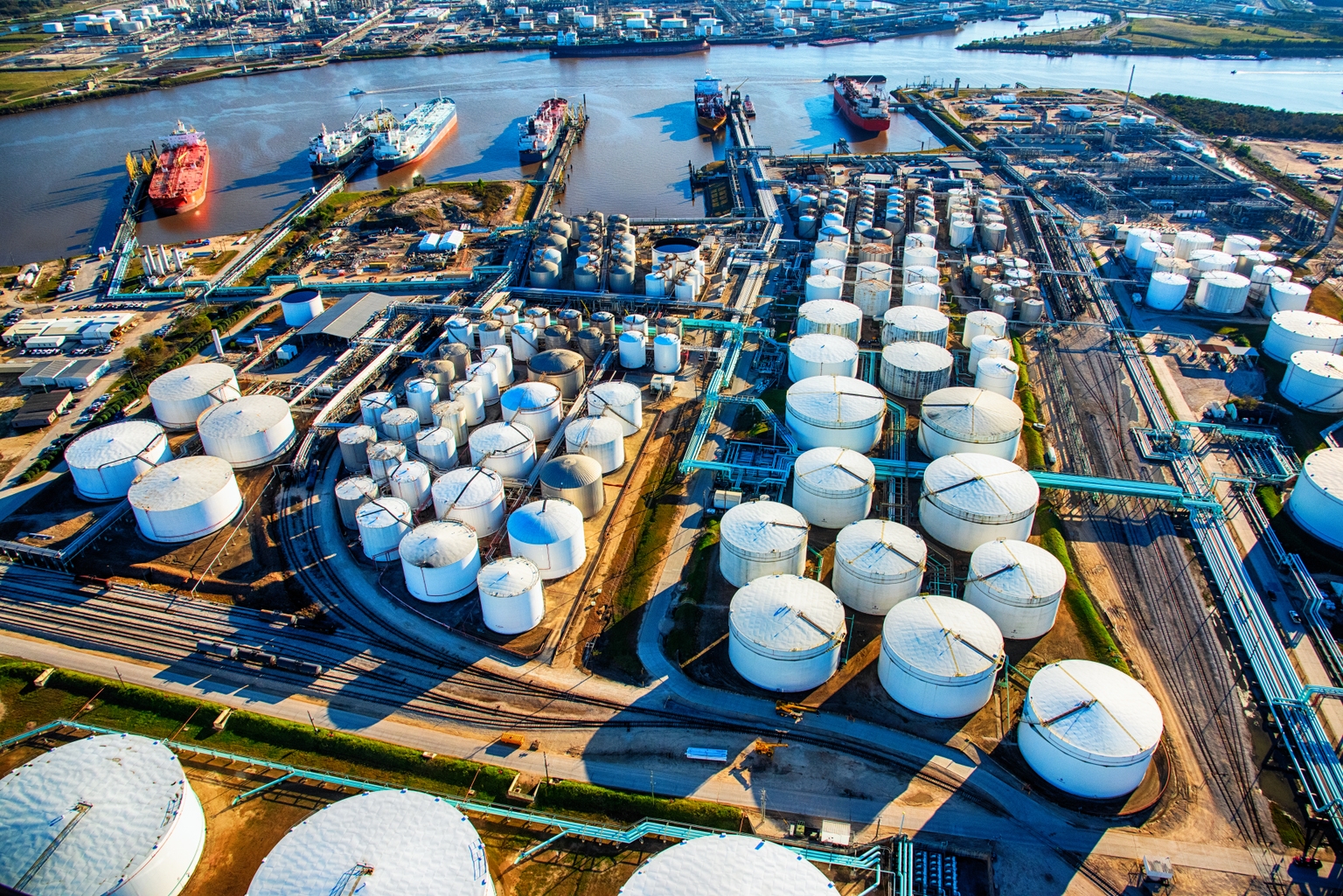
The Fog of the Energy Shock
Etftrends· 2026-03-12 13:58
Core Insights - The recent escalation in the Iran conflict has introduced significant uncertainty into the macroeconomic landscape, impacting both the real economy and interest rates [1] - A notable 31% increase in spot crude oil prices last week marks the largest weekly rise since April 2020, representing a 6.5 standard deviation move, which complicates the previously optimistic economic outlook [1] - The oil shock poses a risk of higher energy costs affecting consumption, margins, and inflation expectations, particularly as the economy was showing signs of stabilization [1] Economic Indicators - The latest payroll report indicates a "jobless expansion," with labor demand cooling but without a significant decline in overall economic activity [1] - ISM data suggests a potential recovery in manufacturing, indicating that economic growth may be stabilizing rather than declining [1] Market Reactions - Despite the sharp rise in oil prices, markets have shown relative calm, with Treasury yields remaining within a historically tight range and credit spreads near cycle tights, indicating limited immediate concern about economic stress [1] - The current market calm contrasts sharply with the scale of the oil price increase, highlighting the potential for a rapid shift in risk dynamics if geopolitical tensions persist and energy prices remain high [1]

全球市场- 能源冲击下外汇市场的动态反应-Global Markets Daily_ The Evolving FX Response to the Energy Shock
2026-03-12 09:08
Global Markets Daily: The Evolving FX Response to the Energy Shock The Evolving FX Response to the Energy Shock The FX Reaction Remains Largely Consistent with Moves in Energy and Risk European macro markets have been front-and-centre in the fallout from the unfolding energy price shock. Last week we carried out a series of benchmarking exercises for the initial reaction in European crosses, including to the historical sensitivities of those crosses to shifts in gas and equity prices. We found that while a ...
X @Bloomberg
Bloomberg· 2026-03-12 07:25
A sharp energy shock from the Iran war is extending a slide in Indian equities and pushing the rupee to record lows as foreign investors stay on the defensive https://t.co/JU5VP58gSi ...
全球经济- 全球 360°:我们对全球市场的观点-Global Economic Briefing-The Global 360-Our views around the world
2026-03-11 08:12
Summary of Key Points from the Conference Call Industry Overview - The conference call discusses the implications of recent military actions in Iran, particularly the closure of the Strait of Hormuz, which has significantly impacted energy markets, especially oil and LNG prices [16][21][72]. Core Economic Insights United States - The U.S. economy is experiencing a deceleration in the labor market, with non-farm payrolls indicating a slowdown. Breakeven payrolls are estimated to hover around 50,000 [17]. - Inflation is expected to be strong in January, influenced by energy supply shocks, but is projected to dissipate starting in Q2 2026. A 10% rise in oil prices could add 35 basis points to headline CPI for three months, with minimal impact on core inflation [33][41]. - The Federal Reserve is expected to maintain its June and September rate cut calls, but risks are skewed towards later cuts due to potential sustained oil price shocks [17][41]. Euro Area - Euro area inflation is sensitive to energy supply shocks, with recent price spikes likely to push inflation higher in the coming months. The European Central Bank (ECB) is expected to delay rate cuts until 2027 due to these inflationary pressures [18][23]. - The euro area economy grew at 0.2% in Q4 2025, with higher energy prices posing stagflationary risks [41]. Japan - Japan's Bank of Japan (BoJ) is expected to raise rates in June, with the market anticipating an April hike. However, the BoJ is cautious due to the lagging pass-through from wages to prices [19][41]. China - The National People's Congress (NPC) set a growth target of 4.5-5.0%, focusing on growth stability and structural adjustments. The policy stance is supply-centric, with an emphasis on technology and infrastructure spending [20][25][31]. - Real GDP growth for 2026 is projected at 4.8%, with nominal growth at 4.1-4.2% [31]. India - India remains exposed to energy price shocks, with a 10% increase in oil prices potentially dragging growth by 15 basis points. The RBI's response to inflation will depend on the duration of the oil price rise [49][50]. Additional Insights - The geopolitical tensions in the Gulf region are expected to have lasting effects on energy prices and economic stability across various regions, particularly in Asia, where countries are highly dependent on oil imports [55][56]. - The analysis highlights the importance of understanding the duration of energy price shocks and their implications for inflation and economic growth across different economies [24][72]. - The report emphasizes that central banks are likely to adopt a cautious approach in response to inflationary pressures driven by energy prices, with a focus on waiting for clearer economic signals before making policy changes [72]. Conclusion - The conference call provides a comprehensive overview of the current economic landscape influenced by geopolitical events, particularly in the energy sector. The insights suggest a cautious outlook for monetary policy across major economies, with inflationary pressures likely to dominate discussions in the near term.

South Africa's Godongwana on Mideast War Shock, Debt, Investment
Bloomberg Television· 2026-03-05 11:06
Let's start with the impacts of the Middle East then, particularly the energy shock. What does this do. What do you modeling in terms of the potential impacts on growth and inflation in South Africa if this conflict continues.Yeah, I mean, the starting point is we tabled our budget on the 25th. We didn't pencil the war in. Three days later, we've got the war.I mean, it's not the first time we're having an incident of this thing in 2022. We tabled the budget on the 20/23. When we wake up on the 24th Russia t ...

Stocks Are the Asset Class That's Wrong: 3-Minutes MLIV
Bloomberg Television· 2026-03-05 09:23
Mark, is that still too much in your view, in terms of the equity markets. Is there complacency around the energy shock and the inflationary impacts of the conflict in the Middle East. Completely.I think it's going to get a lot worse for stock markets before the weekend. I'm not a geopolitical expert, so I'm pretty simple about this. The three main protagonists, the US, Iran and Israel, have all been consistent that they are planning to keep on attacking for some time. The US and Iran have both denied that ...

X @BSCN
BSCN· 2026-03-04 11:57
📉ASIAN MARKETS PLUNGE AS IRAN-ISRAEL CONFLICT INTENSIFIESAsian stock markets tumbled sharply amid escalating war between Israel, the U.S. and Iran, sparking investor panic and energy shock fears.South Korea’s KOSPI saw historic losses, plunging over 10% and triggering trading curbs due to panic selling as the conflict spreads.Soaring oil prices and disrupted supply through the Strait of Hormuz intensified sell-offs, especially among energy-dependent economies. ...