FOMO (Fear of Missing Out)

Search documents
跨资产流动与配置- 因 “错失恐惧症”(FOMO),资金流动呈 “拉锯” 状态-Cross-Asset Flows and Allocations-Fund Flows 'Yo-yo' on FOMO
2025-10-21 01:52
Summary of Key Points from the Conference Call Industry Overview - The report discusses trends in fund flows across various asset classes, particularly focusing on US equities, commodities (especially gold), and fixed income markets. [2][9][66] Core Insights 1. **Fund Flows Dynamics**: - Strong inflows into US equities and commodities, particularly gold, are driven by investor sentiment characterized by "FOMO" (Fear of Missing Out) rather than fundamental valuations. [2][9][66] - Since August 2025, US equity ETFs and mutual funds have attracted approximately **US$134 billion** in inflows, with **US$39 billion** directed towards emerging market (EM) equity funds. [11][12] - Flows to US equity funds have rebounded significantly after a dip post-Liberation Day, with the week of September 17 witnessing the highest net flow in a year. [13][14] 2. **US vs. International Markets**: - Flows to US equities have surged at the expense of European and Japanese markets, despite high relative valuations in the US. [9][14][21] - European equities have seen fluctuating inflows, with a cumulative **US$49 billion** YTD, but the inflow momentum appears to have plateaued. [22] - Japanese equities are experiencing persistent outflows, with a YTD net flow of approximately **negative US$10 billion**, the lowest in a decade. [25] 3. **Gold and Commodities**: - Commodities funds have seen **US$44 billion** in net inflows YTD, with a significant increase in weekly flows since July, averaging over **US$2.6 billion** in September. [39][40] - The report anticipates continued strong demand for gold, projecting prices could reach **US$4,500/oz by the end of 2026**. [45] 4. **Fixed Income Trends**: - US bonds have attracted around **US$360 billion** in net inflows YTD, while European fixed-income funds have seen **US$110 billion**, marking the highest inflows in over a decade. [53][56] - There is a notable shift in preference towards US investment-grade (IG) corporate bonds, with significant inflows observed in September 2025. [57] Additional Insights - The report emphasizes that while current flows are favorable towards US assets, the potential for rapid shifts in investor sentiment remains, highlighting the volatility associated with "FOMO" flows. [66] - The analysis suggests that ongoing Federal Reserve easing policies will likely support these favorable flow trends in the near term. [66] Conclusion - The overall sentiment in the market indicates a preference for US equities and commodities, particularly gold, driven by momentum rather than fundamentals. However, the potential for quick reversals in flows due to changing investor sentiment is acknowledged. [66]

X @🚨BSC Gems Alert🚨
🚨BSC Gems Alert🚨· 2025-10-20 10:48
Cryptocurrency Market Opportunity - Highlights the potential for significant gains in $RKC, urging immediate action before a price surge [1] - Positions $RKC within a broader trend of underdog cryptocurrencies gaining momentum, suggesting a potentially lucrative investment opportunity [1] Risk and Due Diligence - Includes a disclaimer "ad DYOR" (Do Your Own Research), emphasizing the importance of individual investigation before investing [1] - Identifies $RKC as a "BSCGemsAlert," indicating it's a newly identified cryptocurrency on the BNB Chain, which may carry higher risk [1] Call to Action - Encourages participation in the $RKC movement, appealing to investors' fear of missing out (FOMO) [1] - Provides a contract address (CA: 0x860de30baf288efaefd90f2700358d26d4fc4444) for direct investment [1] Project Details - Mentions "Rockycat" as the project name associated with $RKC [1] - Provides links to the project's X (formerly Twitter) and Telegram channels for further information [1]
3 Smart Moves for Investors Worried About Buying at the Top
Yahoo Finance· 2025-10-14 14:01
Group 1 - The article discusses the challenges investors face when entering a soaring market, emphasizing the fear of buying at a peak and experiencing a subsequent decline [1][2] - Chris Sain, a stock market coach, advises investors to recognize the importance of market momentum while also exercising caution [3][4] - Sain suggests that investors should dollar-cost average into the market during high periods, as new highs often lead to further increases [5] Group 2 - The article highlights the common mistake of investors making large moves due to fear of missing out (FOMO) in a hot market [6] - Sain advocates for consistent investment strategies, such as automatic deposits, to mitigate the risks associated with impulsive decisions [6] - The principle that "time in the market beats trying to time the market" is reinforced, promoting a long-term, disciplined investment approach [6]
X @TylerD 🧙♂️
TylerD 🧙♂️· 2025-09-29 12:56
Market Trends - DATs facing challenges [1] - Vanguard considering cryptocurrency involvement [1] - ASTER, XPL, Apex experiencing decentralized exchange (DEX) boom [1] - NFT strategies gaining traction while meme-based assets decline [1] Key Topics - Discussion of major news from the past week [1] - Focus on ASTER, XPL, Apex and the DEX boom [1] - Analysis of NFT strategies and the decline of memes [1]
S&P 500 near record P/E ratios: Are we at the top of the market?
Youtube· 2025-09-24 19:30
Market Overview - The market is currently experiencing less volatility and more complacency, which could change as the year progresses [4][5] - Historically, September is one of the worst months for stock performance, but this year has bucked that trend due to better-than-expected economic data and potential rate cuts from the Federal Reserve [4][5][22] Market Sentiment and Valuation - The S&P 500 is trading at approximately 25 times current year consensus EPS, indicating a stretched market multiple that necessitates earnings growth to justify valuations [9][10] - There is a focus on 2026 earnings, with the S&P 500 trading at about 22.5 times projected earnings for that year, which is considered not overly expensive [12][13] Interest Rates and Economic Indicators - The Federal Reserve is expected to cut rates multiple times, which could lead to a more favorable environment for both fixed income investments and the stock market [14][15] - Long-term interest rates have decreased, which may act as a catalyst for the housing market and refinancing opportunities for homeowners [18][19] Sector Analysis - The small-cap Russell 2000 has shown significant recovery, up nearly 9% this year, indicating a broadening market rally beyond just large-cap stocks [23][24][43] - Banks and private equity firms are expected to perform well due to favorable monetary policy and strong investment banking activity [50][52] Consumer Spending Trends - American Express is favored over Visa due to its strong travel business and membership benefits, which are expected to drive growth [62][67] - Amazon is preferred over Walmart for its diversified offerings and potential for monetizing its media assets [59][61] Investment Opportunities - There is optimism for housing stocks if interest rates continue to decline, which could stimulate demand [19][20] - Private equity firms are expected to benefit from lower interest rates and robust investment banking activity, positioning them for strong performance [52][55] Market Dynamics - The market is characterized by a "wall of worry," where investors are hesitant to enter due to fear of missing out, which could support continued upward momentum [34][35] - The breadth of the market rally is improving, with more sectors participating, which is a positive sign for overall market health [43][44]

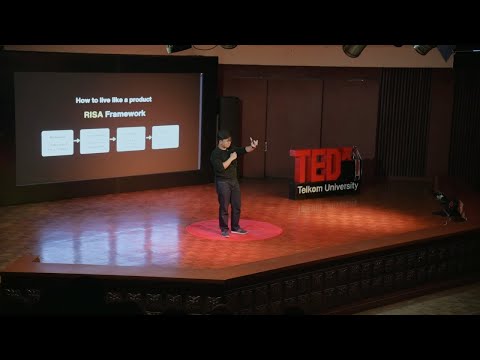
Solve Your FOMO Trait by Living Like a Product | Arvin Zulfikar | TEDxTelkom University
TEDx Talks· 2025-09-03 16:37
Core Argument - The presentation addresses the "fear of missing out" (FOMO) and its impact on personal growth, particularly among students [1][2] - It argues that blindly following trends and others' actions without a clear personal goal can hinder genuine growth [6] - The presentation advocates for a focused approach to personal development, emphasizing the importance of understanding one's own goals and values [6][7] Proposed Solution: "Live Like a Product" - The speaker introduces a framework called "Derisa Framework" (Relevant, Innovative, Strategic, Adaptive) to guide personal growth [13] - This framework encourages individuals to understand their context, explore possibilities, strategically plan their actions, and adapt to changing circumstances [13][14][15][16][19] - The "Live Like a Product" approach promotes objectivity and iterative improvement, viewing external feedback as input for development [8][10] Practical Application - The speaker shares a personal example of using the Derisa Framework to achieve specific goals during their university years, such as graduating in 35 years and becoming an outstanding student [14][26] - The example highlights the importance of prioritizing activities and making choices aligned with personal goals, even when faced with tempting opportunities [23][25] - The presentation concludes by encouraging the audience to define their personal "product" and trust the process of self-improvement [27]
X @Crypto Rover
Crypto Rover· 2025-08-14 18:42
Market Sentiment - Industry anticipates a "Fear Of Missing Out (FOMO)" season [1] - Expects daily gains of 20-25% to become common [1] - Suggests the primary risk is premature selling [1]
RTX: FOMO Drives New Heights - Wait For A Dip Buying Opportunity
Seeking Alpha· 2025-08-05 13:40
Core Insights - The article emphasizes the importance of conducting personal in-depth research and due diligence before making investment decisions, highlighting the inherent risks involved in trading [3]. Company and Industry Analysis - The analysis is intended solely for informational purposes and does not constitute professional investment advice, indicating a focus on providing insights rather than direct recommendations [3][4]. - There is a clear distinction made between the opinions expressed in the article and those of Seeking Alpha as a whole, suggesting that the views may not represent the platform's official stance [4].


X @Bitget Wallet 🩵
Bitget Wallet 🩵· 2025-08-01 10:06
Marketing Campaign - Bitget is launching "FOMO Thursdays: Week 8" starting August 6, 21:00 (UTC+8) [1] - The campaign includes a special edition celebrating "10 Years of ETH" [1] - Participants can engage in staking $10 for one entry or trading altcoins on Altcoin List for two extra entries [1] Giveaways and Prizes - A total of 3 ETH giveaways are available through different participation methods [1] - Top prize is 1 ETH [1] - Lucky prize offers 0.003 ETH to 4,000 winners [1] - An X (formerly Twitter) giveaway offers 0.003 ETH to 20 winners [1] Social Media Engagement - Participants can enter the X giveaway by retweeting the post, commenting with FOMOThursdays, ETH10Years, and their Bitget Wallet EVM address [1]
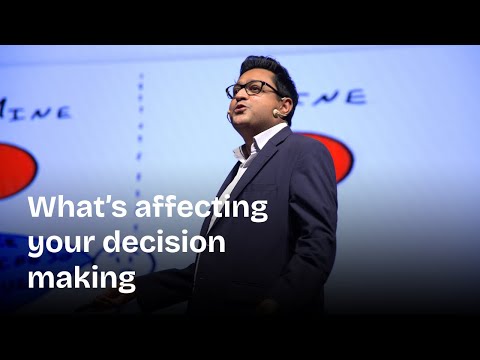
What's Affecting Your Decision Making | Neil Parikh | TEDxNM College
TEDx Talks· 2025-07-22 16:01
Behavioral Finance & Investment Biases - The speaker argues that people are inherently lazy and greedy, leading to a desire for instant gratification, which negatively impacts investment decisions [1][3] - The financial industry is affected by people's sentiments and behaviors, which are formed by habits [6] - Speculation is increasing among all generations due to impatience and the need for instant gratification, with a large percentage of exchange volumes being futures and options [5] - Good investment habits include regular saving, investing, and sticking to a financial plan with disciplined asset allocation [6][7] - Bad investment habits include buying based on tips, following social media influencers blindly, and deviating from a financial plan due to short-term gains [8] Investment Risks & Cognitive Biases - Greed, exemplified by over-allocation to small-cap stocks, can lead to excessive risk-taking and significant losses [9][10] - Fear of missing out (FOMO) drives people to invest in already high-priced assets, reducing the risk-to-reward ratio [10][12] - Overconfidence, fueled by market rallies, can lead to abandoning studies or jobs for speculative trading, which is a dangerous trend [13][14] - Availability bias can lead to making decisions based on recent, frequent, and extreme information, rather than a comprehensive view [17][18] - Confirmation bias leads investors to seek out opinions and information that confirm their existing beliefs, ignoring contradictory information [19][20][21] - Herd mentality can lead to scams and inflated prices, making it crucial to be a contrarian investor [23][24] - Anchoring bias, where investors fixate on their purchase price, can prevent them from selling losing investments and missing out on better opportunities [26][27] - Endowment bias, where people overvalue what they own, can hinder rational decision-making about assets [28][30] Overcoming Biases & Improving Investment Decisions - Understanding and overcoming biases is crucial for making better decisions and becoming a successful investor [15][16] - The speaker advises to control urges, delay instant gratification, and be aware of personal biases [31]