Genetics

Search documents
Know Thyself 2.0: When Technology Rewrites Life | Aristides G. Eliopoulos | TEDxNTUA
TEDx Talks· 2025-09-19 15:15
Genetic Predisposition and Disease - Genetic variations account for 04% of the differences between individuals, influencing traits and disease susceptibility [3] - Genetics reveals two paths to disease predisposition: monogenic diseases caused by a single gene mutation and polygenic diseases influenced by hundreds or thousands of DNA variations combined with lifestyle factors [5][6] - Approximately 50% of chronic diseases, including type 2 diabetes, obesity, heart disease, and depression, are attributable to genetic factors [6] - Polygenic risk scores can identify individuals with a two-to-threefold increased genetic risk for obesity, hypertension, or heart disease, enabling preventative measures [7] Genetic Technology and Prevention - Genetic guidance helps prevent diseases by enabling personalized prevention strategies based on individual genetic predispositions [10] - Epigenetics demonstrates that environmental factors, diet, stress, exercise, and the microbiome influence gene expression without altering the DNA sequence [12][13] - The completion of the human genome sequencing project cost approximately $3 billion and took over a decade; now, whole-genome DNA analysis from saliva costs around €600 and takes only a few days [15] - Genome editing technologies, like CRISPR, allow for correcting "typos" in the DNA, with applications in treating monogenic diseases such as sickle cell anemia [16] - Artificial intelligence is used to predict disease risks by learning from thousands or millions of genomes, enhancing precision medicine [16][17] Ethical Considerations and Future Implications - The convergence of genetics and technology raises ethical questions regarding access to genetic information, privacy protection, data management, and the right to know or not know [23] - Genetic information empowers individuals to personalize nutrition, treatment, and disease prevention, improving quality and duration of life [22] - Synthetic biology is advancing beyond understanding and correcting DNA to creating new genes, biological systems, and even artificial cells from scratch [17]


X @Andrew Tate
Andrew Tate· 2025-08-04 14:05
Social Commentary - Post natal depression stems from a woman's perceived mistake in replicating "beta male" genetics [1] - This replication occurs through strategies like time investment, familiarity, and acts of service [1] - Women in seemingly happy marriages may experience post natal depression due to this perceived genetic mistake [1] - Conversely, brief encounters with "alpha" males may not lead to post natal depression because of the perceived superior genetics [1][2] - The report suggests a belief that genetics are paramount, with a small effort from a "killer" being more valuable than significant effort from a weaker male [2]
X @The Economist
The Economist· 2025-07-31 04:20
Genetically, the animal is about as far removed from a common nag as it is possible for a horse to be. The beast has never been tamed https://t.co/OMuFVhe8q4 ...
Why cousin marriage is a genetic gamble | Mohammed Jakir Hosen | TEDxCOU
TEDx Talks· 2025-07-29 14:49
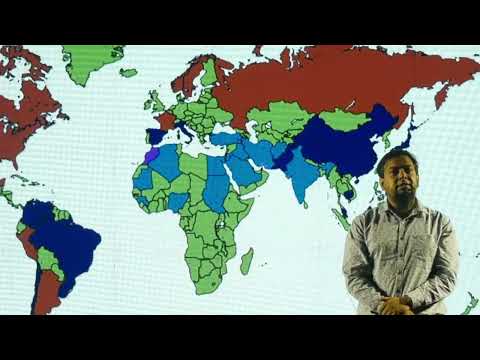
Core Argument - Consanguineous marriage, particularly among cousins, increases the risk of genetic disorders in offspring due to the higher probability of inheriting recessive genes [2][6] - While consanguinity is prevalent globally, it is notably higher in Arab countries and Muslim communities, with Pakistan having over 50% of marriages between cousins [10][11] - Increased awareness, premarital genetic screening, and newborn screening are crucial interventions to mitigate the risks associated with consanguineous marriages [15][16][19] Genetic Risks and Examples - Offspring of consanguineous marriages have a 25% chance of being affected by autosomal recessive diseases [6][14] - Historical examples, such as the Habsburg family, demonstrate how inbreeding can lead to serious genetic diseases and the decline of a bloodline [8] - Conditions like Meckel-Gruber syndrome, a fatal genetic disorder, are linked to consanguinity, resulting in severe fetal abnormalities and death [9] Regional Prevalence and Cultural Factors - Consanguineous marriage rates vary significantly by country, with higher rates observed in Arab and Muslim communities [10] - Cultural factors, including attraction, love, status, and wealth preservation, contribute to the practice of consanguineous marriage [11] - In Bangladesh, studies indicate consanguinity rates ranging from 4% to 10%, with higher rates in certain regions [12] Impact on Child Health - Under-five child mortality rates are significantly higher in consanguineous families compared to non-consanguineous families [13] - Miscarriage rates are also significantly elevated in consanguineous families [14] - Children from consanguineous families are approximately three times more likely to be affected by genetic diseases such as thalassemia, disability, and asthma [14] Solutions and Prevention Strategies - Premarital carrier screening is essential to identify potential genetic risks in partners and for future generations [15] - Newborn screening can help detect enzyme deficiencies or hormone imbalances early, enabling prompt intervention [16] - Public awareness campaigns are vital to educate communities about the risks associated with consanguineous marriage [16] Success Stories - Cyprus successfully reduced the incidence of thalassemia through a 25-year policy-level initiative involving screening, mandatory prenatal testing, and DNA screening [17][18] - The number of thalassemia births in Cyprus decreased from approximately 30 per year to 2-3 per year through these interventions [17][18]
X @The Economist
The Economist· 2025-07-26 08:40
Animal Genetics - The animal's genetic makeup is significantly different from that of a common horse [1] Animal Behavior - The animal has never been domesticated [1]
X @The Economist
The Economist· 2025-06-30 19:27
Scientists in China have presented the most complete attempt yet at making healthy, fertile mice from two sperm cells. Bipaternal human children, though, are still far away https://t.co/6pVZZVcFQy ...
X @The Economist
The Economist· 2025-06-30 15:00
Scientific Advancement - Mice with two fathers have successfully produced offspring using their own genetic material [1] Ethical Considerations - The technology is not expected to be applicable to humans in the near future [1]
23andMe (ME) Earnings Call Presentation
2025-06-25 11:31
Business Overview - 23andMe operates with two business verticals: Consumer and Research[11] - The Consumer business focuses on personalized health services, ancestry, and recurring subscription revenue[13] - The Research business leverages the world's largest re-contactable genetic and phenotypic data engine for data licensing, target discovery, and research services for pharma[15] - The company has genotyped over 15 million customers, with over 84% of customers opting-in to research, generating 4.8 billion phenotypic data points[17] Consumer Health - Genetics plays a role in 8 out of the 10 leading causes of death in the US[24] - 23andMe helps consumers identify their genetic risks, with over 28,000 customers identified with BRCA1/BRCA2 variants and over 4 million with a higher likelihood of type 2 diabetes[32] - 76% of customers report taking a positive health action after learning about their genetics[33] - 23andMe offers direct access to care with Lemonaid Health Telehealth Services, including access to GLP-1 drugs for weight loss in a number of states[43, 47] Research and AI - 23andMe has a large biobank with over 9 million research participants with ILD data sharing consent and over 5 million biobanked samples[65] - The company is pursuing multiple approaches to integrate Claims and EHR data into its existing data ecosystem, with over 5 million 23andMe customers having both Claims and EHR data[67, 71] - 23andMe is investing in AI to drive the next wave of insights and value-creation, leveraging its large-scale, relevant, and unique data[93] Financials - In FY2024, PGS revenue was $168 million with subscription revenue of $20 million[57] - For the three months ended December 31, 2024, Consumer Services revenue was $40 million (66% of total revenue) and Research Services revenue was $21 million (34% of total revenue)[104] - Total revenue for the three months ended December 31, 2024, was $60 million, compared to $45 million for the same period in FY2024[104] - Total revenue for FY2024 was $220 million, with Consumer Services accounting for $202 million (92%) and Research Services accounting for $17 million (8%)[104] - The company has $216 million in cash to support its plans for targeted investment in high ROI growth initiatives[103]

让科研人员不再做牛马!斯坦福大学华人团队打造首个通用生物医学AI智能体,从设计实验、数据分析到药物发现全自动搞定
生物世界· 2025-06-10 08:21AI Processing
编辑丨王多鱼 排版丨水成文 生物医学研究是增进人类对健康和疾病的理解、推动药物研发以及提升临床护理水平的基础。 然而,在生物医学实验室中,科研人员往往被复杂的实验方案、庞大的数据库、五花八门的分析工具以及不停更新的海量文献所淹没。生物医学研究日益受到这 些重复且分散的工作流程的制约,让科研人员疲于奔命, 严重减缓了科学发现的速度,限制了科学创新。这凸显了科学界对根本性新方法的迫切需求——一种能 够 有效扩展科学专业知识、简化研究工作流程,并充分释放生物医学研究潜力的全新路径。 2025 年 6 月 2 日, 斯坦福大学 黄柯鑫 、 Serena Zhang 、 王瀚宸 、 屈元昊 、 陆荧洲 等研究人员领衔的团队,联合 Genentech、Arc Institute、 加州大学 旧金山分校及 普林斯顿大学等 多个顶尖研究机构,发布了一款 通用生物医学 AI 智能体 —— Biomni ,该智能体能够自主完成横跨遗传学、基因组学、微生物 学、药理学和临床医学等多个生物医学分支领域的复杂研究任务 。 Biomni 的诞生标志着 AI 在生物医学研究中从"工具使用者"向"自主决策者"的跃迁 。通过将分散的科研资源整 ...