
Inflation Hedge

Search documents
Crypto Market Sell-Off: 1 High-Conviction Cryptocurrency to Buy and 1 to Avoid
Yahoo Finance· 2026-02-06 16:40
Core Insights - The cryptocurrency market has faced significant challenges in 2026, with most top tokens declining due to high interest rates and macroeconomic pressures [1] - Investors are advised to be selective, favoring established cryptocurrencies like Bitcoin while avoiding less stable altcoins such as Shiba Inu [2] Bitcoin Analysis - Bitcoin's price has decreased approximately 30% over the past year, yet it remains the most valuable cryptocurrency with a market capitalization of $1.4 trillion [2] - Despite a dramatic drop from around $68,000 in November 2021 to about $16,000 in November 2022, Bitcoin has shown resilience and is up over 70% in the last five years [3][2] - Factors contributing to Bitcoin's recovery include declining interest rates, SEC approval of spot price ETFs, and the upcoming halving event in 2024, which reduces mining rewards [4] - Bitcoin's advantages include active mining, a capped supply of 21 million tokens, and nearly 20 million tokens already mined, which may enhance its appeal as a hedge against inflation [5] - As Bitcoin approaches its next halving in 2028, its scarcity could position it similarly to gold or silver, potentially stabilizing and increasing its price as a hedge against fiat currency expansion [6] Shiba Inu Analysis - Shiba Inu, a smaller meme coin, has lost nearly 60% of its value in the past year and is considered a risky investment [7] - Created as a parody of Dogecoin, Shiba Inu has seen significant price increases since its launch but faces limitations that may hinder its growth potential in the coming years [7]
America is back from the ‘dead’ thanks to tariffs, Trump says. How to bet on the ‘hottest country’ for big gains
Yahoo Finance· 2026-02-05 14:03
Economic Growth and Tariffs - The U.S. economy experienced a significant growth rate of 4.4% in the third quarter of 2025, marking the fastest pace in two years, driven by consumer spending, exports, government spending, and investment [2] - A narrower trade deficit contributed 1.62 percentage points to overall GDP growth, with imports declining [1][2] - President Trump attributes this economic turnaround to his tariff policies, claiming they have transformed the U.S. from a "DEAD" country to the "HOTTEST" economy in the world [3][5] Stock Market Performance - The stock market has seen a strong bull run, with the S&P 500 up approximately 24% since Trump's tariff announcement in April 2025, and the Dow Jones Industrial Average nearing 49,449 [6][9] - Trump predicts the Dow will soon break 50,000, reflecting his bullish outlook on the stock market's continued growth [6][10] Retirement Accounts and Wealth Creation - The average 401(k) balance rose by 9% year-over-year to an all-time high of $144,400 in Q3 2025, benefiting from the stock market surge [9] - The U.S. stock market is emphasized as a powerful engine of wealth creation, with significant gains flowing into retirement accounts [9] Investment Opportunities - Platforms like Moby provide market research to simplify stock analysis, with their recommendations outperforming the S&P 500 by nearly 12% on average over the past four years [11] - Fundrise has disrupted the venture capital space by allowing retail investors to invest in private tech companies with a minimum investment of $10, aiming to build a portfolio of valuable firms [13][14] Real Estate Investment - Real estate is highlighted as a cornerstone of wealth-building, with properties providing consistent rental income and a hedge against inflation [16] - Crowdfunding platforms like Arrived enable investors to buy shares in rental homes with as little as $100, making real estate investment more accessible [17][18] - Institutional-quality real estate investments are available through platforms like Lightstone DIRECT, which requires a minimum investment of $100,000 and has a strong historical performance [20][21][22]
Citadel CEO criticizes Trump’s Fed attacks, warning they could have ‘steep costs.’ Here’s how to protect your portfolio
Yahoo Finance· 2026-02-04 17:09
Group 1: Inflation and Economic Context - The U.S. consumer price index has increased by 24% over the past five years, indicating significant inflationary pressures [2] - A historical perspective shows that $100 in 2025 will only buy what $12.05 could in 1970, highlighting the erosion of purchasing power due to inflation [2] - The Federal Reserve has cut interest rates three times in the previous year and maintained a target range of 3.5% to 3.75% in January 2026, acknowledging that inflation remains elevated [3] Group 2: Gold as an Investment - Gold is recognized as a hedge against inflation and market corrections, with its price surging by over 73% in the past 12 months [7] - Goldman Sachs has raised its gold price forecast for December 2026 to $5,400 per ounce, reflecting a further expected increase of 15% from early February [8] - Investors are encouraged to consider gold IRAs for retirement savings, which offer tax advantages while allowing investment in physical gold [9] Group 3: Real Estate as an Investment - Real estate is also viewed as a strong hedge against inflation, with property values and rental income typically rising during inflationary periods [11] - The S&P CoreLogic Case-Shiller U.S. National Home Price Index has shown a five-year annualized return of 7.2%, driven by strong demand and limited housing supply [12] - Crowdfunding platforms like Arrived allow investors to participate in real estate with minimal capital, starting from as little as $100, without the burdens of property management [14] Group 4: Alternative Investments - The S&P 500 is currently trading at its highest price-to-earnings ratio since the dot-com boom, with projected annualized returns of only 3.9% to 5.9% over the next decade [22] - Postwar and contemporary art has emerged as an alternative investment class with low correlation to the market, attracting over 70,000 investors since 2019 through platforms like Masterworks [23] - Masterworks has reported net annualized returns of 14.6%, 17.6%, and 17.8% on sold artworks held for over a year, indicating strong performance in this asset class [24]
JPMorgan forecasts gold to hit $6,300 in 2026 despite sharpest fall since 1980s
New York Post· 2026-02-02 18:18
JPMorgan expects gold prices to hit $6,300 per ounce by the end of 2026 – despite bullion suffering its sharpest one-day drop since 1983 on Friday.Gold futures fell 0.9% Monday, continuing its descent following news that President Trump plans to nominate former Fed governor Kevin Warsh to lead the Federal Reserve – an expected pick that calmed investor nerves.But JPMorgan expects gold prices to hit $6,300 per ounce by the end of 2026 as investors and central banks continue to buy up the safe-haven asset. JP ...


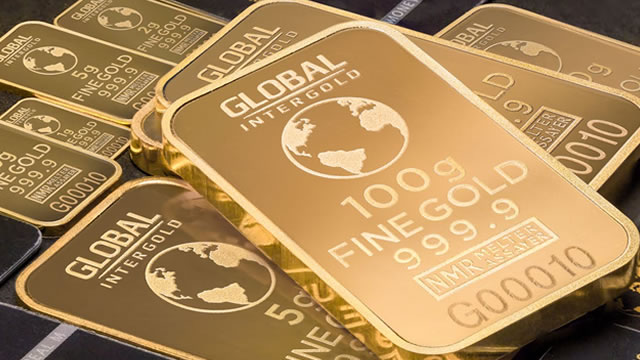
The Sell-Off In Gold May Be Last Stop Before $10,000 – 5 Stocks and an ETF To Buy Now
Yahoo Finance· 2026-01-31 14:35
We conducted some research and found that the most powerful structural force is the global shift in reserve holdings. Central bank gold holdings amount to nearly 36,200 tonnes and account for almost 20% of official reserves, up from around 15% at the end of 2023. Diversification away from U.S. dollar reserve holdings, while still moderate, has accelerated in recent years, according to published sources. Central banks continue to increase the percentage of gold in their international reserves, fundamentally ...
An American Silver Play With Growth Potential
Yahoo Finance· 2026-01-30 20:15
Silver Market Overview - Silver prices have tripled in the past year, rising from around $30 in late January 2025 to over $100 today, driven by its status as a safe haven and hedge against inflation [1] - There is a significant shortage of physical silver, estimated at 95 million ounces in 2025, due to soaring demand for technologies like solar panels and electric vehicles [1] Investment Strategies - Investors are advised to consider silver mining companies as a safer investment compared to investing directly in silver [2] - Mining companies benefit from expanding profit margins as silver prices rise above production costs [3] Hecla Mining Company - Hecla Mining is the largest silver producer in the U.S. and Canada, accounting for 37% of U.S. silver production and 29% in Canada, positioning it favorably in a stable jurisdiction [6] - Hecla's profitability is closely tied to silver price fluctuations, with historical data showing significant margin changes during price spikes [7] - Current profit margins are improving but have not fully aligned with the soaring silver prices; Hecla's Greens Creek mine has low all-in sustaining costs of $11.01 per ounce, making it one of the lowest-cost producers in North America [8]

Why Barrick Mining Corporation Plunged Today
Yahoo Finance· 2026-01-30 19:13
Shares of miner Barrick Mining Corporation (NYSE: B), previously known as Barrick Gold, fell 9.8% on Friday as of 12:30 p.m. EDT. Barrick reports earnings next week, and there wasn't any company-specific news today. That means the stock's decline was likely due to the 9% drop in gold prices today as of that time. Where to invest $1,000 right now? Our analyst team just revealed what they believe are the 10 best stocks to buy right now, when you join Stock Advisor. See the stocks » Gold tends to be viewed ...
Should You Buy Bitcoin While It's Under $90,000?
Yahoo Finance· 2026-01-30 18:41
As of this writing on Jan. 28, Bitcoin (CRYPTO: BTC) trades at $89,350 per digital coin. It has hovered at this level since Jan. 21, down from an all-time high of $126,198 last October. This retreat could be the start of the next crypto winter, with lower Bitcoin prices and struggling altcoins in store for the next couple of years. Things could be different this time, though -- maybe I'm looking at a temporary drawdown before the crypto market takes off again. And maybe (just maybe) it's the harbinger of ...
Gold and silver plunge after news Trump will nominate Kevin Warsh as Fed chair
New York Post· 2026-01-30 17:24
Market Reaction - Gold prices fell by as much as 10%, dropping from $5,500 to around $5,136 per ounce following the news of Kevin Warsh's nomination as the next chair of the Federal Reserve [1][6] - Silver prices declined by up to 20%, decreasing from $120 to around $103 per ounce [1][6] Economic Context - Gold and silver had previously surged to record highs due to investor demand driven by concerns over inflation, rising government debt, and political pressure on the Fed [2] - Precious metals are typically viewed as safe havens, particularly when there are fears that the Fed might cut interest rates sharply [2] Nominee Profile - Kevin Warsh has a hawkish track record from his tenure as a Fed governor from 2006 to 2011 and is expected to maintain the Fed's independence [3] - Warsh's background includes experience in investment banking at Morgan Stanley and involvement during the great financial crisis, which is seen as a valuable pedigree for the role [4] Implications for Investors - The nomination of Warsh is perceived to alleviate concerns among businesses and investors, as higher interest rates generally favor yield-producing assets over non-yielding hard assets like gold and silver [6] - The ongoing criminal investigation into current Fed chair Jerome Powell may also impact investor confidence and the overall financial landscape [12][13]

This ETF Just Might Bail You Out If the Dollar Keeps Tanking
Yahoo Finance· 2026-01-29 15:50
Core Viewpoint - The Swiss Franc Trust Currencyshares (FXF) is gaining attention as the U.S. dollar continues to decline, with the Swiss franc becoming increasingly attractive as a safe-haven currency amid global economic uncertainty [1][2]. Group 1: Currency Performance - The U.S. dollar has been on a downward trend, while the Japanese yen is showing signs of recovery, leading to a surge in the Swiss franc, which is approaching levels not seen in over a decade [1]. - The Swiss franc is viewed as a "gold" of the currency world, especially as the U.S. dollar loses its appeal [3]. Group 2: Safe-Haven Status - Switzerland's low debt, stable government, and historical neutrality make it a preferred destination for investors seeking safety during times of political and economic turmoil [3]. - The current global climate, characterized by trade wars and inflation, drives investors to seek refuge in the Swiss franc [3]. Group 3: Economic Stability - Switzerland has almost no inflation, currently around 0.1%, allowing the franc to maintain its value better than many other currencies [6]. - In contrast, the U.S. dollar is losing purchasing power at a rate of 3% to 4% annually due to inflation, making the Swiss franc a more stable option for protecting investment portfolios [6].