
Securitization

Search documents
KBRA Assigns Preliminary Ratings to Monroe Capital ABS Funding III, LP
Businesswire· 2025-12-15 16:23
Core Insights - KBRA has assigned preliminary ratings to three classes of notes issued by Monroe Capital ABS Funding III, LP, which is a securitization backed by a portfolio of recurring revenue and middle market corporate loans [1] - The total size of the securitization is $485.0 million, managed by Monroe BDC Advisors, LLC, an affiliate of Monroe Capital LLC [1] Summary by Categories Securitization Details - The securitization consists of $310.4 million of Class A notes, $53.35 million of Class B notes, and $24.25 million of additional notes [1]



Atlanticus Refinances Securitization Facility
Globenewswire· 2025-12-10 21:15
Core Insights - Atlanticus Holdings Corporation has successfully refinanced a $750 million term securitization, achieving a reduction of over 200 basis points in the coupon rate compared to the previous bonds [1][2] - The refinancing is part of Atlanticus's strategy to reduce costs and enhance the reach of its Mercury brand, aiming to empower more everyday Americans [2] - The company has a strong operational history, having serviced over 20 million customers and managed $48 billion in consumer loans over 25 years [3] Company Overview - Atlanticus is a financial technology company that partners with banks, retailers, and healthcare providers to offer inclusive financial services [3] - The company utilizes proprietary technology and analytics to support a range of consumer loan products, including private label credit and general-purpose credit cards [3] - Atlanticus also operates an Auto Finance subsidiary that caters to automotive dealers and non-prime financial organizations with various financing and service programs [3]


Journal of Political Economy 2025年精选文章目录与摘要|保险学术前沿
13个精算师· 2025-12-07 02:05
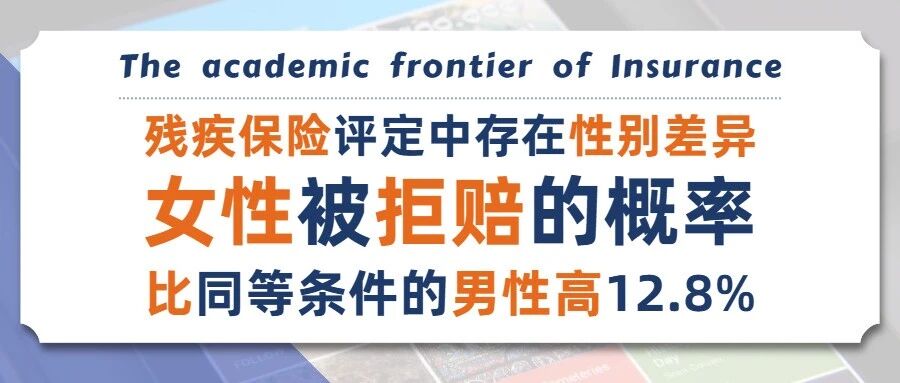
Core Insights - The article discusses various studies published in the Journal of Political Economy, focusing on the implications of unemployment insurance, disability insurance, dynamic pricing in insurance markets, and long-term health insurance in Germany. Group 1: Unemployment Insurance - Entities with a pessimistic view on disasters are more likely to leverage risky asset purchases and prefer longer-term debt contracts, as these contracts provide implicit disaster insurance that increases with maturity [6][7]. - A study on Missouri's unemployment insurance policies found that a reduction in benefit duration led to a 12% increase in job-finding rates, driven by increased job vacancies and enhanced search efforts from unemployed workers [8]. Group 2: Disability Insurance - Research indicates that women with work disabilities are 12.8 percentage points more likely to be denied disability insurance compared to men, attributed to a higher assessment of their remaining work capacity [10][11]. Group 3: Dynamic Pricing in Insurance Markets - Stricter dynamic pricing regulations have limited effects on consumer welfare while reducing insurer profits and increasing market concentration [12][13]. Group 4: Long-Term Health Insurance - The German long-term health insurance market is the largest globally, with contract designs closely aligning with optimal dynamic contracts for individuals with stable lifetime income profiles, achieving welfare levels only 4% lower than optimal contracts [14][15]. - The availability of informal care reduces the demand for long-term care insurance by 7 percentage points and suppresses Medicaid spending, suggesting that cash benefits for informal caregivers could enhance insurance demand and family welfare [17][18].
X @Bloomberg
Bloomberg· 2025-12-04 00:10
The EU is in danger of striking an “unduly conservative compromise” on legislation meant to kick-start securitization, two of the bloc’s biggest finance lobbies warned https://t.co/DDSIW3MPYa ...
PGY's Network Volume Grows So Far in 2025: Will the Trend Continue?
ZACKS· 2025-11-24 15:11
Core Insights - Pagaya Technologies Ltd. (PGY) has demonstrated strong growth in network volume, achieving a year-over-year increase of 10.5% for the nine months ending September 30, 2025 [1][11] Business Model and Expansion - PGY has diversified its business model beyond personal loans, expanding into auto lending and point-of-sale financing, which has been a key driver of network volume growth [2][11] - The company has improved its credit trends and diversified its funding sources, including more forward flow deals and asset-backed securities (ABS) issuance, which enhances flexibility and reduces reliance on a single funding source [3][11] Financial Performance - The increase in network volume has led to a 26.7% year-over-year rise in network AI fees during the first nine months of 2025, contributing to a total revenue growth of 28.4% year-over-year [4][11] - For the full year 2025, PGY anticipates network volume to reach between $10.5 billion and $10.75 billion, supported by advancements in AI credit models and a scalable ABS platform [5] Market Position and Valuation - PGY's stock has surged by 132.8% this year, contrasting with a 10.1% decline in the industry, indicating strong investor confidence [10] - Currently, PGY trades at a 12-month forward price-to-sales (P/S) ratio of 1.13X, significantly below the industry average of 2.92X over the past three years [12] Earnings Estimates - The Zacks Consensus Estimate for PGY's earnings has increased to $3.10 for 2025 and $3.41 for 2026, reflecting year-over-year growth projections of 273.5% and 10%, respectively [13]


Navient (NasdaqGS:JSM) Update / Briefing Transcript
2025-11-19 17:02
Summary of Navient's Strategy Update Conference Call Company Overview - **Company**: Navient - **Division Highlighted**: Earnest, focusing on student loan refinancing and personal loans Key Points and Arguments Phase One and Phase Two Strategy - **Phase One**: Aimed at maximizing cash flows from legacy portfolios, resulting in an additional $2 billion of discretionary cash for growth or distributions [5][6] - **Phase Two**: Focused on growing earnings and changing market perception of Navient from a student lender to a specialty finance company [5][6][7] Earnest's Role and Business Model - **Earnest**: Represents Navient's student loan refinancing and personal loan business, with a strategy to generate long-term relationships with high lifetime value customers [9][10] - **Customer Profile**: Average customer age is in the early to mid-30s, with an income of approximately $120,000 and a FICO score above 770, indicating a high potential customer base [11] Financial Performance and Projections - **2025 Financial Snapshot**: Expected operating profit of around $70 million with $10 billion in outstanding loans, primarily securitized [12][14] - **Return on Equity (ROE)**: Aiming for a pre-tax ROE of about 12%, with potential for significant increases through optimized securitization strategies [42][45] Securitization Strategy - **Securitization Changes**: Transitioning from horizontal to vertical securitization to maximize return on equity, despite lower net interest income [20][22] - **Loan Sales**: Exploring loan sales as a method to remove loans from the balance sheet and accelerate income [22][23] Market Opportunities - **Total Addressable Market (TAM)**: - Education and graduate lending market estimated at $12 billion annually [32] - Student loan refinancing market projected to grow from $8 billion in 2025 to $11 billion in 2026 [32] - Personal lending market expected to be around $36 billion by 2028, targeting existing customers [33][34] Competitive Landscape - **Market Positioning**: Aiming to be competitive at lower origination levels compared to peers like Upstart and SoFi, with a focus on maintaining low sales and marketing expenses [26][27] - **Customer Acquisition**: Approximately $350 million spent to acquire the current customer base, with plans to monetize through multiple products as customer needs evolve [30] Technology and Operations - **New Lending Platform**: Launched a modular lending platform to improve operational efficiency and increase loan automation, enhancing conversion rates [17][18] - **Data Science Integration**: Expanding the use of machine learning for credit decisioning and pricing to improve competitiveness [18] Future Outlook - **Growth Projections**: Anticipating a significant increase in originations, with a goal of reaching around $4 billion in originations in the near term [40] - **Transition Year**: 2026 is seen as a pivotal year for transitioning into personal lending and expanding market presence [39] Additional Important Insights - **Talent Acquisition**: Efforts to attract industry talent to enhance operational capabilities and market competitiveness [12][13] - **Investor Relations**: Emphasis on improved disclosures to better communicate the value of Earnest as part of Navient [28][29] This summary encapsulates the strategic direction and financial outlook of Navient, particularly focusing on the Earnest division and its role in the company's growth strategy.

Credit Acceptance Announces Completion of $500.0 Million Asset-Backed Financing
Globenewswire· 2025-11-13 21:02
Core Points - Credit Acceptance Corporation completed a $500.0 million asset-backed non-recourse secured financing, conveying loans valued at approximately $625.2 million to a special purpose entity [1] - The financing involves three classes of notes with varying amounts, average life, prices, and interest rates, structured to ensure that 96.0% of cash flows will be used for principal and interest payments [1][2] - The company maintains approximately $2.0 billion in unused borrowing capacity and unrestricted cash following this financing, marking its 60th term securitization since 1998 [2] Financing Structure - The notes issued include Class A ($284.61 million, 2.58 years, 4.50% interest), Class B ($104.57 million, 3.33 years, 4.87% interest), and Class C ($110.82 million, 3.70 years, 5.38% interest) [1] - The company will receive 4.0% of cash flows from the underlying consumer loans to cover servicing expenses, while the remaining 96.0% will be allocated to pay principal and interest on the notes [1] Company Overview - Credit Acceptance Corporation provides innovative financing solutions that enable automobile dealers to sell vehicles to consumers with varying credit histories [3] - The financing programs help consumers improve their credit scores, allowing them to transition to more traditional financing sources [4] - The company is publicly traded on the Nasdaq under the symbol CACC [4]


CPS(CPSS) - 2025 Q3 - Earnings Call Transcript
2025-11-11 19:00
Financial Data and Key Metrics Changes - Revenues for Q3 2025 were $108.4 million, an 8% increase from $100.6 million in Q3 2024 [7] - For the nine months ending September 2025, revenues reached $325.1 million, a 13% increase over $288 million in the same period last year [7] - Expenses for Q3 2025 were $101.4 million, also up 8% from $93.7 million in Q3 2024 [8] - Net income for Q3 2025 was $4.9 million, a 2% increase from $4.8 million in Q3 2024 [9] - Diluted earnings per share remained flat at $0.20 for Q3 2025, compared to the same period last year [9] Business Line Data and Key Metrics Changes - The fair value portfolio increased to $3.6 billion, yielding 11.4% net of losses [7] - Origination volumes for Q3 2025 were $391.1 million, with a total of $1.275 billion for the nine months, a 4% increase year-over-year [13] - The percentage of the portfolio from troubled 2022 and 2023 vintages is now below 30% [19] Market Data and Key Metrics Changes - The unemployment rate stood at 4.3% as of August 2025, with expectations to rise to 4.5% in 2026 [22] - The company noted increased competition from banks and credit unions, which may pressure growth [25] Company Strategy and Development Direction - The company is focusing on organic growth by adding new dealers and improving capture rates, which have increased from the high fours to over 6% [15] - A specific focus on large dealer groups has led to their originations comprising 31% of total originations, up from 17% two years ago [16] - The company aims to maintain APRs while improving margins and cutting expenses [27] Management's Comments on Operating Environment and Future Outlook - Management expressed a positive outlook for 2025, anticipating it to be the second-best year in the company's history despite modest growth [13][14] - The company is not overly concerned about a slight increase in unemployment, viewing it as a manageable risk [28] - Management highlighted that the performance of newer vintages (2024 and 2025) is showing improvement, indicating a positive trend in credit performance [19][20] Other Important Information - The company successfully completed a securitization despite market challenges, indicating stability in the market [6][25] - The total debt increased by 11% to $3.4 billion, while the fair value portfolio grew by 16%, showing improved balance sheet management [10][11] Q&A Session Summary - No specific questions or answers were provided in the transcript, as the call concluded without a Q&A segment [31]

EFC Q3 Deep Dive: Securitization Expansion and Loan Portfolio Growth Drive Results
Yahoo Finance· 2025-11-07 00:00
Core Insights - Ellington Financial reported Q3 CY2025 revenue of $82.76 million, exceeding analyst expectations by 4.9% and reflecting a year-on-year growth of 23.6% [6] - The company's non-GAAP profit was $0.53 per share, which was 20.7% above consensus estimates [6] - Management highlighted strong performance driven by loan portfolio expansion and an active securitization pipeline [3] Financial Performance - Revenue: $82.76 million vs analyst estimates of $78.87 million, representing a 23.6% year-on-year growth [6] - Adjusted EPS: $0.53 vs analyst estimates of $0.44, a 20.7% beat [6] - Adjusted Operating Income: $25.74 million with a 31.1% margin, showing a 60.4% year-on-year growth [6] - Market Capitalization: $1.38 billion [6] Strategic Initiatives - The company priced seven securitizations during the quarter, focusing on non-QM and closed-end second lien loans, enhancing liquidity [7] - Total portfolio holdings grew by 12%, with significant increases in non-QM, proprietary reverse mortgage, and commercial mortgage bridge loans [7] - A successful $400 million issuance of five-year senior unsecured notes reduced reliance on short-term repo financing, improving capital efficiency [7] Credit Quality and Risk Management - Management reported exceptionally low cumulative realized credit losses in both residential and commercial loans, attributed to disciplined underwriting and a focus on higher FICO borrowers [7] - The company emphasized the importance of risk controls, including personal guarantees on certain loan types [7] Technology and Operational Efficiency - Investments in proprietary technology have enabled more efficient loan origination and delivery, broadening the range of mortgage products [8]

Ellington Financial(EFC) - 2025 Q3 - Earnings Call Transcript
2025-11-06 17:00
Financial Data and Key Metrics Changes - The company reported GAAP net income of $0.29 per share and adjusted distributable earnings (ADE) of $0.53 per share, marking a new quarterly high for ADE since its introduction in 2022, significantly exceeding the $0.39 per share dividends for the quarter [5][11][20] - Total portfolio holdings grew by 12% during the quarter, driven by non-QM, proprietary reverse mortgage, and commercial mortgage bridge loans [7][20] - The economic return for the third quarter was 9.2% annualized, with book value per share at $13.40 [20] Business Line Data and Key Metrics Changes - In the credit portfolio, net interest income grew sequentially, with $0.42 per share from credit, $0.04 from agency, and $0.09 from Longbridge [11][12] - The Longbridge segment had strong contributions from both originations and servicing, with origination profits driven by higher volumes of proprietary reverse mortgage loans [14][15] - The adjusted long credit portfolio increased by 11% to 3.56% quarter over quarter, while the Longbridge portfolio increased by 37% to $750 million [15][17] Market Data and Key Metrics Changes - The company noted a favorable environment for agency RMBS due to lower interest rates and reduced volatility, which supported portfolio performance [13] - The securitization market has become more liquid and commoditized, attracting a larger universe of investor-grade bond buyers, which has tightened spreads [70] Company Strategy and Development Direction - The company is focusing on diversifying its funding sources and reducing reliance on short-term repo financing, as evidenced by the successful pricing of $400 million in senior unsecured notes [10][21] - There is an emphasis on technology investments to enhance loan origination efficiency and expand the range of products offered by affiliate loan originators [23][25] - The company plans to expand its footprint in the securitization markets and is optimistic about purchasing seasoned mortgage loan portfolios from banks [25][27] Management's Comments on Operating Environment and Future Outlook - Management expressed concerns about potential economic cracks, including recent corporate bankruptcies and weakened job formation, but remains focused on maintaining credit quality [21][22] - The company anticipates continued strong performance in the fourth quarter, with robust securitization activity and origination volume [29][30] - Management highlighted the importance of maintaining a disciplined risk management approach while pursuing high returns [32] Other Important Information - The company has seen a significant increase in securitization volumes, with 20 securitizations priced year to date, more than triple last year's pace [6][9] - The percentage of borrowings subject to mark-to-market margining declined to 61% from 74% month over month, indicating improved financing terms [19] Q&A Session Summary Question: Discussion on loan originator platforms and valuations - Management noted that strong earnings performance has driven higher book values and liquidity for loan originator platforms, leading to improved valuations [35][36] Question: Opportunities in buying loans from banks - Management confirmed that recent transactions involved residential mortgage loans from smaller banks, indicating a trend of banks restructuring portfolios due to lower yields [40][41] Question: Credit performance and allocation of capital - Management highlighted that credit performance remains strong, particularly among higher-end borrowers, while being cautious about potential impacts from layoffs in the labor market [46][47] Question: Longbridge portfolio and leverage - Management stated that Longbridge does not require more leverage to achieve target returns, as most equity is in high-yielding servicing [75] Question: Non-QM market and convexity risk - Management emphasized the importance of understanding prepayment risks and noted that the Non-QM market has become more liquid and attractive due to tighter spreads [77][81]