Soft Landing

Search documents
Peter Schiff Slams Federal Reserve's Plan For Buying Treasury Bills: 'QE By Any Other Name Is Still Inflation' - Invesco QQQ Trust, Series 1 (NASDAQ:QQQ), SPDR S&P 500 (ARCA:SPY)
Benzinga· 2025-12-11 07:29
Core Viewpoint - The Federal Reserve's decision to cut interest rates and resume purchasing Treasury bills has sparked a debate about the U.S. economy's future, with contrasting views from analysts and economists [1]. Group 1: Economic Perspectives - Economist Peter Schiff warns that the Fed's new liquidity measures represent a dangerous return to quantitative easing, predicting that this policy will lead to rising long-term interest rates [2]. - In contrast, institutional investors express optimism, with LPL Financial's Chief Economist Jeffrey Roach stating that the Fed's actions indicate a successful balance of its dual mandate, leading to a "Goldilocks" scenario for the economy [3]. - Gina Bolvin from Bolvin Wealth Management supports this optimistic view, suggesting the Fed is shifting focus from fighting inflation to managing economic risks [4]. Group 2: Fed's Actions and Market Reactions - The Fed plans to purchase approximately $40 billion per month in shorter-maturity Treasuries to smooth volatility in short-term funding markets, a move that has drawn criticism from Schiff [4][5]. - Bill Adams, Chief Economist for Comerica Bank, notes that the Fed is operating in a "data vacuum" due to delayed economic releases and anticipates a leadership change when Chair Powell's term ends in May 2026 [5]. - Chris Zaccarelli of Northlight Asset Management cautions that the current optimistic sentiment may diminish if investors realize that the path to lower rates is slower than expected [6]. Group 3: Market Performance - The S&P 500 index has increased by 17.35% year-to-date, while the Dow Jones index has returned 13.36%, and the Nasdaq Composite has gained 22.68% in the same period [7]. - The SPDR S&P 500 ETF Trust (NYSE:SPY) closed at $687.57, up 0.66%, while the Invesco QQQ Trust ETF (NASDAQ:QQQ) closed at $627.61, up 0.41% [8].

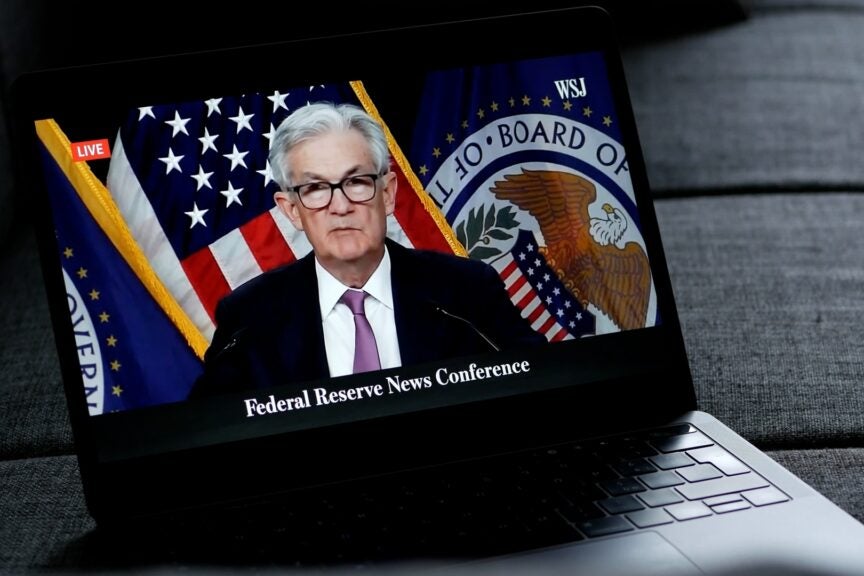
December FOMC Decision to Outline Rate Cutting Path for 2026
Youtube· 2025-12-09 23:51
Economic Outlook - The Federal Reserve is expected to implement a 25 basis point cut, with a potential pause in January due to divisions among Fed governors [1][2] - There is an anticipation of weak retail sales for October, but a more positive outlook for November and the holiday season [2][3] - The consensus for the unemployment rate in 2026 is projected to be around 4.5%, indicating a soft landing for the economy [4][5] Labor Market Insights - Job openings have fluctuated, with a potential drop from 7.5 million to 6 million, which could lead to a rapid increase in the unemployment rate to 6% [6][7] - There has been a slight uptick in the unemployment rate, with figures moving from 4.0% at the beginning of the year to 4.4% in September, indicating a stagnant labor market [8] - Despite concerns, there is an expectation of GDP growth in the range of 1.5% to 2% next year, which may support job growth and stabilize the unemployment rate [9][10] Consumer Spending and Inflation - Compensation growth is expected to rise by 3.5% to 4% next year, which, combined with a low inflation environment of just under 3%, could lead to an increase in consumer spending [10][11] - Concerns remain regarding PCE inflation, driven by immigration policy changes and a tight labor market, particularly affecting lower-income sectors [12] Investment Trends - There is a notable trend in capital expenditure (capex) spending, particularly in equipment investment, with strong demand observed in the auto sector [19][20] - However, there are concerns about structural investment, especially in commercial construction, which may face weaknesses due to excess supply and slowed shifts to electric vehicles (EVs) [22][23] Market Positioning - The strategy for portfolio positioning is to maintain market weight on midcaps and large caps while being underweight on small caps due to concerns over small firm hiring [16][17] - There is a focus on midcaps with strong cash flow growth and large caps, while the momentum trade in mega caps is still considered viable [18]

Everyone's Bullish, Cash Is Gone—What Happens If The Fed Doesn't Cut?
Yahoo Finance· 2025-11-19 22:30
Group 1 - Global fund managers are holding the lowest cash levels in nearly two decades, with average cash levels falling to 3.7% from 3.8%, the lowest since early 2022 [3][4] - A net 34% of fund managers remain overweight equities, which is below the historical 60% range seen at major market tops, indicating a bullish but not euphoric sentiment [4] - The Bank of America Global Fund Manager Survey shows that 53% of respondents expect lower inflation and stronger growth over the next year, while 45% identify an AI equity bubble as the biggest tail risk [5][6] Group 2 - The "Long Magnificent 7" trade, which includes major tech stocks like NVIDIA, Microsoft, and Apple, is cited as the most crowded bet by 54% of managers [7] - For the first time in 20 years, a net 20% of managers believe companies are overinvesting, driven by hyperscale AI capital expenditure [6]





AI to steal your job? JPMorgan’s Jamie Dimon makes this important statement amid layoff fears; hails Nvidia as ‘unbelievable company’
The Times Of India· 2025-11-06 08:25
Core Viewpoint - JPMorgan Chase & Co's CEO Jamie Dimon emphasizes that the bank will focus on using AI to enhance efficiency rather than reduce staff numbers, countering concerns about job losses due to automation [2][4]. Group 1: AI and Employment - Dimon states that while AI will reduce workloads in certain areas, it will also create jobs, particularly in data, analytics, and technology infrastructure [2][4]. - He acknowledges that AI could displace up to 80% of jobs in some professions but believes new opportunities will arise elsewhere [5]. Group 2: Economic Outlook - Dimon maintains a cautiously optimistic outlook on the economy, noting that technological innovation historically generates more employment than it replaces [3][4]. - He mentions a weakening in the broader labor market but asserts that the economy is still progressing, describing it as being in a "soft landing" [3][4]. Group 3: AI's Potential - Dimon praises AI's potential, comparing the current AI boom to the internet revolution, and highlights companies like Nvidia as examples of significant technological advancement [3][4]. - He believes AI holds "enormous" potential for breakthroughs in various fields, including medicine and engineering, suggesting that humanity should benefit from these advancements [3][4].


Fed Should ‘Keep an Open Mind’ on Rates for December, Daly Says
Bloomberg Television· 2025-11-03 19:06
Let me start with I did agree with the decision. I thought it was appropriate to take another bit off the policy rate. We have an economy that has been remarkably resilient, really weathered so many different things, and still consumers continue to spend.Businesses continue to invest. We continue to have good growth, but we still have inflation printing above our 2% target. And we need to get that down is gradually coming down, but is still too high.And importantly, we have a labour market that relative to ...

Stock Market Spotlight: The Transportation Sector (IYT)
See It Market· 2025-10-28 13:36
Market Overview - The core stock market ETFs, particularly the Semiconductors Sector ETF (SMH) and the Biotechnology Sector ETF (IBB), show optimism similar to the S&P 500, Dow Industrials, and NASDAQ 100, with SMH reaching a new all-time high while IBB remains below its peak from 2021 [1] - The Russell 2000 ETF (IWM) is just below its all-time high established two weeks ago, indicating mixed price action that is more neutral than bullish [3] Sector Performance - The Retail Sector ETF (XRT) and Regional Banks ETF (KRE) are identified as the weakest links among core ETFs [2] - The Transportation Sector ETF (IYT) is barely above the 50-Day Moving Average and has been underperforming relative to the S&P 500 ETF (SPY), indicating a divergence in performance [3][4] - The IYT has been stuck in the middle of the monthly high and low, with two closes above the 50-DMA needed for a positive outlook [5] Economic Drivers - The underperformance of the U.S. Transportation Sector can be attributed to structural, cyclical, and investor-sentiment factors, including weak freight/demand growth and rising operational costs [4][8] - A shift in the economy towards services and digital goods is reducing the growth of heavy goods movement, impacting transportation sector performance [8] - Investor perception of a potential slowdown or mild recession is leading to early discounting of transportation stocks compared to other sectors [8]

球资产配置:2025 年 10 月机构观点 —— 无数据,无问题Global Asset Allocation_ House Views October 2025 – No data, no problem
2025-10-27 00:31
Summary of Key Points from the Conference Call Industry Overview - **Focus on Global Asset Allocation**: The report discusses the outlook for various asset classes, including equities, bonds, commodities, and foreign exchange, with a particular emphasis on the US and China markets. Core Insights and Arguments - **US Economic Outlook**: Despite a lack of recent economic data due to the US government shutdown, investors remain optimistic about the US economy for 2026, with GDP consensus estimates rising to 1.8% for the US, 1.1% for Europe, and 4.2% for China [8][10] - **Equity Strategy**: The company maintains an overweight position in US and Chinese equities, driven by the AI theme and expected Fed cuts. The UK market is underweighted due to its defensive nature and lack of AI exposure [10][33] - **Sector Preferences**: Upgrades in consumer discretionary to neutral, with overweights in communications, financials, technology, and utilities, while underweighting consumer staples, materials, and real estate [2][39] - **Bond Market Positioning**: The company remains neutral on duration, favoring EM local bonds over Japanese government bonds (JGBs) due to the latter's expansionary fiscal risks [9][57] - **Credit Market Concerns**: The company is underweight in both US and EU investment-grade credit, viewing it as less likely to benefit from the AI boom and as a hedge against potential economic downturns [11][62] - **Commodity Strategy**: A shift from overweight precious metals to neutral, while increasing exposure to base metals, is noted. The expectation is for gold prices to consolidate around $4,000 [12][80] - **Foreign Exchange Positioning**: The company remains long on emerging market foreign exchange (EMFX) carry trades, indicating a preference for high-yielding currencies [3][13] Additional Important Insights - **Geopolitical Risks**: The report highlights ongoing geopolitical tensions, particularly between the US and China, which could impact market dynamics. The potential for negotiations around tariffs and export controls is discussed [18] - **Earnings Season Expectations**: High expectations for the upcoming earnings season are noted, with the potential for a year-end rally if results meet or exceed these expectations [20][23] - **Healthcare Sector**: The healthcare sector is under observation due to recent positive developments, although it remains neutral due to its defensive nature and lagging performance this year [46] - **Japan's Political Landscape**: The new leadership in Japan may lead to increased fiscal spending, which could positively impact Japanese equities, although the company remains cautious [27][57] This summary encapsulates the key points from the conference call, providing a comprehensive overview of the company's investment outlook and strategic positioning across various asset classes and sectors.

Retail Leverage Goes To Extremes
ZeroHedge· 2025-10-26 20:20
Market Overview - U.S. markets reached new all-time highs for the S&P 500 and Nasdaq Composite, driven by a cooler-than-expected inflation report (CPI for September at 3.0% vs. ~3.1% expected), which bolstered hopes for further rate cuts and the nearing end of Quantitative Tightening [1][2] - Retail investors are increasingly buying into mega-cap AI and technology stocks, such as Nvidia, AMD, Meta, and Apple, reflecting a trend of chasing headlines and technical breaks [1][9] Economic Signals - Despite the positive market sentiment, underlying economic conditions remain fragile, with concerns about retail leverage and a partial government shutdown delaying key economic data [2][3] - Credit card spending growth has only increased by 0.3% annually, indicating weakness in consumer spending, particularly among lower-end consumers [3][4] Retail Leverage Concerns - Retail leverage has surged, with margin debt reaching a record $1.13 trillion, raising concerns about the sustainability of this speculative behavior [18][20] - The market is witnessing a shift where retail investors are using leverage not for hedging but for speculative purposes, which could lead to significant risks if market conditions change [25][26] Technical Analysis - The S&P 500 closed at a record 6,753, confirming a breakout above previous resistance levels, but the market's internal structure shows weakness, with fewer stocks participating in the rally [7][10] - Momentum indicators suggest a negative divergence, indicating that the recent price movements may not be as strong as they appear [10][11] Upcoming Catalysts - The upcoming week is critical, with significant macroeconomic data releases and earnings reports from major technology firms that could influence market direction [43][44] - Key events include the Federal Reserve's interest rate decision and earnings from companies like Microsoft, Alphabet, Meta, Amazon, and Apple, which together represent over 20% of the S&P 500's market capitalization [44][45]


Fed Signals Rate Cut, Credit Concerns Rattle Wall Street | Real Yield 10/17/2025
Youtube· 2025-10-17 18:07
Group 1 - The Federal Reserve is expected to cut rates by 25 basis points in October, focusing on the labor market despite signs of economic slowing [2][5][6] - The two-year yield is projected to decline for the third consecutive week, reaching its lowest level in three years, indicating market expectations of aggressive Fed action [4][20] - Concerns about the labor market are increasing, with a disconnect between GDP growth and labor market performance, suggesting structural issues may be at play [9][10][11] Group 2 - J.P. Morgan CEO Jamie Dimon warns of potential credit issues, likening them to "cockroaches," indicating that more problems may emerge in the credit market [28][31] - The investment-grade credit market remains resilient, with strong demand and inflows, while high-yield markets are experiencing outflows [34][35] - There is a significant focus on technical factors driving the credit market, with a notable supply-demand imbalance favoring investment-grade bonds [40][41] Group 3 - The impact of tariffs on inflation is being closely monitored, with estimates suggesting that tariffs contribute approximately 10% to the current inflation rate [49][50] - The St. Louis Fed anticipates that inflation will converge towards 2% by the second half of 2026, contingent on tariff impacts [51]
Fed Governor Christopher Waller on Careful Rate Cuts, Labor Market Concerns, AI
Youtube· 2025-10-16 13:01
Economic Outlook - The Treasury Secretary is seeking a visionary approach to economic policy, emphasizing the importance of forward-thinking rather than solely relying on historical data [2][3][4] - Current economic indicators suggest a weak labor market despite signs of stronger growth, creating a puzzling situation where a growing economy cannot coexist with negative or stagnant job growth [7][8][22] Interest Rate Policy - The discussion around interest rates indicates a cautious approach, with suggestions to reduce rates gradually while monitoring economic data [9][10][18] - The financial conditions for corporate America differ significantly from those for Main Street America, with rising costs for mortgages and loans impacting households [15][19] Labor Market Dynamics - There is uncertainty in hiring practices among firms due to tariff-related concerns, leading to a slowdown in payroll growth [11][12][13] - The labor market's current weakness is not reflected in the financial markets, raising questions about the sustainability of economic growth [22][23][35] Structural vs. Cyclical Changes - The potential for structural changes in the labor market poses a challenge for monetary policy, which is typically designed to address cyclical fluctuations [35][36] - The distinction between cyclical and structural changes is critical for future policy decisions, as misjudging the nature of the changes could lead to ineffective responses [37]