
Structural Reforms

Search documents
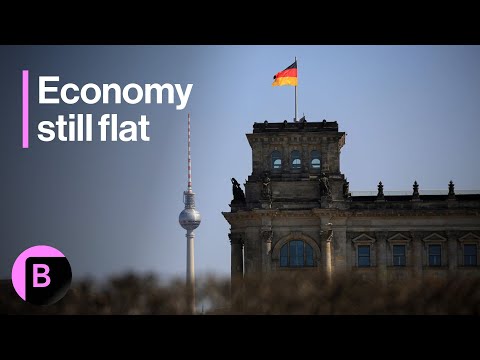
Ifo German Business Confidence Rises, Economy Flat Even after EU_US Trade Deal
Bloomberg Television· 2025-08-25 09:04
Business Sentiment & Expectations - Companies report a flat and weak business situation [1] - Expectations are improving, anticipating increased government spending in the future [2] - Order intake and other indicators are not yet showing improvement [2] - Companies are increasing capacity in anticipation of government spending [4] Economic Challenges - German company insolvencies have reached the highest level since 2005 [3] - The housing and apartment sector remains weak [4] - GDP figures disappointed with a -0.0% [10] Trade Deal Assessment - The current trade deal is considered a humiliation for the EU, reflecting an imbalance of power [5] - The trade deal is worse than previous arrangements, posing a challenge to the German economy, estimated around 15% [6] - Companies do not fully trust the trade deal due to uncertainty and potential changes [7] Fiscal Stimulus & Reforms - A fiscal stimulus package targeting defense and infrastructure has been unveiled [8] - The stimulus is expected to have a positive impact next year [8] - The sustainability of the stimulus depends on complementary structural reforms [9][11] - Without structural reforms, the effects of government spending will be short-term and may lead to price increases [10][11]

全球宏观展望之后:中国的 “内卷” 与 “演化”-What's Next in Global Macro China's Involution Convolution
2025-08-18 01:00
Summary of Key Points from the Conference Call Industry Overview - The focus of the conference call is on the **Chinese economy** and its current macroeconomic challenges, particularly regarding **deflation** and the **anti-involution campaign** initiated by the Chinese government [1][2]. Core Insights and Arguments - **Chinese Inflation Trends**: While the US has experienced inflation above target, China has seen inflation below target, with the GDP deflator negative for nine consecutive quarters, indicating a risk of deflation [1]. - **Policy Shift**: The anti-involution campaign represents a significant policy pivot aimed at addressing deflation and overcapacity in the economy, moving away from traditional stimulus measures [1][2]. - **Industrial Landscape Changes**: The current industrial environment is characterized by a dominance of private enterprises in emerging sectors like solar, electric vehicles (EVs), and batteries, contrasting with the state-owned enterprises (SOEs) of the past [2]. - **Need for Market-Oriented Strategies**: The complexity of the current macro environment necessitates a more market-oriented approach to policy, rather than top-down mandates, to effectively consolidate supply in various sectors [2][3]. - **Production Cuts in SOE-Dominated Sectors**: Sectors with high SOE concentration, such as coal, steel, and cement, are already experiencing production cuts, following a historical precedent [3]. - **External Pressures**: Rising US tariffs and geopolitical fragmentation may accelerate the consolidation of domestic industries, pushing China towards higher value-added production [4]. - **Long-Term Reform Outlook**: Structural reforms are essential to address deflation, including recalibrating local incentives, revamping the tax system, and shifting the economic balance towards consumption [8]. Additional Important Content - **Gradual Implementation of Reforms**: The anticipated reforms are expected to be modest and flexible initially, with broader frameworks for the private sector to be established later in the year [3]. - **Consumption Subsidies**: Small steps such as consumption subsidies and targeted welfare support are part of the ongoing discussions to stimulate the economy [5][7]. - **Upcoming Five-Year Plan**: The 15th Five-Year Plan is expected to provide more clarity on reform priorities, balancing industrial policies with the need for structural reforms [8]. This summary encapsulates the critical insights from the conference call regarding the Chinese economy's current state and the implications of the anti-involution campaign, highlighting the need for strategic reforms and market-oriented policies to combat deflation and stimulate growth.
X @Bloomberg
Bloomberg· 2025-07-18 03:15
France needs structural reforms, not budget gimmicks, writes @LionelRALaurent (via @opinion) https://t.co/nHVFxWL0VD ...
XP Inc.: Brazil's Growth Outlook Improves Despite Global Uncertainty
Prnewswire· 2025-04-22 12:30
Core Viewpoint - XP Inc. has released a more optimistic outlook for the Brazilian economy, projecting GDP growth of 2.3% in 2025 and 1.5% in 2026, up from previous forecasts of 2.0% and 1.0% respectively [1][2] Economic Indicators - The upward revision in GDP forecasts is attributed to strong job market performance, resilient household income, and recent federal government stimulus measures [2] - Key stimulus measures include additional funding for the "Minha Casa Minha Vida" housing program, payroll-deductible credit expansion, and fiscal incentives for low and middle-income households [2] Inflation and Monetary Policy - Inflation forecast remains at 6.0% for 2025, with a revision to 4.7% for 2026 due to higher growth expectations and potential inflationary effects from income tax reform [5] - The Brazilian Real (BRL) is forecasted to maintain a value of 6.00 per USD by year-end, although risks are associated with global trade disruptions and commodity price volatility [5] - The Chief Economist at XP emphasizes that while monetary policy is currently effective, achieving sustained inflation reduction and lower interest rates will require clarity on fiscal consolidation and structural reforms [3][4] Fiscal Challenges - XP projects that the Brazilian government will need to raise an additional BRL 110 billion (approximately USD 18.3 billion) in revenue to meet the surplus target for 2026, indicating ongoing fiscal balance challenges [5]
