
Wealth Inequality

Search documents
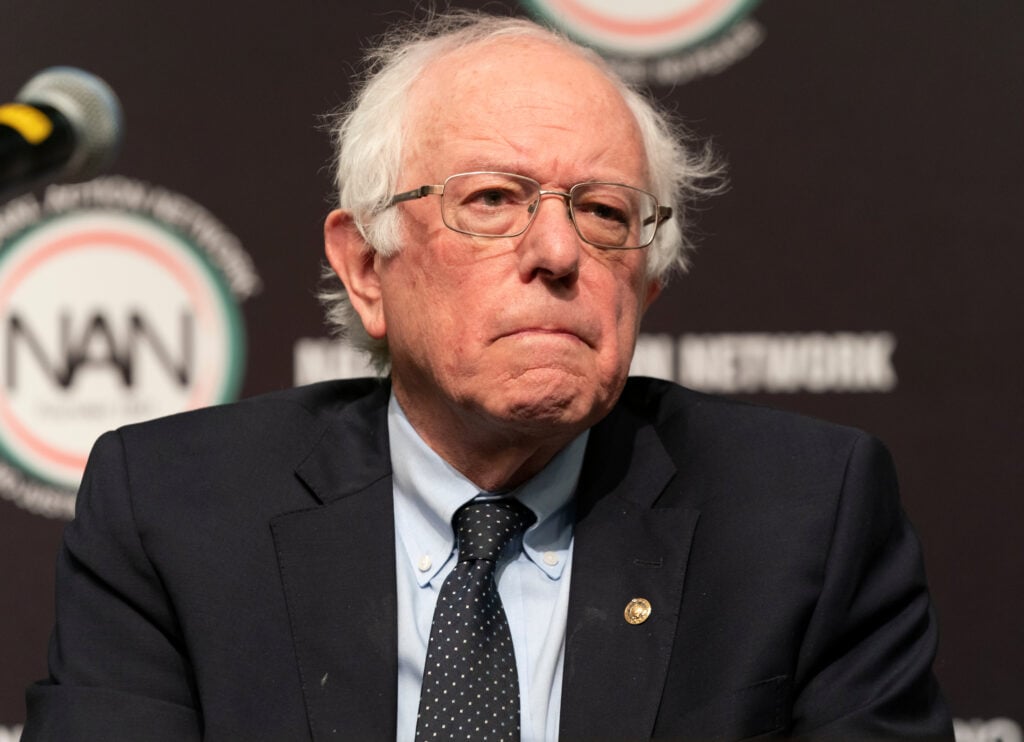
Bernie Sanders Slams 'Immoral and Unsustainable' Wealth Inequality, Calls To End Oligarchy Amid Soaring Billionaire Fortunes - JPMorgan Chase (NYSE:JPM), Meta Platforms (NASDAQ:META)
Benzinga· 2025-12-27 02:38
Core Insights - The growing wealth disparity in the U.S. is highlighted, with a significant increase in the fortunes of a few billionaires, particularly Elon Musk, who reached a net worth of approximately $750 billion in 2025 [1][4]. Group 1: Wealth Disparity - Senator Bernie Sanders criticized the increasing income and wealth gap, noting that while millions struggle with basic necessities, the combined wealth of 10 billionaires surged by $730 billion in 2025 [2][3]. - The total wealth of the world's billionaires rose by $3.6 trillion in 2025, reaching $18.7 trillion, with the top 10 billionaires, including Musk, adding over $729 billion [4]. Group 2: Economic Impact - The wealth inequality issue has intensified, with warnings from billionaire lawyer John Morgan that the growing income gap could lead to a breaking point for the nation [6]. - Consumer spending patterns are affected, with lower-income households feeling increasingly excluded while higher-income households experience faster wage growth and increased spending [7].


X @The Wall Street Journal
The Wall Street Journal· 2025-12-22 12:52
The ultrarich are spending a fortune so they never have to interact with the general public. https://t.co/ZDV5Ppm2WK ...
The average American’s net worth is $620,654, but that number means little. Here’s the figure that counts
Yahoo Finance· 2025-12-13 12:15
As of 2024, the average American had a net worth of $620,654, according to a recent report on global wealth by UBS. (1) But if that number sounds surprisingly high and disconnected from your lived experience, there’s a reason for that. Averages are calculated by taking a total amount and dividing it by the number of individuals in a dataset. However, this metric is easily skewed by a few individuals who are complete outliers. For instance, if you (with the average American net worth) and Elon Musk enter ...
Is Trump Gaslighting Americans About Affordability?
Bloomberg Television· 2025-12-10 13:45
What is your thought on this when the president says affordability is a Democrat con job. Are you part of that con. It's absurd.It's one thing for the president to try to gaslight the American people about the immigrants that they're deporting who are almost all nonviolent non criminals or some bogus accusation about the Department of Justice or whatever. But you can't lie to people about their pocketbooks. People are feeling it every week, every month.They have to make ends meet. And this president is maki ...
X @Bloomberg
Bloomberg· 2025-12-10 00:35
A tiny slice of the global elite owns three times more wealth than the bottom half of the world’s population combined, a new study found https://t.co/eGCGZUzRpq ...
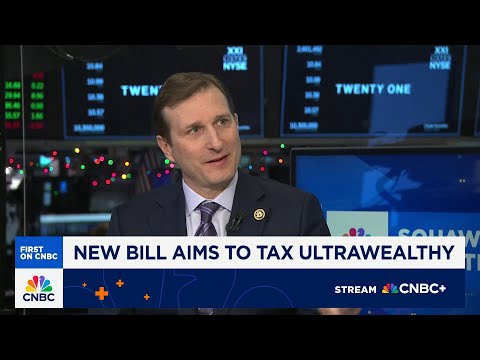
Rep. Dan Goldman on new bill that aims to tax the ultrawealthy
CNBC Television· 2025-12-09 16:14
Proposed Legislation: The Robin Hood Act - The Robin Hood Act aims to impose a 20% tax on loans and lines of credit backed by capital assets like stock shares and real estate for wealthy Americans [1] - The bill targets individuals with income between $400,000 and $450,000 who take out loans against their stock holdings, although the primary focus is on billionaires [5] Rationale for the Bill - The bill addresses wealth inequality by targeting the practice of borrowing against assets to avoid paying taxes, a strategy used by some of the wealthiest individuals [2][3][8] - Current tax system allows some billionaires to have very low effective tax rates (e.g., Jeff Bezos at 1%, Elon Musk at 3%) by borrowing against their stock [3] - Existing methods of taxing wealth, such as marginal tax rates, wealth taxes, or taxing unrealized gains, are considered complicated and difficult to implement [4] Potential Impact and Revenue - Projected revenue from the bill is estimated to be close to $300 billion over 10 years [9] - The revenue could be used to fund universal child care, universal pre-kindergarten for four-year-olds, and expanded child tax credits [10] Concerns and Considerations - Concerns exist that the bill could stifle growth and innovation for entrepreneurs who have their money tied up in new private companies [7] - There are concerns about the impact on doctors, lawyers, and small business owners who borrow against their stock holdings [5] - Margin loans used to buy stock are exempted from the tax [6] - A city tax is not supported because it may push more people out and generate less revenue [11][12]
X @The Wall Street Journal
The Wall Street Journal· 2025-12-06 12:30
The ultrawealthy are wielding their growing fortunes to glide through a rarefied realm unencumbered by the inconveniences of ordinary life. They don’t wait in lines. They don’t jostle with airport crowds or idle unnecessarily in traffic.Read more: https://t.co/33fqH24dep https://t.co/erC1m5Rejb ...
I Asked ChatGPT What Would Happen If the Top 1% Paid Off America’s Student Debt
Yahoo Finance· 2025-11-30 13:55
Core Insights - The total student loan debt in the United States is approximately $1.8 trillion, which is a small fraction of the wealth held by the top 1% of Americans [1][4] - The wealth of the top 1% reached a record $52 trillion in Q2 2025, representing a $4 trillion increase from the previous year, sufficient to eliminate all student debt and still leave over $2 trillion [2] Economic Impact of Debt Cancellation - Immediate boost in consumer spending: Paying off student debt would provide borrowers with additional disposable income, potentially increasing GDP by 0.3% to 1% annually [6] - Reduction in wealth inequality: The top 1% might see a 3% to 4% decrease in their total wealth, while the bottom 90% would experience relief from debt but not significant wealth transfers [6] - Potential inflationary pressures: A sudden increase in spending power could lead to short-term inflation, particularly in housing and services, depending on the pace of debt cancellation [6] - Effects on credit markets: Banks and loan servicers would face a loss of future interest payments, which could tighten credit markets slightly [6]
X @The Wall Street Journal
The Wall Street Journal· 2025-11-29 12:00
In Miami and elsewhere, the wealthy are moving in increasingly private spheres, shelling out big money to bypass the indignities of public life https://t.co/4hjpHnVHxm ...
X @The Wall Street Journal
The Wall Street Journal· 2025-11-27 18:08
The ultrawealthy are wielding their growing fortunes to glide through a rarefied realm unencumbered by the inconveniences of ordinary life. They don’t wait in lines. They don’t jostle with airport crowds or idle unnecessarily in traffic.Read more: https://t.co/QVH1K5zbzK https://t.co/YNxXFPPqzq ...