
Precision Medicine

Search documents
Caris Life Sciences, Inc. (CAI) Soars 81% YoY with $181M Q2 Revenue
Yahoo Finance· 2025-10-01 17:43
Core Insights - Caris Life Sciences, Inc. is recognized for its advancements in precision medicine, utilizing whole exome and transcriptome sequencing alongside AI-driven insights for cancer detection and therapy selection [1] - The company reported significant growth in Q2 2025, with revenues reaching $181.4 million, an 81% increase year-over-year, and molecular profiling revenue rising nearly 86% [2] - Caris Life Sciences achieved profitability on an adjusted EBITDA basis, generating $16.7 million in EBITDA and $5.9 million in free cash flow, indicating strong investor confidence [2] Financial Performance - Q2 2025 revenue was $181.4 million, reflecting an 81% year-over-year growth [2] - Molecular profiling revenue increased by nearly 86% [2] - Gross margins improved to 62.7% from 37.5% a year ago [2] - The company completed over 50,000 clinical therapy selection cases [2] - Generated $16.7 million in adjusted EBITDA and $5.9 million in free cash flow [2] Scientific Advancements - Caris Life Sciences is enhancing its leadership in precision oncology, with recent findings on tumor-infiltrating clonal hematopoiesis (TI-CH) published in the New England Journal of Medicine [3] - The MI Cancer Seek® assay, an FDA-approved AI-enabled liquid biopsy platform, has shown broad clinical utility for early cancer detection and therapy guidance [4] - New data on sequencing strategies in breast cancer subgroups demonstrates the application of AI-driven molecular insights in treatment decisions [5]

7 Most Promising Biotech Stocks to Buy According to Hedge Funds
Insider Monkey· 2025-09-30 20:46
Core Insights - The biotechnology sector is increasingly recognized for its dynamic growth and potential for high returns, particularly in gene therapy and precision medicine [2][3] - Small- and mid-cap biotech companies are leading biopharmaceutical innovation, contributing to two-thirds of the industry's R&D pipeline [2] Company Highlights - **BioMarin Pharmaceutical Inc. (NASDAQ:BMRN)** - Hedge fund holdings increased to 58, with Tealwood Asset Management expanding its position by 37.4%, now owning shares worth $1,185,000 [7] - The company's future is characterized by valuation, growth, and a strong pipeline, with only 34% of revenues derived from the U.S. healthcare market [8] - Key product Palynziq has a significant addressable market, with an estimated 9.38% CAGR from 2025 to 2030 for the drug [9][10] - **Alnylam Pharmaceuticals, Inc. (NASDAQ:ALNY)** - Hedge fund holdings also at 58, with Wealth Enhancement Advisory Services reducing its stake by 64.5%, now holding shares worth $1,699,000 [11] - The company is expected to achieve over $1 billion in quarterly revenue by year-end and more than $1 billion in adjusted earnings in the upcoming year [12] - Alnylam's stock has outperformed the market by nearly 50% over the past year, driven by the successful launch of Amvuttra in TTR-CM [13][14]



DGX's Haystack Oncology Teams Up With Rutgers Cancer Institute
ZACKS· 2025-09-30 14:10
Core Insights - Quest Diagnostics (DGX) has partnered with Haystack Oncology and Rutgers Cancer Institute to evaluate the Haystack MRD test for optimizing postoperative therapy in stage II/III non-small cell lung cancer (NSCLC) patients [1][3][9] Company Developments - Haystack MRD is a lab-developed test (LDT) validated in a CLIA-certified laboratory and is commercially available through Quest Diagnostics [2][9] - The MRD-PORT Trial (NCT06979661) is a prospective phase II study assessing the use of Haystack MRD to guide postoperative radiation and systemic therapies based on residual tumor DNA presence [3][4] - In addition to the lung cancer study, a previous collaboration in 2023 focused on using Haystack MRD for early-stage triple-negative breast cancer treatment [3] Industry Prospects - The global minimal residual disease (MRD) market was valued at $2.50 billion in 2024 and is projected to grow at a compound annual growth rate (CAGR) of 10.1% through 2030, driven by rising cancer incidence, technological advancements, and integration with personalized medicine [6] - The FDA granted Breakthrough Device Designation to Haystack MRD for identifying MRD-positive patients with stage II colorectal cancer, indicating its potential in guiding adjuvant therapy [5] Other Developments in the Industry - Quest Diagnostics has introduced an advanced pharmacogenomic (PGx) laboratory test service to help providers understand patients' genetic responses to drug therapies, aiming to prevent therapeutic failures and adverse drug interactions [7] - Competitors like QIAGEN and Exact Sciences are also advancing in the molecular diagnostics space, with QIAGEN achieving CE-IVDR certification for its testing systems and Exact Sciences launching a multi-cancer early detection blood test [8][11]


Anavex Life Sciences Announces Publication of Oral Blarcamesine Describing a New Class of Clinical Precision Medicine from Phase IIb/III Alzheimer’s Disease Trial
Globenewswire· 2025-09-30 12:30
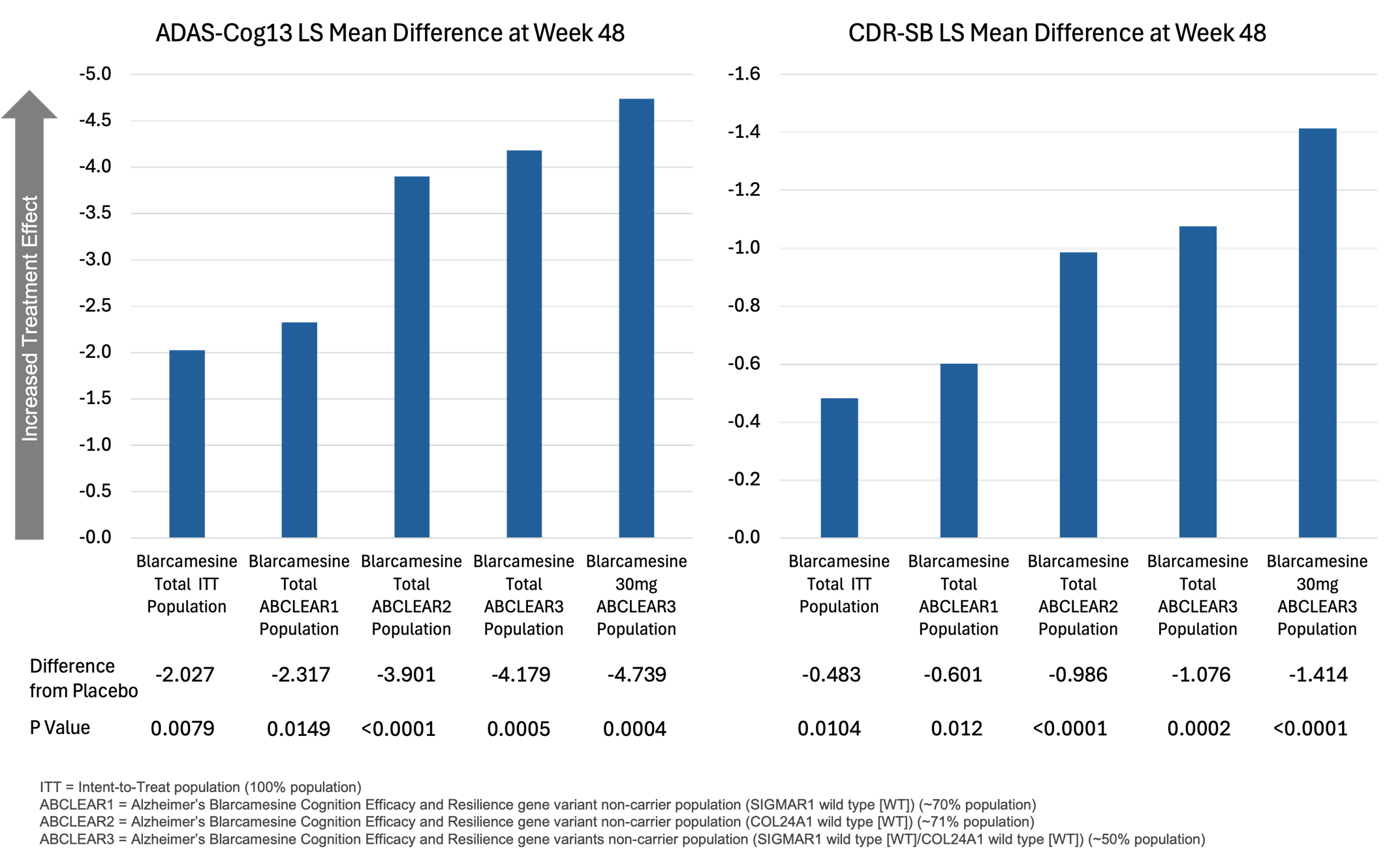
Core Insights - The publication highlights significant improvements in Quality of Life (QoL-AD) scores for early Alzheimer's disease patients participating in the Phase IIb/III trial of oral blarcamesine, indicating a reversal of the negative trajectory associated with the disease [1][3] - Approximately 70% of participants benefited from the treatment, showcasing an unprecedented effect size through a novel Precision Medicine approach [1][3] - Blarcamesine enhances the brain's autophagy mechanism, potentially alleviating both medical and economic burdens associated with Alzheimer's disease [1][3] Company Overview - Anavex Life Sciences Corp. is a clinical-stage biopharmaceutical company focused on developing innovative treatments for various CNS disorders, including Alzheimer's disease, Parkinson's disease, and schizophrenia [1][6] - The lead drug candidate, ANAVEX2-73 (blarcamesine), has completed Phase 2a and Phase 2b/3 clinical trials for Alzheimer's disease, demonstrating its potential to restore cellular homeostasis and halt or reverse disease progression [6] - The company aims to simplify care delivery and expand access for patients through the practical and scalable option of once-daily oral dosing of blarcamesine [4][6] Clinical Findings - The trial results indicate that blarcamesine demonstrates superior clinical efficacy compared to approved therapies, with a strong safety profile and no requirement for routine MRI monitoring [3][4] - Cognitive and functional improvements were observed alongside enhanced Quality of Life for Alzheimer's patients, suggesting a significant impact on patient care [3][4] - Anavex plans to continue evaluating the Phase IIb/III trial data and will present findings at international Alzheimer's disease conferences [5]

INmune Bio Announces Submission of Phase 2 MINDFuL Trial Results in Alzheimer’s Disease to npj Dementia, a Nature Portfolio Journal
Globenewswire· 2025-09-29 12:00
Core Insights - INmune Bio, Inc. has submitted a manuscript detailing the results of its Phase 2 MINDFuL trial for XPro1595, a selective soluble TNF neutralizer, in early Alzheimer's disease with inflammation [1][2] - The trial did not meet its primary endpoint in the overall population, but showed promising results in a prespecified subgroup with amyloid pathology and high inflammatory burden [2][3] - The company anticipates regulatory feedback from the FDA in the first quarter of 2026 regarding the trial results [3] Company Overview - INmune Bio is a clinical-stage biotechnology company focused on developing treatments that target the innate immune system [5] - The company has three product platforms: DN-TNF, CORDStrom™, and INKmune®, each targeting different diseases and mechanisms [5] Product Insights - XPro1595 is a next-generation TNF inhibitor that selectively neutralizes soluble TNF without affecting trans-membrane TNF or TNF receptors, potentially reducing neuroinflammation in neurological diseases [4][6] - The trial results indicate that XPro1595 may benefit a specific subset of Alzheimer's patients, supporting its development as a precision medicine approach [6] Safety Profile - XPro1595 demonstrated a favorable safety profile, with no amyloid-related imaging abnormalities (ARIA) observed, distinguishing it from other treatments [6]


Tevogen Marks Major Milestone in Its AI Initiative to Enhance Efficacy of T Cell–Based Therapies with 100x PredicTcell™ Beta Data Expansion
Globenewswire· 2025-09-25 12:30
Core Insights - Tevogen Bio Holdings Inc. has made significant advancements in its PredicTcell™ platform, which aims to enhance precision immunotherapy through advanced machine learning and transformer-based models, supported by Microsoft and Databricks [1][3] Development Progress - The alpha version of PredicTcell was trained on over 124,000 records with transformer-based architecture and 91,000 records using traditional machine learning, achieving recall levels of approximately 92–97% and precision between 38–43% [2] - The beta version has expanded its training dataset to around 1.4 million records, with a total dataset exceeding 6.7 billion records, significantly increasing the number of features for training from 22 to 27 [5][6] Clinical Implications - The advancements in the PredicTcell platform could lead to T-cell therapies that reliably bind to their target, potentially transforming clinical success rates and reducing drug development costs [3][6] - Insights from Tevogen's ExacTcell™ platform and positive Phase 1 trial results inform the beta version's focus on higher precision in identifying virology targets [3] Market Potential - The company aims to raise efficacy standards in T-cell therapies, unlock new markets in immunotherapy, and improve patient access to life-saving therapies across various diseases, including infectious diseases and oncology [3][6]

McKesson (NYSE:MCK) 2025 Investor Day Transcript
2025-09-23 14:30
Summary of McKesson 2025 Investor Day Company Overview - **Company**: McKesson Corporation (NYSE: MCK) - **Event**: 2025 Investor Day held on September 23, 2025 - **Focus**: The presentation highlighted McKesson's growth strategy, innovation, and commitment to improving healthcare access and outcomes for patients [10][11][12] Core Industry Insights - **Healthcare Industry**: McKesson operates within the healthcare services sector, focusing on pharmaceutical distribution, oncology, and biopharma services. - **Market Dynamics**: The healthcare landscape is evolving with increasing demand for innovative therapies, personalized care, and advancements in technology and AI [19][20][76] Key Strategic Pillars 1. **People and Culture**: Emphasis on attracting and nurturing talent to drive productivity and innovation [21][22] 2. **Oncology and Multi-Specialty Services**: Continued investment in oncology services, which represent a significant area of growth and complexity in healthcare [24][25] 3. **North American Pharmaceutical Distribution**: Strengthening core distribution capabilities, which account for over one-third of pharmaceuticals in the U.S. with 99.9% order accuracy [30][72] 4. **Portfolio Modernization**: Ongoing evaluation and optimization of the business portfolio to align with strategic goals and enhance shareholder value [33][55] Financial Performance - **Growth Metrics**: Expected compounded growth rate of 10% in adjusted operating profit and 17% in adjusted earnings per diluted share for fiscal 2026 [18] - **Cash Flow Generation**: Strong cash flow has been utilized for organic and inorganic growth investments [15][54] Innovations and Technology - **AI and Automation**: Investments in advanced technologies to improve operational efficiency and patient outcomes [20][85] - **Supply Chain Resilience**: Focus on maintaining a robust supply chain to mitigate drug shortages and ensure medication access [88] Recent Developments - **Acquisitions**: Completed acquisition of Prism Vision to expand into retinal care, leveraging oncology expertise [27] - **Separation of Medical Surgical Segment**: Planned separation to enhance strategic focus and operational efficiency, expected to be completed by 2027 [59][58] Market Opportunities - **Aging Population**: Increasing demand for medications due to an aging demographic and rising chronic diseases [76] - **Specialty Pharmaceuticals**: Specialty drugs, particularly in oncology, are driving market growth, with significant investments planned in this area [78] Customer Relationships - **Strategic Partnerships**: Building strong relationships with key customers like Walmart and HCA Healthcare to enhance service delivery and patient access [89][91] Conclusion - **Future Outlook**: McKesson is positioned for sustained growth through strategic investments, a focus on innovation, and a commitment to improving healthcare outcomes for all [40][41]

Myriad Genetics and SOPHiA GENETICS to Develop an Innovative Companion Diagnostic Offering in Liquid Biopsy
Globenewswire· 2025-09-23 12:00
Core Insights - Myriad Genetics and SOPHiA GENETICS have announced a strategic collaboration to develop a global liquid biopsy companion diagnostic test for pharmaceutical companies, leveraging Myriad's laboratory capabilities and SOPHiA's extensive network [1][2][3] Company Overview - Myriad Genetics is a leader in molecular diagnostic testing and precision medicine, focusing on advancing health and well-being through molecular tests that guide treatment decisions [9] - SOPHiA GENETICS is a cloud-native healthcare technology company that utilizes AI to enhance access to data-driven medicine, particularly in oncology and rare disorders [5] Collaboration Details - The partnership will initially focus on the MSK-ACCESS® liquid biopsy application, which detects genomic alterations from a single blood draw using advanced algorithms [2] - Myriad will handle regulatory submissions in the U.S., while SOPHiA will manage submissions outside the U.S., aiming to provide access to key regulated markets globally [3] Industry Impact - This collaboration is seen as a pivotal moment for the industry, combining the strengths of a specialty lab and a global testing network to expand access to innovative oncology testing [4] - The hybrid model in companion diagnostics is expected to enhance service to both clinical and pharmaceutical partners, accelerating the adoption of liquid biopsy solutions [4]


Lunit and Agilent Technologies Announce Collaboration to Enhance Development of Companion Diagnostic Solutions Powered with AI for Precision Medicine
Prnewswire· 2025-09-22 13:00
Core Insights - The collaboration between Lunit and Agilent aims to revolutionize biomarker testing and enhance precision medicine capabilities [1] Company Overview - Lunit is a leading provider of AI for cancer diagnostics and therapeutics [1] - Agilent Technologies Inc. is a global leader in life sciences, diagnostics, and applied chemical markets [1] Collaboration Details - The partnership is a nonexclusive collaboration focused on developing AI-based companion diagnostic solutions [1]

Tempus Receives U.S. FDA 510(k) Clearance for Tempus xR IVD, its RNA NGS In Vitro Diagnostic Device
Businesswire· 2025-09-22 12:30
Core Viewpoint - Tempus AI, Inc. has received 510(k) clearance from the FDA for its RNA-based Tempus xR IVD device, which will enhance precision medicine and patient care through advanced RNA sequencing technology [1] Company Summary - Tempus AI, Inc. is a technology company focused on integrating AI to improve precision medicine and patient care [1] - The Tempus xR IVD device is positioned as a life sciences tool aimed at supporting drug development programs [1] Industry Summary - RNA sequencing technology is highlighted for its ability to capture extensive biological information, providing deeper insights into disease mechanisms [1]

