Clean Energy

Search documents
广东能源入股!我国电源规模最大“沙戈荒”大基地项目开工
Sou Hu Cai Jing· 2025-11-28 19:36
Core Insights - The Qinghai Hainan Clean Energy Delivery Base Power Project has commenced, with Guangdong Energy Group as a major shareholder, representing Guangdong Province in this significant investment and construction initiative [1][4]. Project Overview - The project is the largest power generation base in China, with the highest proportion of renewable energy, involving a total investment of nearly 73 billion yuan. It is designed to have a total power generation capacity of 19.44 million kilowatts, including 6 million kilowatts of wind power, 9.6 million kilowatts of solar power, 2.64 million kilowatts of coal power, and 120,000 kilowatts of electrochemical energy storage for 4 hours [4]. - The project will utilize a ±800 kV ultra-high voltage direct current transmission line with a capacity of 8 million kilowatts to deliver electricity directly to Guangdong. Once completed, it is expected to generate an average annual output of 36 billion kilowatt-hours, significantly optimizing the national energy layout and supporting high-quality development in the eastern region [4]. Strategic Importance - Guangdong Energy Group emphasizes the strategic significance and far-reaching impact of the project, aligning with national energy security strategies and regional cooperation between Guangdong and Qinghai provinces. The group aims to execute the project with the highest standards and utmost dedication, transforming Qinghai's clean energy advantages into strong momentum for the green transition and high-quality economic and social development [6]. - As the largest and most powerful provincial energy enterprise in Guangdong, the group operates across 22 provinces with a total installed capacity exceeding 62 million kilowatts. The clean energy installed capacity accounts for 59.1%, an increase of 27.6 percentage points compared to the end of the 13th Five-Year Plan, reinforcing the foundation for high-quality development [6].


Is NextEra Energy Stock Underperforming the S&P 500?
Yahoo Finance· 2025-11-28 17:37
Core Viewpoint - NextEra Energy, Inc. is a leading utility and clean-energy company with a market capitalization of approximately $178.1 billion, emphasizing its significant role in the North American energy sector [1][2]. Company Performance - NextEra Energy's shares are currently trading 2.3% below their 52-week high of $87.53, with a notable increase of 19.8% over the past three months, outperforming the S&P 500 Index's 5.1% gains during the same period [3]. - Over the past year, NextEra Energy's stock has risen by 10.4%, and it has increased by 20.5% on a year-to-date basis, while the S&P 500 Index has seen gains of 13.6% and 15.8% respectively [4]. Strategic Developments - The company's growth in 2025 is attributed to strong operational execution, a rapidly expanding renewable energy pipeline, and increased electricity demand driven by data centers and AI expansion [5]. - A significant partnership with Alphabet Inc. was established in October 2025, involving a 25-year agreement to restart Iowa's nuclear facility, which will provide carbon-free power for Google's AI and cloud operations, highlighting NextEra's strategic positioning in the clean energy market [5]. Competitive Landscape - In comparison, rival Duke Energy Corporation has underperformed NextEra Energy, achieving only 5.5% gains over the past 52 weeks and 14.6% year-to-date [6].

FCEL vs. BE: Which Hydrogen Power Stock Has Better Potential for Now?
ZACKS· 2025-11-28 17:05
Core Investment Thesis - Hydrogen fuel energy stocks are positioned as a strong long-term investment due to increasing global clean-energy demand, with green and low-carbon hydrogen capable of decarbonizing hard-to-electrify sectors [1][2] Industry Overview - Hydrogen-based electricity generation can alleviate renewable energy intermittency and grid bottlenecks, although it remains in early development stages [2] - The industry is capital-intensive, requiring significant funding for research, development, and large-scale project execution [12] Company Analysis: FuelCell Energy (FCEL) - FuelCell is strategically positioned to benefit from the rising demand for clean, reliable, and distributed power technologies, supported by government incentives and corporate decarbonization efforts [3] - The Zacks Consensus Estimate for FCEL's earnings per share shows a year-over-year increase of 1.56% in 2025 and 56.26% in 2026 [6] - FCEL's revenue estimates indicate a year-over-year increase of 34.69% in 2025 and 21.47% in 2026 [7] - FCEL has a lower debt-to-capital ratio of 19.4% compared to Bloom Energy's 62.57%, and trades at a lower Price/Sales (P/S) multiple of 1.07X [8][14][15] Company Analysis: Bloom Energy (BE) - Bloom Energy is well-positioned to meet the demand for low-carbon, on-site power technologies, with solid-oxide fuel cells that provide efficient, ultra-clean electricity [4] - The Zacks Consensus Estimate for BE's earnings per share reflects a year-over-year increase of 85.71% in 2025 and 78.75% in 2026 [6] - BE's revenue estimates show a year-over-year increase of 28.60% in 2025 and 37.74% in 2026 [10] - Bloom Energy's shares are trading at a premium with a P/S multiple of 9.4X [15][16] Comparative Analysis - Both FCEL and BE have strong backlogs due to the growing acceptance of fuel cell technology [5] - FCEL shows stronger revenue growth estimates for 2025, while BE leads in EPS growth estimates [8] - In the past month, shares of FCEL have decreased by 24%, while BE's shares have declined by 24.4% [18] Conclusion - Based on the analysis, FuelCell Energy has a slight edge over Bloom Energy due to better sales growth in 2025, lower debt-to-capital ratio, and a more attractive valuation, making it a preferable investment choice at this time [20]


Dragonfly Energy Introduces Battle Born® Industrial-Grade Power Stations
Globenewswire· 2025-11-28 12:30
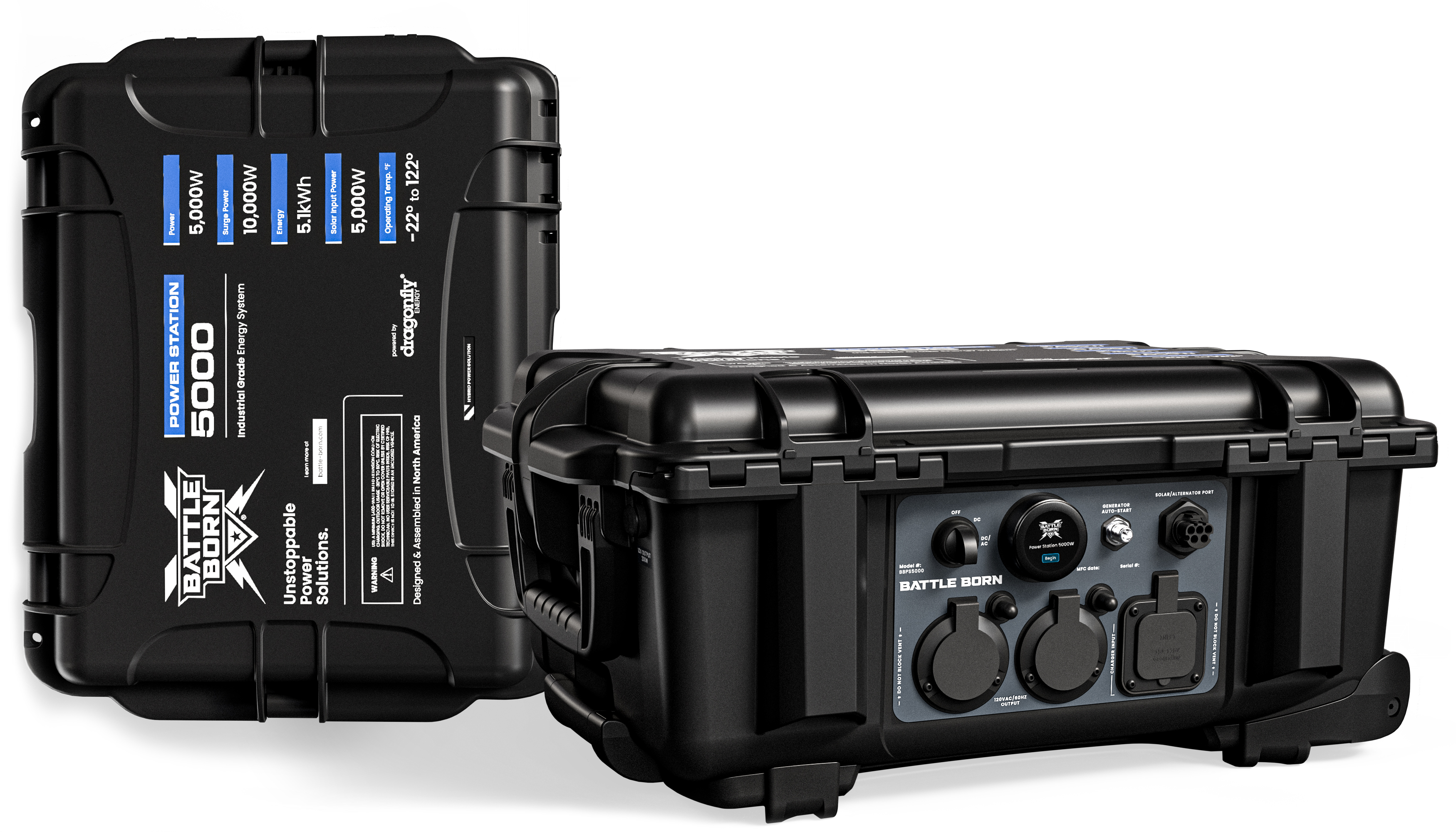
Core Insights - Dragonfly Energy Holdings Corp. has launched the Battle Born Power Station Series, which includes the Battle Born Power Station 3000 and Power Station Pro 5000, aimed at professional and off-grid applications [2][5] - These power stations are designed for demanding environments, providing quiet, emissions-free power with a durable, weatherproof design [3][4] - The Power Station 3000 offers 3,000 watts of continuous output and 2.5 kilowatt-hours of LiFePO₄ energy storage, while the Pro 5000 provides 5,000 watts and 5.1 kilowatt-hours of storage [4] Product Features - The Battle Born Power Station Series is engineered for environments where consumer-grade products are inadequate, ensuring reliable performance in various settings [3] - Both models are safe for indoor and outdoor use, making them suitable for remote job sites and emergency scenarios [3] - The units eliminate the need for fuel, fumes, and routine engine maintenance, offering a long-term alternative to traditional gas and diesel generators [3] Market Positioning - The launch of these industrial-grade power stations positions Dragonfly Energy as a leader in the portable power market, particularly in applications where dependable power is crucial [5] - Pre-orders for the new models are currently available with special pricing, and initial shipments are expected to begin in Q1 2026 [5] Company Overview - Dragonfly Energy specializes in lithium battery technology, including cell manufacturing and battery pack assembly, and is recognized for its Battle Born Batteries brand [7][8] - The company employs a patented dry electrode manufacturing process, enabling it to produce chemistry-agnostic power solutions for various applications [8]

3 Reasons to Forget Plug Power Stock
The Motley Fool· 2025-11-28 11:01
Core Viewpoint - Plug Power's stock, currently trading below $2 per share, has seen a significant increase of over 140% in the past six months, yet the company remains unprofitable and faces substantial challenges ahead [1][2]. Financial Performance - Plug Power generated $629 million in revenue in 2024, which represents a 29% decline from 2023, and the company has never turned a profit since its inception [2][3]. - The company projects ambitious revenue targets of $1.2 billion for 2023, $6 billion by 2027, and $20 billion by 2030, but these goals appear increasingly unrealistic given current performance [2]. Cash Flow and Funding - Plug Power has been burning cash and relies heavily on debt and stock issues to raise funds, indicating a precarious financial situation [5]. - The company recently raised additional funds to repay high-cost debt and refinance loans, but it still struggles to generate positive cash flows [7]. Growth Plans and Challenges - Plug Power's growth is significantly dependent on a $1.66 billion loan guarantee from the Department of Energy, which is now in jeopardy due to political changes [8]. - The company has paused activities related to the DOE loan program, which could lead to the termination of the loan commitment and hinder future access to federal funding [9][10].


CF Energy Announces Financial Results For the Three-month and Nine-month periods ended September 30, 2025
Globenewswire· 2025-11-27 14:21
Core Insights - CF Energy Corp. has reported its unaudited interim consolidated financial results for the three-month and nine-month periods ended September 30, 2025, indicating a significant decline in revenue and profit compared to the previous year [1][4][11] Financial Performance Summary Q3 2025 Results - Revenue for Q3 2025 was RMB 88.5 million (approx. CAD 17.2 million), a decrease of 30% from RMB 126.9 million (approx. CAD 24.0 million) in Q3 2024 [4] - Gross profit in Q3 2025 was RMB 27.4 million (approx. CAD 5.3 million), down 18% from RMB 33.3 million (approx. CAD 6.3 million) in Q3 2024, with a gross profit margin of 31.0%, an increase of 4.8 percentage points from 26.2% in Q3 2024 [6][7] - Net profit for Q3 2025 was RMB 3.8 million (approx. CAD 0.7 million), a decrease of 11% from RMB 4.3 million (approx. CAD 0.8 million) in Q3 2024 [9] - EBITDA (non-GAAP) for Q3 2025 was RMB 23.2 million (approx. CAD 4.5 million), a decrease of 7% from RMB 24.9 million (approx. CAD 4.7 million) in Q3 2024 [10] Nine-Month 2025 Results - Revenue for the nine-month period ended September 30, 2025, was RMB 292.0 million (approx. CAD 56.6 million), a decrease of 22% from RMB 376.4 million (approx. CAD 71.1 million) in the same period of 2024 [11] - Gross profit for the nine-month period was RMB 77.6 million (approx. CAD 15.0 million), down 5% from RMB 81.6 million (approx. CAD 15.4 million) in the previous year, with a gross profit margin of 26.6%, an increase of 4.9 percentage points from 21.7% in 2024 [13] - Net profit for the nine-month period was RMB 6.4 million (approx. CAD 1.2 million), an increase of 10% from RMB 5.8 million (approx. CAD 1.1 million) in 2024 [16] - EBITDA (non-GAAP) for the nine-month period was RMB 66.2 million (approx. CAD 12.8 million), an increase of 4% from RMB 63.6 million (approx. CAD 12.0 million) in 2024 [18] Company Outlook and Strategic Initiatives - The company aims to transition from a natural gas distributor to a comprehensive clean energy service solutions provider, emphasizing the importance of adapting to regulatory impacts and market dynamics [19] - CF Energy has developed a distributed smart energy ecosystem, integrating smart energy systems and battery swapping networks to enhance energy management and sustainability [20][26] - The company is actively working on projects like the Haitang Bay integrated smart energy project, which utilizes advanced grid technologies for efficient energy distribution [21] - Future initiatives include the integration of demand response systems and the establishment of a virtual power plant model to optimize energy usage and enhance grid services [30][31]

The Nuclear Stock Everyone's Talking About (and Why You Should Care)
The Motley Fool· 2025-11-27 09:05
Core Insights - Nuclear energy stocks have experienced significant growth in 2025, with the Global X Uranium ETF up over 62% year-to-date [1] - Nano Nuclear Energy is gaining attention for its innovative small nuclear reactor design that can be transported by truck, potentially revolutionizing energy supply [2] - Despite its potential, Nano is currently pre-revenue and facing regulatory approval challenges, with its stock price down nearly 50% from October highs [3] Company Overview - Nano Nuclear Energy is positioned at the intersection of three major trends: the resurgence of nuclear energy, the shift towards clean energy, and advancements in artificial intelligence [4] - The company's strategy involves creating small reactors to provide power to areas with unreliable electricity, including data centers, mining sites, military camps, off-grid communities, and even space [4] Financial Position - As of June, Nano had approximately $210 million in cash and raised $400 million from private investors, indicating a strong balance sheet [6] - The company's trailing twelve-month cash burn is around $30 million, providing a sufficient runway for operations [6] Regulatory Challenges - The primary concern for Nano is the timeline for passing regulatory processes, which currently leaves the company with no revenue [8] - Due to this uncertainty, the stock is expected to be volatile, making it potentially less suitable for conservative investors [8]


Constellation Energy vs. Duke Energy: Which Stock Shines Brighter?
ZACKS· 2025-11-26 16:26
Core Insights - The demand for clean electricity in the United States is surging, driven by AI-based data centers, reshoring of manufacturing, increased use of electric appliances, and rapid adoption of electric vehicles [1] - Nuclear power plants are positioned to provide a significant volume of reliable, emission-free electricity, with companies like Constellation Energy and Duke Energy planning to expand their generation capacities [1][2] Company Analysis: Constellation Energy (CEG) - Constellation Energy is the largest producer of carbon-free nuclear power in the U.S., providing steady baseload electricity and reducing exposure to commodity price fluctuations [3] - The company is expected to invest nearly $3 billion and $3.5 billion in 2025 and 2026, respectively, with 35% of capital expenditures allocated for nuclear fuel acquisition [15] - The Zacks Consensus Estimate for CEG's 2025 and 2026 earnings per share (EPS) has decreased by 0.11% and 2.89%, respectively, with long-term earnings growth projected at 15.42% [6] Company Analysis: Duke Energy (DUK) - Duke Energy has a diverse clean energy portfolio and a reliable nuclear fleet, contributing to earnings stability and regulatory engagement [4] - The company plans to invest up to $200 billion over the next decade, with $83 billion earmarked for the 2025-2029 period, primarily for clean energy transition [15] - Duke Energy's 2026 EPS estimate rose by 0.15%, with long-term earnings growth projected at 6.87% [8] Financial Metrics Comparison - Constellation Energy's return on equity (ROE) is 21.59%, significantly higher than Duke Energy's 9.98% [10] - The current dividend yield for Constellation Energy is 0.44%, while Duke Energy's yield is 3.49% [13] - Duke Energy trades at a forward P/E of 12.27X, which is lower than Constellation Energy's 31.12X and the S&P 500's 23.15X [7][18] Market Positioning - Both Constellation Energy and Duke Energy are investing in infrastructure to provide clean electricity, presenting significant growth opportunities in the energy sector [19] - Duke Energy is considered to have an edge over Constellation Energy due to stronger earnings estimates, better dividend yield, extensive capital investment plans, and cheaper valuation [20]



Here's Why PCG Stock Deserves a Spot in Your Portfolio Right Now
ZACKS· 2025-11-26 16:21
Core Insights - PG&E Corporation (PCG) is benefiting from systematic investments in infrastructure improvements and clean energy initiatives, enhancing service reliability and positioning itself as a strong investment in the Utility-Electric Power industry [1] Growth Outlook & Surprise History - The Zacks Consensus Estimate for fourth-quarter earnings per share (EPS) has increased by 2.6% to 39 cents over the past 60 days [2] - The revenue estimate for 2025 is projected at $26.06 billion, indicating a year-over-year growth of 6.72% [2] - PCG's long-term earnings growth rate is estimated at 15.89%, with an average earnings surprise of 0.5% over the last four quarters [2] Dividend History - PCG has consistently increased shareholder value through dividends, currently paying a quarterly dividend of 2.5 cents per share, leading to an annualized dividend of 10 cents [3] - The current dividend yield stands at 0.64%, which is lower than the Zacks S&P 500 composite average of 1.10% [3] Capital Investment and Clean Energy Plan - The company plans to invest $12.9 billion in 2025 and an additional $73 billion from 2026 to 2030, targeting a 10% earnings growth for 2025 and a long-term annual growth rate of at least 9% during 2026-2030 [4] - PG&E aims to achieve 90% of retail energy sales from renewable and zero-carbon sources by 2035, supported by its investment in battery energy storage [5] Return on Equity - PCG's Return on Equity (ROE) is currently at 11.10%, surpassing the industry average of 9.64%, indicating efficient utilization of shareholders' funds [6] Solvency - The times interest earned (TIE) ratio for PCG at the end of the third quarter of 2025 was 1.8, reflecting the company's ability to meet long-term debt obligations [7] Share Price Performance - Over the past three months, PCG's shares have increased by 4.4%, although this is below the industry's growth of 7.7% [10] Other Stocks to Consider - Other top-ranked stocks in the same industry include Dominion Energy, Inc. (D), Edison International (EIX), and CenterPoint Energy, Inc. (CNP), all carrying a Zacks Rank 2 [11][12]


FSLR vs. CSIQ: U.S. Thin-Film Leader or Global Volume Player?
ZACKS· 2025-11-26 16:10
Core Insights - The rising demand for solar energy is attracting investor interest in companies within the solar value chain, particularly First Solar (FSLR) and Canadian Solar (CSIQ) [1][2] Group 1: Industry Trends - Solar power is rapidly growing as a solution for cleaner energy, with significant increases in solar photovoltaic (PV) installations across various markets [2] - Government incentives, corporate decarbonization efforts, and consumer adoption of renewable technologies are driving the surge in solar deployment [2] Group 2: First Solar (FSLR) Overview - First Solar is expanding its manufacturing capacity to meet global solar demand, producing 3.6 gigawatts (GW) and selling 5.3 GW of modules in Q3 2025, with a total nameplate capacity of 23.5 GW [3] - The company is adding a new 3.7 GW module finishing line in the U.S., expected to begin operations in late 2026, which will enhance its global presence and revenue growth [3] - A new $1.1 billion AI-enabled manufacturing facility in Louisiana will add 3.5 GW of annual capacity, improve quality control, and reduce costs while using U.S.-sourced materials [4] Group 3: Canadian Solar (CSIQ) Overview - Canadian Solar is a vertically integrated clean-energy company, known for high-quality crystalline silicon solar panels and expanding into energy infrastructure, including large-scale solar power plants and energy-storage projects [5] - The company secured a German battery energy storage system contract in November 2025, marking a strategic shift towards becoming a full-fledged energy-storage and grid-solutions provider [6] Group 4: Financial Performance and Estimates - The Zacks Consensus Estimate for First Solar's 2025 earnings per share (EPS) indicates a decrease of 3.25%, while Canadian Solar's EPS estimates show increases of 18.94% for 2025 and 61.5% for 2026 [8][10] - First Solar has a total debt to capital ratio of 5.8%, significantly lower than Canadian Solar's 60.41% [11] - In the past six months, FSLR shares have risen by 64.8%, while CSIQ shares have increased by 149.5% [12] Group 5: Valuation Comparison - FSLR shares trade at a forward Price/Sales (P/S F12M) multiple of 4.56, compared to CSIQ's P/S F12M of 0.22, indicating a significant valuation difference [13] Group 6: Strategic Positioning - Both companies operate in the solar market but with different strategies; Canadian Solar focuses on scale and a diversified clean-energy ecosystem, while First Solar emphasizes high-efficiency thin-film technology and U.S.-based production [14] - Currently, Canadian Solar is favored due to its better price performance and earnings growth compared to First Solar [15]