
Unemployment

Search documents
Miran Says Current Fed Policy Poses Risks to Labor Market
Youtube· 2025-09-22 19:12
Group 1 - The appropriate Fed funds rate is estimated to be in the mid 2% area, which is nearly two percentage points lower than the current policy [1] - The Federal Reserve aims to promote price stability for the benefit of American households and businesses [1] - There are significant risks associated with maintaining a restrictive policy, particularly concerning the Fed's employment mandate [2] Group 2 - Current monetary policy is considered to be well into restrictive territory, with short-term interest rates being approximately two percentage points too tight [3] - The tight monetary policy could lead to unnecessary layoffs and higher unemployment rates [3]
U.S. interest rates are way too high, Fed's Miran says, and rising layoffs and unemployment could be the result
MarketWatch· 2025-09-22 17:21
Core Viewpoint - The new Federal Reserve official Stephen Miran expressed concerns that U.S. interest rates are excessively high, which could lead to unnecessary layoffs and increased unemployment if not significantly reduced [1] Group 1 - Stephen Miran's first major speech highlighted the risks associated with high interest rates [1] - The potential consequences of maintaining high interest rates include unnecessary layoffs and a rise in unemployment [1]


Fed’s Miran calls for slashing main interest rate to avert job loss
Yahoo Finance· 2025-09-22 16:19
Core Insights - Federal Reserve Governor Stephen Miran voted against a quarter-point reduction in the benchmark interest rate, advocating instead for a half-point cut to address potential unemployment issues [3][7] - Miran argues that the majority of Fed officials overestimate inflation risks, particularly regarding tariffs, which he believes have led to excessive concern over price pressures [3][7] - He predicts that tariff revenues could significantly reduce the federal budget deficit, potentially by over $380 billion annually in the next decade, which may ease upward pressure on interest rates [4] Monetary Policy Debate - The recent monetary policy discussions have highlighted differing views among Fed officials, with St. Louis Fed President Alberto Musalem expressing limited room for further easing without risking an overly accommodative policy [5][6] - Musalem supported the recent 25-basis-point rate cut as a precautionary measure to support the labor market, emphasizing the importance of controlling inflation, which may remain above the 2% target due to tariffs and labor supply issues [5][6] - Miran contends that the neutral rate of interest has likely decreased due to tariff revenues and tax policies, suggesting that current monetary policy is too restrictive and risks higher unemployment [7]
Miran defends low-rate view as colleagues caution on further cuts
Yahoo Finance· 2025-09-22 14:05
Core Viewpoint - New Federal Reserve Governor Stephen Miran believes the Fed is misjudging the tightness of its monetary policy, suggesting that aggressive rate cuts are necessary to protect the job market [1][4]. Group 1: Monetary Policy Assessment - Miran argues that the current benchmark interest rate of 4% to 4.25% is more restrictive than Fed officials realize, proposing a cut of perhaps two percentage points [3][4]. - He emphasizes that the Fed has not adequately accounted for the downward pressure on the neutral interest rate caused by recent immigration, tax, and regulatory changes [2][4]. Group 2: Diverging Opinions Among Fed Officials - St. Louis Fed President Alberto Musalem supports a cautious approach, indicating that the policy rate may already be close to neutral and expressing limited room for further easing [5][6]. - Musalem warns that overemphasizing the labor market could lead to negative consequences, advocating for a balanced approach to monetary policy [6].
Fed Chair Jerome Powell Just Implemented a 'Risk Management' Rate Cut. Will This Push the S&P 500 Index to 7,000 or Is It a Sell-the-News Event?
Yahoo Finance· 2025-09-22 12:01
Core Points - The Federal Open Market Committee (FOMC) lowered the federal funds rate by a quarter point, bringing it to a range of 4% to 4.25% [1] - The FOMC's dot-plot indicates expectations for future rate trends, with members anticipating two more cuts in 2025 and one in 2026, differing from market expectations [6] - Fed Chair Jerome Powell described the rate cut as a "risk management cut" to hedge against potential economic slowdown [5][7] Economic Context - The Fed is facing challenges with its dual mandate of stable prices and maximum employment, as unemployment has increased and inflation is rising above the 2% target [4] - The impact of President Trump's tariffs on inflation remains uncertain, complicating the Fed's decision-making process [4] Market Reactions - Following the FOMC meeting, the stock market experienced volatility, with questions about whether the S&P 500 index will reach 7,000 or if it is a "sell-the-news" event [2] - The stock market has been anticipating interest rate cuts, which have contributed to the rise in the S&P 500 index [7]
X @Bloomberg
Bloomberg· 2025-09-22 09:40
As hard as higher prices are to swallow for many households, rising unemployment is the greater risk right now, @conorsen says (via @opinion) https://t.co/uAyaigEnir ...
下周“按兵不动”几无悬念!澳洲联储主席坦言经济数据略强于预期
Zhi Tong Cai Jing· 2025-09-22 03:48
Group 1 - The Reserve Bank of Australia (RBA) is expected to maintain the interest rate at 3.6% during the upcoming meeting, following three rate cuts since February this year [1][2] - Inflation has significantly decreased, and the labor market is nearing full employment, although there has been a slight increase in the unemployment rate [1][2] - The RBA has made substantial progress in reducing inflation, but aims to ensure that inflation remains sustainably within the target range [1] Group 2 - The Australian economy has shown signs of expansion, driven by a recovery in private demand, with economic activity growth accelerating [2] - The unemployment rate in Australia remained stable at 4.2% in August, indicating a resilient labor market despite some recent slowdowns in hiring activity [2] - Global uncertainties, including protectionist policies and geopolitical tensions, have not led to the worst-case scenarios anticipated by RBA officials [2]
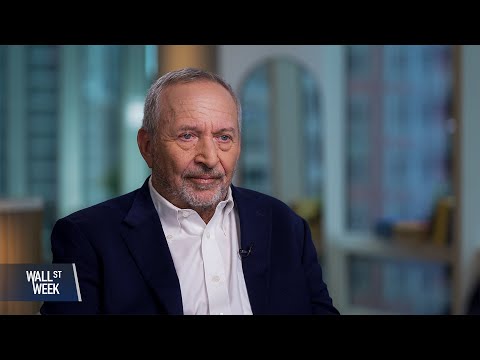
Larry Summers on Powell: Fed Faces “Unprecedented” Inflation vs Jobs Dilemma
Bloomberg Television· 2025-09-21 12:01
We start with the big question for Global Wall Street this week, as the Fed issued its long-awaited decision and summary of economic projections. Our special contributor, Larry Summers of Harvard, takes us through what we learned. - It wasn't far off what the market was expecting or I was expecting.I was glad to see Jay lean into all the uncertainties in the moment--the uncertainties about inflation, the uncertainties about future policy, the uncertainties about unemployment, the uncertainties about the pol ...
X @The Economist
The Economist· 2025-09-21 05:20
Worries about unemployment and foreign domination are understandable. Yet India stands to gain far more by embracing AI than it will lose https://t.co/KV9HIeHQaZ ...
Key US Inflation Metric to Ease as Focus Shifts to Jobs Market
Yahoo Finance· 2025-09-20 20:00
Economic Overview - Canadian GDP data for July and flash estimates for August will provide insights into the economic recovery after a 1.6% contraction from April to June due to the US tariff war [1] - The US economy shows early signs of recovery, with August spending data expected to indicate brisk consumer spending despite tepid income growth [2] Federal Reserve Insights - Fed Chair Jerome Powell indicated a cooling labor market as a reason for the first interest rate cut of the year, while remaining vigilant on inflation amid ongoing tariff impacts [4] - A report is anticipated to show a slower growth rate in the personal consumption expenditures price index, providing the Fed some leeway to address labor market weaknesses [5] Central Bank Activities - Bank of Canada Governor Tiff Macklem will discuss trade upheaval's effects on inflation and rates, while Statistics Canada will release population estimates amid post-pandemic immigration challenges [6] - Several central banks, including those in Sweden, Switzerland, and Hungary, are expected to maintain current rates, while Mexico and Nigeria are likely to implement cuts [7] Global Economic Indicators - Flash purchasing manager indexes (PMIs) in Asia and Europe will be closely monitored, with key readings from Australia and India expected to show service sector momentum [9] - Japan's midweek PMIs and retail sales data will provide insights into household spending, critical for the Bank of Japan's policy discussions [10] China Economic Data - China's August industrial profits will be reported, assessing corporate earnings stability after months of deflationary pressure, with government spending growth slowing [11] Latin America Economic Developments - Brazil's central bank will release minutes from its recent rate-setting meeting, maintaining a key rate of 15% amid high inflation [19] - Mexico is expected to continue its streak of rate cuts, with analysts anticipating a reduction to 7.5% as inflation remains within the central bank's tolerance range [22][23]