
Interest Rates

Search documents
The Fed Is Behind! CUT RATES NOW Before The Economy Worsens
From The Desk Of Anthony Pompliano· 2026-03-06 22:01
Hello everyone. The jobs report this morning shows that the Fed is behind the curve. We know the Donro doctrine is changing financial markets quickly.Geopolitics has rattled markets. And Anthropic just dropped a brand new chart that's going to make you question whether AI can take your job. We're live today from the desk of Anthony Pompiano.Before we get into today's episode, I need your help. We currently have 44,763 subscribers on YouTube. My goal is to get to 1 million.Hit the subscribe button and let's ...

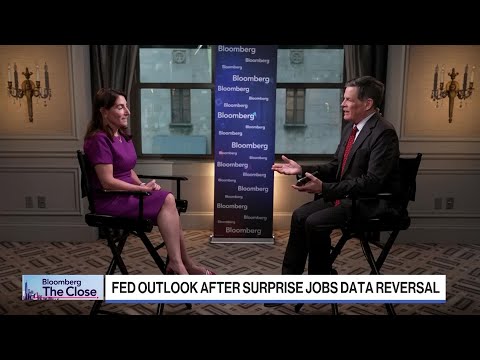
Fed's Hammack Sees Two-Sided Risks to Interest Rates
Bloomberg Television· 2026-03-06 21:23
You made an address basically suggesting that risks are two sided now. You've been on the side of inflation being the biggest concern. But then we got this jobs report today that sort of makes the case for some of the doves on the committee.What did you make of it. Well, I try not to make too much of any one individual number. And certainly this number was a disappointment, mostly because it means that there are more Americans who aren't working.That's what disappointed me in this report. We've seen the eco ...
Fed's Hammack Sees Two-Sided Risks to Interest Rates
Youtube· 2026-03-06 21:23
Economic Outlook - The overall economy has been characterized as healthy and brightening, with businesses expressing optimism and plans for increased investments [2][4] - The labor market is stabilizing, with unemployment rates hovering around 4.3% to 4.4%, although the headline jobless number has shown some weakness [3][4] Inflation Concerns - Inflation has remained above the target for five years, currently around 3%, with little progress made in the last two years [4][5] - There are ongoing pricing pressures from various sectors, particularly energy and insurance costs, which are affecting businesses' margins [24][25][26] Business Sentiment - Companies are no longer hesitant to invest, recognizing the need to operate despite uncertainty, with many actively seeking to hire skilled labor [22][23] - Businesses are cautious about passing on increased costs to consumers due to concerns over demand, indicating a delicate balance between pricing and consumer sentiment [27][29] Monetary Policy - The current monetary policy is viewed as being around neutral, with discussions on whether it is tight enough to address inflation while supporting the labor market [6][7] - The upcoming leadership transition in the Federal Reserve is expected to bring fresh ideas and discussions regarding monetary policy and balance sheet management [10][12][16]
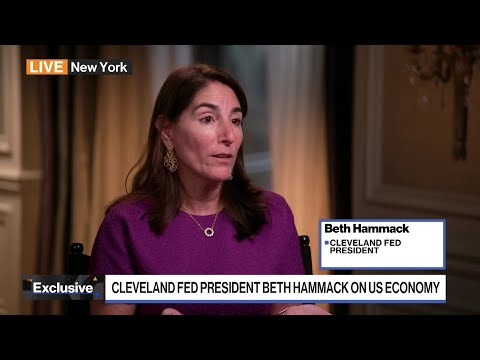
Fed’s Hammack Expects Rates to Be On Hold for Some Time
Bloomberg Television· 2026-03-06 21:05
You just finished a panel. You made an address basically suggesting that risks are two sided. Now, you've been on the side of inflation being the biggest concern.But then we got this jobs report today that sort of makes the case for some of the doves on the committee. What did you make of it. Well, I try not to make too much of any one individual number.And certainly this number was a disappointment, mostly because it means that there are more Americans who aren't working. That's what disappointed me in thi ...
Fed's Hammack Expects Rates to Be On Hold for Some Time
Youtube· 2026-03-06 21:05
Economic Outlook - The overall economy has been described as healthy and brightening, with a positive outlook for growth and business investments [2][5] - Businesses express optimism about demand and are looking to increase investments, indicating a stabilizing labor market with an unemployment rate around 4.3% to 4.4% [3][4] Labor Market - The recent jobs report was disappointing as it indicated more Americans are not working, which is a concern despite the overall economic health [2][4] - The labor market has shown signs of stabilization, although the headline jobs number has been weaker recently [4] Inflation Concerns - Inflation has remained above target for five years, with little progress made in reducing it over the past two years, currently around 3% [5][6] - There is a need to balance monetary policy to bring inflation down while still supporting the labor market [6] Monetary Policy - The current monetary policy is viewed as being around neutral, with businesses still willing to invest and banks reporting improving loan growth [8][9] - The next meeting of the Open Market Committee may not lead to significant changes in policy, as the situation is considered stable for now [9][10]

Dollar Pressured by a Weak US Payroll Report
Yahoo Finance· 2026-03-06 20:40
Core Insights - The dollar index (DXY00) experienced a decline of -0.35% due to a weaker-than-expected US February payroll report and a drop in US January retail sales, contributing to negative sentiment towards the dollar [1][2] Economic Indicators - The US February nonfarm payrolls unexpectedly fell by -92,000, contrasting with expectations of a +55,000 increase, marking the largest decline in four months [2] - The unemployment rate for February rose by +0.1 to 4.4%, indicating a weaker labor market than anticipated [2] - Average hourly earnings in February increased by +0.4% month-over-month and +3.8% year-over-year, surpassing expectations of +0.3% month-over-month and +3.7% year-over-year [3] - US January retail sales decreased by -0.2% month-over-month, which was a smaller decline than the expected -0.3% [3] - Consumer credit in January rose by +$8.05 billion, falling short of expectations of +$12.65 billion [3] Federal Reserve Commentary - Fed Governor Christopher Waller stated that the Iran war is unlikely to lead to sustained inflation, emphasizing the importance of core prices over energy prices for predicting future inflation [4] - Cleveland Fed President Beth Hammack indicated that monetary policy should remain on hold for some time as inflation shows signs of decreasing and the labor market stabilizes [4] - Boston Fed President Susan Collins expressed concerns about uncertain inflation, suggesting that current policy rates should be maintained at mildly restrictive levels for an extended period [4] - Swaps markets are pricing in a 5% chance of a -25 basis point rate cut at the upcoming policy meeting on March 17-18 [4]
X @BSCN
BSCN· 2026-03-06 19:04
💸MONEY: FED OFFICIAL SIGNALS RATES TO STAY PUTCleveland Fed President Beth Hammack indicates interest rates likely to remain on hold "for some time," suggesting pause in monetary policy adjustments.Markets watching for clues on Fed's next move amid economic uncertainty. https://t.co/VGVGpmjQAH ...
The Reason Why The Fed Can't Aggressively Cut Rates
Benjamin Cowen· 2026-03-06 18:16
The issue that we have is that on the same day we had this negative payroll print, oil is up 12 to 13%. So that's the why that's the reason why the Fed can't aggressively cut rates because energy prices, not just oil, but energy prices collectively, I think make up about 7% of CPI. That might not sound like a lot, but when energy prices can swing, say 30 to 50% in a year, they can have an effect on inflation. ...
As Iran War Tests Investors, Here's How To Navigate The Stock Market During A Crisis
Investors· 2026-03-06 17:48
Core Insights - The article discusses how geopolitical conflicts, specifically the Iran war, impact stock market trading and investor behavior, emphasizing the importance of maintaining a long-term perspective rather than reacting to daily market fluctuations [1][2]. Market Reactions to Geopolitical Events - Historical data indicates that stock markets often overreact to the onset of conflicts but tend to stabilize and return to pre-crisis trends within weeks [1][2]. - The S&P 500's performance after significant geopolitical events shows varied short-term reactions, with some events leading to declines while others result in rebounds [1][2]. - For instance, the S&P 500 fell 1.1% during the initial phase of the Iran conflict but ended up nearly 2% higher by the conflict's conclusion [1][2]. Investment Strategies During Conflicts - Investors are advised to adopt a defensive trading approach during geopolitical tensions, with recommended market exposure reduced to 20%-40% from 60%-80% prior to the conflict [2]. - Portfolio management is crucial, with suggestions to take profits in stocks that have seen significant gains and to avoid using margin [2][3]. - The article highlights the importance of identifying strong stocks that could emerge as future leaders, particularly in sectors like energy [2][3]. Oil Market Dynamics - The article notes a close correlation between rising oil prices and falling S&P 500 returns during military conflicts, as increased energy costs can dampen U.S. economic activity [2][3]. - Oil prices surged significantly during the Iran conflict, with U.S. oil futures rising over 30% from pre-conflict levels, indicating heightened market sensitivity to geopolitical events [3]. Investor Sentiment and Market Volatility - The Cboe Market Volatility Index (VIX) spiked during the Iran war, reflecting increased investor fear, which historically can signal market lows [3]. - Despite the heightened volatility, the S&P 500 and Nasdaq have remained within their trading ranges, suggesting that while conflicts create uncertainty, they do not always lead to sustained market declines [3].