Colonialism

Search documents
Museums must give back what they stole — here’s why | Dorota Blumczynska | TEDxWinnipeg
TEDx Talks· 2025-07-25 15:25
Problematic Artifacts & Provenance - The Manitoba Museum holds nearly 3 million artifacts and specimens, many from First Nations, Inuit, and Matey communities, but some lack documented histories or provenance [6] - A Japanese samurai armor in the museum's collection lacks any documentation as to how it entered the collection, including donor name, craftspeople, cultural significance, or travel history [3][4] - Museums have historically been entangled in exploitation, colonialism, and racism, acting as repositories of conquest and violence, displaying stolen artifacts to uphold certain world views [8][9] Repatriation & Rematriation - Museums have a responsibility to return ceremonial, sacred, and other items to the First Nations, Inuit, and Matey communities from which they originated, globally [12] - Museums must incur the costs of finding descendant communities through donor records, archives, historic maps, and oral histories [13] - Museums should play a role in rematriation, standing beside First Nations, Inuit, and Matey communities as they reclaim their sacred relationships with lands and waters [14] Shared Authority & Collaboration - Museums should share authority with communities, working in partnership to amplify systemically excluded histories through co-creation, co-curation, co-authoring, and co-exhibiting [15] - "Nothing about us without us" should be at the forefront of all museum work, with communities telling their own stories [15] - Museums should collect with consent and work with communities to document their histories, so those histories can become teachers [17] Future of Museums - The transformation of museums is possible, creating spaces rooted in truth, grounded in repair, and welcoming to all [19] - Museums should uphold justice, make space for uncomfortable truths, and honor histories, celebrating indigenous ingenuity and contributions [16] - Visitors are seeking truth, looking for missing stories, and calling on museums to abandon neutrality and be allies in truth, reconciliation, and justice [17][18]

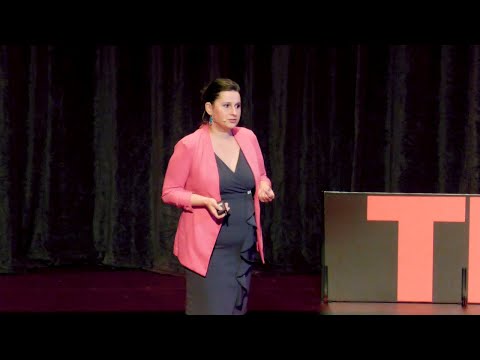
What Does It Mean to be Muslim Feminist Under Western Hegemony? | Raja RHOUNI | TEDxChouaibDoukkaliU
TEDx Talks· 2025-07-22 16:10
Feminism & Decolonization - The presentation explores the complexities of identifying as a feminist, particularly as a Muslim woman in the context of colonial wars and transnational anti-feminist sentiments [2][3] - It examines the tension between feminism and cultural hegemony, seeking answers in the work of Moroccan feminist sociologist Fatiman Mernissi [3][4] - Mernissi's work is significant for "feminizing decolonization" and "decolonizing feminism," challenging both colonial legacies and Western-centric feminist perspectives [4][5] - Islamic feminism is presented as a hybrid theory in conversation with both Islamic tradition and feminist thought, aiming to reclaim the power of interpretation from male dominance [8][9] - Mernissi's intellectual journey involved confronting orientalism and critiquing Western expansionist and militaristic foreign policy [12][13] - The speaker advocates for an intersectional, communal, and decolonial feminism to imagine a better world [16] Fatiman Mernissi's Contributions - Mernissi returned to Morocco to fight the "demon of silence" affecting illiterate women, integrating gender analysis into decolonization efforts [5][6] - She initially held anti-religious views similar to Western feminism but later developed a more sympathetic position on Islam, emphasizing its potential for gender equality [7][8] - Mernissi challenged the notion that human rights and democracy are alien to Islam, arguing that they are values Islam contributed to modernity [10] - She used her platform to criticize American foreign policy and advocate for a non-supremacist, non-brutal, and non-egoistic humanism [13][14]