Orientalism

Search documents
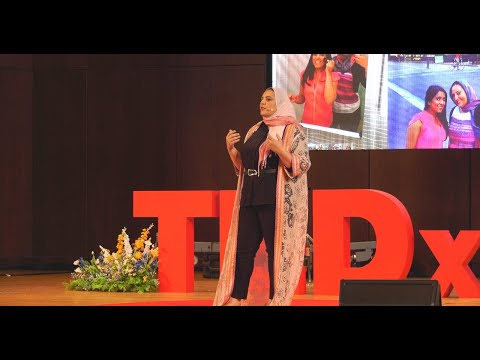
What Does It Mean to be Muslim Feminist Under Western Hegemony? | Raja RHOUNI | TEDxChouaibDoukkaliU
TEDx Talks· 2025-07-22 16:10
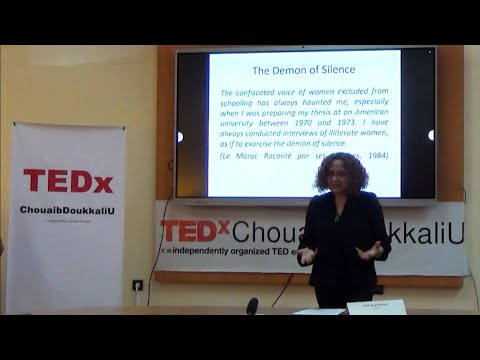
Feminism & Decolonization - The presentation explores the complexities of identifying as a feminist, particularly as a Muslim woman in the context of colonial wars and transnational anti-feminist sentiments [2][3] - It examines the tension between feminism and cultural hegemony, seeking answers in the work of Moroccan feminist sociologist Fatiman Mernissi [3][4] - Mernissi's work is significant for "feminizing decolonization" and "decolonizing feminism," challenging both colonial legacies and Western-centric feminist perspectives [4][5] - Islamic feminism is presented as a hybrid theory in conversation with both Islamic tradition and feminist thought, aiming to reclaim the power of interpretation from male dominance [8][9] - Mernissi's intellectual journey involved confronting orientalism and critiquing Western expansionist and militaristic foreign policy [12][13] - The speaker advocates for an intersectional, communal, and decolonial feminism to imagine a better world [16] Fatiman Mernissi's Contributions - Mernissi returned to Morocco to fight the "demon of silence" affecting illiterate women, integrating gender analysis into decolonization efforts [5][6] - She initially held anti-religious views similar to Western feminism but later developed a more sympathetic position on Islam, emphasizing its potential for gender equality [7][8] - Mernissi challenged the notion that human rights and democracy are alien to Islam, arguing that they are values Islam contributed to modernity [10] - She used her platform to criticize American foreign policy and advocate for a non-supremacist, non-brutal, and non-egoistic humanism [13][14]

How Do We Reframe the Image of Muslim Women in Film? | Iman Zawahry | TEDxUF
TEDx Talks· 2025-07-15 16:30
Representation in Film - The speaker discusses the impact of orientalist ideologies on the portrayal of Middle Eastern and Muslim identities in film, leading to stereotypes and "othering" [1] - USC Annenberg study reveals that Muslims, representing approximately 25% of the global population, only account for 16% of characters in top 200 films, with nearly 40% of these characters perpetuating violence and less than 25% being Muslim women in submissive roles [1] - The speaker highlights that over 50% of primary/secondary Muslim characters are immigrants, almost 90% speak English with an accent or not at all, and over 75% wear faith-related clothing, primarily portrayed in Middle East/North Africa settings, with less than 1% in the United States [1] - According to the Institute of Social Policy and Understanding, 9% of terrorism is labeled as Islamic terrorism, receiving 770% more media coverage than non-Muslim perpetrators, despite the majority of American domestic terrorist fatalities being attributed to white supremacists [1] - FBI data indicates a 357% increase in racially motivated domestic terrorism cases from 2013 to 2021, with the number more than doubling between 2020 and 2021 [1] Diverse Audiences and Film Success - UCLA Hollywood Diversity Report indicates that Black, Indigenous, and People of Color (BIPOC) and female moviegoers significantly supported the theatrical industry in 2023 and 2024 [7][8] - Films like Super Mario Brothers and Transformers had over 60% diverse audiences, while Guardians of the Galaxy exceeded 51% [7] - In 2024, Despicable Me 4 and Inside Out 2 had over 70% BIPOC audiences, and Deadpool and Wolverine had over 65% [8] - Nine out of the top 10 films featured approximately 30% BIPOC cast, and five of the top 10 films had over 40% female cast [8] "Americanish" Film Case Study - "Americanish," a Muslim romantic comedy, won 26 awards, was featured in 50 film festivals worldwide, and was distributed by Sony International, demonstrating the potential for success of diverse stories [9] - The film faced challenges in securing support initially, with many rejections from wealthy businessmen, but found success when pitched to Muslim women investors, with the majority of investors being Muslim women and 100% from the US and UK Muslim community [2][3] Initiatives and Future Directions - Organizations like the Islamic Scholarship Fund, Muslim Public Affairs Council, Hollywood Bureau, Pillars Fund, and the Door Duke Building Bridges Program are working to support Muslim storytellers [10] - The Gina Davis Institute, Muslim Casting, and the Pillars Fund collaborated to create the "Surviving to Thriving" onscreen representation test to evaluate portrayals of Muslim women [11] - The speaker emphasizes the need for authentic representation, honest voices behind the camera, and questioning surface-level portrayals to create meaningful change [5][16]