Space Race

Search documents
Starlink Dominates as Low Earth Orbit Satellite Race Intensifies
Bloomberg Television· 2025-08-04 14:17
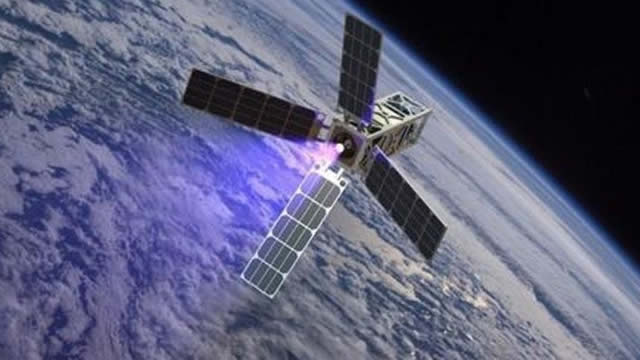
Market Overview & Competition - The LEO (Low Earth Orbit) satellite market is valued at $15 billion and is expected to grow to $108 billion by 2035 [3] - Starlink, owned by SpaceX, currently has 7,600 satellites and plans to expand to as many as 48,000, holding a significant lead in the LEO satellite race [4] - Project Kuiper, owned by Amazon, has fewer than 80 satellites in orbit due to manufacturing issues and launch delays [12] - Eutelsat acquired OneWeb in 2023, operating a constellation of about 640 satellites, pursuing a strategy that combines GEO (Geostationary Orbit) and LEO satellites [13] Cost & Technology - Manufacturing a LEO satellite costs between $250,000 to $500,000, with launch costs adding another $250,000 to $500,000 per satellite [5] - LEO satellites orbit at an altitude of 300 kilometers to 1,200 kilometers, allowing for a signal round-trip time of 100 milliseconds or less [7][8] - Maintaining a LEO constellation requires launching as many as 25% of the satellites every year just to maintain the replacement cost [11] - A single GEO satellite can be up to 1,000 times more expensive than a LEO satellite to manufacture [9] Business Models & Government Involvement - Starlink focuses on providing internet access primarily to rural areas globally [5] - OneWeb targets the B2B (business-to-business) and government connectivity market, expecting to grow from just north of 5 million connections to close to 15 million by 2033 [15] - Eutelsat plans to invest 4 billion euros in CapEx between now and 2029, largely to replace its current LEO constellation [19] - The UK government plans to invest 163 million euros in Eutelsat, joining France and other investors in a major funding round, bringing the total raise to 1.5 billion euros, or $1.8 billion [18]

David Sacks: The AI Race is bigger than the Space Race 🇺🇸
All-In Podcast· 2025-08-02 03:33
AI Policy & Competition - The US government declared the United States is in an AI race, framing it as a global competition reminiscent of the space race [1] - The AI race is considered more important than the space race due to its potential to reshape the global economy and determine future superpowers [2] - The US government emphasizes the importance of winning the AI race [2] Key Pillars for Winning the AI Race - Innovation is a key pillar, requiring the removal of red tape to foster ingenuity [3] - Infrastructure investments, including hundreds of billions of dollars in energy, power generation, grid upgrades, and data centers, are crucial [3] - Promoting AI exports to establish America's tech stack as the global standard is essential [3] Non-Negotiables - American workers must be at the center of the prosperity created by AI [4] - AI models procured by the government must be free of ideological bias [4] - Technologies must be protected from misuse or theft by malicious actors [4] Strategic Considerations - The US government recognizes the dual-use nature of AI, acknowledging its potential for both good and bad [5] - The US government emphasizes the importance of the United States being the pioneer in AI development [5] - The AI race, framed similarly to the space race, is expected to be the dominant frame on AI policy for years to come [5]

Firefly Aerospace sets IPO range that would value rocket maker at $5.5 billion
CNBC· 2025-07-28 18:01
Company Overview - Firefly Aerospace plans to price its shares between $35 to $39 in its upcoming initial public offering (IPO), which would value the company at approximately $5.5 billion [1] - The company intends to sell around 16.2 million shares, potentially raising up to $631.8 million from the offering [1] Industry Context - The IPO is taking place amid a renewed interest in the space industry, with significant investments from billionaire-led companies like Elon Musk's SpaceX [2] - Other space tech firms, such as Voyager, have recently gone public, and Innovative Rocket Technologies is planning to debut through a $400 million special purpose acquisition company merger [2]
AI czar David Sacks on Trump launching 'America's AI action plan'
CNBC Television· 2025-07-24 17:00
Strategic Importance of AI - The AI race is considered more critical than the space race due to its potential to reshape the global economy and determine future superpowers [2] - The US maintaining its lead in AI is crucial for remaining the most powerful country, while falling behind could lead to global competitors like China gaining an advantage [2] - President Trump's speech is framed as a significant technology address, comparable to President Kennedy's declaration to win the space race, emphasizing the need to win the AI race [1] Government Initiatives - President Trump's administration has outlined a plan aimed at securing victory in the AI race [2]

X @Tesla Owners Silicon Valley
Tesla Owners Silicon Valley· 2025-07-20 01:29
Space Exploration & Industry Dependence - Without Elon Musk and SpaceX, the USA would still be dependent on Russia for space flights [1] - Elon Musk is presented as the primary driver for the USA's current involvement in the space race [1]

X @Tesla Owners Silicon Valley
Tesla Owners Silicon Valley· 2025-07-20 01:23
Industry Impact - Elon Musk's contributions are pivotal to the USA's involvement in the space race [1] Key Observation - The report highlights the role of irony in shaping events [1]
CNBC Property Play: Building data centers on the moon
CNBC Television· 2025-07-16 18:20
Real Estate & Space Industry Trends - Data centers are a rapidly growing sector in real estate, driven by AI, cloud computing, and online activities, but their high energy consumption poses a challenge [1] - Private capital is flowing into the space industry, with new companies emerging to serve various aspects of the sector from both public and private perspectives [3] - The space industry is experiencing a revolution, with companies seeking to monetize space through manufacturing and serving as a base for further space exploration, including potential data center production on the moon [6] - Space offers unlimited power from the sun, unlimited cooling from the vacuum, and unlimited real estate, potentially unlocking constraints faced on Earth and providing clean energy [9] - The current economic environment presents challenges for global development, with stagflation, higher rates, and slower growth making it difficult for developers to make projects financially viable [19][20] Technological Advancements & Infrastructure - Reusable rocket technology is advancing, with potential for 1,000 tons of launch capability, moving towards a million tons per year [32] - Robotics are becoming increasingly advanced and advantageous in the lunar environment due to the challenges of sustaining human life in space [31] - Ethos is developing technology to utilize lunar geological resources, such as anorthosite, to create building materials like synthetic igneous rock, which is twice as strong as concrete, for constructing landing pads, roads, and foundations on the moon [26][27][28][29] Energy & Power Consumption - Data centers are projected to consume a significant portion of US power generation, potentially reaching 40% by 2030, highlighting a serious infrastructure problem [42] - China has a significantly larger installed power base than the US and is investing heavily in solar energy, necessitating the exploration of new, non-Earth-bound power generation methods [44] - The cost of solar energy is declining rapidly, and nuclear energy is gaining traction, suggesting that energy problems will be solved, but the demand for power is infinite [47] Investment & Future Outlook - Capital is seeking great opportunities and returns, with space emerging as a promising area for investment [21] - Infrastructure investments require a long-term perspective, considering future disruptors and their potential interplay with the current world [14] - The space industry is in its early stages, similar to the railroad era, representing a major investment opportunity and creating new "rails" for the future [17]
X @Ansem 🧸💸
Ansem 🧸💸· 2025-06-26 16:17
Government Disclosure - United States government confirmed aliens are real [1] Investment Implication - The report questions the ownership of "space race stonk" [1]
President Trump Just Cut the Budget on Boeing's and Lockheed's Most Important Space Program
The Motley Fool· 2025-05-17 11:07
Core Insights - The Trump administration's proposed budget for fiscal year 2026 includes a significant 24% cut to NASA's funding, reducing it from $24.8 billion to $18.8 billion, which may impact major space companies' revenue streams [3][4] - The budget proposal suggests the termination of the Space Launch System (SLS) program, which has been criticized for its high costs and delays, with a projected cost of $4 billion per launch and being 140% over budget [6][8] - The proposed budget allocates $7 billion for lunar exploration under Project Artemis and $1 billion for Mars missions, but cuts funding for the Mars Sample Return mission [5][6] Impact on Companies - The termination of the SLS program threatens an estimated $82 billion in contracts for major contractors like Boeing, Lockheed Martin, and Northrop Grumman, which were expected to benefit from Project Artemis [8] - Conversely, the budget cuts could create opportunities for more cost-effective space contractors like SpaceX and Blue Origin, which are positioned to take over roles currently held by traditional aerospace companies [9][11] - SpaceX's Starship and Blue Origin's New Glenn rocket are projected to offer lunar missions at significantly lower costs, with Starship estimated at less than $3 billion per trip and New Glenn at $3.4 billion [9][10] Long-term Industry Outlook - The proposed changes indicate a shift towards more budget-conscious space operations, potentially sidelining established companies in favor of newer, more efficient competitors [11][12] - While this transition may not be favorable for current investors in traditional aerospace stocks, it could lead to a more sustainable and cost-effective future for the space industry [12]