
Tariff war

Search documents
Boeing Faces Key Turnaround Challenges With Tariff Risks, China Orders: Analyst
Benzinga· 2025-04-24 19:45
Core Viewpoint - BofA Securities analyst Ronald J. Epstein maintains a Neutral rating on Boeing Company with a price target of $185, citing significant challenges in the company's turnaround efforts [1] Production and Financial Outlook - Boeing needs to stabilize 737 model production at 38 units per month before seeking FAA approval to increase output to 42 units [2] - The company must manage its loss-making defense programs to avoid further pressure on free cash flow [2] - The ongoing tariff war poses risks of higher costs and delays in orders from China [2] Strategic Developments - The recent award of the F-47 NGAD program by the White House and Air Force is viewed as a strategic victory for Boeing, particularly under the leadership of new CEO Kelly Ortberg [3] - This contract is considered a critical long-term opportunity that could enhance Boeing's defense position for decades [3] Earnings and Cash Flow Projections - Earnings per share estimates have been raised, with the 2025 forecast increased to $0.35 from $0.15, the 2026 estimate to $3.90 from $2.55, and the 2027 projection to $5.85 from $4.90 [4] - The free cash flow outlook has been revised, now anticipating a lower cash usage of $3.6 billion in 2025 compared to the earlier estimate of $4.5 billion [5] Market Reaction - Boeing shares are trading higher by 2.72% to $177.11 as of the last check on Thursday [5]


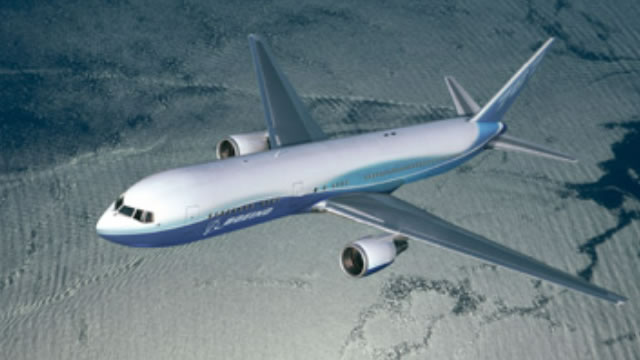
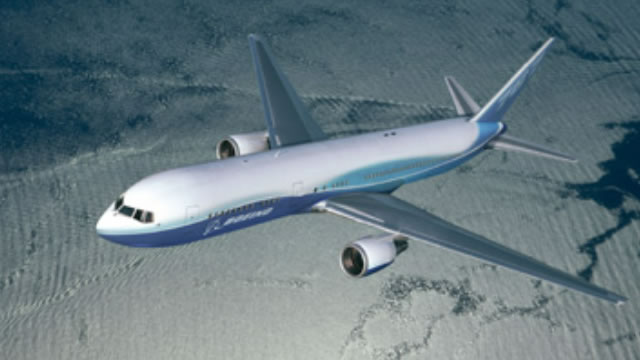
Boeing jet returns to US from China — a victim of Trump's tariff war
New York Post· 2025-04-21 00:46
Core Viewpoint - The return of a Boeing 737 MAX jet intended for a Chinese airline highlights the impact of escalating tariffs between the US and China, disrupting aircraft deliveries and affecting the aerospace industry [1][3][4]. Group 1: Tariff Impact - President Trump raised baseline tariffs on Chinese imports to 145%, leading to a 125% tariff on US goods imposed by China [3][6]. - The new tariffs significantly affect the delivery of Boeing jets, with a new 737 MAX valued at approximately $55 million, making it financially burdensome for Chinese airlines to accept deliveries [3][6]. Group 2: Delivery Disruptions - The 737 MAX jet, which was at Boeing's Zhoushan completion center, was returned to Seattle due to the tariff situation, indicating a breakdown in the aerospace industry's duty-free status [1][4]. - Confusion over changing tariffs may result in many aircraft deliveries being delayed, with some airline CEOs considering deferring deliveries to avoid paying duties [6].
What Investors Should Know About the Impact of Tariffs on Shopify's Business
The Motley Fool· 2025-04-19 20:00
Core Viewpoint - The new tariff policy introduced by the U.S. government is expected to significantly impact Shopify's merchants, leading to increased costs and potential declines in sales, which could ultimately affect Shopify's revenue and growth prospects [2][14]. Impact on Merchants - The new tariff policy will increase the cost of goods sold for merchants, with a minimum 10% tariff on most imports, raising the cost of a $10 product to $11 [4]. - Merchants relying on Chinese supplies will face a staggering 145% tariff, increasing their costs to $24.5 for the same product, which may jeopardize their business models [5]. - Merchants will encounter complexities at checkout due to the need to factor in duties and taxes, which could lead to customer complaints if not managed properly [6]. - Uncertainties around tariff negotiations will complicate merchants' planning, leading to a wait-and-see approach that may weaken sales volume in the near term [7]. - Even if merchants adapt in the short term, they will face a higher cost structure in the future, impacting long-term sales prospects as consumers have less disposable income [8]. Implications for Shopify's Business - Shopify, as a SaaS provider, will not face direct financial impacts unless tariffs extend to digital products [9]. - The company has $178 million in monthly recurring revenue, or $2.1 billion annually, which is more resilient to tariff impacts as long as merchants continue using its services [10]. - However, the majority of Shopify's revenue, approximately $8.9 billion, is tied to gross merchandise value (GMV), which will be negatively affected by reduced merchant sales due to increased product costs [11]. - An escalation of the tariff war could hinder Shopify's growth in North America and globally, as tariffs act as a tax on trade, affecting international commerce [12]. - The complexity introduced by tariffs may create opportunities for Shopify to develop new tools and technologies to assist merchants in navigating the trade environment [13]. Considerations for Investors - While Shopify is not directly taxed by tariffs, the disruption to merchants could lead to revenue and GMV pressure in the near term [14]. - Long-term growth may face structural challenges if trade barriers remain, necessitating close monitoring of merchant churn, GMV trends, and Shopify's ability to monetize new tools [14]. - The path forward for Shopify has become more complicated, but growth potential still exists [15].


Why Are US-Listed Chinese Stocks Falling On Wednesday?
Benzinga· 2025-04-16 13:15
Group 1: Market Impact - U.S.-listed Chinese companies such as Alibaba, PDD Holdings, Baidu, NIO, Li Auto, and XPeng are experiencing a decline in stock prices due to new tariffs imposed by the Trump administration, which can reach as high as 245% on certain imports [1] - The trade war has led to a selloff of heavily foreign-owned Chinese tech stocks, with e-commerce firms being the most affected by the increased tariffs on small parcels [6] Group 2: Economic Growth and Forecasts - China's GDP grew by 5.4% in the first quarter, surpassing the analyst estimate of 5.2%, driven by consumer subsidies and strong export shipments [2] - Economists from major international banks, including UBS and Goldman Sachs, have reduced their forecasts for China's 2025 growth to approximately 4% or lower, indicating a potential struggle to meet the growth target of around 5% [4] Group 3: Tariff Dynamics - The tariff war began with a 20% tariff imposed by Trump, escalating to 104% and then to 125% in response to China's retaliatory actions, which included raising its tariffs by 84% [5][6] - The tariffs are expected to lead companies to increase product prices to maintain margins, which could negatively impact demand for lower-priced offerings from Chinese companies [5]



China halts Boeing jet orders
Fox Business· 2025-04-15 11:40
Core Viewpoint - Chinese airlines have been ordered to halt further deliveries of Boeing aircraft due to the U.S. imposing a 145% tariff on Chinese goods, which has negatively impacted Boeing's stock price and delivery plans in China [1][4][9]. Group 1: Impact on Boeing - Boeing's pre-market share price dropped by 3.72% following the news of the tariff [1]. - Year-to-date, Boeing has delivered 18 aircraft to nine airlines in China, with major airlines planning to take delivery of 45, 53, and 81 planes from 2025 to 2027 [1][4]. - The imposition of a 125% duty on U.S. imports by China could significantly increase the cost of Boeing jets for Chinese carriers, potentially leading them to consider alternatives like Airbus and domestic manufacturer COMAC [9]. Group 2: Chinese Government Response - The Chinese government has requested that local carriers stop purchasing aircraft-related equipment and parts from U.S. companies, which is expected to raise maintenance costs for Boeing jets operating in China [4]. - There are considerations by the Chinese government to provide assistance to airlines leasing Boeing jets that are facing increased costs due to the tariffs [4]. Group 3: Broader Trade Context - The ongoing tariff war between the U.S. and China has been exacerbated by President Trump's trade policies, with China retaliating by increasing levies on U.S. imports to 125% [7]. - Despite the tensions, Trump has indicated that a deal with Beijing could be possible, although no agreement has been finalized [7].
