登革热

Search documents
暑期登革热进入高发季!发热皮疹怎么办?专家支招→
Yang Shi Xin Wen· 2025-07-12 02:58
Group 1 - The National Health Commission anticipates an increase in the risk of vector-borne diseases, zoonotic diseases, and intestinal infectious diseases due to increased personnel movement and high temperatures during the summer [1] - The risk of local outbreaks of dengue fever and other vector-borne diseases is rising in southern provinces as summer progresses, with hand-foot-mouth disease and infectious diarrhea also being in a high incidence season [2] - Dengue fever is an acute infectious disease caused by the dengue virus, primarily transmitted by Aedes mosquitoes, with local transmission outbreaks occurring annually in southern provinces during summer and autumn [3] Group 2 - Typical symptoms of dengue fever include sudden fever, muscle and joint pain, rash, bleeding, and leukopenia, with most patients experiencing mild or asymptomatic cases, while a minority may develop severe dengue [4] - Vulnerable populations such as the elderly, pregnant women, and individuals with underlying health conditions like diabetes, hypertension, and coronary heart disease are at higher risk of developing severe dengue [5]
被蚊子叮咬后离死亡有多近?
Hu Xiu· 2025-07-10 09:04
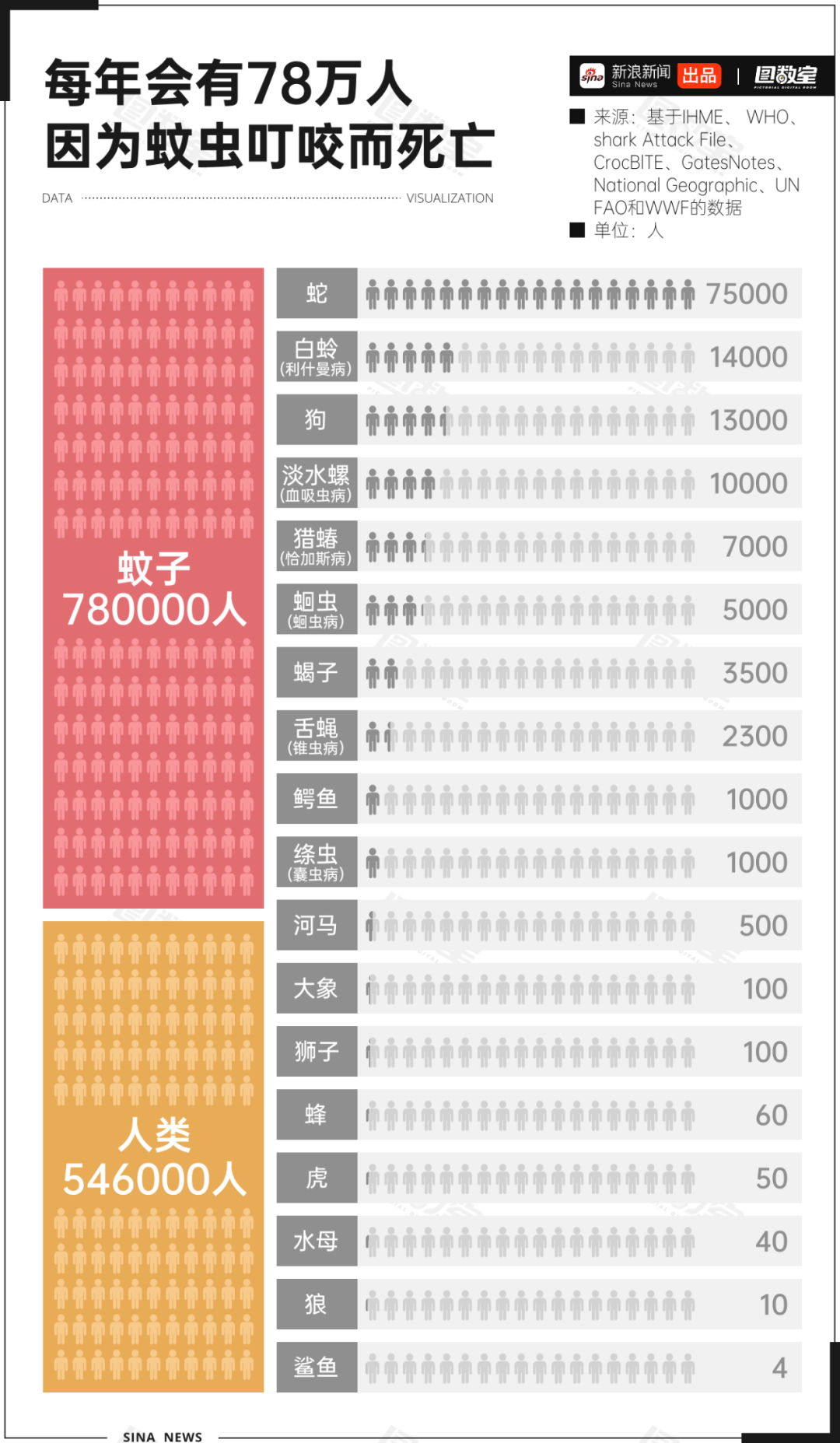
Group 1 - The article highlights that mosquitoes are responsible for approximately 780,000 deaths annually, making them the deadliest animals globally [1][6][5] - In China, mosquito-borne diseases such as dengue fever and malaria are on the rise, with dengue cases experiencing a significant increase in recent years [2][9][11] - The distribution of mosquitoes in China is not limited to southern provinces; several northern provinces also have high mosquito populations [15][17] Group 2 - The main mosquito-borne diseases in China include dengue fever, malaria, and Japanese encephalitis, all of which can have severe health impacts [9][11] - Dengue fever is currently the most concerning mosquito-borne disease in China, with a rapid increase in cases reported in 2023 [9][11] - The spread of mosquito-borne diseases is closely linked to economic development, population mobility, and climate change, with global dengue cases increasing approximately 30 times over the past 50 years [11] Group 3 - The most common mosquito species in China include Aedes albopictus, Culex pipiens, and Anopheles sinensis, with a total of 418 known species [19] - Mosquito activity peaks at specific times, with different species exhibiting varying feeding patterns, which can influence their impact on human populations [20][21] - Mosquito saliva contains allergens that can cause significant immune responses in humans, leading to more severe reactions to bites from certain species [25]