Dollar Weakness

Search documents
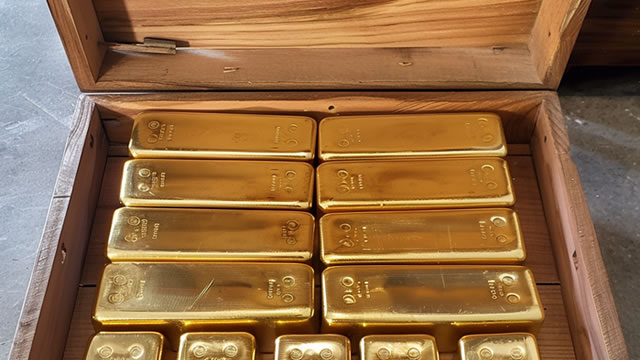
Gold Near Record High: Central Banks & Retail Investors Pile into Commodities
Youtube· 2025-12-15 21:30
Core Viewpoint - The gold market is experiencing a significant upward trend, with prices up 65% year-to-date, driven by liquidity from global deficit spending and central bank buying, particularly from countries like China [2][3][5]. Group 1: Price Action and Drivers - Gold is approaching all-time highs, with a notable increase in price attributed to liquidity in the market and aggressive central bank buying [2][3]. - The weakness of the dollar has positively impacted gold prices, and this trend is expected to continue into 2026 [3]. - Central banks are likely to continue their buying practices, influenced by global economic concerns and the ongoing trend of "de-dollarization" [4][5]. Group 2: Market Participation and Trends - There is a shift in investment focus from commodities to gold equities, with some mining companies seeing over 100% performance increases [7][8]. - Retail participation in the gold market is increasing, with a notable rise in interest in gold equities and the GLD ETF [9][10]. - Silver is also experiencing a strong performance, often seen as a precursor to gold in a commodities bull market, indicating broader retail engagement in precious metals [12][13].

SPEU: A Robust Play On European Equities And Dollar Weakness (NYSEARCA:SPEU)
Seeking Alpha· 2025-12-12 19:46
Group 1 - The SPDR Portfolio Europe ETF (SPEU) is an equities exchange-traded fund that has been in the market for over a decade [1] - Binary Tree Analytics (BTA) aims to provide transparency and analytics in capital markets instruments and trades, focusing on CEFs, ETFs, and Special Situations [1] - BTA has over 20 years of investment experience and emphasizes delivering high annualized returns with a low volatility profile [1]

SPEU: A Robust Play On European Equities And Dollar Weakness
Seeking Alpha· 2025-12-12 19:46
Group 1 - The SPDR Portfolio Europe ETF (SPEU) is an equities exchange-traded fund that has been in the market for over a decade [1] - Binary Tree Analytics (BTA) aims to provide transparency and analytics in capital markets instruments and trades, focusing on CEFs, ETFs, and Special Situations [1] - BTA has over 20 years of investment experience and emphasizes delivering high annualized returns with a low volatility profile [1]

Dollar Weakness Pushes Sugar Prices Higher
Yahoo Finance· 2025-12-10 19:30
Core Viewpoint - Sugar prices have experienced fluctuations due to varying production levels in major producing countries, with recent data indicating a bearish outlook for future prices driven by increased output in India and Brazil [2][3][4]. Group 1: Sugar Price Movements - On March 1, NY world sugar 11 closed up by 0.24 (+1.64%), while March London ICE white sugar 5 closed up by 7.30 (+1.74%) due to dollar weakness prompting short-covering in sugar futures [1]. - Sugar prices have retreated to three-week lows recently, primarily due to increased production in India and Brazil [2]. Group 2: Production Insights - The India Sugar Mill Association (ISMA) reported a significant increase in Indian sugar production, with a 43% year-on-year rise to 4.11 million metric tons (MMT) for the period of October-November [2]. - Brazil's Conab raised its sugar production estimate for 2025/26 to 45 MMT, reflecting a positive outlook for Brazilian sugar output [3]. - Brazil's Center-South sugar output increased by 8.7% year-on-year to 983 thousand metric tons (MT) in the first half of November, contributing to the overall increase in sugar production [3]. Group 3: Global Supply and Surplus Forecasts - The International Sugar Organization (ISO) forecasts a sugar surplus of 1.625 million MT for 2025-26, driven by increased production in India, Thailand, and Pakistan, contrasting with a previous deficit forecast [4]. - A robust global sugar supply has negatively impacted sugar prices since early October, with London sugar reaching a 4.75-year low and NY sugar hitting a 5-year low [5]. - Czarnikow has increased its global sugar surplus estimate for 2025/26 to 8.7 MMT, indicating a growing concern over sugar supply outpacing demand [5]. Group 4: India’s Production and Export Potential - The ISMA has raised its 2025/26 India sugar production estimate to 31 MMT, an 18.8% year-on-year increase, which may enhance India's export capabilities [6]. - The reduction in the estimate for sugar used for ethanol production in India from 5 MMT to 3.4 MMT may further support increased sugar exports [6].
Crude Oil Prices Gain on Dollar Weakness and Geopolitical Risks
Yahoo Finance· 2025-12-03 20:19
Core Insights - Crude oil and gasoline prices exhibited mixed performance, influenced by dollar weakness and geopolitical tensions, while inventory reports indicated unexpected increases in stockpiles [2][4]. Group 1: Market Performance - January WTI crude oil closed up by $0.31 (+0.53%), while January RBOB gasoline closed down by $0.00031 (-0.17%) [1]. - The dollar index (DXY) fell to a 5-week low, providing support for energy prices [2]. Group 2: Geopolitical Factors - Geopolitical risks are bolstering crude prices, with threats from Russian President Putin regarding attacks on ships aiding Ukraine [3]. - Recent drone attacks on Russian tankers in the Black Sea have heightened tensions [3]. Group 3: Supply Dynamics - Russian crude oil product shipments dropped to 1.7 million barrels per day (bpd) in early November, the lowest in over three years, due to ongoing conflicts and targeted attacks on refineries [4]. - New US and EU sanctions on Russian oil companies and infrastructure are further constraining Russian oil exports [4]. Group 4: OPEC+ Production Strategy - OPEC+ plans to pause production increases during Q1 of 2026, following a production rise of 137,000 bpd in December [5]. - The International Energy Agency (IEA) forecasts a record global oil surplus of 4.0 million bpd for 2026, prompting OPEC+ to restore 2.2 million bpd of production cuts made in early 2024 [5].
Dollar Does Not Deserve Its 'Very Rich Valuation,' Goldman Strategist Says
Bloomberg Television· 2025-12-03 16:14
In recent days, particularly since the market took a turn in pricing, we've seen guests be a little less concerned about the labor market than they had been before this data blackout. You are still concerned about the labor market. Explain why.Good morning and thanks for having me. Yes, I think that, you know, what you have seen in the data lull is that some of the second tier data indicators, also some of the private sector indicators have still indicated a tentative signal that the layoff rate is beginnin ...

Emerging Markets Bonds Can Keep the Good Times Going
Etftrends· 2025-11-28 13:26
Core Insights - President Trump's economic policy during his second term was expected to prioritize "America first," yet international markets, particularly emerging markets, have outperformed domestic financial markets [1] Emerging Markets Performance - Investors in emerging markets have achieved significantly higher returns compared to developed markets this year, with emerging-market government bonds gaining 15% and equities rising over 25% through September 30, based on indices like the JPMorgan Emerging-Market Bond Index and the MSCI Emerging Markets equity index [3] - The Neuberger Berman Emerging Markets Debt Hard Currency ETF (NEMD) has returned nearly 4% in a few months, indicating its potential as a noteworthy investment option [2] Drivers of Emerging Markets Debt - A primary driver for the upside in emerging markets debt, including bonds in NEMD, has been the weakness of the dollar, with 10 of the 14 major emerging market currencies outperforming the dollar by the end of Q3 [4] - Many emerging currencies have appreciated this year, often by double-digit percentages, leading to reduced local inflation pressures and allowing central banks to ease monetary policy [5] Federal Reserve Influence - The dollar's decline has been partly due to expectations of Federal Reserve easing, which has positively impacted NEMD [6] - Lower policy interest rates have increased demand for emerging-market bonds, as investors seek to benefit from rising bond prices, while central bank easing has raised expectations for stronger local corporate earnings, boosting equities [7]

Dollar Remains Weak in Quiet Trade
Barrons· 2025-11-28 09:30
Summary of Key Points Core Viewpoint - The dollar remains weak and is trading at the lower end of its recent range, close to a nine-day low, due to expectations that the Federal Reserve will cut interest rates next month [1]. Market Activity - Trading activity is limited as the U.S. Thanksgiving holiday leads to thin trade [1]. - Futures and options trading on the Chicago Mercantile Exchange was halted due to a data-center problem, further contributing to limited market moves [2].
Gold (XAUUSD) & Silver Price Forecast: Dollar Weakness and Fed Cut Bets Lift Metals
FX Empire· 2025-11-13 07:49
Core Insights - The article emphasizes the importance of conducting thorough due diligence before making any financial decisions, particularly in the context of investments and trading activities [1] Group 1 - The content includes general news and personal analysis intended for educational and research purposes [1] - It highlights that the information provided may not be real-time or accurate, and prices may be sourced from market makers rather than exchanges [1] - The article warns that trading decisions should be made at the individual's full responsibility, and reliance on the information provided is discouraged [1] Group 2 - The website discusses complex financial instruments such as cryptocurrencies and contracts for difference (CFDs), which carry a high risk of losing money [1] - It encourages individuals to perform their own research before making investment decisions and to avoid investing in instruments that are not fully understood [1]

There's a Lot to Like About NEMD ETF
Etftrends· 2025-11-06 14:47
Core Viewpoint - Regional diversification in investment portfolios is essential, particularly in fixed income, as emerging market bonds are outperforming the Bloomberg US Aggregate Bond Index year-to-date [1][3]. Group 1: Emerging Markets Debt (EMD) Performance - Emerging market bonds are significantly outperforming the S&P 500 and the Bloomberg US Aggregate Bond Index, highlighting the importance of including them in fixed income portfolios [1]. - The Neuberger Berman Emerging Markets Debt Hard Currency ETF (NEMD) is gaining attention due to its strong performance and active management approach [2][3]. Group 2: Factors Driving NEMD's Momentum - Monetary easing and the desire for geographic diversity in fixed income portfolios are contributing to the growing popularity of ETFs like NEMD [3]. - Improving corporate balance sheets in developing markets are leading to credit rating upgrades, which positively impact bond prices and financing costs [4]. Group 3: Economic and Currency Influences - A weaker US dollar is beneficial for hard currency debt, which NEMD holds, and this trend may continue, providing further support for emerging market debt [5][6]. - The International Monetary Fund (IMF) projects a growth differential of 2.6% for emerging markets compared to developed markets in 2025, indicating a favorable economic outlook for EMD [7].