
Inflation Reduction Act

Search documents
Is Quanta Well-Positioned Amid IRA and Domestic Manufacturing Push?
ZACKS· 2025-07-15 14:51
Core Insights - Quanta Services, Inc. (PWR) is strategically positioned to benefit from increased utility investment, grid modernization, and the U.S. energy and manufacturing capacity expansion driven by the Inflation Reduction Act (IRA) [1] - The company reported a record backlog of $35.3 billion as of March 31, 2025, supported by demand for high-voltage transmission, power generation, and advanced infrastructure related to clean energy and domestic industrial activity [1][8] Group 1: Financial Performance and Outlook - Quanta has provided a positive outlook for 2025, driven by rising utility spending, strong base business momentum, and growth in electric infrastructure and data center demand [3] - Earnings estimates for 2025 and 2026 have increased to $10.33 and $11.72 per share, indicating year-over-year growth of 15.2% and 13.5%, respectively [13] Group 2: Risk Management and Strategic Initiatives - The company is mitigating risks associated with policy changes and tariff-related issues through its contract structures, which limit exposure to input cost inflation [2] - Quanta is enhancing supply-chain resilience by investing in U.S.-based transformer manufacturing, which helps clients navigate regulatory changes and reduce reliance on foreign sourcing [4][8] Group 3: Market Position and Competitive Performance - Quanta's stock has outperformed its peers, with a 43.6% increase over the past three months, compared to 22.8% for AECOM and 60.4% for Fluor Corporation [6][8] - The company's current forward 12-month price-to-earnings (P/E) ratio is 34.94, which is higher than AECOM's 20.44 and Fluor's 20.25 [10][12] Group 4: Infrastructure Spending and Growth Opportunities - As infrastructure spending backed by policy gains momentum, Quanta is well-positioned to capture growth opportunities in transmission, renewable energy, and manufacturing-related projects [5] - The company is seeing increased visibility into larger transmission projects, supported by utility spending and accelerated data center expansion [4]



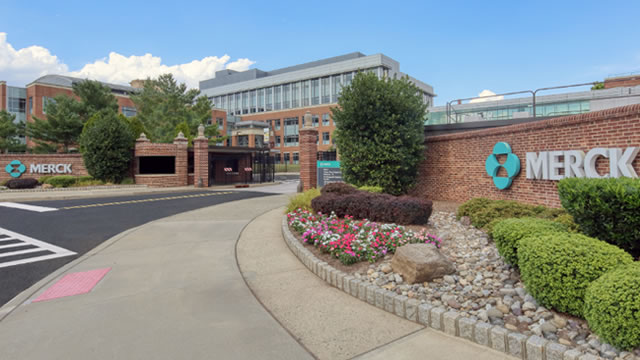
Merck Faces Multiple Challenges: Will It Steer Through Successfully?
ZACKS· 2025-07-09 14:25
Core Insights - Merck (MRK) is anticipated to encounter significant challenges affecting its long-term growth, primarily due to the expected loss of exclusivity for its leading PD-L1 inhibitor, Keytruda, in 2028 [1][10] - Keytruda, which accounts for approximately 50% of Merck's sales, generated $7.21 billion in Q1 2025, reflecting a 6% year-over-year increase [2][10] - The company is also facing declining sales for its second-largest product, Gardasil, which saw a 40% drop in Q1 2025 due to weak demand in China [3][10] Revenue Drivers - Keytruda is projected to maintain strong sales until its patent expiration in 2028, with an estimated compound annual growth rate (CAGR) of 5.4% over the next three years [2] - Gardasil's sales have been declining, with a 3% decrease to $8.58 billion in 2024, and a negative CAGR of 6.4% expected over the next three years [4] Regulatory Impact - The redesign of Medicare Part D under the Inflation Reduction Act (IRA), effective in 2025, is expected to negatively impact sales of Merck's diabetes drug, Januvia/Janumet, in 2026, and Keytruda starting in 2028 [5][10] - Other pharmaceutical companies, including J&J, Pfizer, and Eli Lilly, are also anticipating adverse effects from the Medicare Part D changes [8] Future Growth Potential - Merck's new products, such as the 21-valent pneumococcal conjugate vaccine, Capvaxive, and the pulmonary arterial hypertension drug, Winrevair, are expected to support growth post-Keytruda exclusivity [6] - The company is actively seeking to diversify its product offerings, particularly in the non-oncology sector, to mitigate potential challenges [6] Market Performance - Year-to-date, Merck's shares have decreased by 18.2%, contrasting with a 1.1% decline in the industry [11] - Merck's current price/earnings ratio stands at 8.71, which is lower than the industry average of 14.93 and its own 5-year mean of 12.83, indicating an attractive valuation [12] Earnings Estimates - The Zacks Consensus Estimate for Merck's 2025 earnings has slightly decreased from $8.94 to $8.91 per share, while the estimate for 2026 has dropped from $9.77 to $9.73 over the past 60 days [13]

Pfizer to Face Several Headwinds: Can It Successfully Navigate Them?
ZACKS· 2025-06-24 15:26
Core Viewpoint - Pfizer is expected to face multiple challenges in the coming years, including declining sales from COVID products and significant revenue impacts from patent expirations and Medicare Part D redesign [2][3][4]. Group 1: Revenue Challenges - Sales from COVID products, Comirnaty and Paxlovid, are projected to decline, with revenues in 2025 expected to be similar to 2024 [2]. - The loss of exclusivity (LOE) for key products like Eliquis, Vyndaqel, Ibrance, Xeljanz, and Xtandi is anticipated to have a significant negative impact from 2026 to 2030 [3]. - The redesign of Medicare Part D under the Inflation Reduction Act (IRA) is expected to adversely affect Pfizer's revenues by approximately $1 billion starting in 2025, particularly impacting higher-priced drugs [4]. Group 2: Market Environment - The appointment of Robert F. Kennedy Jr. as Secretary of Health and Human Services has put additional pressure on vaccine manufacturers like Pfizer [5]. - Broader economic factors, including tariff uncertainties and geopolitical tensions, are contributing to muted economic growth [5]. Group 3: Growth Prospects - Despite the challenges, Pfizer's key drugs such as Vyndaqel, Padcev, and Eliquis, along with new products, are expected to drive top-line growth [6]. - Pfizer is implementing significant cost-reduction measures and improving R&D productivity, which should support profit growth despite anticipated revenue declines [6]. Group 4: Valuation and Earnings Estimates - Pfizer's stock has decreased by 6.2% this year, compared to a 1.3% decline in the industry [9]. - The company is trading at a forward P/E ratio of 7.82, below the industry average of 14.81 and its own 5-year mean of 10.89, indicating attractive valuation [11]. - The Zacks Consensus Estimate for 2025 earnings has increased from $2.99 to $3.06 per share, while the estimate for 2026 has risen from $3.02 to $3.09 per share over the past 60 days [12].


How Are Production Tax Credits Powering Constellation Energy's Growth?
ZACKS· 2025-06-20 13:50
Core Insights - Constellation Energy Corporation (CEG) is significantly benefiting from the Production Tax Credit (PTC) for nuclear energy, which provides a per-kilowatt-hour incentive for electricity generated from eligible resources [1][2][9] - The PTC, part of the Inflation Reduction Act, enhances CEG's revenues, especially during low power market prices, thereby protecting profitability and supporting the operation of nuclear plants [2][9] - CEG anticipates over 13% adjusted operating earnings growth through 2030, driven by PTC benefits, operational improvements, and planned refueling outages [3][9] Financial Performance - CEG's shares have increased by 39.4% over the past three months, outperforming the industry growth of 19.1% [8] - The Zacks Consensus Estimate indicates a 9% increase in earnings per share for 2025 and a 22.09% increase for 2026 [11] - CEG is trading at a premium with a forward 12-month price-to-earnings ratio of 29.43X compared to the industry average of 20.8X [14] Revenue Protection Mechanism - The PTC provides crucial downside protection for CEG's nuclear plants when revenues fall below $44.75/MWh, with inflation adjustments enhancing this safeguard [4][9] - CEG expects an incremental base revenue of $500 million in 2028, contingent on inflation adjustments between 2.3% and 2.6% [4] Growth Initiatives - CEG's consistent PTC earnings allow for investments in growth initiatives such as repowering wind assets, extending plant licenses, and acquiring new assets [3][5]


Broadwind(BWEN) - 2025 Q1 - Earnings Call Presentation
2025-05-13 11:03
Financial Performance Summary - Total revenue decreased year-over-year to $36.8 million in 1Q25 from $37.6 million in 1Q24[15] - Gross profit decreased year-over-year to $4.3 million in 1Q25 from $6.6 million in 1Q24[15] - Adjusted EBITDA decreased year-over-year to $2.4 million in 1Q25 from $4.2 million in 1Q24[16] - GAAP Net Income turned into a loss of $0.4 million in 1Q25, compared to a profit of $1.5 million in 1Q24[17] - Gross margin decreased year-over-year to 11.7% in 1Q25[14] - Adjusted EBITDA margin decreased year-over-year to 6.4% in 1Q25[14] Segment Performance - Heavy Fabrications segment revenue increased to $25.2 million in 1Q25 from $22.0 million in 1Q24[20] - Heavy Fabrications segment orders increased by 10.4% year-over-year to $12.4 million in 1Q25[19, 21] - Gearing segment revenue decreased by 28.4% year-over-year in 1Q25[25] - Industrial Solutions segment orders increased by 38% year-over-year in 1Q25[32] Balance Sheet - Cash and LOC availability at quarter-end was $22.6 million in 1Q25[39, 40] - Net leverage was 1.4x at March 31, 2025[39]

Can Sunrun Weather the Policy Storm? Analysts Weigh Potential Solar ITC Cuts
Benzinga· 2025-05-08 19:35
Core Viewpoint - Sunrun Inc. reported better-than-expected first-quarter results, with an EPS of $0.20, surpassing the analyst consensus estimate of a $0.25 loss, and revenue of $504.27 million, exceeding the consensus estimate of $484.06 million [1] Group 1: Financial Performance - The company achieved a positive cash flow for the fourth consecutive quarter and exceeded solar and storage capacity addition guidance [5] - RUN shares increased by 11.7%, reaching $8.255 following the earnings report [6] Group 2: Analyst Insights - Guggenheim analyst Joseph Osha maintained a Neutral rating, noting modest customer volume growth with additions of 25,428, reflecting only a 6% increase [2] - Osha highlighted that the company is expected to prioritize liquidity and profitability over aggressive growth in the near to medium term [2] - KeyBanc analyst Sophie Karp reiterated a Sector Weight rating, acknowledging the results as a positive indicator of strong demand across channels [5] Group 3: Industry Challenges - Osha identified policy-related challenges, particularly concerning the solar Investment Tax Credit (ITC), which significantly affects cash generation, estimating a $50 million impact on cash flow for every 1% change in the effective ITC rate [3] - The company has strategies to mitigate the effects of a lower ITC, but predicting the net effect and timing of changes to the Inflation Reduction Act remains challenging [4] - Broader uncertainty around government and fiscal policy, along with high industry-wide cost of capital, may hinder the stock's positive momentum in the near term [6]


Hannon Armstrong Sustainable Infrastructure Capital(HASI) - 2025 Q1 - Earnings Call Presentation
2025-05-07 20:18
Financial Highlights - Adjusted Earnings per Share (EPS) was $0.64[7], while GAAP EPS was $0.44[7] - The company closed transactions exceeding $700 million[7] - New asset yields surpassed 10.5% in Q1 2025[7, 25] - Available liquidity stood at $1.3 billion as of March 31, 2025[7] - CCH funded assets reached $1 billion as of March 31, 2025[7] Portfolio and Pipeline - The company's 12-month pipeline is greater than $5.5 billion[18], diversified across Grid-Connected (GC) (30%)[19], Behind-the-Meter (BTM) (49%)[18], and Fuels, Transport, & Nature (FTN) (21%)[19] - Managed assets totaled $14.5 billion, with CCH assets at $1 billion[21] - The portfolio is diversified across Resi Solar (46%)[22], Public Sector (38%)[22], C&I (4%)[22], Community Solar (4%)[22], and Other (3%)[22] Guidance and Outlook - The company reaffirmed its guidance for a Compound Annual Growth Rate (CAGR) of 8-10% to Adjusted EPS in 2027, using a 2023 base year[8]

WEC Energy(WEC) - 2025 Q1 - Earnings Call Transcript
2025-05-06 18:00
Financial Data and Key Metrics Changes - The company reported first quarter 2025 earnings of $2.27 per share, reflecting a $0.30 increase compared to the first quarter of 2024 [4][16] - The earnings guidance for 2025 is reaffirmed at $5.17 to $5.27 per share, assuming normal weather conditions for the remainder of the year [5][22] - The long-term compound annual growth rate (CAGR) target remains at 6.5% to 7% [5][22] Business Line Data and Key Metrics Changes - Utility operations earnings increased by $0.28 compared to the first quarter of 2024, driven by weather impacts and rate-based growth [16][17] - Earnings from the Energy Infrastructure segment increased by $0.05, largely due to higher production tax credits [20] - Earnings from the Corporate and Other segment decreased by $0.03, primarily due to higher interest expenses [21] Market Data and Key Metrics Changes - Wisconsin's unemployment rate stands at 3.2%, below the national average, indicating strong economic conditions [5] - Weather-normalized retail electric delivery saw a 0.7% growth, led by large commercial and industrial classes [18][20] - The company anticipates a weather-normal annual electric sales growth of 4.5% to 5% starting in 2027 [20] Company Strategy and Development Direction - The company is focused on a $28 billion capital investment plan aimed at economic growth and reliability [8][10] - A new Very Large Customer (VLC) tariff proposal has been filed to accommodate economic growth and attract data center investments [12][13] - The company is actively working on transitioning its generation assets to gas and renewables to meet future capacity needs [29][68] Management's Comments on Operating Environment and Future Outlook - Management expressed confidence in the economic development along the I-94 corridor and ongoing projects, including significant expansions by companies like Microsoft and Eli Lilly [6][7][92] - The management is cautiously optimistic about the future, noting that while there is caution among customers regarding tariffs, significant projects are still progressing [91][92] - The company is monitoring federal developments related to the Inflation Reduction Act and is actively seeking to safe harbor projects in its capital plan [10][51] Other Important Information - The company has no active rate cases currently and is preparing for future rate case filings [12][15] - The company plans to raise a total of $700 to $800 million in common equity in 2025 through various programs [21][43] - The company is managing tariff impacts on its capital plan, estimating a 2% to 3% overall exposure [8][80] Q&A Session Summary Question: Thoughts on recent MISO capacity auction results and CapEx for data centers - Management indicated a tight auction and is working to ensure enough capacity to meet demand, with plans for additional gas generation [27][28] Question: Pipeline safety modernization program in Illinois and CapEx opportunities - Management expects to ramp up the program in 2026 and 2027, with spending projected to exceed $500 million annually [35][37] Question: Update on Microsoft and data center developments - Management confirmed ongoing strong demand and development from Microsoft, with no concerns about the project's progress [39][41] Question: Impact of tariffs on capital plan - Management noted that tariffs could impact costs, particularly for solar and battery projects, and will notify regulators of any significant increases [78][81] Question: Future of gas in Illinois and potential impacts from workshops - Management remains optimistic about the gas needs and the approved pipe replacement program, with no expected negative changes [96] Question: Commentary on large load customers outside data centers - Management reported cautious optimism among large customers, with ongoing expansions in various sectors despite tariff concerns [91][92]

WEC Energy(WEC) - 2025 Q1 - Earnings Call Transcript
2025-05-06 18:00
Financial Data and Key Metrics Changes - The company reported first quarter 2025 earnings of $2.27 per share, reflecting a $0.30 increase compared to the first quarter of 2024 [17] - The earnings guidance for 2025 is reaffirmed at $5.17 to $5.27 per share, assuming normal weather conditions for the remainder of the year [23][24] - The long-term compound annual growth rate (CAGR) target remains at 6.5% to 7% [5][23] Business Line Data and Key Metrics Changes - Utility operations earnings increased by $0.28 compared to the first quarter of 2024, driven by weather impacts and rate-based growth [18][19] - Earnings from the American Transmission Company increased by $0.02, attributed to continued capital investment [21] - The Energy Infrastructure segment saw a $0.05 increase in earnings, primarily due to higher production tax credits [21][22] Market Data and Key Metrics Changes - Wisconsin's unemployment rate stands at 3.2%, below the national average, indicating strong economic conditions [5] - Weather-normalized retail electric delivery grew by 0.7% in the first quarter, led by large commercial and industrial classes [20] - Significant economic developments include Microsoft's data center complex and Eli Lilly's $3 billion expansion in Wisconsin [6][7][8] Company Strategy and Development Direction - The company is focused on a $28 billion capital investment plan aimed at economic growth and reliability [9] - A new Very Large Customer (VLC) tariff proposal has been filed to accommodate economic growth and attract data center investments [13][14] - The company is actively working on transitioning its coal units to gas and integrating renewable energy sources into its generation mix [31][70] Management's Comments on Operating Environment and Future Outlook - Management expressed confidence in the economic development in Southeastern Wisconsin, particularly regarding data center demand [6][42] - The company is monitoring tariff impacts on its supply chain and capital plan, estimating a 2% to 3% overall exposure [9][10] - Management remains optimistic about continued growth in the region and the company's future prospects [25] Other Important Information - The company has no active rate cases currently and is preparing for future rate proceedings related to its capital investments [12][16] - The company is closely monitoring developments related to the Inflation Reduction Act and its potential impacts on renewable projects [11][53] Q&A Session Summary Question: Thoughts on recent MISO capacity auction results and CapEx for data centers - Management noted a tight auction and is working to ensure sufficient capacity to meet demand, with plans for additional gas generation [29][30] Question: Pipeline safety modernization program in Illinois and CapEx opportunities - Management indicated that the program will ramp up in 2026 and 2027, with expected spending of over $500 million annually [39] Question: Updates on Microsoft and data center developments - Management confirmed ongoing positive discussions with Microsoft, with strong demand forecasts for the region [42] Question: Impact of equity issuance on market uncertainty - Management acknowledged that stock price, cash needs, and market conditions all influence equity issuance plans [44] Question: Impacts of the Inflation Reduction Act and tax credit transferability - Management expressed confidence in managing potential impacts, noting that most projects are already integrated with IRA benefits [50][54] Question: Details on the VLC tariff and its competitiveness - Management emphasized the fair and balanced nature of the VLC tariff, designed to attract large customers without subsidizing costs for others [60][61] Question: Drivers of strong residential electric load growth - Management attributed growth to normalization of weather conditions compared to the previous year, which was unusually warm [67] Question: Generation needs for Cloverleaf data center project - Management indicated that the generation mix will likely include both gas and renewables, with further details expected in the third quarter [70][72]
Array Technologies(ARRY) - 2025 Q1 - Earnings Call Transcript
2025-05-06 12:00
Financial Data and Key Metrics Changes - Revenue for Q1 2025 was $302.4 million, a 97% increase year-over-year and a 10% increase sequentially from Q4 2024 [26][7] - Adjusted gross margin for Q1 2025 was 26.5%, reflecting a decline due to the roll-off of prior year benefits and a higher mix of international projects [29][30] - Net income attributable to common stockholders was $2.3 million, compared to a net loss of $11.3 million in the prior year [31] - Adjusted EBITDA was $40.6 million, representing an adjusted EBITDA margin of 13.4% [30] Business Line Data and Key Metrics Changes - Delivered volume increased by 143% year-over-year, achieving the second-largest quarter of volume shipped since Q2 2023 [27][7] - Domestic order book grew over 9% in Q1 2025, with over 40% of the order book set to be delivered in the remaining quarters of 2025 [8][9] - New product offerings, such as Omnitrac and Skylink, accounted for 15% of revenue and 30% of new bookings in Q1 [9] Market Data and Key Metrics Changes - The order book remained resilient at $2 billion despite near-term policy-related headwinds [7][36] - North America represented approximately 65% of revenue, with a mix shift impacting gross margins [28] - International markets, particularly Europe, are performing as expected with solid growth anticipated in 2025 [14] Company Strategy and Development Direction - The company is focused on maintaining operational agility and delivering long-term value amidst a rapidly evolving policy environment [6] - Continued investment in talent and technology is aimed at enhancing customer engagement and product innovation [8][20] - The company is actively engaging with policymakers to support energy tax credits and address regulatory uncertainties [13] Management's Comments on Operating Environment and Future Outlook - Management expressed confidence in the strength of fundamentals and the resilience of the company despite near-term volatility [6] - The company reaffirmed its full-year 2025 guidance, expecting revenue between $1.05 billion and $1.15 billion [36] - Management noted that while utility-scale solar remains a low-cost energy source, regulatory uncertainties may lead to project delays [11] Other Important Information - The company ended the quarter with a cash balance of approximately $348 million and total liquidity of about $510 million [32][34] - Free cash flow for the period was a use of $15.4 million, driven by working capital investments [30] - The company is exploring additional markets for international expansion, including the Middle East [15] Q&A Session Summary Question: Can you provide more color on the growing interest in VCAs? - Management is in active discussions with customers about longer-term commitments and will announce VCAs as they are finalized [42][44] Question: What is the guidance for Q2 revenue? - Specific guidance for Q2 has not been provided, but the first half is expected to account for about 55% of total revenue [46][47] Question: Can you discuss the size of orders and lead times? - Lead times remain industry-leading at fourteen weeks, with ongoing discussions about potential early pull-ins for 2025 [50][51] Question: How is the company managing cash use and term loans? - The company has successfully amended its revolving credit facility and is considering options for managing term loans [61][62] Question: What is the exposure to battery cell pack challenges? - Most components needed for projects are already in the country, minimizing risk for 2025 projects [76] Question: How are steel pricing and bookings expected to impact margins? - Steel prices are expected to increase, which will translate into higher ASPs for future bookings [85][86]
