tariffs

Search documents
Navarro Weighs In on Bolton, Lisa Cook and India Tariffs
Bloomberg Television· 2025-08-27 22:02
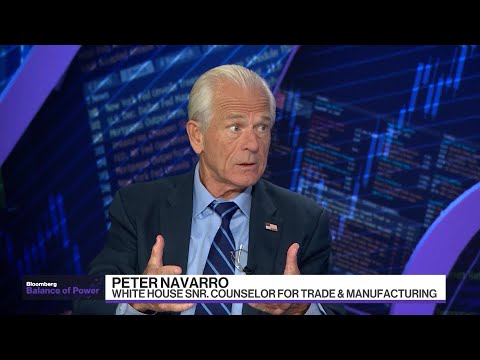
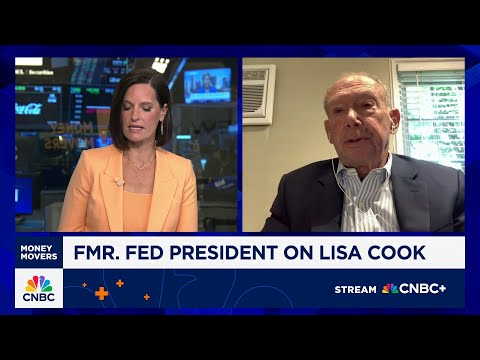
Legal & Ethical Concerns - Lisa Cook面临因涉嫌在两周内为两处房产申请抵押贷款时提供虚假永久居住地声明的指控,这可能构成不当行为 [4] - 总统有权以正当理由解雇联邦储备官员,本案中的理由可能是渎职 [3][6] - 类似的不当行为指控过去曾导致政府官员离职 [5] - 对于与丽莎·库克类似指控的人,可能会面临牢狱之灾、资产没收和赔偿 [11] Federal Reserve & Monetary Policy - Lisa Cook 此前曾投票支持维持低利率,导致通货膨胀 [8] - Lisa Cook 被指责在担任美联储理事期间将美联储武器化 [10] Geopolitics & International Trade - 印度对俄罗斯石油的购买行为,尽管享有折扣,但实际上帮助俄罗斯资助了对乌克兰的战争 [17][18] - 印度对俄罗斯石油的购买量约为每天 150 万桶 [21] - 印度被指责在关税问题上不诚实,并且不愿停止购买俄罗斯石油 [16][17] - 如果印度停止购买俄罗斯石油,可能会促使俄乌战争结束 [20] - 印度对进口商品征收高额关税,损害了美国的企业、工人和消费者 [19] - 对印度征收 80% 关税的可能性正在谈判中 [15]

Euro Is More Attractive Than Dollar, says JPM's Reschke
Bloomberg Television· 2025-08-27 19:35
What we're seeing is a market that's surprisingly strong with all the geopolitical noise, whether it's in Europe, in the US, tariffs and so on. Absolute levels are almost at historical heights. You know, we see spread levels both in Europe and the U.S. really, you know, can't get much better.But what would what what we are seeing is that investors are becoming ever so slightly more selective. You know, all the deals that we did and there was 10 billion of supply yesterday went well, but we saw a really sign ...
X @Bloomberg
Bloomberg· 2025-08-27 16:55
Market Analysis - Citigroup analysts indicate that the price gap between US palladium and silver prices and international benchmarks is too narrow [1] - The slim price gap is concerning due to the risk of tariffs on critical minerals [1]
Fmr. Minneapolis Fed president Stern: Fed needs to maintain objectivity of monetary policy process
CNBC Television· 2025-08-27 16:31
Fed Independence & Monetary Policy - The market is concerned about a potential rupture in Fed independence [1] - Maintaining the objectivity and integrity of the monetary policy process is crucial [2] - The Fed should continue its responsibilities regarding monetary policy, financial stability, and bank supervision [4] - The Fed's 2% inflation target is reasonable, and low stable inflation (1-3%) is generally equivalent [12][13] Fed Structure & Governance - Regional bank presidents are appointed by local boards of directors, subject to approval by the board of governors, creating a system of checks and balances [6][7][8] - Fed governors are appointed to 14-year staggered terms to insulate the Fed from short-term pressures [9][10] Economic Impact - Tariffs are expected to have a net negative effect on the economy by distorting resource allocation and increasing costs for consumers [10][11]
X @Bloomberg
Bloomberg· 2025-08-27 04:09
BREAKING: Trump hits India with 50% tariffs, the highest in Asia, in a serious blow to his ties with Modi https://t.co/glovRPAQpq ...
We're in an 'anything goes' moment with tariffs, says Jim Cramer
CNBC Television· 2025-08-26 23:27
If we wipe out an industry in this country because it's cheaper to make the stuff overseas, is that a national security risk or are we just nostalgic for a different time when America was still a manufacturing powerhouse. Last week, the president talked about an ongoing 232 investigation making it furniture. 232, mind you, being a national security kind of tariff president has control over.The president's apparently worried about supply chain risk for furniture. Something that seems a little strange, but we ...
Watch CNBC's full interview with Commerce Secretary Howard Lutnick
CNBC Television· 2025-08-26 13:08
US Government Intervention in Business - The discussion revolves around the extent to which the US government should take equity stakes in companies, especially those receiving government funding or benefiting from government policies [3][4][11] - The Trump administration's approach involved seeking equity in exchange for government assistance, contrasting with what is portrayed as the Biden administration's "giveaways" [3][18] - The Commerce Secretary argues that if the US adds fundamental value to a business, it's fair for the government to seek a stake, referencing examples like university patents and defense contractors [13][14][15] - A key point is whether the US government's involvement is essential for a company's success, particularly in strategic sectors like rare earth magnets where Chinese dominance poses a threat [28][29] Trade and Competition - The discussion highlights concerns about unfair competition from countries that subsidize their industries, arguing that the US needs to ensure fair treatment and protect its interests [32][33][34] - The Commerce Secretary criticizes the Chips Act for providing $50 billion in subsidies without securing equity, questioning why the US should give money away for free [31][34] - The conversation touches on the US trade deficit and the increasing foreign ownership of American assets, framing the Trump administration's policies as an effort to reverse this trend [36][37][38] Specific Company Examples - Intel received an $11 billion grant from the Biden administration, which the Trump administration would have converted into an equity stake [3][4] - TSMC initially received $65 billion from the Biden administration, but after negotiations, committed to $165 billion of investment [7][8] - Micron received a $25 billion grant, later increased to $200 billion [9] - Texas Instruments increased investment from $23 billion to $60 billion [10] Lisa Cook Controversy - The discussion addresses allegations of mortgage fraud against Lisa Cook, a governor at the Federal Reserve [39][40] - The Commerce Secretary asserts that if Cook committed mortgage fraud, she should resign [40][43] - The conversation briefly touches on potential implications for Federal Reserve Chair Powell if he doesn't take action [41] Economic Outlook - The Commerce Secretary portrays a positive economic outlook under the Trump administration, citing high stock market levels, steady bond markets, and a 3% GDP growth rate [45][47] - He suggests that the Federal Reserve could cut interest rates to benefit American taxpayers, estimating a $360 billion annual saving per 1% interest rate cut [46] Infrastructure - The discussion briefly mentions the need for smooth intercontinental railroad operations, leaving the specifics of how to achieve this to regulators and industry experts [49][50]
X @Bloomberg
Bloomberg· 2025-08-26 10:22
What are digital services taxes and why is US President Donald Trump threatening countries that impose them with additional tariffs? Here's what to know. https://t.co/givR1PRW65 ...
X @Bloomberg
Bloomberg· 2025-08-25 13:20
Higher US tariffs won’t derail the euro-area economy, which is on the brink of a recovery, European Central Bank President Christine Lagarde says https://t.co/3VH9iYUeWK ...
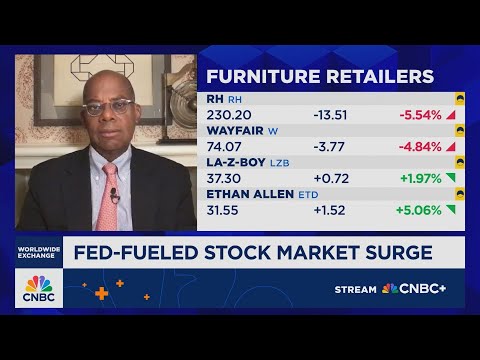
Ferguson: The market tilt is toward a cut, possibly as soon as September
CNBC Television· 2025-08-25 11:58
Fed Policy & Market Reaction - The market interpreted the Fed's communication as dovish, leading to a significant market rally [1] - The market may be overreacting to the possibility of a rate cut as early as September, as more data is forthcoming [2] - A potential rate cut might be a "hawkish cut," implying a small adjustment or a step towards neutral rather than a series of cuts [3] - The circumstances surrounding a rate cut matter to the market, not just the cut itself [4] Economic Indicators & Inflation - A rate cut could signal that the Fed sees only slight economic weakness and no dramatic weakening in consumer sentiment [5] - Labor market weakness seems to be overshadowing concerns about inflation for the Fed [7] - The Fed appears comfortable with inflation running slightly above its target, but may reconsider its strategy if it exceeds a certain comfort range [8] - The Fed is data-dependent, not on autopilot, and structural changes in the market could force a reconsideration of policy [9] Tariffs & Inflation Expectations - New tariffs, such as those on furniture, add complexity and could lead to a series of rolling price increases, potentially influencing inflation expectations [10][11] - If consumers consistently see price increases, they may believe inflation is returning, which should influence the Fed's policy stance [12]