Diversification

Search documents
5 Best High-Yielding ETFs to Own Right Now
247Wallst· 2025-10-02 11:36
Core Insights - ETFs provide significant diversification benefits and can reduce overall investment risk compared to investing in individual securities [1] Group 1 - ETFs offer a good deal of diversification [1] - Investing in ETFs can help lower overall risk [1]


Market concentration is creating fragility investors can’t ignore, says SEI's Jim Smigiel
CNBC Television· 2025-10-01 20:53
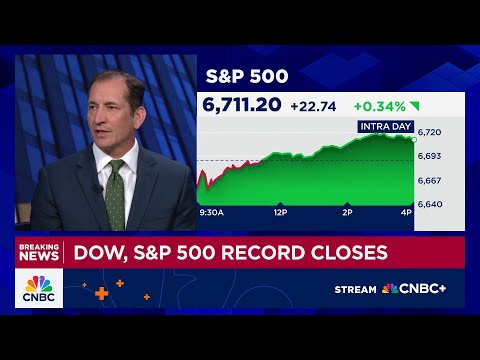
Joining us now is SEI chief investment officer Jim Schmeigel. Jim, uh, you talked earlier in the year about this wall of worry that the market had to climb. You even raised some concerns about private credit.I believe we're now in Q4. How much worry is left for this market. >> Well, there should be a lot more worry, I think, than what the market is actually uh showing us and that investors are really showing us.We uh I put out my quarterly piece today and the big theme is it's not about the volatility, it's ...

Jim Cramer offers investing advice in his new book, 'How to Make Money in Any Market'
CNBC Television· 2025-10-01 17:37
Investment Strategy - Advocates for a blend of index funds and individual stock ownership, suggesting a five-stock portfolio with one speculative pick [14][15] - Emphasizes the importance of diversification within growth stocks to mitigate risk [19] - Stresses the need to conduct thorough research ("do homework") before investing in any stock [6][21] - Suggests using available resources like chat tools (Perplexity, Grok) to analyze company balance sheets for debt [10] Market Analysis & Outlook - Acknowledges the dramatically changed market structure and the increased access to securities and asset classes for investors [9][13] - Highlights the potential for individual stocks, like Nvidia, to significantly impact an investor's financial life [15][16][17] - Notes that third-quarter winners often continue to perform well into the fourth quarter [21] Stock Picking & Selling - Recommends paying attention to a stock's performance and balance sheet to determine when to sell [9][10] - Suggests that if a stock consistently declines, investors should examine the balance sheet for issues like excessive debt [9][10]

Jim Cramer offers investing advice in his new book, 'How to Make Money in Any Market'
Youtube· 2025-10-01 17:37
Core Insights - Jim Kramer's new book, "How to Make Money in Any Market," aims to democratize investment knowledge and empower individual investors to make informed decisions [1][4][15] - The discussion emphasizes the importance of understanding stock fundamentals, such as price-to-earnings (PE) multiples and balance sheets, to avoid common investment mistakes [4][10][11] - Kramer's approach encourages a balanced portfolio that includes both index funds and individual stocks, highlighting the potential life-changing impact of successful stock investments [15][16][18] Investment Strategies - Kramer's investment philosophy suggests focusing on long-term stock ownership rather than short-term trading, advocating for thorough research before making investment decisions [7][8][22] - He emphasizes the need for diversification among growth stocks while cautioning against over-diversification that can dilute returns [19][20] - The book discusses the significance of recognizing when to sell stocks based on their performance and financial health, particularly through analyzing balance sheets [9][10][11] Market Observations - Kramer's insights reflect a positive outlook on certain stocks, such as Western Digital and Merck, which have shown resilience in the market [2][3] - He notes the changing market structure and the necessity for investors to adapt their strategies accordingly, particularly in turbulent market conditions [9][14] - The conversation highlights the emotional impact of successful investments, with anecdotes of individuals who have significantly benefited from stocks like Nvidia [17][18]

Get Active, Diversified Government Bond Exposure After Rate Cut
Etftrends· 2025-10-01 13:04
Core Insights - The Federal Reserve's recent 25 basis point rate cut has prompted fixed income investors to reconsider their bond exposure, particularly in government bonds, suggesting a more active and diversified investment approach with the Vanguard Government Securities Active ETF (VGVT) [1][2] Group 1: Rate Cut Impact - The rate cut was largely anticipated by capital markets but has introduced potential market uncertainty regarding future cuts by the Federal Reserve [2] - The Fed has indicated that only one rate cut is expected next year, with economic data playing a crucial role in shaping interest rate policy [2] Group 2: VGVT Overview - VGVT boasts a diversified portfolio with nearly 200 holdings, making it more selective compared to its benchmark, the Bloomberg U.S. Government TR Index, which has almost 500 bonds [3] - The fund primarily invests in Treasuries (78%), with allocations to commercial mortgage-backed securities (20.5%) and government mortgage-backed securities (1.3%) [3] Group 3: Investment Strategy - VGVT employs a strategy that disperses exposure across various maturities and durations, maintaining an average duration of approximately 5.7 years and an average effective maturity of 7.6 years [4] - The fund's 30-day SEC yield is reported at 4% as of September 25 [4] Group 4: Active Management Advantage - Given the uncertainty in interest rate policy, an active management approach is deemed essential for navigating the complexities of government securities [5] - VGVT leverages the expertise of the Vanguard Fixed Income Group, allowing portfolio managers to adjust holdings based on market conditions to optimize income and manage risk [6] Group 5: Cost Efficiency - VGVT offers a cost-effective investment solution with an expense ratio of just 10 basis points, significantly lower than the FactSet segment average for similar funds [7]

Ultra-rich Americans ditching stocks and real estate, says investing legend — 5 assets they’re using to shockproof
Yahoo Finance· 2025-10-01 12:30
Group 1: Gold Investment Insights - Gold IRAs provide a way for investors to hold physical gold or gold-related assets within a retirement account, combining tax advantages with the protective benefits of gold investment [1] - Over the past year, gold prices have increased by more than 40%, with forecasts from Goldman Sachs and JPMorgan predicting prices could reach $4,000 per ounce by 2026 [2] - Gold is viewed as a safe haven during economic stress or geopolitical uncertainty, making it a natural destination for investors [2] Group 2: Portfolio Management Trends - Members of Tiger 21 are adopting a more cautious approach to their portfolios, prioritizing wealth preservation and increasing allocations to cash and fixed income [3] - There is a notable shift towards alternative stores of value, including gold and Bitcoin, as investors seek stability amid market volatility [4][7] - The average Tiger 21 member controls over $100 million, indicating significant wealth management strategies are in play [4] Group 3: Bitcoin's Growing Acceptance - Bitcoin is increasingly recognized as a secure asset, with its market size being one-tenth that of gold, and is now considered an alternative asset during tough economic times [7] - The built-in scarcity of Bitcoin, capped at 21 million, adds to its appeal as a non-inflatable asset [7] Group 4: Real Estate Investment Dynamics - Despite a slight pullback in real estate allocations, it remains a reliable asset class for wealth preservation, especially during inflationary periods [14] - Real estate values tend to rise with inflation, providing landlords with cash flow that adjusts accordingly [14][16] - Crowdfunding platforms like Arrived and First National Realty Partners offer accessible ways for investors to engage in real estate without the burdens of traditional landlord responsibilities [17][20]
Active investment is where there's real opportunity and excitement: Man Group CEO Robyn Grew
CNBC Television· 2025-10-01 12:10
Market Overview & Investment Strategy - Global markets are experiencing volatility and dispersion, presenting opportunities for firms providing solutions and uncorrelated returns [2] - Diversification of portfolios is crucial for both large allocators and individual investors [3] - Active investment, as opposed to passive index investing, offers real opportunity and excitement due to dispersion in markets [6] Man Group Performance & Strategy - Man Group manages over $193 billion in assets [1] - Volatility is generally beneficial for active management, enabling the firm to capitalize on outperformance signals and data [9] - A 40% drop in first-half core profit was attributed to the asset mix and underperformance of trend-following hedge fund strategies [10] Policy & Economic Factors - US equity market resilience is notable, despite concerns about overvaluation [4] - US policy volatility has whipsawed markets, but businesses are adapting [12] - Markets have largely shrugged off concerns related to geopolitics and policy changes [15] - Data points, such as concerns about inflation and recession among US insurers, are not currently impacting the market as expected [16]
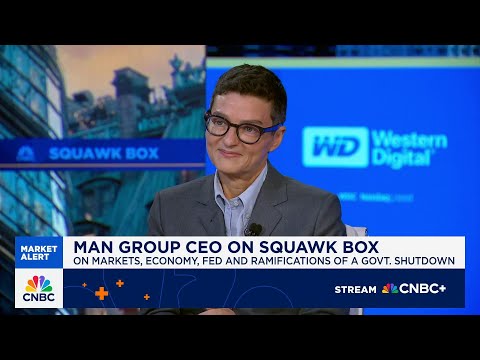
Active investment is where there's real opportunity and excitement: Man Group CEO Robyn Grew
Youtube· 2025-10-01 12:10
Core Viewpoint - The current global market environment is characterized by volatility, dispersion, and opportunities for diversification, which are favorable for alternative investment firms [2][4]. Market Conditions - The equity market in the United States remains resilient, with ongoing strength despite concerns about pricing [4]. - There is a notable dispersion within the equity market, indicating the value of active investment strategies over passive ones [6]. Investment Opportunities - Active investment strategies are highlighted as having real opportunities, particularly in credit markets and private credit, which are uncorrelated to equity market performance [7][10]. - High yield and investment-grade credit markets present significant opportunities, especially as interest rates and inflationary pressures create new lending opportunities [7]. Company Performance - Despite the overall market conditions, the company's shares have declined by 22% over the past year, indicating challenges in aligning share price with market volatility [8]. - The company experienced a 40% drop in core profit in the first half of the year, attributed to the mix of assets and performance issues in certain hedge fund strategies [10]. Policy Impact - The volatility of U.S. policies has created challenges for market predictability, but there is a sense that markets are adapting to these changes [12][14]. - The resilience of U.S. equity markets suggests that they can absorb policy changes more readily, with historical performance during government shutdowns being relatively stable [14]. Economic Indicators - Concerns about inflation and potential recession are present among U.S. insurers, but current credit spreads do not indicate an impending recession [16]. - The resilience of the U.S. market is notable, with various factors, including AI investment, potentially influencing future performance [17].

X @Investopedia
Investopedia· 2025-10-01 00:00
Robo-advisors rebalance & diversify automatically—helping investors stay on track during market volatility.https://t.co/gqfrV8fH8w https://t.co/0tnoqBvedg ...
VSDA: Why Future Dividend Growth Could Be In Jeopardy
Seeking Alpha· 2025-09-30 09:58
Core Insights - Wilson Research focuses on providing insights into exchange-traded funds (ETFs) that balance growth potential and dividend yield [1] - The analysis incorporates fundamental analysis along with macro-level factors such as industry trends, economics, and geopolitics [1] - The team includes an MBA graduate and an independent financial coach, aiming to deliver actionable information for long-term investors [1] Investment Philosophy - Wilson Research is inspired by the investment philosophies of Warren Buffett and the entrepreneurial philosophies of Robert Kiyosaki [1] - The emphasis is on diversification while maintaining low fees for investors [1]