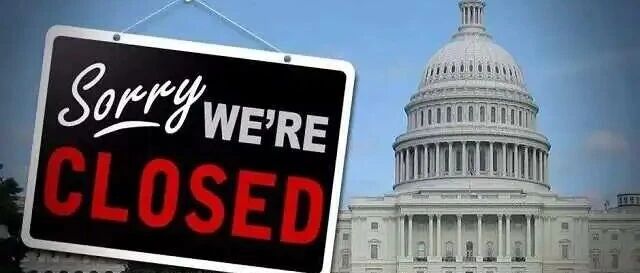
政府关门

Search documents
历史罕见!白宫警告政府关门期间或永久裁员,预算僵局再升级
Hua Er Jie Jian Wen· 2025-09-25 10:12
Core Points - The White House has instructed federal agencies to prepare for permanent layoffs during a government shutdown, marking a more aggressive strategy than previous temporary furloughs, increasing pressure on bipartisan negotiations [1][2] - The Office of Management and Budget (OMB) has issued a memo requiring agencies to develop layoff plans for projects that lack funding and do not align with presidential priorities, indicating that any cuts after the funding deadline will be permanent [2] - The budget impasse stems from fundamental disagreements between the two parties regarding spending priorities, with Republicans proposing a seven-week extension of current funding levels, while Democrats demand the extension of enhanced subsidies under the Affordable Care Act and the restoration of frozen federal funds [3] Group 1 - The White House's threat of permanent layoffs is seen as a tactic to pressure Democrats amid a looming government shutdown [1] - The OMB memo specifies that layoffs will be permanent if Congress does not pass a short-term spending bill by September 30 [2] - The ongoing budget standoff has led to the cancellation of meetings between President Trump and Democratic leaders, further complicating negotiations [3] Group 2 - Democrats have responded strongly to the White House's layoff threat, questioning its legality and labeling it as an intimidation tactic [4] - House Minority Leader Hakeem Jeffries criticized the OMB's directive, suggesting it violates federal spending laws and warning that Democrats will not be intimidated [5] - Former OMB official Bobby Kogan criticized the directive as harmful to the nation, arguing it would unnecessarily lead to a loss of talent and expertise [5]
美国政府关门风险急剧升级!最后时刻,特朗普“掀桌”
Jin Shi Shu Ju· 2025-09-24 01:53
Core Points - President Trump canceled a scheduled meeting with top Democratic leaders aimed at resolving issues related to a potential funding agreement to avoid a government shutdown [2][3] - The cancellation increases the likelihood of a government shutdown, with Democrats insisting that any temporary agreement must protect healthcare programs, including extending tax credits under the Affordable Care Act [3][4] - Trump criticized the Democrats' demands as "unserious and ridiculous," stating that meeting with them would not be productive [3][4] Summary by Sections - **Meeting Cancellation** Trump's decision to cancel the meeting with Senate Minority Leader Chuck Schumer and House Minority Leader Hakeem Jeffries raises concerns about a potential government shutdown [2][3] - **Democratic Response** Jeffries and Schumer expressed frustration, accusing Trump of avoiding responsibility and failing to address the healthcare crisis affecting Americans [3][4] - **Healthcare Protection Demands** Democrats emphasized the need for any funding agreement to include protections for healthcare programs, particularly the tax credits associated with the Affordable Care Act, which are set to expire at the end of the year [3][4] - **Trump's Position** Trump stated that Democrats are "lost" and indicated a willingness to meet if they agree to his principles, framing the situation as a matter of patriotism and responsibility [4]
最后的“摊牌”!民主党人计划本周四与特朗普当面对决
Jin Shi Shu Ju· 2025-09-23 05:58
Core Points - The impending government shutdown deadline on October 1 has prompted Congressional Democrats to plan a meeting with President Trump to discuss ways to keep the government operational [1] - Senate and House Democrats are insisting that any negotiations include unresolved issues regarding federal healthcare program cuts and are unwilling to agree to a simple temporary funding bill [1][2] - A proposed $1.5 trillion alternative bill by Democrats aims to keep the government running until October 31, but it has not secured the necessary votes for passage [1][2] Group 1 - Congressional Democrats are set to meet with President Trump to discuss government funding options as the shutdown deadline approaches [1] - The White House is advocating for a "clean" funding extension without additional Democratic demands [1][3] - Senate Minority Leader Chuck Schumer emphasizes the urgency of addressing rising healthcare costs now rather than delaying negotiations [2] Group 2 - House Minority Leader Hakeem Jeffries criticizes the Republican temporary funding bill as allowing continued healthcare cuts [2] - Senate Majority Leader John Thune expresses openness to discussing healthcare premium issues but insists that funding bills should not be tied to extensive wish lists [3] - Thune warns that if Democrats block a simple funding extension, they may bear the responsibility for a government shutdown [3][4]
美国一到秋天就面临政府“关门”危机?“9月底将有一场大战”
第一财经· 2025-09-04 09:36
Core Viewpoint - The article discusses the increasing risk of a government shutdown in the U.S. as Congress reconvenes, highlighting the partisan divisions between Democrats and Republicans regarding funding issues [3][6][12]. Group 1: Government Funding Issues - Congress has only 14 working days left in September to reach a bipartisan agreement on government funding before the scheduled recess [3][12]. - A short-term funding bill, known as a "continuing resolution," is anticipated to temporarily avoid a government shutdown [4][12]. - The House has approved 2 out of 12 annual funding bills, while the Senate has passed several, indicating a lack of consensus on budget allocations [11][12]. Group 2: Political Dynamics - House Speaker Johnson blames Democrats for the potential government shutdown, asserting that they are not supporting reasonable funding solutions [6]. - Senate Minority Leader Schumer criticizes Trump and Congressional Republicans for their refusal to cooperate with Democrats to prevent a shutdown [7]. - Trump expresses optimism that Republicans will support a funding extension, while criticizing Democrats for their lack of cooperation [9]. Group 3: Historical Context - The article references a previous government shutdown during Trump's first term, which lasted 35 days due to a failure to reach a funding agreement [13]. - The ongoing budget discussions are crucial as they affect funding for multiple government departments, including Defense, Education, and Homeland Security [11].