都市圈同城化

Search documents
成德眉资同城化 腹地都市圈探路五年
Mei Ri Jing Ji Xin Wen· 2025-07-22 09:00
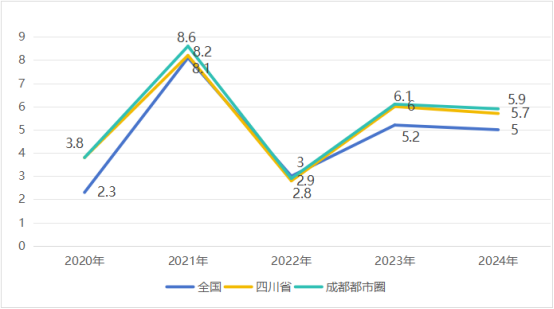
Core Viewpoint - The Chengdu metropolitan area has made significant progress in urban integration over the past five years, transitioning from basic infrastructure connectivity to advanced industrial collaboration and regional synergy, with a target GDP of over 3.3 trillion yuan by 2025 [1][21]. Economic Growth - The total economic output of the Chengdu metropolitan area increased from 2.24 trillion yuan in 2020 to 2.98 trillion yuan in 2024, with an average annual growth rate surpassing national and provincial levels [1]. - The GDP share of the four cities in the province rose from 46% in 2020 to 48.5% in the first quarter of this year, contributing nearly half of the province's economic output despite occupying only 6.8% of its land [1]. Inter-City Collaboration - In 2024, the number of enterprises engaged in cross-city cooperation within the Chengdu metropolitan area reached 2,860, marking a 21.8% increase from 2023, significantly outpacing GDP growth [4]. - Examples of successful inter-city collaborations include the deployment of "Ziyang-made" low-speed unmanned delivery vehicles and the establishment of a complete industrial chain for hydrogen fuel cell buses [5][10]. Innovation and Industry Collaboration - The metropolitan area has developed various collaborative models, such as "R&D + Manufacturing" and "Headquarters + Base," which enhance product iteration speed and innovation [10][11]. - The establishment of innovation hubs along the Tianfu Avenue has attracted significant technological investments, contributing to the region's status as a key area for innovation [11]. Mechanism and Institutional Innovation - The success of the Chengdu metropolitan area is attributed to continuous institutional innovations that facilitate resource allocation and collaborative governance [17]. - A five-level working mechanism and a "1+1+N" planning system have been implemented to enhance coordination among the four cities, breaking down barriers to regional cooperation [18]. Future Outlook - By 2025, the Chengdu metropolitan area aims to solidify its position as a resilient and competitive industrial community, leveraging ongoing innovations and collaborations to navigate future uncertainties [21].

城际公交串起都市圈“同城生活”
Chang Jiang Ri Bao· 2025-07-16 07:32
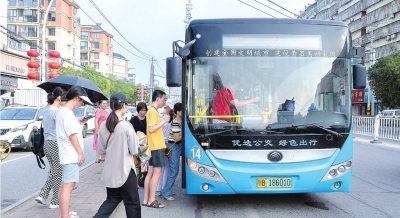
Core Points - The opening of the K25 bus route on June 18 marks the seventh intercity bus line connecting Wuhan and Ezhou, enhancing commuting efficiency between the two cities [3] - The integration of public transport between Wuhan and Ezhou reflects the deeper urbanization and economic collaboration within the Wuhan metropolitan area [4][8] - The development of intercity buses is a significant indicator of urban integration, with the K25 route facilitating direct access to key areas and improving connectivity for residents and workers [4][6] Public Transport Development - The K25 bus route connects Wuhan's Guanggu area with Ezhou's Gedian, covering a distance of 23.6 kilometers with 33 stops, and operates with a fare of 2 yuan [3] - Currently, there are seven intercity bus routes operational between Wuhan and Ezhou, including routes that connect various key locations in both cities [3][4] - The daily passenger volume for intercity buses between Wuhan and Ezhou is approximately 30,000, indicating a strong demand for this mode of transport [4] Economic and Social Integration - The close proximity of Ezhou's Gedian to Wuhan's Guanggu has led to significant economic and cultural integration, with over 60,000 residents commuting between the two areas [4] - The affordable housing in Ezhou has attracted many residents from Huangshi, further enhancing the economic and cultural ties between the cities [5] - The establishment of multiple bus routes has facilitated daily commutes for around 50,000 passengers, showcasing the growing interdependence of the two regions [5][6] Urban Planning and Future Prospects - The expansion of intercity bus services is part of a broader strategy to promote urban integration within the Wuhan metropolitan area, which includes connections to other cities like Xianning, Xiaogan, and Huanggang [7][8] - Recommendations for future development include better planning for additional intercity bus routes and unified numbering for easier identification, which would enhance the overall public transport experience for residents [8]