
Financial Stability

Search documents
Prison program in Maine allows inmates to earn money working remote jobs
NBC News· 2025-11-14 20:00
Preston Thorp is a self-taught software engineer working remotely for a San Francisco based tech company. >> I guess I have an advantage because uh I very little distractions. >> Thorp also happens to be an inmate at the Mountain View Correctional Facility in Maine.>> I have a purpose now. Like prior uh you know I had nothing going for me and and I had been a drug dealer for years. Thorp is one of about 40 residents here working remotely for various industries across the country.At least three other states, ...


Exclusive-European officials consider pooling dollars to lessen Fed reliance after Trump shocks
Yahoo Finance· 2025-11-13 17:54
By Elisa Martinuzzi, Balazs Koranyi, Stefania Spezzati, Mathieu Rosemain and Giuseppe Fonte (Reuters) -European financial stability officials are debating whether to create an alternative to Federal Reserve funding backstops by pooling dollars held by non-U.S. central banks in a bid to reduce their reliance on the U.S. under the Trump administration, five officials familiar with the matter said. The talks, reported here for the first time, are a reaction to policies under U.S. President Donald Trump tha ...
BOK Governor Rhee on Policy Path, Market Volatility
Bloomberg Television· 2025-11-12 06:28
(Subtitles may contain inaccuracies) We had President Lee saying that the BOK did the right thing when it held rates steady instead of cutting rates because that would boost the property market further. Saying the property market is a ticking time bomb. What's your take on whether or not the property sector is in fact one of the considerations for your monetary policy decisions.Yes. Definitely property prices, especially in metropolitan area and Seoul, affect the financial stability. And price stability is ...

Fed survey respondents cite risk to the economy if AI valuations suffer large losses
CNBC Television· 2025-11-07 21:39
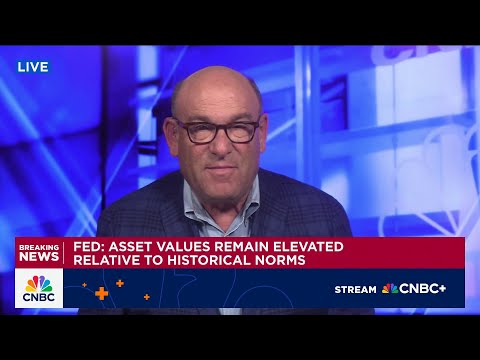
Financial Stability Concerns - Asset values remain elevated relative to historical norms [1] - Commercial real estate values show signs of stabilization, but refinancing concerns exist in coming years [1] - Leverage of publicly traded firms remains high, but debt service ability is robust [2] - Hedge fund and life insurance leverage also remains high [2] - Auto and credit card delinquencies remain above average [3] Banking Sector - Banks are maintaining a high level of liquid assets [2] - Robust bank lending to special purpose entities and private credit is noted [3] Emerging Risks - Algorithmic trading driven by AI raises concerns about potential market manipulation [3] - Survey respondents cite risk to the economy if AI valuations suffer large losses [3] Recent Events - Bankruptcies of First Brands were isolated events [3]
X @Ansem
Ansem 🧸💸· 2025-11-04 22:36
Financial Stability & Risk Management - Having a job provides a guaranteed bi-weekly paycheck, allowing individuals to avoid using trading money for bills [1] - Holding positions longer is facilitated by limiting online activity, preventing unnecessary decisions and potential losses [1] Trading Strategy & Performance - Ironically, the most money was made when the individual had a job, and losses occurred after quitting [1] - Having too much free time can lead to over-analysis and poor trading decisions [1] Investment Portfolio - The individual held 7 figures (millions) in WIF/MICHI/MOTHER while maintaining a 9-to-5 job and doing DoorDash [1]
X @The Wall Street Journal
The Wall Street Journal· 2025-10-22 06:05
High Point University has fueled its enrollment growth and financial stability by catering to a wealthier student body as universities nationwide battle to pad their balance sheets https://t.co/B1o5radclh ...
Dave Ramsey’s 3 Key Moves To Overhaul Your Financial Future
Yahoo Finance· 2025-10-18 20:34
Core Insights - Managing personal finances is a lifelong process that requires continuous attention and planning to achieve life goals [1] - Many individuals seek advice from financial experts, with Dave Ramsey being a notable figure known for his straightforward financial guidance [2][3] Financial Strategies - Ramsey's "Baby Steps" program consists of seven tasks aimed at achieving financial stability and preparing for retirement, starting with saving $1,000 for an emergency fund [4] - The second step focuses on paying off all non-mortgage debt using the debt snowball method, which prioritizes the smallest debts first [5] - Subsequent steps include saving three to six months' worth of expenses, investing 15% of household income for retirement, saving for children's college education, paying off the home early, and building wealth while giving back [6] Budgeting Principles - A key message from Ramsey is to live below one's means to avoid lifestyle creep, emphasizing the importance of a realistic yet challenging budget to prevent overspending [7]
5 Money Tips That Could Save You From Ever Going Broke
Yahoo Finance· 2025-10-18 19:09
Core Insights - A significant concern for many Americans is the fear of financial instability and the possibility of running out of money, regardless of their life stage [1] Group 1: Financial Stability Strategies - Setting a budget is essential for long-term financial stability, helping individuals track income and expenses, avoid overspending, and prepare for emergencies [3] - Building an emergency fund is recommended, with an initial goal of saving $1,000 and eventually covering three to six months of expenses [4] - A survey indicated that 42% of Americans lack an emergency savings fund, and 40% would struggle to cover an unexpected expense of $1,000, highlighting the importance of savings [5] Group 2: Managing Debt - High-interest credit cards pose significant financial risks, with 60% of borrowers carrying a balance month over month and an average annual interest rate of 23% [6] - Prioritizing the payment of high-interest credit cards is a sound strategy for achieving financial stability, allowing for savings to be redirected towards lower-interest debts once higher rates are settled [7]
Mohamed El-Erian: Bond yields are moving due to concerns about credit and regional banks
Youtube· 2025-10-16 20:26
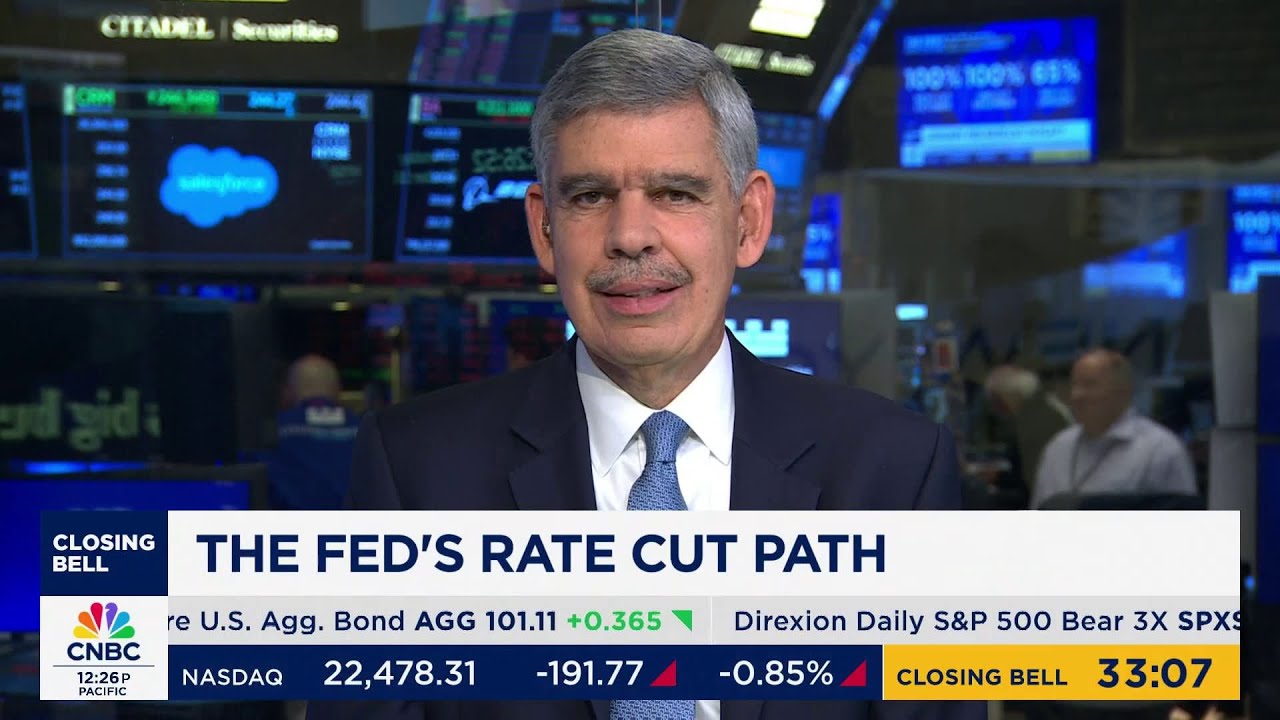
Economic Outlook - The economy shows strong growth with a reported 3.8% growth in the second quarter, the highest in two years, and is expected to maintain over 3% growth with contained inflation [11] - Despite positive economic indicators, there are concerns regarding the labor market and potential decoupling between low-income households and middle to upper-income households [14] Federal Reserve Actions - The Federal Reserve is under pressure to cut interest rates, with discussions around a potential quarter-point cut versus a half-point cut, reflecting uncertainty in economic clarity [8][9] - The Fed's decision-making is heavily data-dependent, and there are concerns about cutting rates while inflation is projected to rise above 3% [9] Credit Market Concerns - There are significant concerns regarding credit quality, particularly among regional banks and alternative asset managers, which could lead to defaults but are not expected to be systemic [2][3][4] - The current environment of tight credit spreads may encourage excessive lending and risk-taking, potentially leading to credit issues [5][6] Market Reactions - The stock market is performing well, but gold prices are at record levels, indicating a potential risk-off sentiment among investors who are hedging against the dollar [12][13] - There is a notable inflow into U.S. companies from foreign investors, suggesting confidence in U.S. equities despite concerns about the dollar's strength [13]
3 Stablecoin Risks Highlighted by IMF Financial Stability Report
Yahoo Finance· 2025-10-15 08:07
Core Insights - The International Monetary Fund (IMF) has identified stablecoins as a significant risk to financial stability in its latest report, highlighting vulnerabilities in the global economy [1][8]. Group 1: Stablecoin Risks - The IMF's 2025 financial stability report mentions stablecoins 80 times, focusing on three main threats due to their rising adoption [4]. - A potential "stablecoin run" could lead to significant market impacts, particularly if major stablecoins like USDT and USDC are forced to liquidate reserves to meet redemption demands, which could influence the overall Treasury market [5][6]. - The report indicates that while a stablecoin run may not directly affect mortgage rates or corporate borrowing costs, the continued growth of stablecoins could introduce systemic risks [6][8]. Group 2: Monetary Policy Concerns - The adoption of dollar-denominated stablecoins raises concerns about currency substitution, especially in regions with weak macroeconomic fundamentals, which could undermine monetary policy tools [9]. - Central banks in the EU and U.K. are wary of threats to their monetary sovereignty, while the issue of digital dollarization is more pressing in the Global South [7][8].