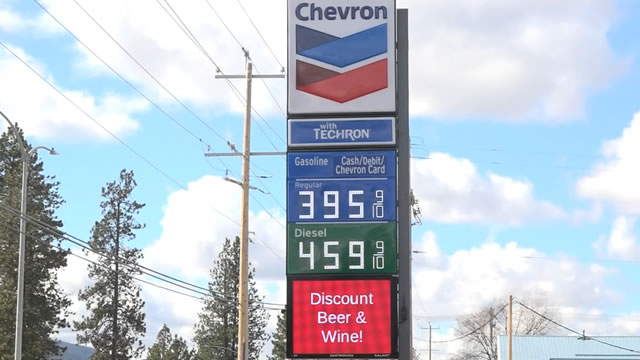
Oil supply disruption

Search documents
How the attack on Iran could impact the global oil market and economy
CNBC· 2026-02-28 19:53
Core Viewpoint - The joint U.S. and Israeli attack on Iran poses a significant risk of oil supply disruption in the Middle East, which could potentially lead to a global economic recession [1] Oil Market Impact - Traders are currently underestimating the threat of Iranian retaliation to the U.S. attack, which could significantly impact oil prices [2] - Crude oil future prices are expected to rise by $5 to $7 per barrel following the attack, with Brent crude prices recently settling at $72.48 per barrel and U.S. West Texas Intermediate at $67.02 per barrel [3] Strait of Hormuz Significance - Iran's potential actions could make the Strait of Hormuz unsafe for commercial traffic, possibly driving oil prices above $100 per barrel [4] - The Strait of Hormuz is crucial, with over 14 million barrels per day flowing through it in 2025, accounting for a third of the world's total seaborne crude exports [5] Global Economic Consequences - A prolonged closure of the Strait of Hormuz could guarantee a global recession, as it is a vital route for oil and liquid natural gas exports [5][7] - Hoarding behavior is expected from major Asian oil importers if the Strait is closed, leading to intense bidding wars and further price increases [8] Alternative Supply Routes - Only a small fraction of crude passing through the Strait can be redirected, with existing pipelines in Saudi Arabia and the UAE providing limited alternatives [9] Military Actions and Insurance Implications - Iran's missile strikes on U.S. bases in the region could disrupt traffic through the Strait, affecting shipping and insurance rates for tanker travel [10][11] Strategic Reserves and Crisis Management - The U.S. could utilize its Strategic Petroleum Reserve, which currently holds about 415 million barrels, to mitigate price spikes [12] - However, the scale and duration of a full crisis in the Strait of Hormuz could exceed the offsets provided by strategic stocks [13]


Oil News: Crude Oil Futures Jump as War Risk Puts Oil Demand and OPEC in Focus
FX Empire· 2026-02-27 13:41
What’s at Stake — Supply Disruption or Peaceful ResolutionWhat’s at stake is potential supply disruptions driven by possible military action against Iran by the United States. The situation went from optimistic to tense quickly overnight. For most of the session on Thursday there seemed to be a relative calm in the market as the latest talks held in Geneva seemed to indicate a possible peaceful resolution to the simmering tensions between the two countries.During the negotiations the United States remained ...

Global oil benchmark hits 6-month high amid fears of U.S.-Iran conflict
MarketWatch· 2026-02-19 11:56
Core Viewpoint - The global oil benchmark, Brent crude, has reached a six-month high due to concerns over potential supply disruptions from a possible U.S. attack on Iran [1] Group 1: Oil Prices - Brent crude futures rose above $71 a barrel for the first time since late July [1] - U.S.-traded light sweet crude futures increased by 1.4% to $66 a barrel as Brent contracts gained [1]
OPEC+ Oil Production Falls by 439,9000 Bpd
Yahoo Finance· 2026-02-12 16:00
Core Insights - OPEC+ crude oil production decreased by 439,000 barrels per day in January 2026, primarily due to significant supply disruptions in Kazakhstan, alongside reduced output from Iran and Venezuela [1][3] Group 1: OPEC+ Production Changes - Total OPEC+ crude oil production averaged 42.45 million barrels per day in January 2026, marking a decline of 439,000 barrels per day compared to December [1] - Kazakhstan's crude oil production fell by 249,000 barrels per day due to a temporary shutdown of the Tengiz oilfield caused by fire damage [2] - Iran and Venezuela also experienced production drops of over 80,000 barrels per day each in January compared to December [3] Group 2: Geopolitical and Operational Factors - The shutdown of the Tengiz field, operated by a Chevron-led consortium, halted production and exports, significantly impacting January's output [2] - Geopolitical tensions and U.S. sanctions have adversely affected Venezuela's oil production, which holds the world's largest crude oil reserves [3] Group 3: OPEC+ Production Quotas - In early February, eight OPEC+ members reaffirmed their decision to maintain production cuts during the first quarter of the year due to seasonal factors [4] - The production quotas for February and March will remain unchanged from January, following decisions made in previous meetings [4]
Oil prices fall as US, Iran agree to talks, easing conflict concerns
Yahoo Finance· 2026-02-05 01:56
Group 1 - Oil prices fell after the U.S. and Iran agreed to hold talks in Oman, easing concerns of military conflict that could disrupt oil supply from the Middle East [1][2] - Brent crude futures decreased by $1 (1.4%) to $68.47 per barrel, while U.S. West Texas Intermediate crude prices fell by 91 cents (1.4%) to $64.23 [1] - The uncertainty surrounding the talks caused price fluctuations, with initial surges due to fears of a collapse, which later moderated as reports confirmed the talks would proceed [2][3] Group 2 - Iran is willing to discuss its nuclear program, including uranium enrichment, while the U.S. aims to address Iran's ballistic missiles and support for proxy groups [3] - Concerns remain regarding potential military actions by U.S. President Donald Trump against Iran, which could risk wider conflict in the oil-rich region [4] - Approximately 20% of the world's oil consumption passes through the Strait of Hormuz, a critical route for oil exports from several Gulf producers [5] Group 3 - U.S. crude stocks and distillate inventories fell, while gasoline inventories rose due to a winter storm affecting large areas of the country [6]
Iran is not a major oil producer, but it still moves prices. Here's why
CNBC· 2026-01-23 17:34
Core Viewpoint - Oil prices are rising due to renewed threats from President Trump against Iran, raising concerns about potential supply disruptions in the oil market [1][2]. Group 1: Oil Production and Supply - Iran produces approximately 3.4 million barrels of oil per day, which is significantly lower than the U.S. and Saudi Arabia, producing about 13.5 million and 9.5 million barrels per day, respectively [1]. - OPEC and its allies, responsible for about 40% of global oil production, increased their output last year, which has reduced spare capacity in the market [4]. Group 2: Market Reactions and Concerns - Recent protests in Iran, triggered by the decline of the rial currency and Trump's military action suggestions, have created anxiety in energy markets, with experts noting that "oil markets are moving on fear" [2]. - The potential for a confrontation between the U.S. and Iran could lead to a significant loss of Iranian oil exports, which would be difficult to replace due to limited spare capacity in OPEC [5]. Group 3: Strategic Importance of Iran - Iran's geographical location is critical, particularly regarding the Strait of Hormuz, a major chokepoint for oil transportation, through which about 20% of global crude flows [6]. - Historical context includes Iran's previous attacks on oil tankers in the Strait of Hormuz, raising concerns about the security of oil supply routes [6]. Group 4: Sanctions and Economic Impact - Existing sanctions on Iran have already affected its crude oil exports, with most of its oil being sold to independent Chinese refiners at discounted prices [7]. - The effectiveness of sanctions in influencing Iranian policy is questioned, as the current market dynamics may limit their impact [8].
Oil Gains on Iran Supply Disruption Fears After U.S. Tariffs
Barrons· 2026-01-13 09:14
Core Viewpoint - Oil prices have reached their highest level since November due to the U.S. imposing a 25% tariff on countries doing business with Iran [1] Group 1: Oil Price Movements - Brent crude and WTI both increased by 0.5%, reaching $64.17 per barrel and $59.81 per barrel, respectively, following a higher settlement in the previous session [2] Group 2: Market Sentiment and Supply Concerns - The potential reduction in Iranian oil supply has shifted market sentiment from bearish to a more cautious outlook, countering earlier expectations of a global oil glut [2] - Ongoing concerns about the tariff's impact on relations with major crude buyers, particularly China, which is a significant importer of Iranian oil, are influencing market dynamics [2] - Market participants are also considering developments in Venezuela as part of the broader supply landscape [2]
Oil climbs, intensifying unrest in Iran spark supply concerns
Reuters· 2026-01-12 00:19
Core Viewpoint - Oil prices are rising due to concerns over potential supply disruptions from Iran amid escalating protests, despite efforts to restore oil exports from Venezuela [1] Group 1 - Oil prices extended gains on Monday, indicating a bullish trend in the market [1] - The intensifying protests in Iran are raising fears of supply disruptions from this OPEC producer [1] - Efforts to quickly resume oil exports from Venezuela are ongoing, but the impact on overall supply remains uncertain [1]

Iran Protests Put Supply Risk Back on the Oil Radar
Yahoo Finance· 2026-01-09 15:15
Oil Market Insights - Iran protests have contributed to a bullish start for 2026, raising concerns about potential supply disruptions, with ICE Brent prices nearing $63 per barrel, marking a $2 increase and the third consecutive weekly gain [2] - The US government's inability to attract investments from oil majors in Venezuela has tempered expectations for a near-term surge in Venezuelan oil production, despite Treasury Secretary Bessent's encouragement for 'wildcatters' to drill [2][6] Geopolitical Developments - The US military seized a Russian-flagged tanker after a three-week pursuit, highlighting ongoing tensions in maritime oil transport [3] - Iraq has approved the nationalization of the West Qurna 2 oilfield, previously operated by Lukoil, due to US sanctions, with operations now under the control of state-owned Basrah Oil [4] Mergers and Acquisitions - Rio Tinto and Glencore are in early discussions to merge, potentially creating the world's largest mining company valued at $207 billion, building on a previous stalled merger proposal [5] - Spanish and Portuguese refiners, Moeve and Galp, are negotiating a merger of their downstream businesses, aiming for a combined capacity of 690,000 b/d, which represents 5% of Europe's refining capacity [7]
Venezuela's oil deliveries to Asia at standstill, Chevron's exports flowing -shipping data
Reuters· 2026-01-06 13:27
Venezuela's main oil ports on Tuesday entered their fifth day without delivering crude for state-run PDVSA's customers in Asia, which are the OPEC country's main buyers, shipping data showed, as the U... ...