
Private credit

Search documents
The latest source of market turmoil: credit-strapped regional banks
Yahoo Finance· 2025-10-17 03:46
Core Insights - Regional bank shares experienced significant declines due to negative updates from Zions Bancorp and Western Alliance Bancorp regarding their lending operations [6] - The SPDR S&P Regional Banking ETF fell by 7%, reflecting broader sector concerns [2] - Credit quality issues are becoming increasingly prominent, particularly in light of recent high-profile bankruptcies in the private credit market [4][5] Company-Specific Summaries - Zions Bancorp's shares dropped by as much as 13% to $46.85 after announcing a $50 million charge-off related to a loan from its subsidiary, California Bank & Trust [1] - Western Alliance Bancorp's stock fell 11% to $69.87 following the announcement of a lawsuit against a borrower for fraud [2] - Jefferies' shares declined by 10% to $49.12 due to concerns over its exposure to the bankrupt auto parts supplier First Brands [3] Industry Context - The recent turmoil in the banking sector is attributed to rising credit concerns, particularly in the private credit market, where opaque lending practices have raised alarms about the creditworthiness of borrowers [4] - High-profile collapses, such as that of First Brands and subprime auto lender Tricolor Holdings, have intensified scrutiny on the private credit sector [5] - Analysts note that investors tend to react quickly to credit concerns, often selling off shares before fully assessing the situation [6]
US banks slump on fears of hidden credit crisis
Yahoo Finance· 2025-10-16 18:36
Group 1: Private Credit Market Concerns - The head of the IMF, Kristalina Georgieva, expressed concern over the growth of private credit lenders, which now account for more than half of financing [1][48] - Recent collapses of heavily indebted firms, such as subprime auto lender Tricolor and auto parts maker First Brands, have raised alarms about lending standards in the $3 trillion private credit sector [2][3] - Jamie Dimon, CEO of JP Morgan, highlighted the presence of "cockroaches" in the debt markets, indicating underlying issues within the private credit industry [5][49] Group 2: Economic Indicators and Banking Sector Performance - Zions Bancorporation announced a write-off of $50 million on two loans, while Western Alliance is pursuing legal action over a $100 million bad loan, contributing to fears of hidden credit stress [4] - US banking stocks have seen significant declines, with Zions shares falling over 10% and Western Alliance dropping more than 9% [3] - The SPDR S&P Regional Banking ETF, which tracks regional banking shares, decreased by more than 4% amid these concerns [3] Group 3: Broader Economic Context - The UK's GDP grew by only 0.1% in August, indicating a mild recovery from a previous contraction, but overall growth remains sluggish [7][18] - The US budget deficit narrowed slightly to $1.8 trillion, despite increased spending on health and public debt interest [8][9] - Wall Street's main indexes experienced declines, particularly in financial stocks, as concerns over the banking sector weighed on investor sentiment [10][11]
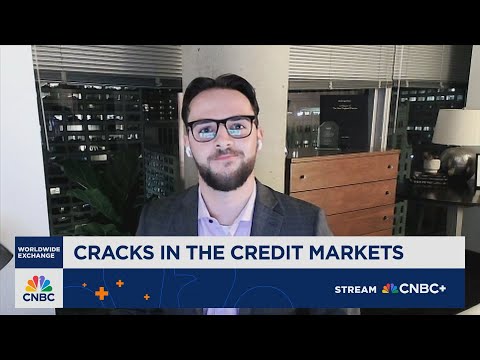
Morningstar on exposure funds and financial companies may have to First Brands' collapse
CNBC Television· 2025-10-15 11:48
I I think everybody's antennas went up when we heard Jamie Diamond say there could be some other ones out there. I really want to kind of dig into this. So, one of the issues here, at least when it came to First Brands, it seems to be offbalance sheet financing.In this case, selling receivables. How common is that. And does that have the potential for contagion.>> A good question. It's it's relatively common practice. Um we we think about complex and opaque when we think the situation here with first brands ...

Investors are underpricing tariff risks, says Raymond James' Sunaina Sinha Haldea
CNBC Television· 2025-10-14 21:18
Markets tried to stage a comeback today as investors try to digest the latest tariff headlines, but could concerns also spill over into private capital markets. Joining us now is Suna Hala. She is the global head of private capital advisory at Raymond James.Great to have you also here on set. So, some other stuff. Is this a canary in the coal mine.>> Well, it certainly could be. I think um canary or not, we have to admit that private credit has been a huge inflow into the credit markets. It's now a mainstay ...
Former Ford CEO: EV market didn't develop the way automakers thought
Youtube· 2025-10-14 19:35
Group 1: General Motors and Electric Vehicles (EVs) - General Motors (GM) announced a $1.6 billion charge related to its electric vehicle (EV) initiatives, indicating potential future impairments [3][4] - The automakers, including GM, invested heavily in EV capacity without adequately addressing consumer demand, leading to stranded capital and misaligned market expectations [2][4] - The market uptake of EVs is expected to be lower than initially planned in the near to medium term, turning previous advantages into challenges for companies like GM [4] Group 2: Auto Parts Bankruptcies - The bankruptcy of auto parts company First Brands is significant in the context of credit conditions but not necessarily a major concern for the auto industry as a whole [6] - First Brands' issues stem from over-leverage, opaque financing, and governance problems, highlighting risks associated with heavy debt and reliance on acquisitions for growth [7] - The rise of private credit, which has less stringent requirements than traditional bank debt, may indicate broader vulnerabilities among over-leveraged companies in the industry [8] Group 3: Auto Loans and Consumer Behavior - The average price of a new car has surpassed $50,000, contributing to increased financial strain on consumers, with average auto loan payments now exceeding $750 per month [10][12] - There is a rising trend in late car loan payments and repossessions, suggesting that consumers may be struggling under the weight of high monthly payments [9][12] - Despite tightening standards from banks and auto finance companies, the subprime segment remains a relatively small portion of auto financing, indicating that the overall auto industry may not be facing imminent doom [12][13]



Bank earnings preview: What Wall Street is expecting the nation's biggest banks to report
Youtube· 2025-10-11 10:01
Core Viewpoint - The banking sector is expected to report strong earnings driven by a rebound in investment banking, with specific banks like Goldman Sachs and Citigroup showing promising results [19][3]. Group 1: Bank Performance and Expectations - Analysts are optimistic about the upcoming earnings reports from major banks, with expectations for revenue and earnings beats [3][19]. - Goldman Sachs is highlighted as a strong buy due to its leading position in equity underwriting and durable fee income from asset and wealth management [11][10]. - Citigroup is seen as attractive on valuation, with recent restructuring efforts and a focus on corporate treasury services [13][12]. - Bank of America is viewed as a hold due to its lagging performance compared to peers, despite recent stock price increases [15][14]. - Morgan Stanley is expected to perform well, particularly in wealth management, alongside Goldman Sachs [17][16]. - JP Morgan Chase is considered a top contender in the financial sector, with a strong executive team and diverse business operations [18][17]. Group 2: Regulatory and Economic Environment - The regulatory landscape under the current administration is seen as fostering economic growth, allowing banks to increase lending and return capital to shareholders [6][5]. - Credit quality remains stable, with banks maintaining normalized loan loss provisions and reserves [8][7]. Group 3: Market Trends and Challenges - The banking industry is facing competitive pressures, leading to reduced rates to attract lending volumes, which may impact margins [21][24]. - There is a growing concern about concentration risk due to increased loans to non-bank financial companies [26][27]. - The private credit sector is under scrutiny, with potential risks emerging from aggressive lending practices and lack of investor protections [30][31]. Group 4: M&A Activity and Industry Consolidation - The trend of consolidation in the banking sector is expected to continue, with banks seeking growth through acquisitions, although this may lead to challenges related to goodwill and operational efficiency [38][39]. - Recent M&A activity, such as Fifth Third's acquisition of Comica, raises questions about the strategic rationale and potential operational challenges [36][37].



Jim Cramer reveals his secrets to wealth and success
Youtube· 2025-10-09 11:57
Core Insights - The discussion highlights the importance of understanding the underlying companies and their management when investing, emphasizing that wealth creation is often tied to diligent research and analysis [3][9][10]. Group 1: Wealth Creation and Investment Strategies - The narrative illustrates how individuals can create significant wealth through strategic investments, particularly in growth stocks like Nvidia, which has been a focal point for many investors [2][4]. - The emphasis is placed on the necessity of doing thorough homework on companies rather than relying solely on market trends or advice from others [3][9]. - The conversation also critiques the notion that wealthy individuals should only invest in private markets, arguing that there are still substantial opportunities in public equities [16][19]. Group 2: Wall Street and Investment Advice - The dialogue reveals skepticism towards Wall Street's tendency to recommend index funds over individual stock picking, suggesting that this approach may not serve the best interests of wealthy investors who are capable of making informed decisions [9][10]. - There is a strong critique of the financial industry's cynicism, where products are often created to extract money from investors rather than genuinely serve their financial interests [10][11]. - The discussion also touches on the perception that private equity and alternative investments are superior, countering that quality growth stocks can yield significant returns [12][16]. Group 3: Personal Experiences and Insights - Personal anecdotes illustrate the journey of understanding wealth management, including lessons learned from experiences at Goldman Sachs and interactions with wealthy clients [5][27]. - The narrative emphasizes the importance of maintaining a disciplined investment approach, such as focusing on a limited number of quality stocks rather than engaging in excessive trading [9][10]. - The conversation concludes with a call for accountability among billionaires and the financial industry, advocating for a more transparent and responsible approach to wealth management [27][28].
Beach Point on First Brands Fallout, Private Debt Risks
Yahoo Finance· 2025-10-03 16:34
Core Viewpoint - The private debt boom may face significant challenges following the collapse of First Brands, with warnings from notable short-seller Jim Chanos that more companies could be at risk as the economic cycle shifts [1] Group 1: Industry Insights - Jim Chanos highlights the potential for a broader unraveling in the private debt market, suggesting that the current environment may lead to increased defaults among companies [1] - Beach Point, a firm involved with First Brands, is mentioned as a key player in the private credit space, indicating the interconnectedness of firms within this sector [1] Group 2: Company Implications - The fallout from First Brands' collapse could signal vulnerabilities in private credit, prompting concerns about the stability of other companies backed by similar financial structures [1] - Portfolio Manager Sinjin Bowron from Beach Point discusses the implications of these developments on the private debt landscape, emphasizing the need for caution [1]
Public Bonds Are Booming. Why Is Private Credit Flashing Distress?
Barrons· 2025-10-03 16:34
Core Insights - Lower interest rates have led to an increase in corporate bond sales, indicating a favorable environment for bond issuance [1] - However, the rise in bankruptcies suggests underlying issues within the private credit sector, particularly concerning bank loans and closed-end funds [1] Group 1 - The sales of corporate bonds have been spurred by lower interest rates, reflecting a positive trend in the bond market [1] - The increase in bankruptcies serves as a warning sign, highlighting potential risks in the private credit market [1]
'We've Seen This Movie Before' | US Shutdown Impact
Youtube· 2025-10-03 13:29
Economic Impact and Labor Market - The expectation is that the current situation will last a few days, but the focus is on the labor market due to potential furloughs affecting around 900,000 federal workers and delays in pay for all federal employees [2][3] - The Trump administration is considering making some furloughs permanent, which could create a shock in the job market, and the Federal Reserve is closely monitoring the labor market as it considers future policy [2][3] Market Reactions and Valuations - Past government shutdowns have had limited effects on bonds and stocks, but current equity valuations are stretched, with a P/E ratio around 22 times, which is above average [3][4][5] - Historical data suggests that investing in the S&P 500 at such a high forward P/E multiple has resulted in muted returns over the next ten years, raising concerns about investor patience during the shutdown [5][6] Credit Market Dynamics - There is increasing demand for alternatives in credit, with a notable rise in private credit funds and interest from private equity sponsors and borrowers [7][9] - Concerns have been raised about the quality of underwriting and covenants in the private credit market, with a degradation noted, while public markets are also seeing significant demand, evidenced by $60 billion in high-yield bond issuance this month [10][11] Consumer Spending Trends - Current data indicates a bifurcation in consumer spending, with higher-income consumers maintaining spending levels while lower-income consumers may already be experiencing recessionary conditions [13][14] - Weak data for travel and hotel occupancy in August suggests that higher-end consumers are becoming more cautious amid market uncertainties [14]