抗战历史

Search documents
“随身携带汽油,危急时先烧密码本”(时空对话)
Ren Min Ri Bao· 2025-05-25 22:32
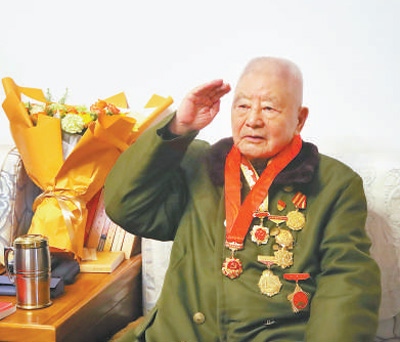
Core Viewpoint - The article highlights the life and contributions of Jiao Kemin, a 98-year-old veteran who played a crucial role as a cipher officer during the Anti-Japanese War, emphasizing the importance of his work in intelligence and communication for military success [2][4][6]. Group 1: Historical Context - Jiao Kemin was born in 1927 in Hebei and became involved in revolutionary activities at the age of 17, joining the Eighth Route Army and later working in a military school [2][3]. - The Jizhong Military Region, where Jiao served, was vital for anti-Japanese activities in central Hebei, employing guerrilla tactics to counter Japanese forces [4][6]. Group 2: Role and Responsibilities - As a cipher officer, Jiao was responsible for translating encrypted messages and ensuring the timely delivery of intelligence, which was critical for military operations [4][5]. - The work environment was perilous, with Jiao often facing the threat of enemy attacks while safeguarding sensitive information, highlighting the high stakes involved in his role [5][6]. Group 3: Personal Reflections and Legacy - Jiao reflects on the sacrifices of his comrades, many of whom were young and did not survive the war, expressing a deep sense of responsibility to remember and honor their contributions [6][8]. - He emphasizes the importance of teaching future generations about history and the significance of military service, instilling values of patriotism and dedication [8].

“枪声一响,我们连队所有战士向敌人冲去”(时空对话)
Ren Min Ri Bao· 2025-05-19 22:01
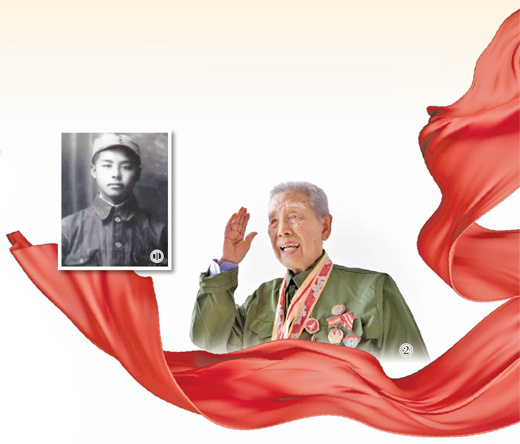
Core Viewpoint - The article highlights the importance of preserving and passing on the memories and experiences of war veterans, specifically focusing on the life and stories of 97-year-old veteran Kong Xiande, who shares his experiences with young students to instill a sense of history and patriotism [4][10]. Group 1: Personal Background and Experiences - Kong Xiande, a 97-year-old veteran from Shandong, became a soldier at the age of 16 due to famine and the invasion of Japanese forces, which led to the death of his family members [5][6]. - He served in the Eighth Route Army and participated in significant battles, including the ambush at Gezhuang, where his unit successfully defeated a larger enemy force [5][6]. Group 2: War Stories and Impact - Kong recounted the brutal realities of war, including a harrowing battle at Wujiacuo, where he was injured and left with a disability [6][7]. - He described the emotional toll of witnessing the loss of many comrades during intense combat, emphasizing the harshness of warfare [7][8]. Group 3: Legacy and Education - Kong emphasizes the importance of sharing war stories with younger generations to ensure the legacy of the past is not forgotten [4][10]. - The interaction with students, where they listen to his stories and present him with gifts, symbolizes the connection between history and the present, fostering a sense of respect and understanding among the youth [8][9].