
抗战历史

Search documents
历史无法尘封 记忆终将苏醒
Xin Lang Cai Jing· 2026-01-08 22:05
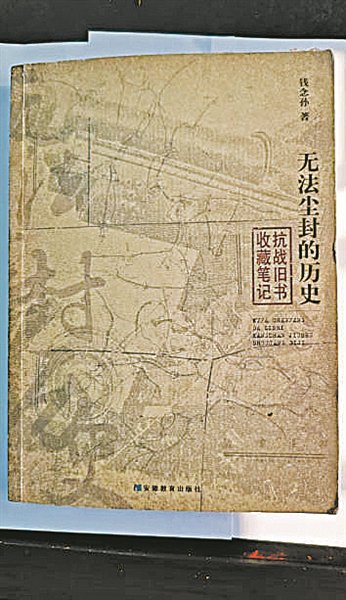
Core Viewpoint - The book "The Unsealable History: Notes on Collecting Anti-Japanese War Books" by Qian Niansun serves as a key to revisiting the collective memory of the Anti-Japanese War, providing a systematic review of rare books from that period and awakening national consciousness [3][4][12]. Group 1: Historical Perspectives - Anti-Japanese war literature offers multiple historical perspectives, including firsthand accounts from Chinese individuals, objective reports from foreign journalists, and internal Japanese strategic documents, creating a multidimensional view of history [4][5]. - The book "The Atrocities of the Japanese Army Witnessed by Foreigners" documents the Nanjing Massacre from a third-party perspective, serving as crucial evidence of Japan's war crimes [4]. - "The Secret History of Japanese Diplomacy in the Invasion of China" reveals the internal diplomatic conspiracies of Japan during the First Sino-Japanese War, providing insights into their aggressive strategies [5][6]. Group 2: Intellectual Resistance - Anti-Japanese literature not only records history but also serves as a weapon of resistance, with intellectuals using writing as a means to build a spiritual defense against invasion [7][8]. - Works like "The Development of Japan" and "Little Discussions" reflect the commitment of intellectuals to link academic work with national defense efforts during the war [7][8]. - The writings of Chen Duxiu during the war period express a strong patriotic sentiment and provide critical insights into the political landscape of the time [8]. Group 3: Cultural Mobilization - Popular literature aimed at the general public played a significant role in mobilizing national sentiment and resistance against the Japanese invasion [10][11]. - "The Anti-Japanese Three-Character Classic" uses traditional forms to convey urgent messages about the war, becoming a classic mobilization text [10]. - The publication of works celebrating national heroes aimed to inspire and rally the populace, combining historical narratives with contemporary needs for cultural mobilization [11]. Group 4: Collective Memory and Historical Preservation - The preservation and study of anti-Japanese war literature are vital for countering historical nihilism and retaining valuable historical memories [12][14]. - The writings from that era, including calls to action from figures like Feng Yuxiang, serve as reminders of the collective responsibility to remember and learn from history [13][14]. - Anti-Japanese war literature is viewed as an essential part of the national cultural gene pool, emphasizing the importance of digital preservation and dissemination of these historical materials [12][14].

国台办:台湾有关方面歪曲抗战历史不得人心 必将失败
Jing Ji Guan Cha Wang· 2025-12-31 03:00
Core Viewpoint - The spokesperson from the Taiwan Affairs Office criticized Taiwan's attempts to distort historical facts regarding the Anti-Japanese War and obstruct cross-strait academic exchanges, asserting that such actions lack public support and are destined to fail [1] Group 1 - The Taiwan Affairs Office held a regular press conference on December 31, addressing questions about retired Taiwanese generals attending a seminar in mainland China [1] - The Taiwan Veterans Affairs Council claimed that "all anti-Japanese heroes are in Taiwan," indicating a strong stance against the participation of Taiwanese individuals in cross-strait exchanges [1] - The spokesperson emphasized that the actions of Taiwan's authorities to suppress cross-strait cooperation and academic discussions are counterproductive and will not succeed [1]
南京的博物馆有看头| 这场展览讲述《得闲谨制》背后的真实历史
Xin Lang Cai Jing· 2025-12-20 10:54
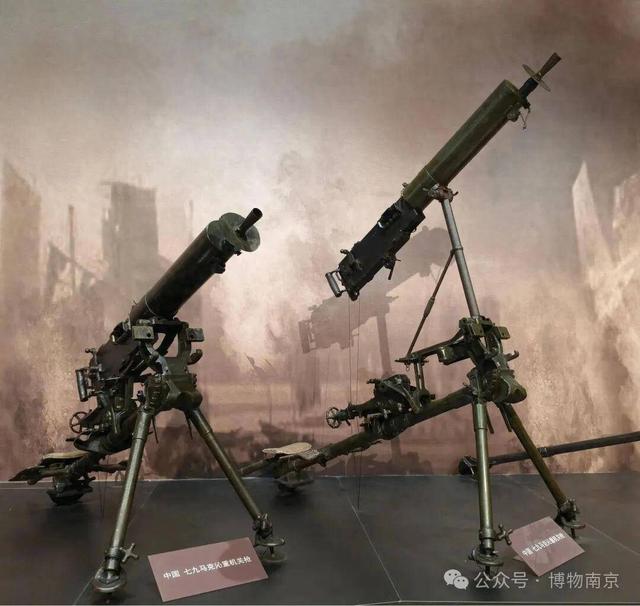
Group 1 - The film "Get Idle and Cautiously Make" depicts the struggle of workers from the Jinling Arsenal during the Anti-Japanese War, highlighting their westward migration to Hunan to resist Japanese forces [1] - The Jinling Arsenal's westward migration began in November 1937, involving nearly 4,000 skilled workers who took over three months to reach Chongqing, where it was renamed the 21st Factory in March 1938 [1] - The 21st Factory produced various weapons that significantly contributed to the victory in the Anti-Japanese War, including the display of Maxim machine guns at the ongoing exhibition [1] Group 2 - After the war, the 21st Factory returned to Nanjing and was renamed the 60th Factory, which later became involved in supplying weapons during the Korean War and transitioned into an aerospace enterprise in 1965 [3] - The Jiangnan Automobile Company, established in 1931, also played a crucial role during the war by transporting troops and supplies, with significant operations recorded from April 1938 to December 1939 [4] - The company managed to transport over 36,300 injured soldiers and refugees, along with substantial amounts of goods, demonstrating its vital contribution to wartime logistics [4]
澳门举办图片展呈现宋庆龄为抗战胜利作出的卓越贡献
Xin Hua She· 2025-11-25 00:54
Core Viewpoint - The fifth Shanghai Cultural and Tourism Photo Exhibition, themed "China is Unconquerable: Soong Ching-ling in the Anti-Japanese War and the World Anti-Fascist War," opened at the Macau University of Science and Technology and will run until December 7, showcasing over 100 historical images to highlight Soong Ching-ling's contributions to the victory in the war [1]. Group 1 - The exhibition aims to help the people of Macau, especially the youth, understand the deep connections between Soong Ching-ling and the Hong Kong-Macau region, emphasizing the historical context of the Chinese people's resistance against foreign aggression [1]. - Special content related to Macau has been added to the exhibition, illustrating the unique role and contributions of Macau during the war [1]. - This year's exhibition marks the fifth consecutive year that the Shanghai Cultural and Tourism Photo Exhibition has been held in Macau, reflecting ongoing cultural collaboration between Shanghai and Macau [1]. Group 2 - The exhibition is organized by the Shanghai Municipal Bureau of Culture and Tourism and the China Welfare Institute, with support from the China Welfare Institute Development Research Center and the Shanghai-Macau Economic and Cultural Development Association [1]. - The president of the Shanghai-Macau Economic and Cultural Development Association expressed hope that the exhibition will help more people revisit history, cherish peace, and further promote deep integration in cultural and tourism sectors between Shanghai and Macau [1].
17国留学生走进沈阳抗战主题场馆 共筑和平记忆
Zhong Guo Xin Wen Wang· 2025-11-06 01:27
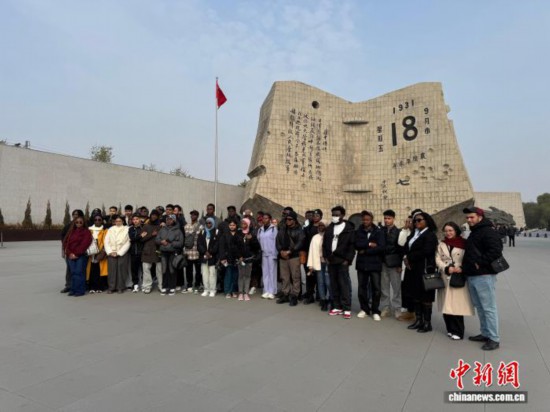
Core Points - A group of over 40 international students from 17 countries, including Russia and Ethiopia, visited the Shenyang WWII Allied POW Camp Memorial and the "September 18th" Historical Museum, focusing on the theme "Learning from History to Build Peace" [1][3][5] Group 1: Event Overview - The visit took place on November 5, where students explored significant historical sites related to WWII and the Japanese invasion of China [3][5] - The Shenyang WWII Allied POW Camp is noted as the best-preserved among 18 camps established by Japan during the war, having housed over 2,000 prisoners from the US, UK, and Australia between 1942 and 1945 [3] Group 2: Educational Impact - An exhibition titled "Justice Without Borders, Fire Together - International Friends in the Anti-Japanese War" showcased nearly 200 historical images and sculptures, deeply impacting the students [3] - Students expressed their surprise and emotional responses to the historical narratives, with one student from Congo stating that the stories of international allies fighting alongside the Chinese people were particularly moving [3][5] Group 3: Reflections on Peace - The visit fostered a deeper understanding of historical struggles, with students acknowledging the importance of cherishing peace [5] - A student from Nigeria remarked on the museum's role in preserving history, allowing visitors to empathize with past experiences [5] - Another student from Russia emphasized the significance of remembering historical memories to appreciate peace [5]
海报|数字铭刻的台湾光复记忆
Xin Hua She· 2025-10-25 08:33
Group 1 - The core viewpoint emphasizes the significance of Taiwan's restoration as a great victory achieved through the collective efforts and sacrifices of the Chinese people, including the Taiwanese compatriots [11] - The article highlights that over 650,000 individuals sacrificed their lives to protect their homeland during the 50 years of Japanese colonial rule from 1895 to 1945 [6] - It notes that Taiwan's restoration is an important part of the outcomes of World War II and the post-war international order, representing a shared glory for both sides of the Taiwan Strait [11] Group 2 - The article calls for a remembrance of the history of resistance against Japanese aggression and emphasizes the importance of upholding national integrity [17] - It encourages collaboration and unity among compatriots on both sides of the Taiwan Strait to create a better future for all Chinese people [17]
外国驻港政商界人士参观抗战专题展 共忆历史维护和平
Xin Hua She· 2025-10-18 05:35
Core Viewpoint - The event organized by the Ministry of Foreign Affairs in Hong Kong aims to educate the public about the history of the Anti-Japanese War and commemorate the sacrifices made during that period, emphasizing the importance of remembering history to safeguard peace and create a better future [1][2]. Group 1: Exhibition and Activities - The exhibition titled "United as One to Maintain Peace - Commemorating the 80th Anniversary of the Victory in the Anti-Japanese War" features over 180 exhibits that vividly depict the historical context of the Anti-Japanese War, highlighting the contributions of Hong Kong in supporting the national resistance [2]. - A series of related activities will take place across Hong Kong, including visits to war sites, seminars, lectures, film screenings, book fairs, and photo exhibitions, aimed at enhancing public understanding of Hong Kong's historical role during the war [1][2]. Group 2: Historical Significance - The event underscores Hong Kong's role as a significant base for the anti-Japanese movement, where local communities actively raised funds and resources to support the mainland, with many individuals returning to the mainland to join the fight [2]. - The speeches delivered at the event highlight China's contributions to the global anti-fascist war and the importance of peaceful development and international cooperation in addressing current global challenges [1].
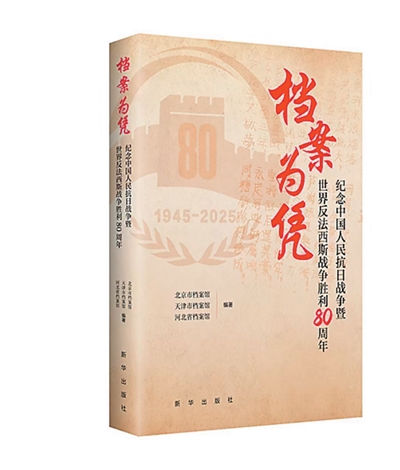
档案中的京津冀抗战史(新书问答)
Ren Min Ri Bao Hai Wai Ban· 2025-10-15 22:56
Core Viewpoint - The publication of the book "Archives as Evidence" commemorates the 80th anniversary of the victory in the Chinese People's War of Resistance Against Japanese Aggression and the World Anti-Fascist War, highlighting the significant contributions of the Beijing-Tianjin-Hebei region during this period through original archival materials [4][5]. Summary by Sections Purpose and Intent - The book aims to reflect on history, remember sacrifices, and pass on the spirit of patriotism through archival evidence, showcasing the collaborative efforts of the archives in the Beijing-Tianjin-Hebei region [5]. Unique Aspects of the Book - All content is derived from original archives held by the three regional archives, ensuring academic rigor and enhancing readability. The book covers various dimensions of the anti-Japanese war, including civilian resistance, underground struggles, and heroic deeds, filling gaps in existing literature [7][8]. Selection of Archives - The selection process emphasizes authenticity and representativeness, including various types of documents such as official communications, newspapers, and personal letters. Notable archives include the "Chicken Feather Letter" and documents detailing the atrocities committed by Japanese forces [8][9]. Collaboration and Challenges - The compilation involved cooperation among the three regional archives, sharing resources and expertise. Challenges included verifying the authenticity of documents and addressing potential biases in materials from Japanese military sources [10][11]. Academic and Social Value - The book serves as a primary source for research on the anti-Japanese war, providing valuable materials for academic study. It also acts as a patriotic educational resource, aiming to inspire and inform the public about historical truths and the spirit of resistance [11]. Future plans include expanding outreach through exhibitions and digital platforms to engage a broader audience [11].
校馆弦歌丨重庆大学“楼与堂”:一场跨越时空的青春回响
Xin Hua Wang· 2025-10-06 06:37
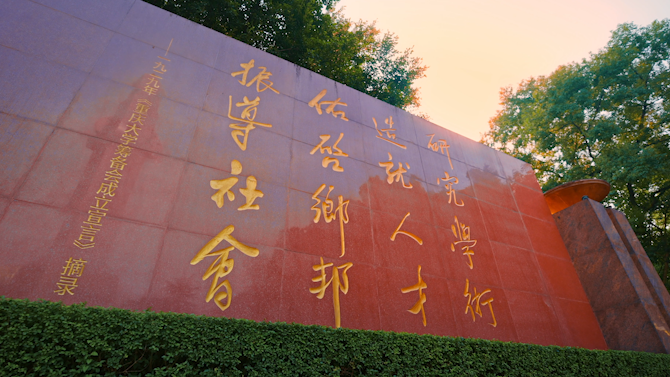
Core Points - Chongqing University, established in 1929, has a rich history marked by its resilience during the Second Sino-Japanese War, where it endured six bombings between 1939 and 1941 [1] - The university's engineering building, a witness to this painful history, still shows traces of bomb damage after its restoration in 2004, and alumni have contributed to the construction of a memorial to commemorate the war [1] - The "July 7th Anti-Japanese War Memorial Hall" was built to honor the "July 7 Incident," with Chongqing University providing approximately 200 acres of land for the construction by the National Central University, which relocated to Chongqing during the war [1] Educational Initiatives - In September, Chongqing University organized a walking history course for students, encouraging more young people to engage with historical events and connect with heroes of the past [3] - This initiative aims to foster a deeper understanding of history through experiential learning, allowing students to physically trace historical sites and reflect on their significance [3]
香港中学生观《南京照相馆》 厚植家国情怀
Xin Hua She· 2025-09-20 14:11
Core Viewpoint - The event "Remembering History, Cherishing Peace" aims to deepen Hong Kong youth's understanding of the Anti-Japanese War history and enhance their patriotism through the film "Nanjing Photo Studio" [1][2] Group 1: Event Details - The event was organized by the Office of the Commissioner of the Ministry of Foreign Affairs in the Hong Kong Special Administrative Region, attended by over 200 students and teachers from the "Hong Kong Cup" diplomatic knowledge competition [1] - The film screening lasted for 2 hours and 17 minutes, evoking strong emotional responses from the audience, with many moved to tears [1] Group 2: Educational Impact - The deputy commissioner emphasized the importance of remembering history to understand the present and future, encouraging students to integrate personal ideals with national development [1] - The film portrays the intertwining of personal and national destinies, showcasing both the brutality of war and the warmth of humanity [1][2] Group 3: Competition Background - The "Hong Kong Cup" diplomatic knowledge competition has been held for 17 years, serving as a platform for Hong Kong youth to understand the country and broaden their perspectives [2] - This year's competition coincides with the 80th anniversary of the victory in the Chinese People's Anti-Japanese War and the World Anti-Fascist War, featuring multiple related questions [2]